
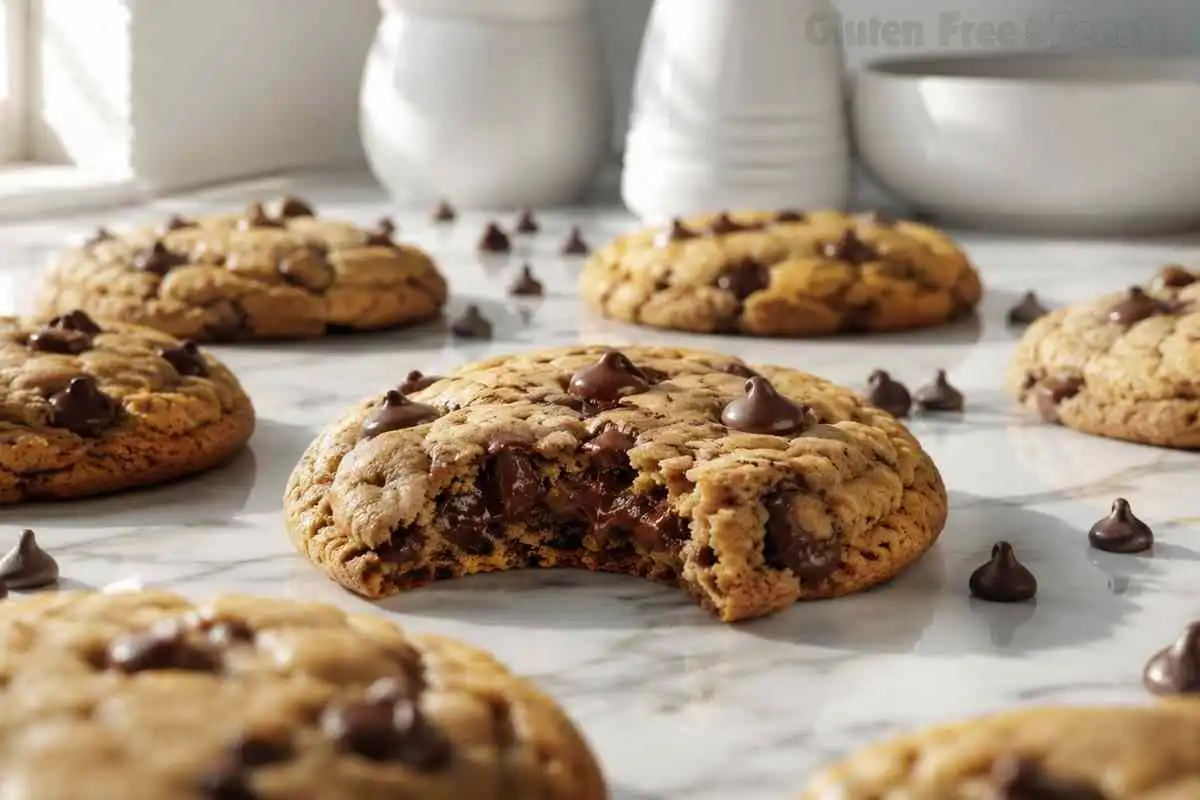
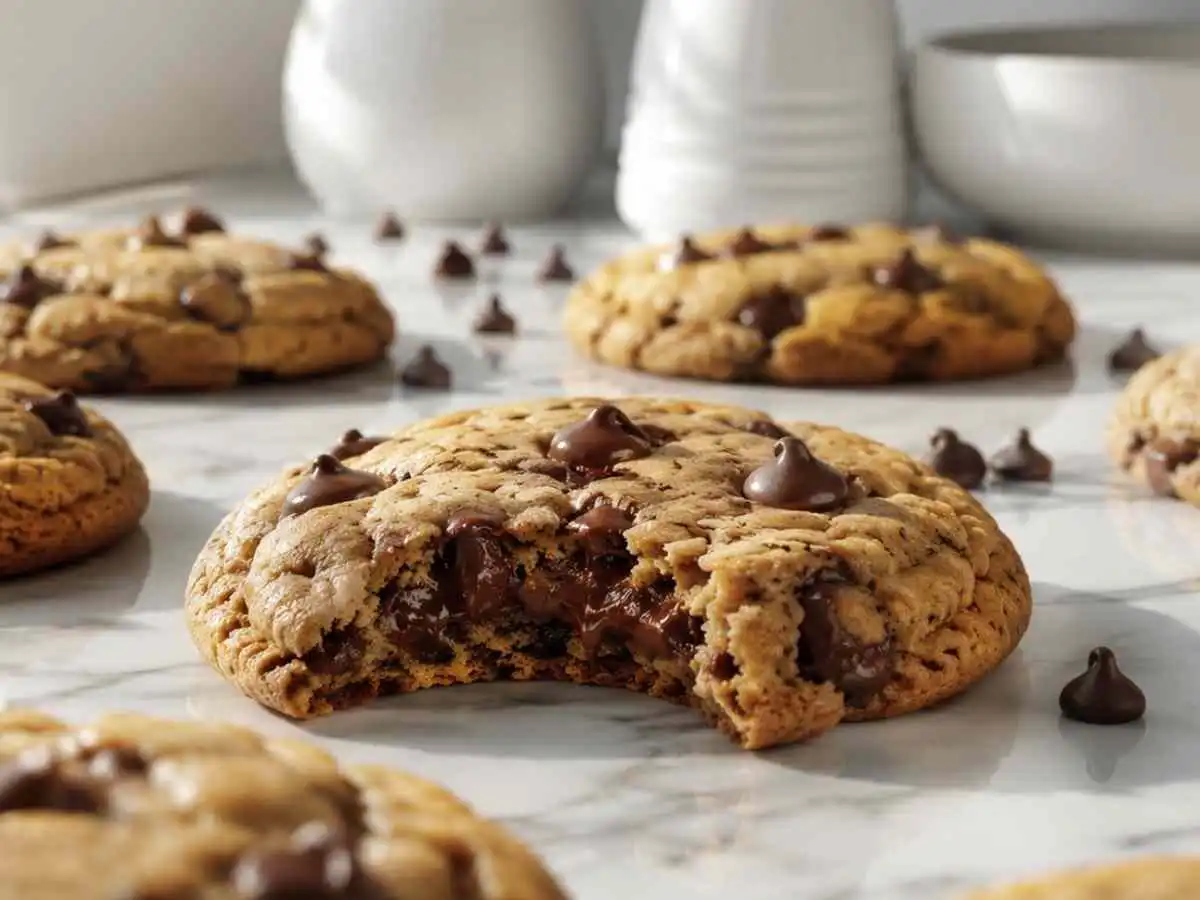
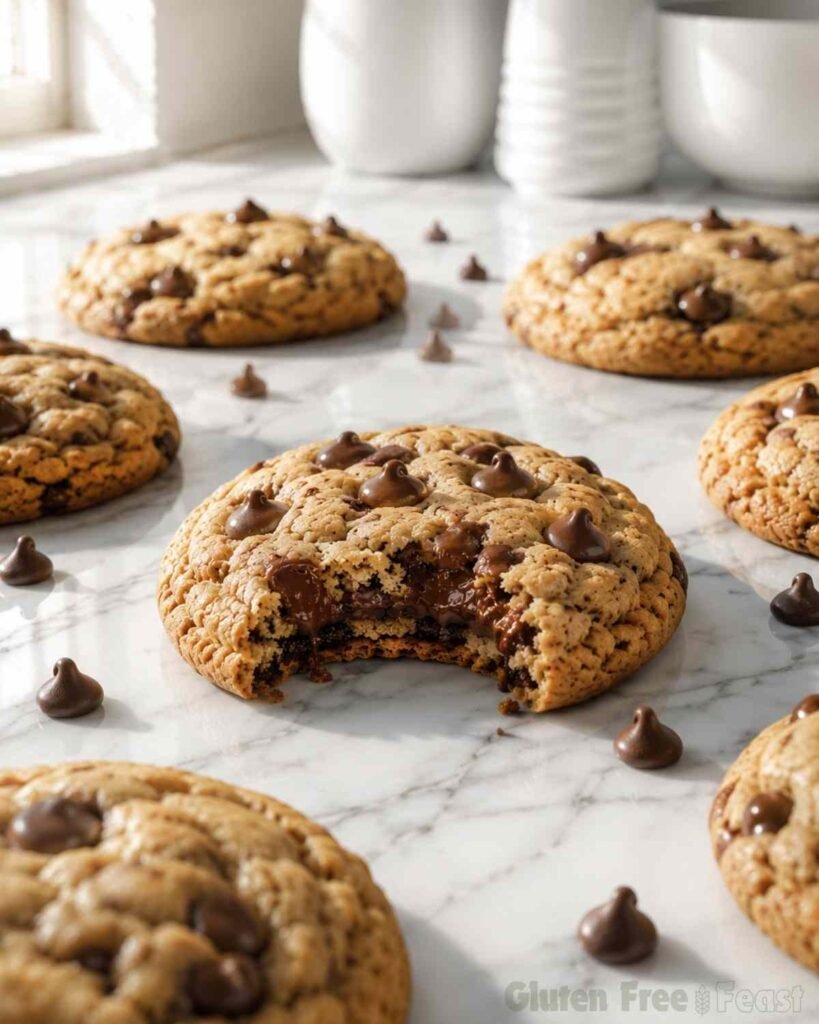
The first thing you notice about these gluten free chocolate chip cookies is the smell: butter turning a deep golden brown in the skillet, going nutty and almost caramel-like before it even meets the rest of the dough. That smell is doing more than making the kitchen smell good. It is the flavor base for the whole cookie, and it is the difference between a cookie that tastes like a passable substitute and one that tastes like the real thing.
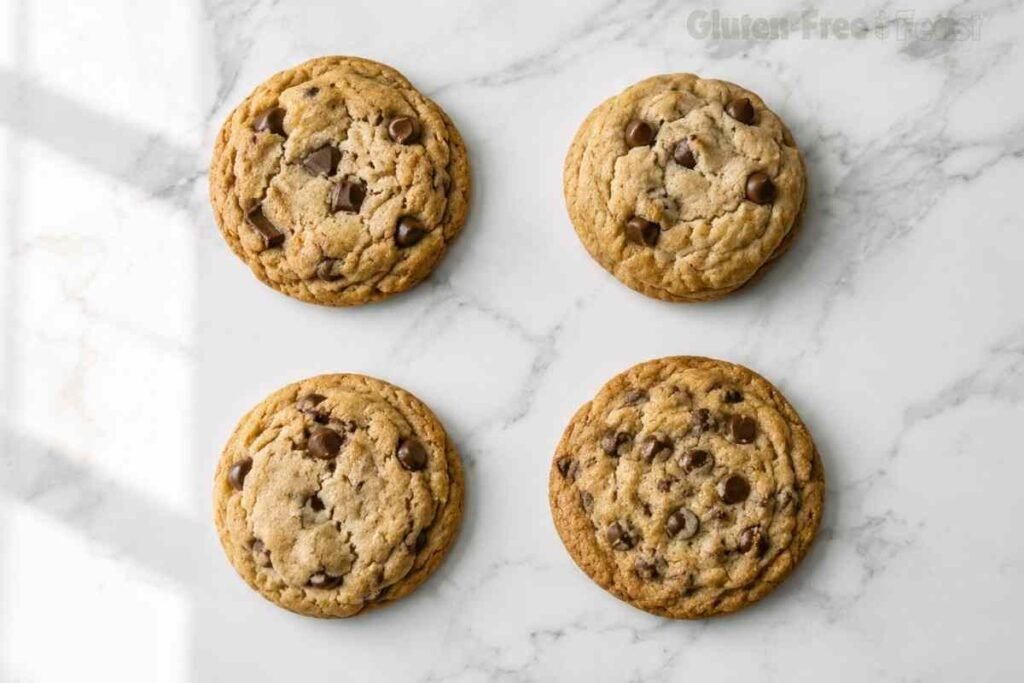
After six rounds of testing in my dedicated gluten free kitchen, browning the butter and resting the dough for 30 minutes turned out to be the two non-negotiable steps. Skip either one and you get a flatter, gummier cookie. Do both and you get crisp, golden edges with centers that stay genuinely chewy, not just soft from underbaking.
If you have been disappointed by gluten free chocolate chip cookies that bake up gritty, flat, or strangely cakey, the rest of this recipe walks through exactly why that happens and how this version avoids it, ingredient by ingredient.
Key takeaways
Gluten free chocolate chip cookies made with a King Arthur Measure for Measure flour and almond flour blend bake at 350°F for 10 to 12 minutes and yield 18 cookies with crisp, golden edges and chewy centers. Browning the butter first and resting the dough for 30 minutes, or up to 5 days refrigerated, lets the gluten free flour fully hydrate, which is what separates a flat, gummy gluten free cookie from one with real depth of flavor and a properly structured, chewy center. The recipe is celiac-safe when made with certified gluten free chocolate chips, such as Enjoy Life or Lily’s Baking Chips, and a certified gluten free vanilla extract such as Nielsen-Massey, with tested nut-free and dairy-free swaps included.
Bake temp: 350°F · Bake time: 10–12 min · Yield: 18 cookies · Key technique: brown butter + rest
Table of Contents
Why You Will Love This Gluten Free Chocolate Chip Cookies Recipe
- Crisp edges, chewy centers: brown butter and a short dough rest give you both textures at once, which is the combination most gluten free cookies struggle to land.
- Real depth of flavor: browning the butter concentrates flavor in a way plain melted butter cannot, so these taste like more than a basic chocolate chip cookie.
- Ready in under an hour: 15 minutes of prep, a 30-minute rest, and 10 to 12 minutes in the oven gets you a full batch of 18 cookies.
- Celiac-safe at every flagged ingredient: certified gluten free flour, almond flour, vanilla extract, and chocolate chips, with specific brands called out so you are not guessing at the store.
- Dairy-free and nut-free swaps included: both tested in my kitchen, not theoretical, so you can adapt this for the people you are actually baking for.
- Make-ahead friendly: the dough holds in the refrigerator for up to 5 days, or freezes as scoop-and-bake balls for up to 3 months.
- One bowl and one skillet: minimal cleanup for a cookie with this much flavor in it.

Gluten Free Chocolate Chip Cookies
Ingredients
Equipment
Method
- In a medium bowl, whisk together the certified gluten free flour, almond flour, baking soda, and salt until evenly combined. Set aside.
- Melt the butter in a medium skillet over medium-low heat, stirring occasionally. Once it foams, stir continuously so the milk solids do not stick and burn. Within a minute or two it will turn deep golden brown and smell nutty. Remove from heat immediately and pour into a medium bowl.
- Add the milk, brown sugar, and granulated sugar to the brown butter and whisk to combine.
- Whisk in the egg and vanilla extract until smooth and slightly glossy.
- Using a rubber spatula, fold the dry ingredients into the wet mixture until just combined, then stir in the chocolate chips.
- Cover the bowl and let the dough rest at room temperature for 30 minutes, or refrigerate up to 5 days.
- Preheat the oven to 350°F. Line two large baking sheets with parchment paper or silicone baking mats.
- Scoop the dough into rounds of about 2 tablespoons each, spacing them 2 inches apart on the prepared sheets.
- Bake for 10 to 12 minutes, until the edges are golden brown and the centers still look slightly underset.
- Cool on the baking sheet for 5 minutes, sprinkle with flaky sea salt if using, then transfer to a wire rack to cool completely.
Notes
Ingredients
Dry Ingredients
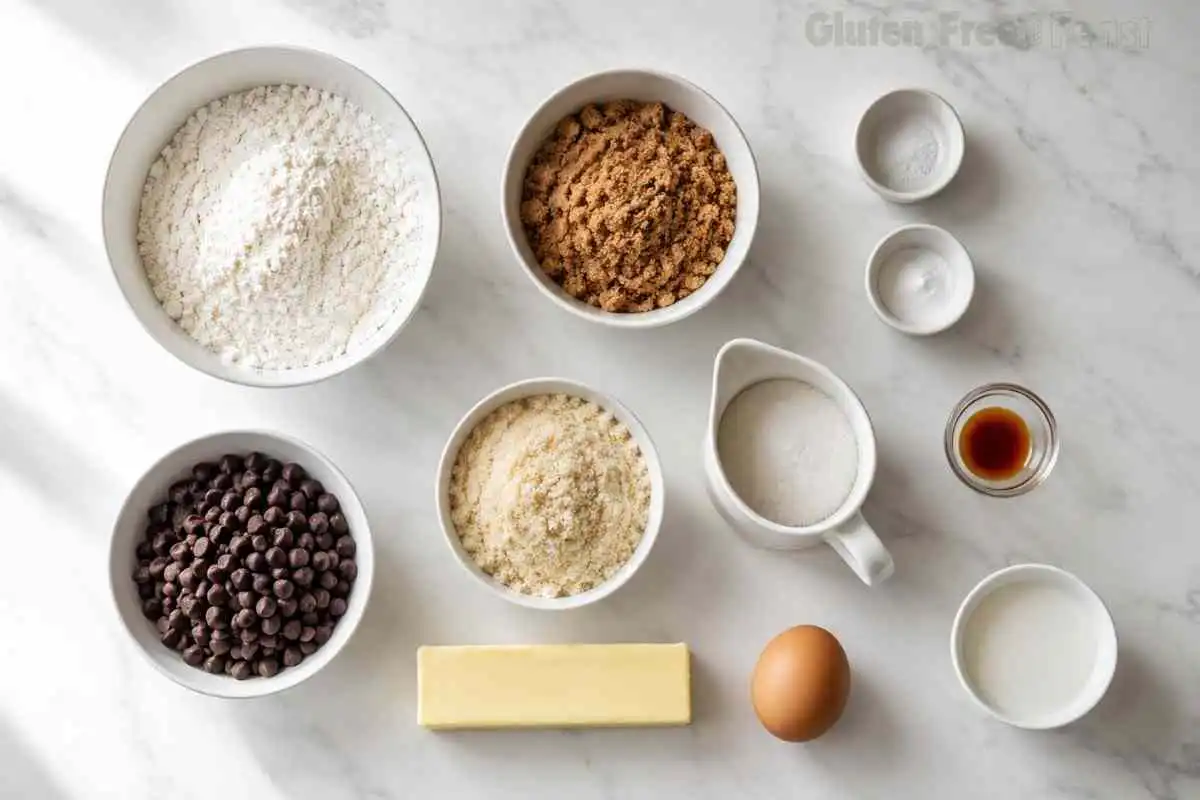
- 1⅓ cups (200g) certified gluten free measure-for-measure flour blend (King Arthur Measure for Measure Gluten Free recommended)
- ¼ cup (25g) certified gluten free almond flour (Bob’s Red Mill Super-Fine Almond Flour)
- 1 teaspoon baking soda
- ½ teaspoon kosher salt
Wet Ingredients and Mix-Ins
- ½ cup (113g) unsalted butter
- 1 tablespoon milk of choice
- ¾ cup (160g) brown sugar, packed
- ¼ cup (50g) granulated sugar
- 1 large egg
- 2 teaspoons pure vanilla extract, certified gluten free (Nielsen-Massey recommended)
- 1 cup (170g) certified gluten free chocolate chips (Enjoy Life Semi-Sweet Mini Chips or Lily’s Baking Chips)
- flaky sea salt for sprinkling, optional
Ingredient Notes and Substitutions
Certified gluten free measure-for-measure flour: King Arthur Measure for Measure Gluten Free Flour is the blend I rely on for this recipe, since it already contains xanthan gum and is certified gluten free by the GFCO. If you reach for a blend that does not contain xanthan gum, add about half a teaspoon, or the dough will spread thinner than this recipe is built for.
Certified gluten free almond flour: Bob’s Red Mill Super-Fine Almond Flour, which is produced in a dedicated gluten free facility and tested gluten free, adds moisture and a faint nutty depth that measure-for-measure flour alone does not give you. If you need this recipe nut-free, see the Substitutions and Variations section below for the swap I tested.
Baking soda: Baking soda is naturally gluten free and does not need a certified label the way flour or chocolate chips do, though a fresh box still matters: stale baking soda is one of the most common reasons gluten free cookies bake up flat.
Unsalted butter: Browning the butter is the one step in this recipe I would never skip. Cooking it until the milk solids turn golden brown and smell nutty drives off water and concentrates flavor in a way plain melted butter cannot match, and that concentrated flavor is what makes these taste like more than a basic chocolate chip cookie.
Brown and granulated sugar: The blend of the two is doing real work here. Brown sugar’s molasses content keeps the centers moist and chewy, while the granulated sugar helps the edges crisp and turn that deep golden color in the oven.
Pure vanilla extract: Nielsen-Massey Pure Vanilla Extract is certified gluten free by the GFCO, which matters more than people expect, since imitation vanilla can sometimes carry gluten-derived caramel coloring. Always reach for a bottle labeled pure vanilla extract, not imitation, and check for a certified gluten free mark if you are baking for someone with celiac disease.
Certified gluten free chocolate chips: This is the ingredient most recipes skip a real callout on, and it is exactly where cross-contamination risk hides. Enjoy Life Semi-Sweet Mini Chips and Lily’s Baking Chips are both certified gluten free by the GFCO and made with allergen-conscious processes, which makes either one a safe default instead of a guess. If you also bake my gluten free banana muffins, you will recognize the same certified chip brand showing up there for the same reason.
Celiac Safety Note: Please confirm that every packaged ingredient in this recipe carries a certified gluten free label before you start. For this recipe, that means checking your measure-for-measure flour, almond flour, vanilla extract, and chocolate chips specifically. Cross-contamination during manufacturing, not the ingredients themselves, is the real risk behind most of these.
A standard FDA-regulated “gluten free” claim already meets a legally enforceable limit of under 20 parts per million, so it is a safe, valid standard on its own. A certified gluten free symbol, such as the GFCO mark, is a voluntary extra step some brands take, testing to a stricter 10 parts per million threshold, and it is worth reaching for when one is available, though its absence does not mean a product is unsafe.
If your kitchen also bakes with wheat flour, keep a dedicated set of measuring cups, mixing bowls, and baking sheets for gluten free batches, and avoid wooden spoons or cutting boards that have touched gluten-containing dough, since wood can hold flour particles in its grain even after washing.
How to Make Gluten Free Chocolate Chip Cookies
Step 1: Mix the Dry Ingredients
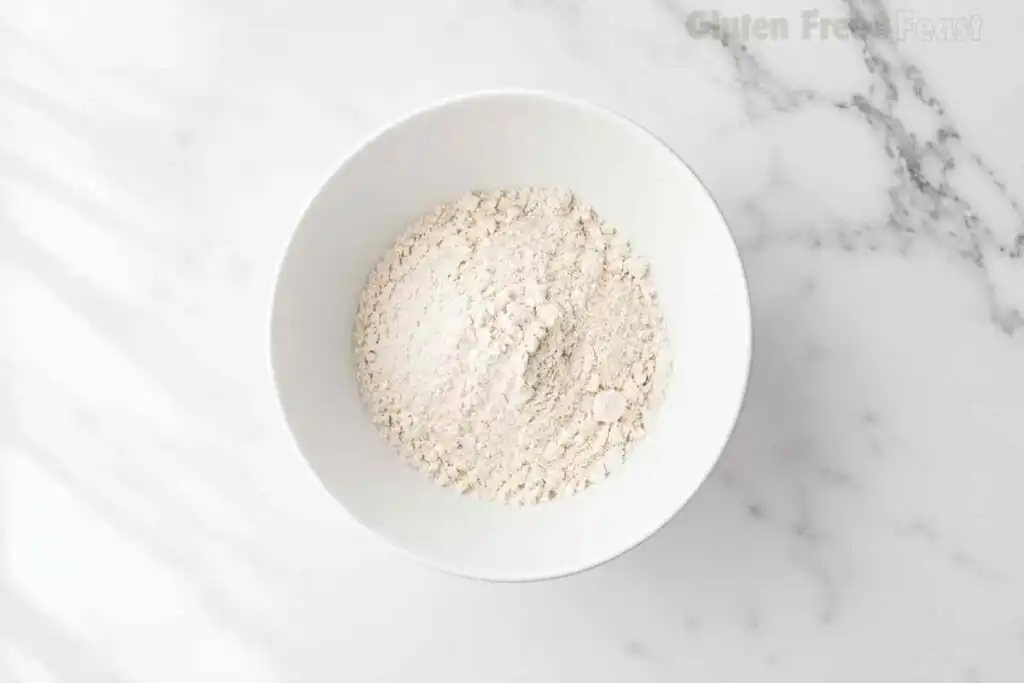
In a medium bowl, whisk together the certified gluten free flour, almond flour, baking soda, and salt until evenly combined. Set the bowl aside while you work on the butter.
Step 2: Brown the Butter
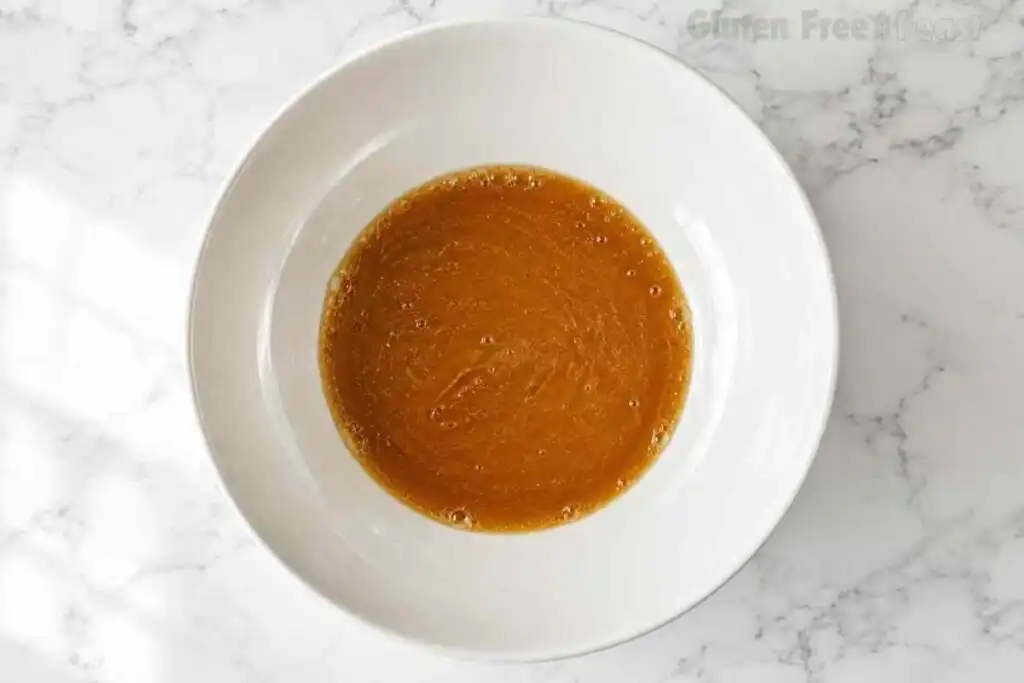
Melt the butter in a medium skillet over medium-low heat, stirring occasionally. Once it starts to foam, stir continuously so the milk solids do not stick and burn. Within a minute or two the butter will turn from yellow to a deep golden brown and take on a nutty aroma. The moment that happens, remove the skillet from the heat and pour the butter into a medium bowl right away, since it can go from browned to burnt quickly once the color starts to shift.

Step 3: Build the Wet Mixture
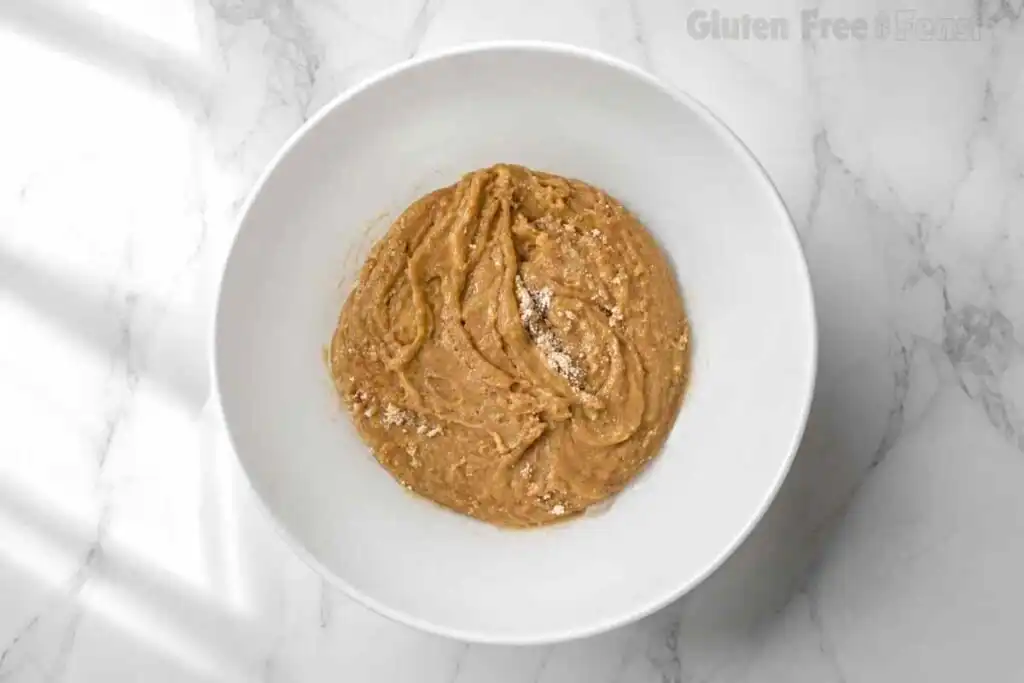
Add the milk, brown sugar, and granulated sugar directly to the brown butter and whisk until combined. Whisk in the egg and vanilla extract until the mixture looks smooth and slightly glossy.
Step 4: Combine and Rest the Dough
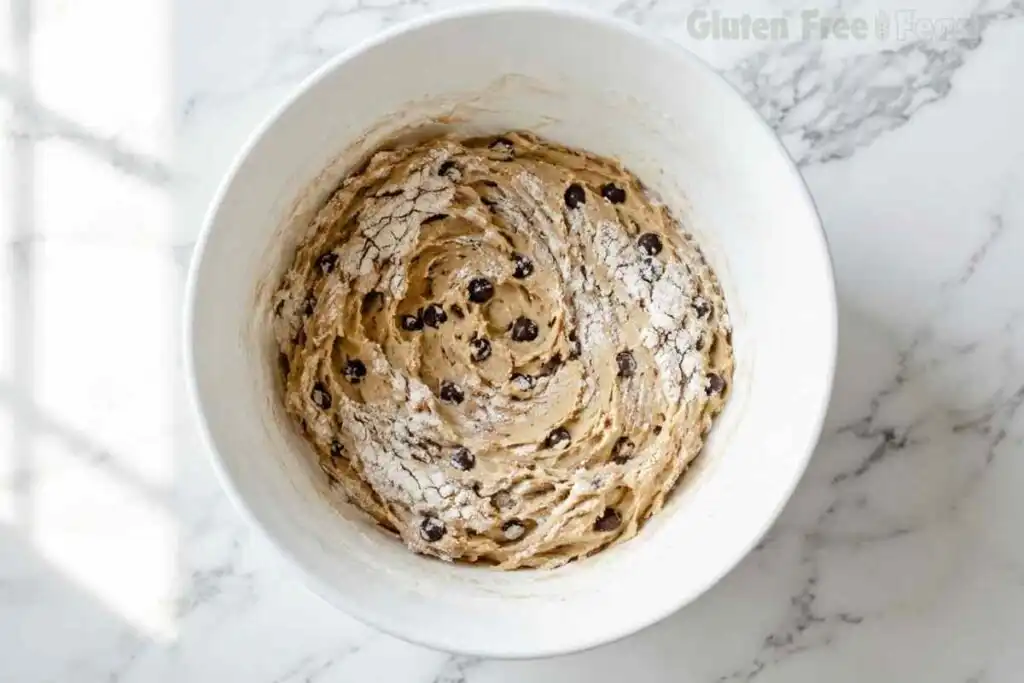
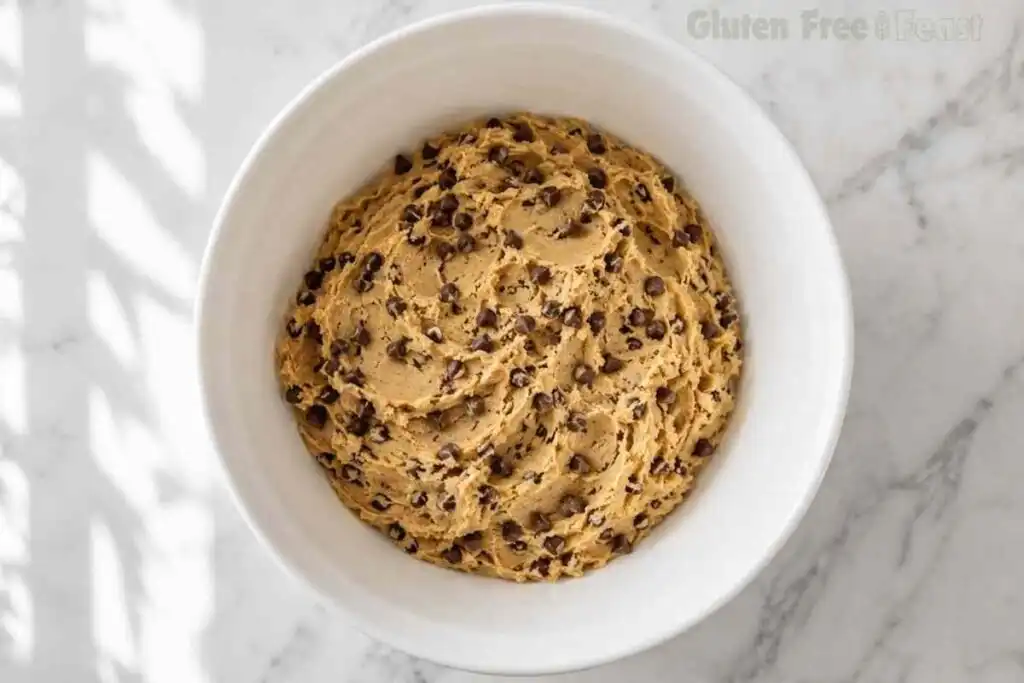
Using a rubber spatula, fold the dry ingredients into the wet mixture until just combined, then stir in the chocolate chips. Cover the bowl and let the dough rest at room temperature for 30 minutes, or refrigerate it for up to 5 days if you want to bake smaller batches over time. This rest is what lets the gluten free flour finish absorbing liquid, so do not skip it even though the dough will look ready to bake right away.
Step 5: Scoop and Bake
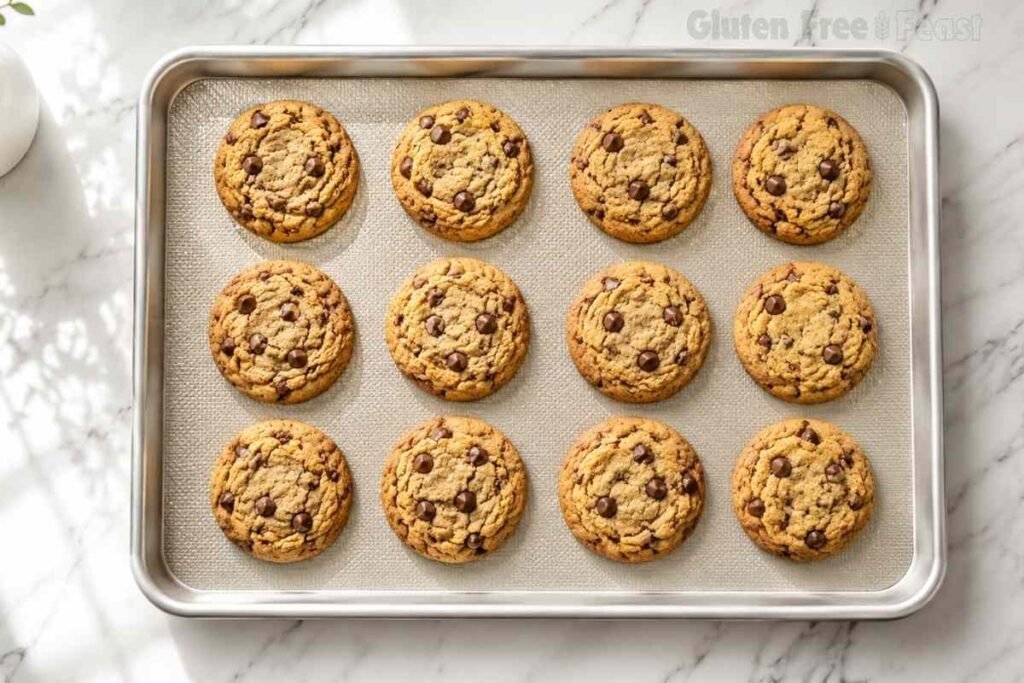
Preheat the oven to 350°F and line two large baking sheets with parchment paper or silicone baking mats. Scoop the dough into rounds of about 2 tablespoons each and place them about 2 inches apart on the prepared sheets. Bake for 10 to 12 minutes, until the edges are golden brown and the centers still look slightly underset. Let the cookies cool on the baking sheet for 5 minutes, sprinkle with flaky sea salt if using, then transfer to a wire rack to cool completely.
Expert Tips for Best Results
- Do not skip browning the butter. Across six rounds of testing, this single step made the biggest difference in flavor of anything in the recipe. Plain melted butter produces a noticeably flatter-tasting cookie.
- Give the dough its full 30-minute rest. Gluten free flour absorbs liquid more slowly than wheat flour, and this rest is what keeps the centers from baking up gummy.
- Measure flour with the spoon-and-level method. Spoon the flour into the measuring cup and level it with a knife rather than scooping directly from the bag, which can pack in up to 20 percent more flour than the recipe needs.
- Pull the cookies while the centers still look slightly underbaked. Gluten free dough does not firm up visually the same way wheat dough does, so relying on golden edges rather than a fully set center is the more reliable test.
- Use a light-colored baking sheet if you have one. Dark sheets absorb more heat and can overbake the bottoms before the tops are ready.
- Let the browned butter cool for a minute before adding the egg. Pouring egg straight into very hot butter can start to scramble it at the edges.
- Rotate your baking sheet halfway through if your oven runs hot on one side. A quick turn at the 6-minute mark keeps the batch baking evenly.
Substitutions and Variations
Dairy-free: Skip browning the butter and use a melted dairy-free butter substitute instead, since dairy-free butter will not brown the same way regular butter does. Leave out the tablespoon of milk entirely, and reach for a certified gluten free, dairy-free chocolate chip such as Enjoy Life, which is already dairy-free by design.
Nut-free: Replace the quarter cup of almond flour with an additional quarter cup of your certified gluten free measure-for-measure flour. The texture will be very slightly less moist, but most people will not notice the difference.
Skip the browning step: If you are short on time, you can use the butter simply melted instead of browned. The cookies will still turn out well, just slightly less complex in flavor, since you are missing the toasted, nutty notes that browning develops.
Bigger chocolate pools: Swap the cup of chocolate chips for a coarsely chopped certified gluten free chocolate bar if you want larger, more irregular pockets of chocolate throughout each cookie.
Sea salt finish: A light sprinkle of flaky sea salt right when the cookies come out of the oven is optional but worth doing, since it cuts the sweetness and makes the chocolate flavor read more intensely.
For more from-scratch projects like this one, browse more GFF baking recipes for other tested gluten free bakes.
What to Serve With Gluten Free Chocolate Chip Cookies
Cold milk: This is the obvious pairing, and for good reason. The chewy center and crisp edge of these cookies are built for dunking.
A cookie platter for guests: Pair these with two or three other bakes from GFF’s dessert recipes for a spread that does not telegraph “special diet” the moment it hits the table.
Ice cream sandwiches: Split a slightly warm cookie and press a scoop of vanilla ice cream between two of them for a quick warm-weather dessert.
Coffee or espresso: The deep, toasted flavor from the brown butter holds up well against a strong cup of coffee, which makes these a natural afternoon-break pairing.
Packed lunches and snack boxes: These travel well once fully cooled, which makes them an easy addition to a lunchbox. Browse more GFF snack recipes for grab-and-go ideas that hold up outside the fridge.
A holiday cookie tray: Because the dough can rest in the refrigerator for up to 5 days, this is one of the easier gluten free cookies to fold into a busier holiday baking schedule.
Storage and Make-Ahead Instructions
Room temperature: Store baked cookies in an airtight container at room temperature for up to 5 days. A slice of bread or a tortilla added to the container helps keep them from drying out.
Refrigerator (dough): The unbaked dough keeps in the refrigerator, covered, for up to 5 days, which makes it easy to bake a few cookies at a time instead of a full batch all at once.
Freezer (baked): Cool completely, then freeze in a single layer before transferring to a freezer bag. Baked cookies keep well for up to 3 months. Let them thaw at room temperature for about 15 minutes before serving.
Freezer (dough balls): Scoop the dough into balls, freeze on a tray until solid, then transfer to a freezer bag for up to 3 months. Bake straight from frozen at 350°F, adding 1 to 2 minutes to the bake time, with no need to thaw first.
Why Trust This Recipe
I approach gluten free recipe development the way I once approached laboratory work: with controlled variables, documented testing, and results that have to hold up outside my own kitchen before I publish them.
These cookies went through six full rounds of testing in my dedicated gluten free kitchen, with notes on what produced a flat, gritty cookie and what consistently produced one with real structure and chew.
What that means for you:
- Six documented test batches before publishing
- Science-based notes on the steps that actually matter
- Honest, kitchen-tested substitution guidance
- Celiac-safe ingredient call-outs at every flagged ingredient
Frequently Asked Questions
Are chocolate chip cookies gluten free?
Most store-bought and bakery chocolate chip cookies are not gluten free, since the vast majority are made with regular wheat flour. A handful of packaged options use certified gluten free flour blends, but the texture rarely matches a from-scratch cookie. This recipe is built specifically to close that gap, using a tested gluten free flour and almond flour blend that produces the same crisp edge and chewy center as a traditional version.
Are chocolate chips gluten free?
Plain chocolate chips are usually gluten free by ingredients, since cocoa, sugar, and milk solids do not naturally contain gluten, and any brand labeled “gluten free” in the United States already has to meet the FDA’s enforceable limit of under 20 parts per million. For extra assurance, some brands also carry third-party certification, such as Enjoy Life or Lily’s, which test to a stricter 10 parts per million threshold.
That certification is a helpful bonus rather than a requirement, since cross-contamination during manufacturing, not the cocoa or sugar itself, is the real risk with chocolate chips.
How do you make gluten free chocolate chip cookies chewy?
Three things drive chewiness in this recipe: browning the butter, resting the dough, and pulling the cookies from the oven while the centers still look slightly underbaked. Browned butter has less water content than regular melted butter, which concentrates flavor and helps the edges crisp while the center stays soft. The 30-minute rest lets the gluten free flour absorb liquid fully, so the dough bakes through evenly instead of staying gummy in the middle.
Can you freeze gluten free chocolate chip cookie dough?
Yes. Scoop the dough into balls, freeze them on a tray until solid, then transfer to a freezer bag for up to 3 months. Bake straight from frozen at 350°F, adding 1 to 2 minutes to the bake time, with no need to thaw first.
What is the best gluten free flour for chocolate chip cookies?
A certified gluten free measure-for-measure flour blend that already contains xanthan gum, such as King Arthur Measure for Measure, gives the most reliable structure in this recipe. Blends without xanthan gum will need it added separately, or the dough will spread too thin and the cookies will lack chew. The almond flour in this recipe adds extra moisture and a slightly nutty flavor that measure-for-measure flour does not provide on its own.
How long do you bake gluten free chocolate chip cookies?
At 350°F, these cookies need 10 to 12 minutes, until the edges are golden brown and the centers still look a touch underset. Gluten free dough does not visually firm up the same way wheat-based dough does, so relying on edge color rather than poking the center is the more reliable test. Pulling them slightly early and letting them finish setting on the hot baking sheet is what keeps the centers chewy instead of dry.
Final Thoughts
These gluten free chocolate chip cookies are the recipe I reach for when I want something familiar to taste genuinely familiar again, crisp edges, chewy centers, and real chocolate flavor, with nothing about the texture giving away that it is gluten free. Bake a batch this weekend, and keep a portion of dough in the fridge so a few warm cookies are never more than 12 minutes away.