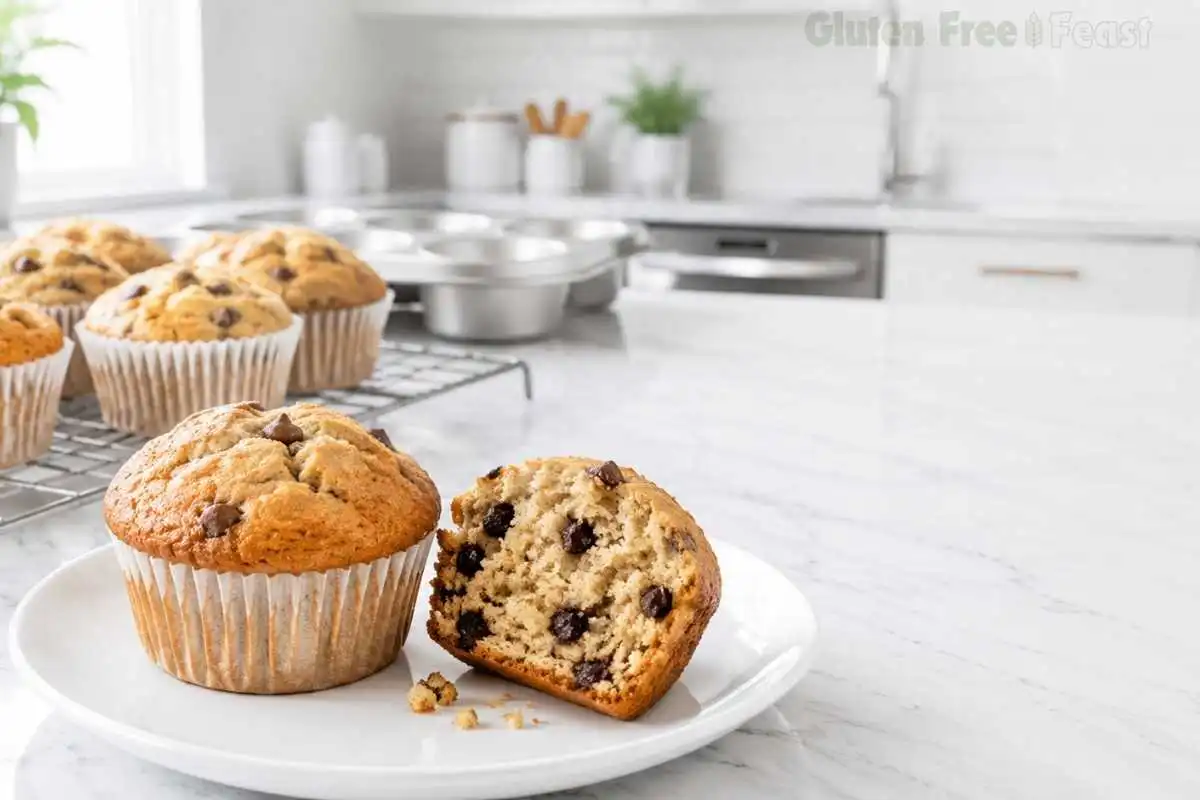
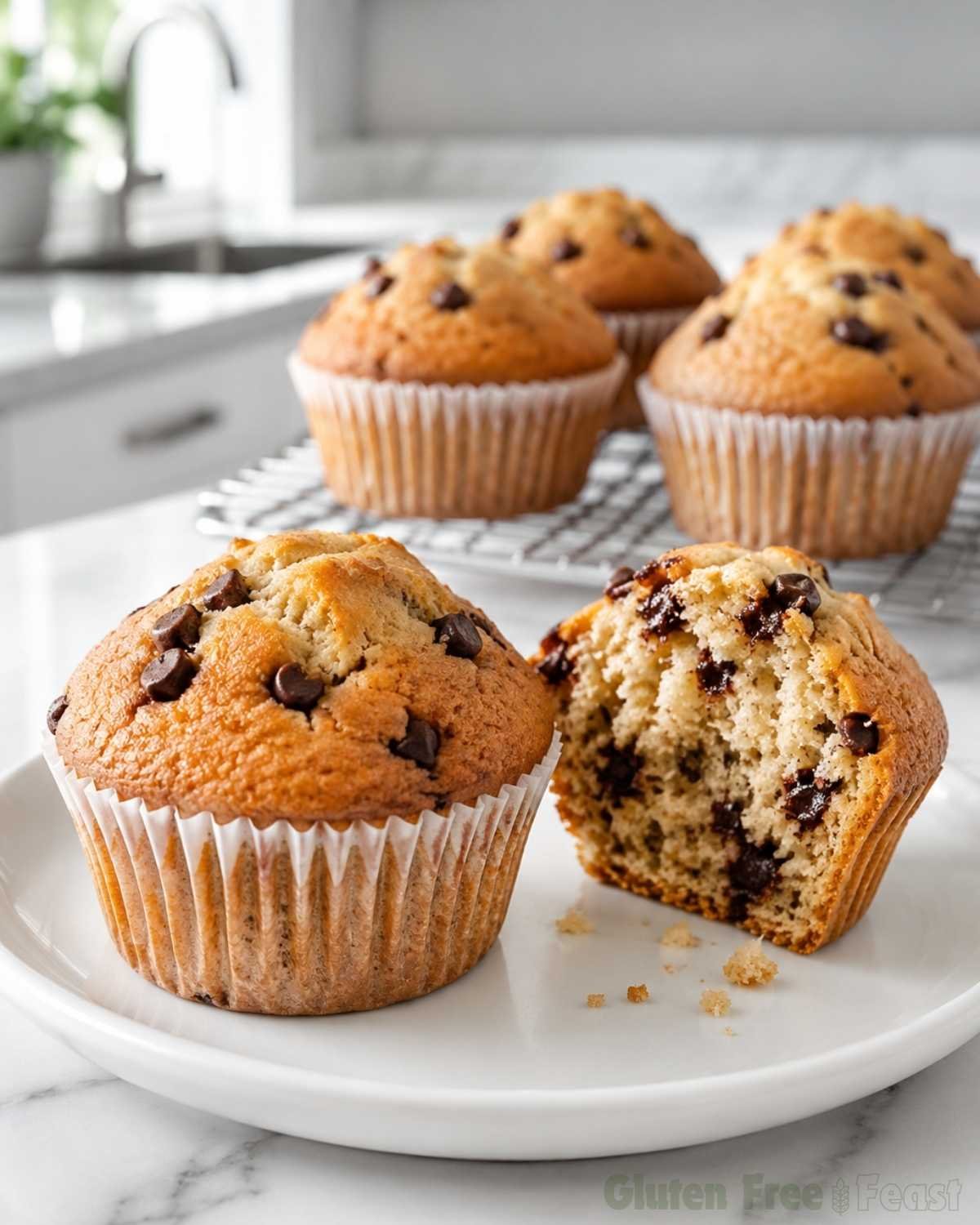
These gluten free banana muffins come together in one bowl, bake up soft and moist, and fill the kitchen with that unmistakable banana-bread smell while they’re in the oven. If you have a bunch of overripe bananas sitting on the counter, this is exactly what they’re for.
What I love most about this recipe is how forgiving it is. There’s no mixer, no resting overnight, no fussy technique. Just a bowl, a fork, and about 25 to 30 minutes between you and a dozen warm muffins. In testing, the one detail that made the biggest difference was something most recipes skip entirely: giving the mashed banana and baking soda a short minute together before anything else goes in. That small pause changes the texture more than you’d expect, and I’ll walk you through exactly why below.
Every ingredient here is specified celiac-safe, so if you’re baking for someone with celiac disease, you can follow this recipe with full confidence. Keep reading and I’ll show you how the batter should look at each stage, plus the substitutions I’ve actually tested myself.
Key takeaways
Gluten free banana muffins turn out soft and moist when you use a certified 1-to-1 gluten-free flour blend with xanthan gum, mash three large overripe bananas (about 1½ cups), and stir baking soda directly into the mashed banana for a short rest before adding the other ingredients. Bake at 350°F for 15 to 20 minutes until a toothpick comes out clean. This one-bowl recipe makes 12 muffins at 208 calories each, includes certified gluten-free chocolate chips, and is fully celiac-safe when every packaged ingredient carries a certified GF label.
Flour: certified GF 1:1 blend with xanthan · Bake: 350°F, 15-20 min · Total time: about 25-30 min · Yield: 12 muffins
Table of Contents
Why You Will Love These Gluten Free Banana Muffins
- One bowl, one fork. No stand mixer, no extra dishes piling up
- Ready in about 25 to 30 minutes from start to cooling rack
- 100% celiac-safe when made with the certified gluten-free ingredients noted below
- Uses up overripe bananas before they go to waste
- Freezer-friendly. Make a double batch and pull muffins out as needed
- Dairy-free and egg-free adaptable, with tested substitutions included
- No unusual ingredients. Everything here is a normal pantry staple, just in gluten-free form
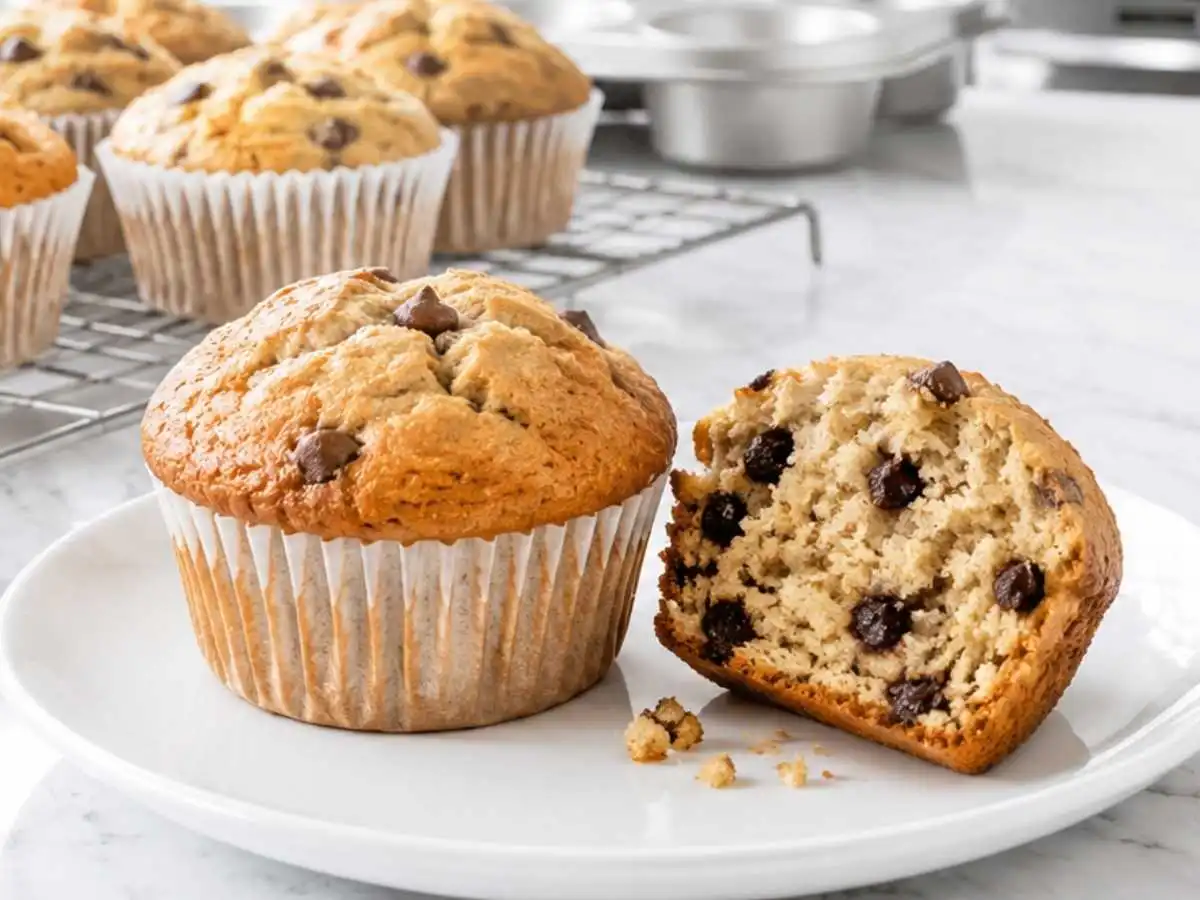

Gluten Free Banana Muffins
Ingredients
Equipment
Method
- Preheat your oven to 350°F.
- Line a standard 12-cup muffin tin with paper liners, or spray with certified gluten-free cooking spray.
- In a large mixing bowl, mash the ripe bananas with a fork until completely smooth, with no large chunks left.
- Stir the baking soda directly into the mashed banana until combined, then let the mixture sit for 1 to 2 minutes. It will look slightly foamy. This early reaction between the banana’s acidity and the baking soda gives the batter a head start on rising before it even reaches the oven.
- Stir the melted butter into the banana mixture until combined.
- Add the granulated sugar, salt, cinnamon, vanilla extract, and whisked eggs. Stir until evenly combined.
- Add the gluten-free flour blend and stir just until no streaks of dry flour remain. Stop as soon as the batter looks uniform.
- Fold in the chocolate chips.
- Using a greased ice cream scoop or a 1/4-cup measure, divide the batter evenly between the 12 muffin cups, filling most of the way.
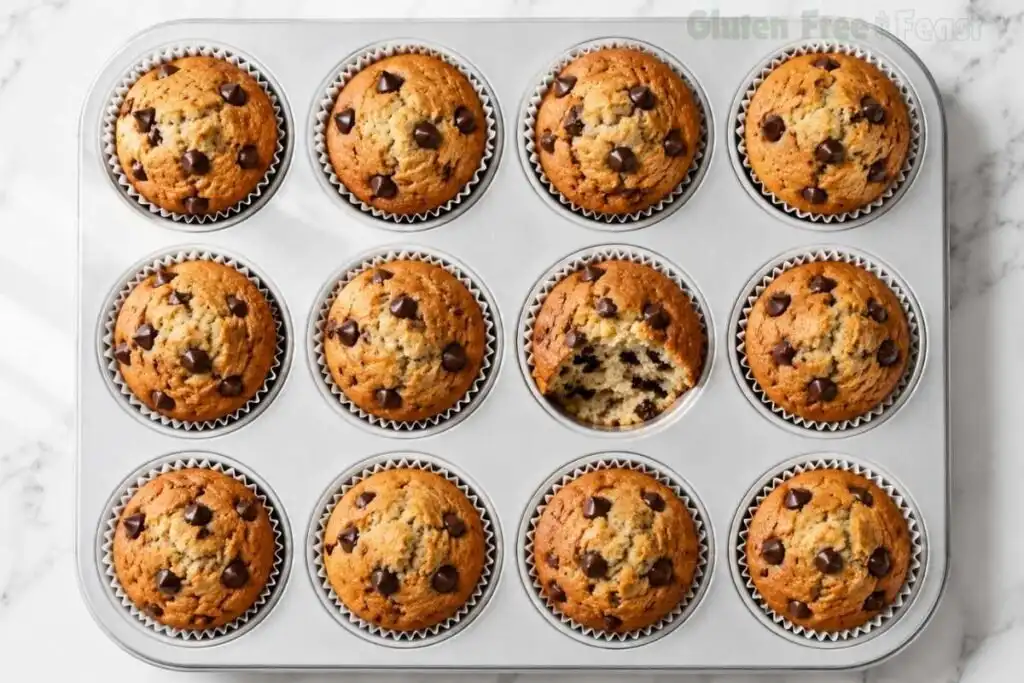
- Bake for 15 to 20 minutes, or until a toothpick inserted into the center comes out clean. Start checking at 15 minutes, as ovens vary.
- Let the muffins cool in the tin for about 5 minutes before transferring to a wire rack to finish cooling.
Notes
Ingredients
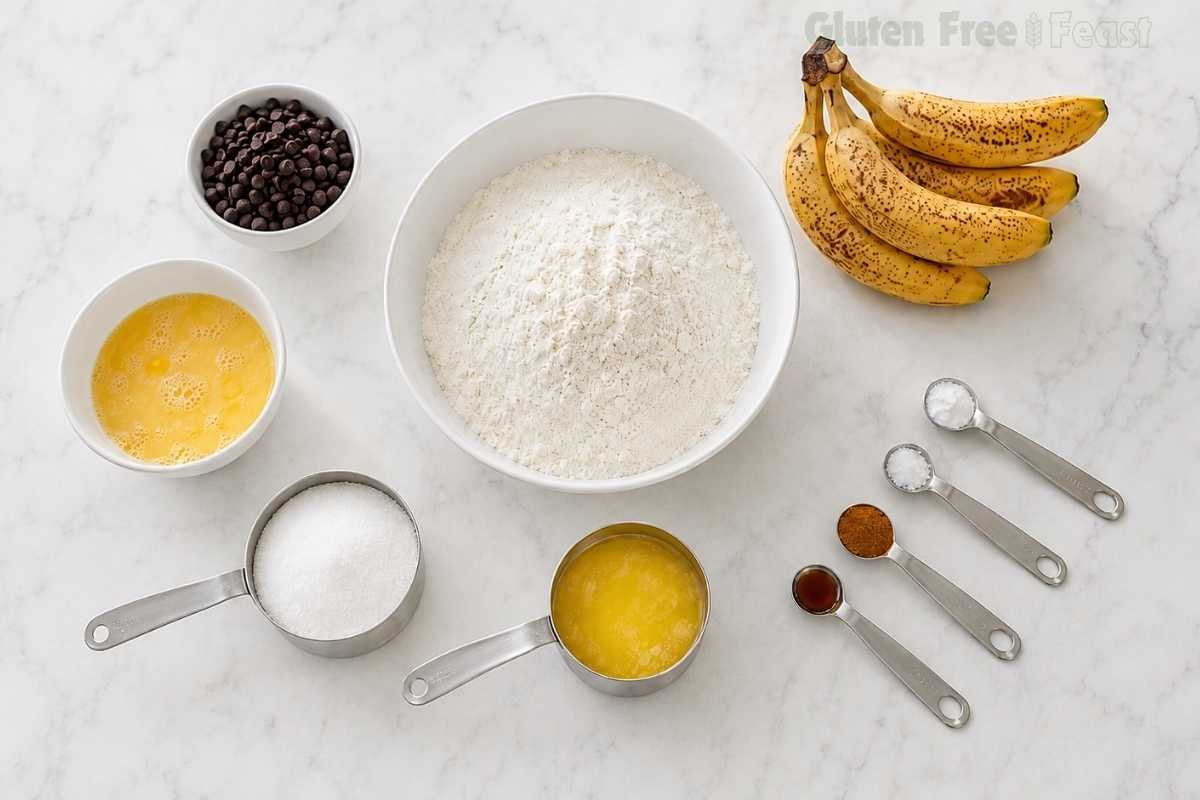
Wet ingredients:
- 3 large ripe bananas, the riper the better (look for heavy black spotting), about 1½ cups mashed
- 1 teaspoon baking soda
- ⅓ cup butter, melted
- ½ cup granulated sugar
- ½ teaspoon ground cinnamon
- ⅛ teaspoon salt
- 1 teaspoon pure vanilla extract
- 2 large eggs, whisked
Dry ingredients and mix-ins:
- 1½ cups certified gluten-free 1:1 all-purpose flour blend with xanthan gum
- ½ cup certified gluten-free chocolate chips
Ingredient Notes and Substitutions
Bananas. This recipe wants bananas that look almost too far gone to eat plain: deeply speckled or even mostly black-skinned. As bananas ripen, their starches convert to sugar, which means riper fruit gives you both more natural sweetness and more moisture. About three large bananas should land you right around 1½ cups mashed, but if you’re short, a partial fourth banana won’t hurt anything.
Certified gluten-free 1:1 flour blend with xanthan gum. This is the ingredient that makes or breaks the texture. A 1:1 blend is formulated to behave like regular all-purpose flour cup for cup, and the xanthan gum inside it does the job that gluten normally would: it gives the batter enough stretch and structure to hold together as it rises, instead of crumbling apart once you slice into it. Brands and blends vary quite a bit, so if your results come out differently than expected, the flour blend is usually the first thing I’d look at.
Baking soda and banana, stirred together first. This is the step almost everyone skips, and it’s worth slowing down for. Ripe bananas are mildly acidic, and baking soda is a base. When you stir the soda directly into the mashed banana and let it sit for a minute or two, that acid-base reaction starts working immediately, which gives the batter an early head start on rising before it ever reaches the oven. I tested this side by side with skipping the rest entirely, and the muffins that got the short pause came out noticeably taller and more even on top.
Certified gluten-free chocolate chips. Many standard chocolate chip brands are processed on shared lines with wheat-based products, one of the more common hidden sources of gluten in baking, so don’t assume “chocolate chips” are automatically safe. Look for a chip that explicitly carries a certified gluten-free label.
Celiac Safety Note: Please ensure all packaged ingredients carry a certified gluten-free label. For this recipe, check specifically: your gluten-free 1:1 flour blend and your chocolate chips. Cross-contamination at packaging facilities is a real risk for people with celiac disease. When in doubt, look for the certified GF symbol, and for more on what that label legally guarantees, the FDA’s gluten-free labeling page is a good reference.
Substitutions I’ve tested:
- Dairy-free: swap the melted butter for an equal amount of melted coconut oil, or use a plant-based butter alternative
- Egg-free: a certified gluten-free egg replacer works in place of the two eggs; follow the package ratio for two eggs’ worth
- Lower sugar: pure maple syrup or coconut sugar can stand in for the granulated sugar in equal amounts, though the crumb will be slightly more tender and a touch darker
How to Make Gluten Free Banana Muffins
Get Set Up
- Preheat your oven to 350°F.
- Line a standard 12-cup muffin tin with paper liners, or spray it with certified gluten-free cooking spray.
Mash and Rest
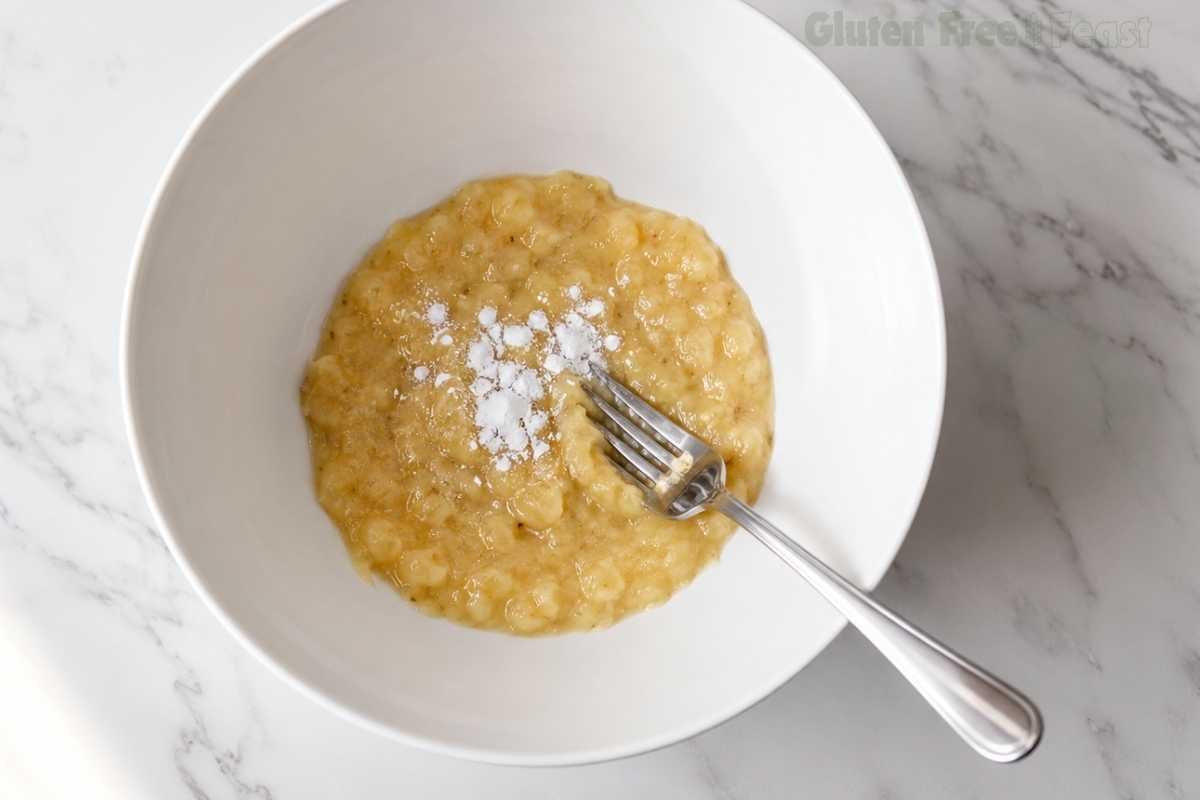
- In a large mixing bowl, mash the ripe bananas with a fork until completely smooth, with no large chunks left.
- Stir the baking soda directly into the mashed banana until combined, then let the mixture sit for 1 to 2 minutes. You’ll notice it look slightly foamy or bubbly. That’s the acid in the banana reacting with the soda, and it’s exactly what you want to see. This is the step that gives these muffins their lift, so don’t rush past it.
Build the Batter
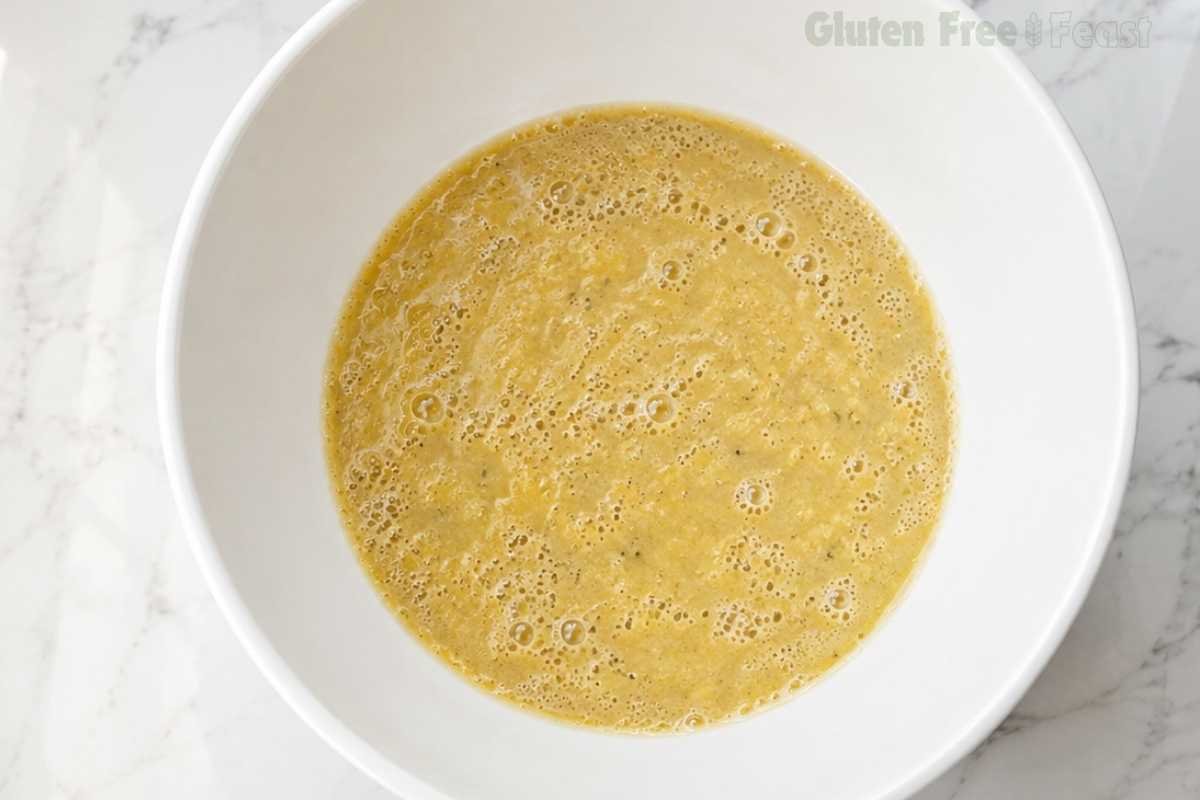
- Stir the melted butter into the banana mixture until combined.
- Add the granulated sugar, salt, cinnamon, vanilla extract, and whisked eggs. Stir until everything is evenly combined.
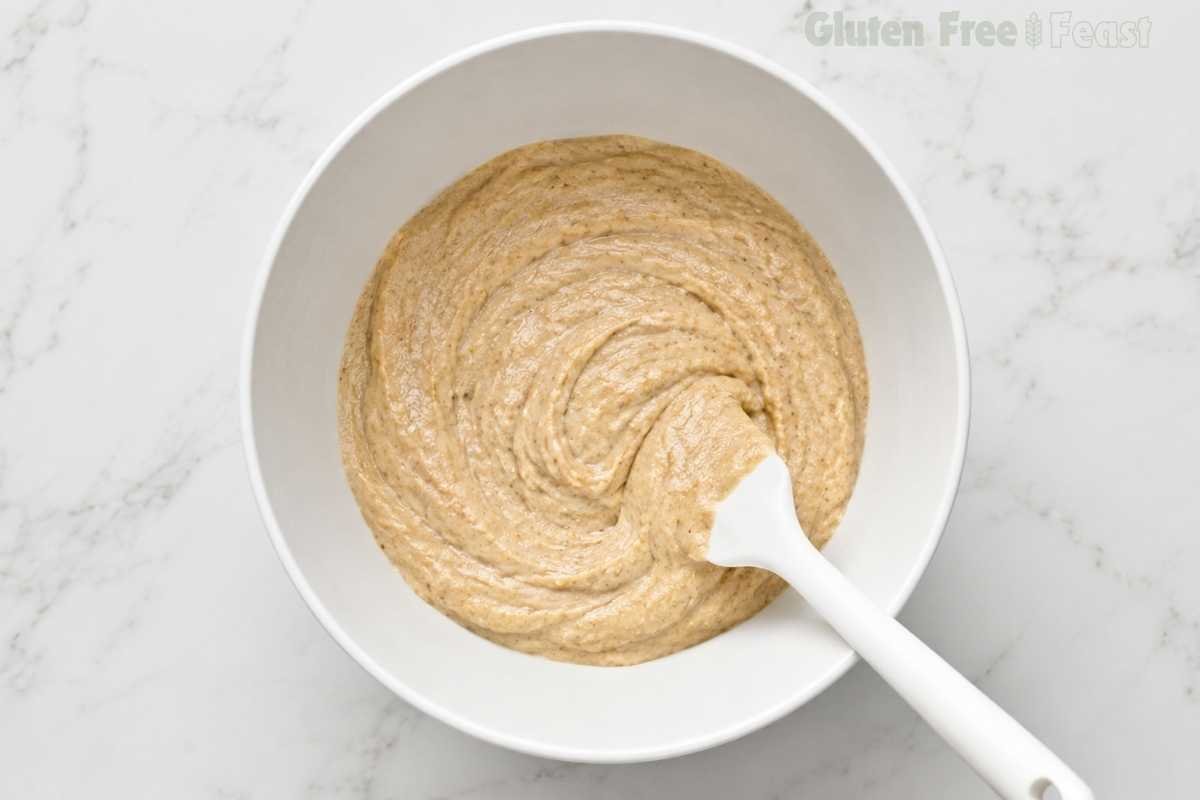
- Add the gluten-free flour blend and stir just until no streaks of dry flour remain. With gluten-free batters, there’s no risk of overworking gluten, since there isn’t any, but stirring well past the point of combination can still knock air out of the batter, so stop as soon as it looks uniform.
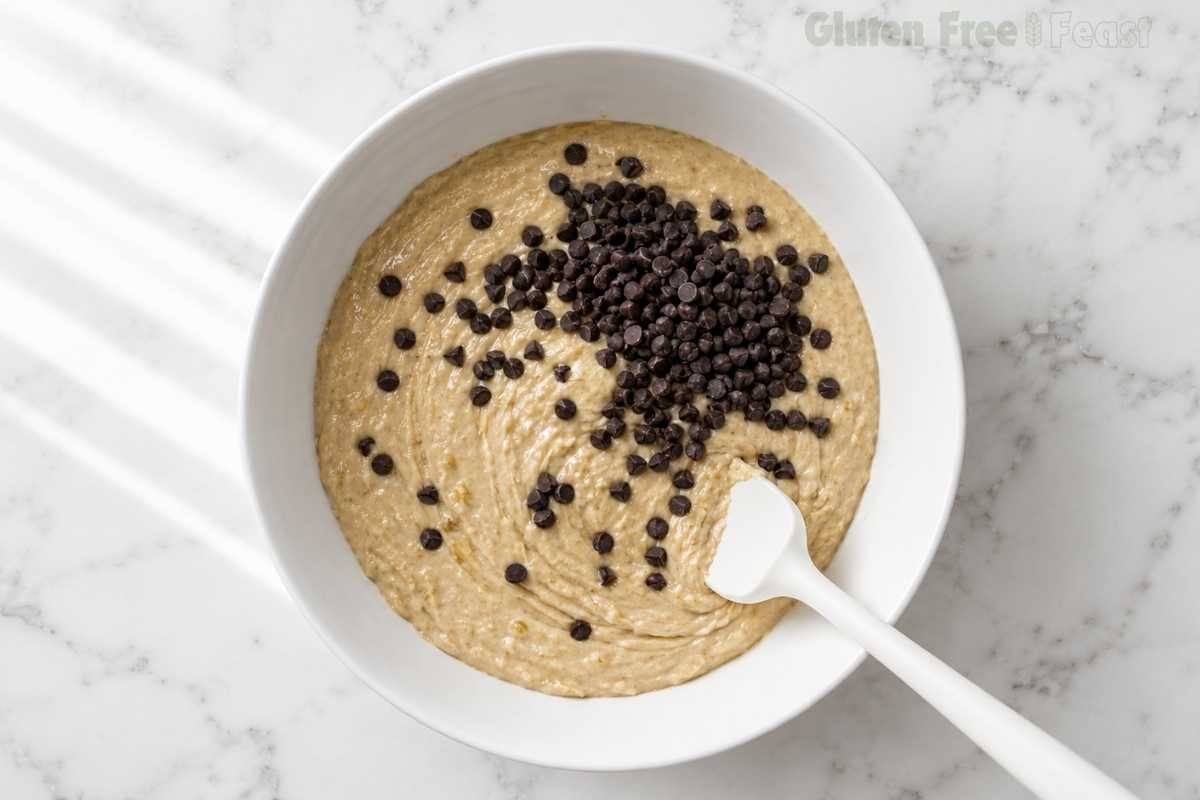
- Fold in the chocolate chips.
Fill and Bake
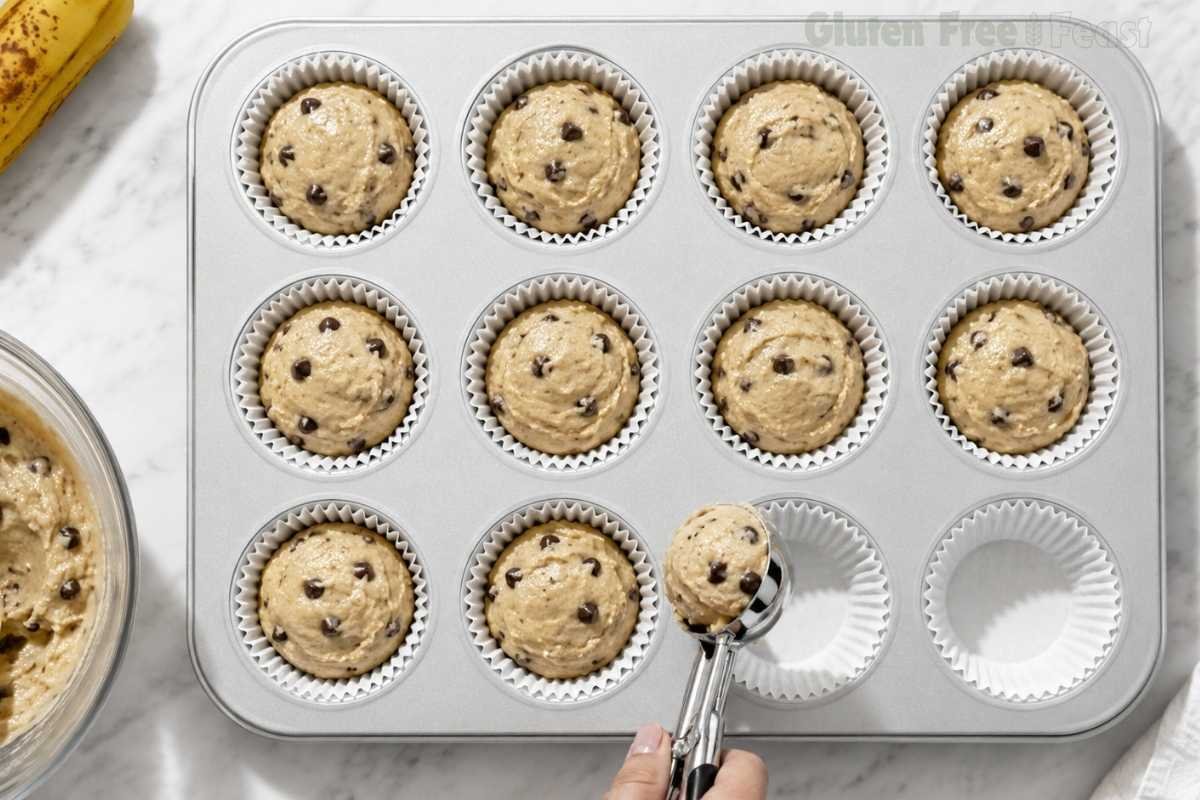
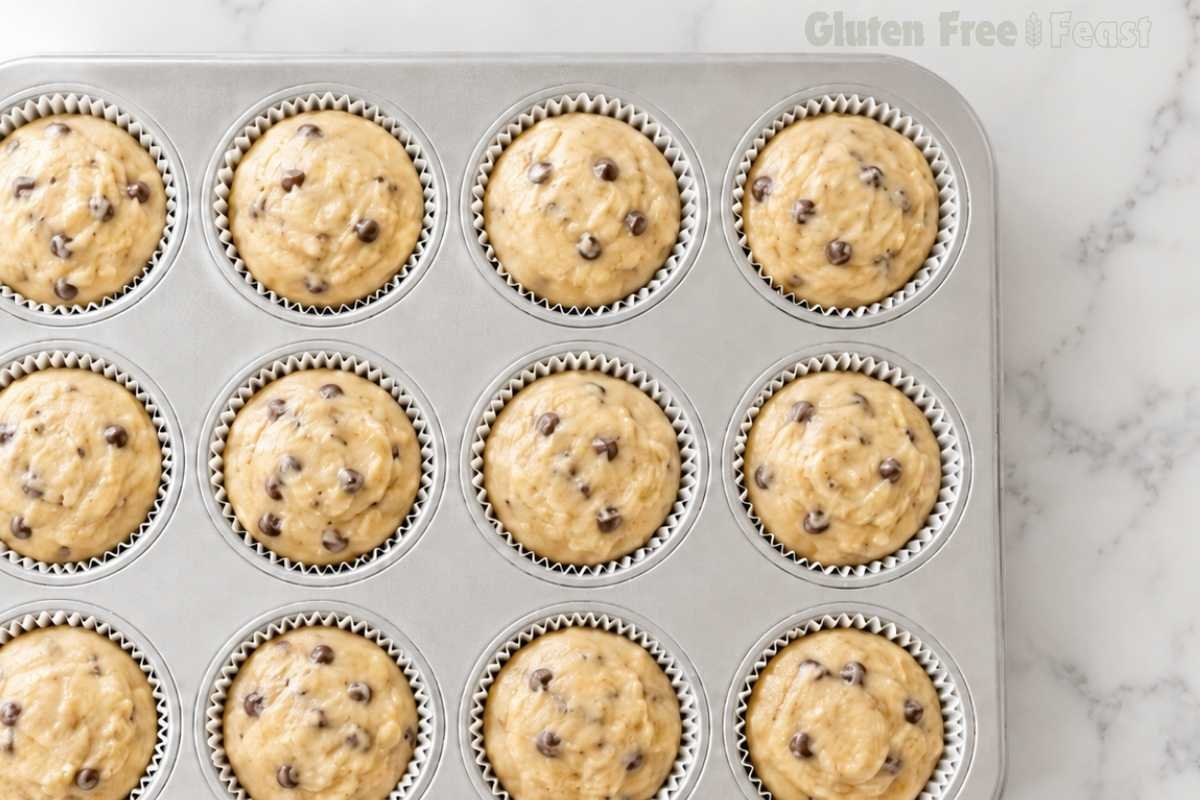
- Using a greased ice cream scoop or a ¼-cup measure, divide the batter evenly between the 12 muffin cups. They should be filled most of the way, since these muffins don’t rise dramatically over the rim.
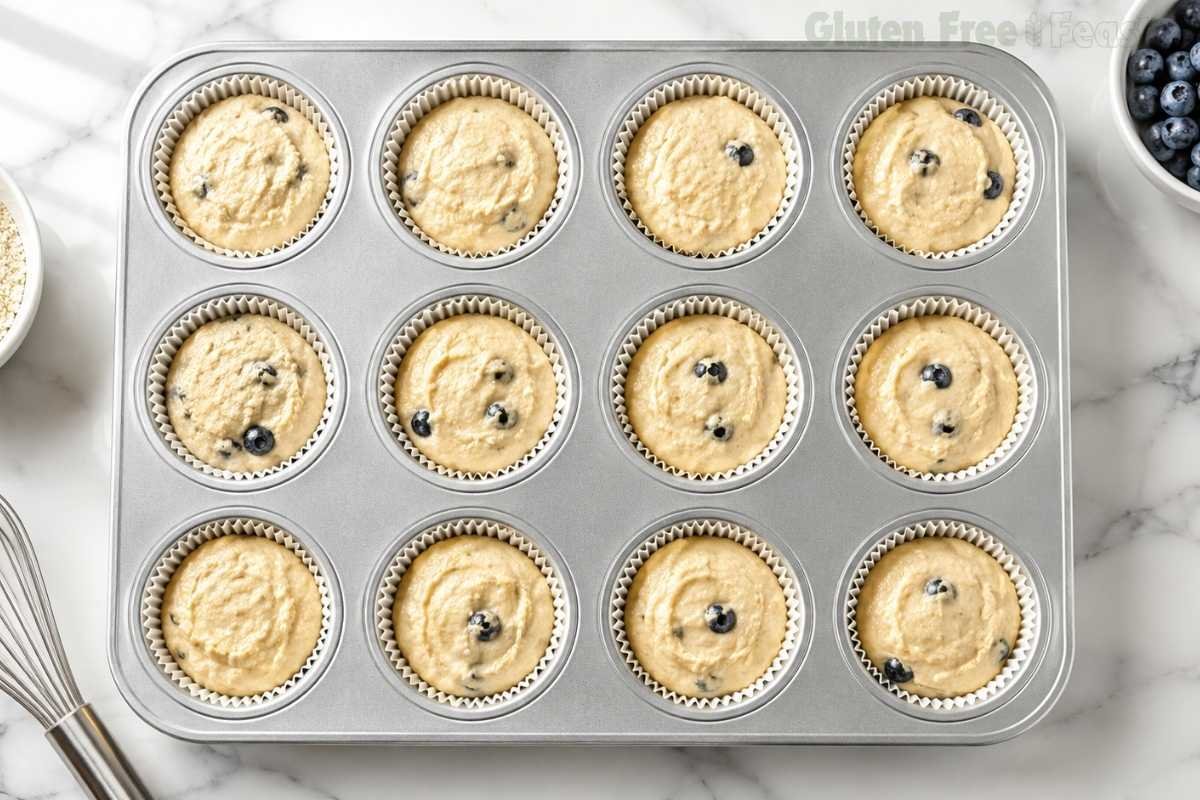
- Bake for 15 to 20 minutes, or until a toothpick inserted into the center comes out clean. Every oven runs a little differently, so start checking at the 15-minute mark. In my testing, a slightly underbaked muffin firms up a bit as it cools, but a toothpick with wet batter on it means it needs more time.
- Let the muffins cool in the tin for about 5 minutes before transferring them to a wire rack to finish cooling.
Expert Tips for Best Results
- Use the ripest bananas you can find. If your bananas are only lightly speckled, the muffins will still work, but they’ll be less sweet and slightly less moist. Black, soft bananas are exactly what you want here.
- Don’t skip the banana-and-soda rest. This is the easiest step in the whole recipe to skip, and the one most worth keeping. One to two minutes is all it takes.
- Measure your flour by weight if you can. Scooping gluten-free flour straight from the bag can pack in more than the recipe intends, which leads to a drier, denser muffin. If you’re using a measuring cup, spoon the flour in lightly and level it off rather than scooping and packing.
- Watch for the most common failure point: underbaking the center. Gluten-free batters can look set on top before the middle has fully cooked through. Always test the center muffin in the tin, not one on the edge, since edge muffins bake slightly faster.
- Distribute the chocolate chips evenly. If you find your chips sinking to the bottom in past bakes, tossing them with a small spoonful of the flour blend before folding them in helps them stay suspended through the batter.
- Let them cool before storing. Warm muffins release steam, and trapping that steam in a container or bag creates condensation that makes the tops sticky. Give them at least 20 to 30 minutes on the rack.
Substitutions and Variations
- Dairy-free: melted coconut oil or a plant-based butter in place of the butter, and confirm your chocolate chips are dairy-free as well as gluten-free
- Egg-free: a certified gluten-free egg replacer in place of the two eggs, following the package instructions for the egg-equivalent amount
- Lower sugar: pure maple syrup or coconut sugar in place of the granulated sugar, in equal amounts
- Nut add-in: ½ cup of chopped walnuts or pecans can be folded in alongside or instead of the chocolate chips, if your kitchen and ingredients are nut-safe
- Extra spice: an additional ¼ teaspoon of cinnamon, or a pinch of nutmeg, brings a warmer flavor without changing the texture
All of the above keep this recipe fully celiac-safe as long as every swapped ingredient carries its own certified gluten-free label.
What to Serve With Gluten Free Banana Muffins
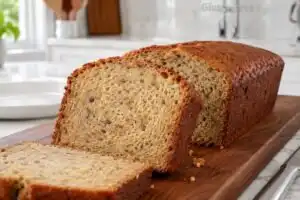
These muffins are easy to build a whole breakfast around. For a weekend spread, set them out alongside a stack of gluten free pancakes so you’ve got something for both the syrup lovers and the grab-and-go crowd. A warm muffin next to scrambled eggs and crispy bacon makes a satisfying plate if you want something more substantial than pastry alone. For an afternoon snack, one of these with a cup of coffee or tea is just right. And if banana is your thing, my gluten free banana bread uses a similar base and is worth trying next, especially if you want a loaf version for slicing. You can browse the rest of my gluten free breakfast recipes for more pairings.
Storage and Make-Ahead
Counter: Once the muffins have cooled completely, store them in an airtight container at room temperature for up to 3 days.
Freezer: Place the cooled muffins on a tray or in the muffin tin and freeze for about 15 minutes uncovered. This flash-freezing step keeps them from sticking together. Once they’re frozen solid, transfer them to a freezer-safe bag or container. Squeeze out as much air as possible if you’re using a bag, and double-bagging helps prevent freezer burn if you’re storing them for longer. They’ll keep well for up to 3 months.
Thawing and reheating: Frozen muffins can thaw overnight in the refrigerator, or you can warm them straight from frozen by wrapping them in foil and heating at 350°F for about 10 minutes. A quick 30-second to 1-minute pass in the microwave also works well if you’re in a hurry.
Make-ahead tip: If you know you’ll want fresh muffins in the morning, you can mash the bananas and stir in the baking soda the night before, then cover and refrigerate. In the morning, just pick up at the “stir in the butter” step.
Why Trust This Recipe
With a background in laboratory science, I develop recipes the same way I approached lab work: with documented testing, controlled variables, and results that can be replicated in any home kitchen.
This recipe has been tested multiple rounds in my dedicated gluten-free kitchen. I have noted what fails, what works, and why, so you are not just following steps but understanding the process.
What that means for you:
- Multiple test batches before publishing
- Science-based notes on key steps throughout
- Honest substitution guidance, not guesswork
- Safe for celiac disease, with cross-contamination taken seriously at every step
Frequently Asked Questions
Are bananas gluten-free?
Yes, all fresh bananas are naturally gluten-free. The gluten risk in banana muffins comes from the flour and any add-ins like chocolate chips, not from the fruit itself. As long as your flour blend and chocolate chips carry certified gluten-free labels, the whole recipe stays celiac-safe.
Why do you stir the baking soda into the banana first?
Mashed banana is naturally a little acidic, and baking soda is a base. Combining them first lets that reaction begin right away, giving the batter an early boost of lift before it even reaches the oven. Stirring the soda into dry flour instead, or adding it at the end, misses this head start.
What’s the best flour for gluten-free banana muffins?
A certified 1:1 gluten-free all-purpose flour blend that already contains xanthan gum. The xanthan gum does the structural work that gluten would normally do, helping the muffins hold together instead of crumbling. A single flour, like almond flour or rice flour on its own, won’t give you the same result.
Can I make these without chocolate chips?
Absolutely. The chocolate chips are easy to leave out entirely, or swap for chopped nuts, dried fruit, or an extra pinch of cinnamon. The base muffin works well as a plain banana muffin too.
Can I use frozen bananas?
Yes. Thaw them first, then drain off any excess liquid that collects before mashing, or your batter may end up too wet. Frozen-and-thawed bananas tend to be very soft and very ripe, which actually works in this recipe’s favor.
How do I know when the muffins are done?
A toothpick inserted into the center of a muffin should come out clean, with no wet batter clinging to it. Start checking at 15 minutes, since ovens vary, and keep in mind that melted chocolate chips can sometimes look like wet batter on a toothpick. If you’re unsure, check a second muffin away from any chips.
Final Thoughts
These banana muffins are the kind of recipe I come back to whenever I’ve got bananas going soft on the counter. They’re simple, they’re forgiving, and that one-bowl cleanup makes them an easy yes on a busy morning. If you give these a try, I’d love to hear how they turned out for you.