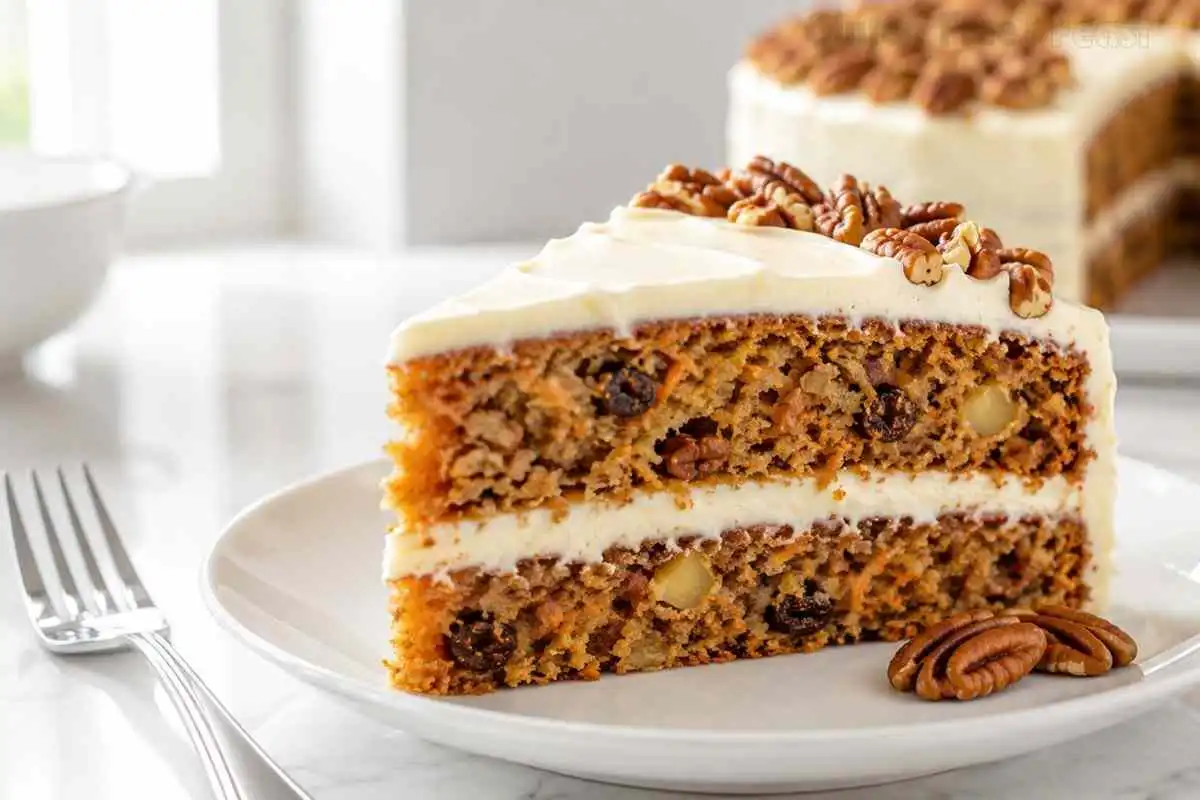
The first thing you notice is the smell: warm cinnamon, toasted pecans, and something faintly tropical from the pineapple. My neighbor knocked on the door ten minutes after I opened the kitchen window. When I told her it was gluten free, she stood there holding her plate and said nothing. Then she asked for the recipe.
That reaction is exactly what this recipe is built to produce. Six rounds of testing in my dedicated gluten free kitchen showed the difference comes down to three things: GFCO-certified flour, the right moisture builders, and knowing how fine to grate the carrots. All three are covered in detail below.
If you have tried other gluten free carrot cake recipes and ended up with something gummy or dry, keep reading. The science behind why that happens, and exactly how to avoid it, is what this recipe is built around.
Key takeaways
This gluten free carrot cake bakes at 350°F for 35 to 40 minutes and yields 16 servings, using GFCO-certified King Arthur Measure for Measure flour and Bob’s Red Mill certified GF baking powder to keep every component celiac-safe.
Unsweetened applesauce and undrained crushed pineapple replace oil as the primary moisture builders. Applesauce helps the cake stay tender for days, while pineapple juice hydrates the GF flour and adds moisture.
Finely grated carrots distribute moisture evenly throughout the crumb, and a simple fold-and-combine method prevents overmixing.
The lemon cream cheese frosting uses C&H or Domino powdered sugar and Nielsen-Massey GFCO-certified vanilla, with Miyoko’s Creamery and Kite Hill as tested dairy-free options.
Prep Time: 15 mins · Cook Time: 40 mins · Total Time: 55 mins · Yield: 16 servings
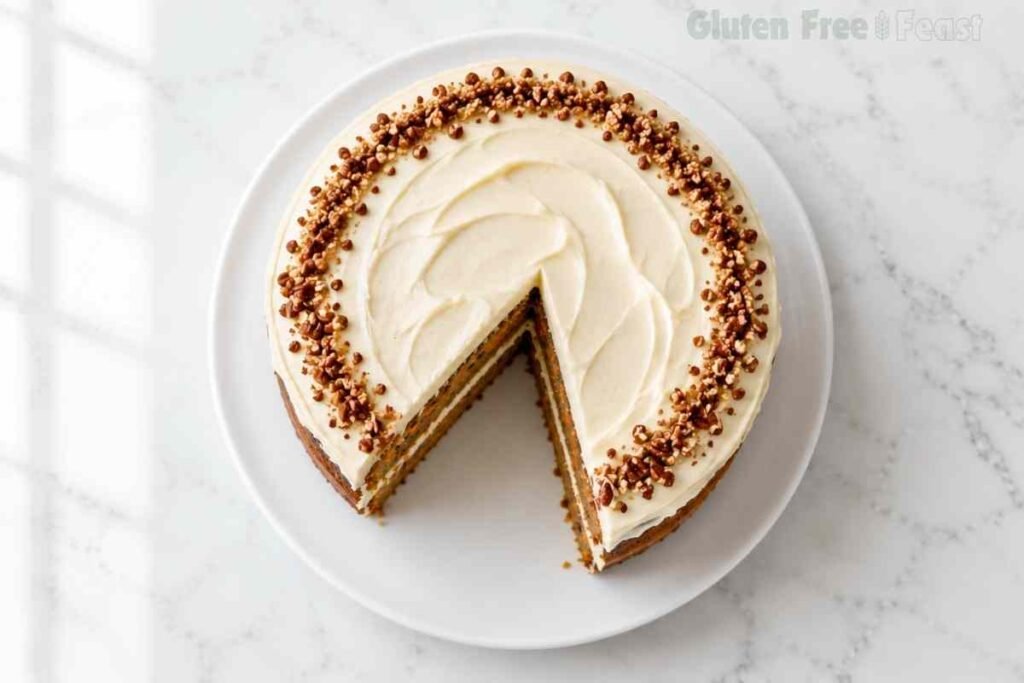
Table of Contents
Why You Will Love This Gluten Free Carrot Cake
- Celiac-safe at every ingredient: GFCO-certified King Arthur Measure for Measure flour, Bob’s Red Mill certified GF baking powder, and Nielsen-Massey GFCO-certified vanilla. No hidden gluten sources, no generic “gluten free” claims without certification behind them.
- Moist crumb that holds for days: applesauce and undrained pineapple juice keep this cake tender on day two and day three without any extra effort.
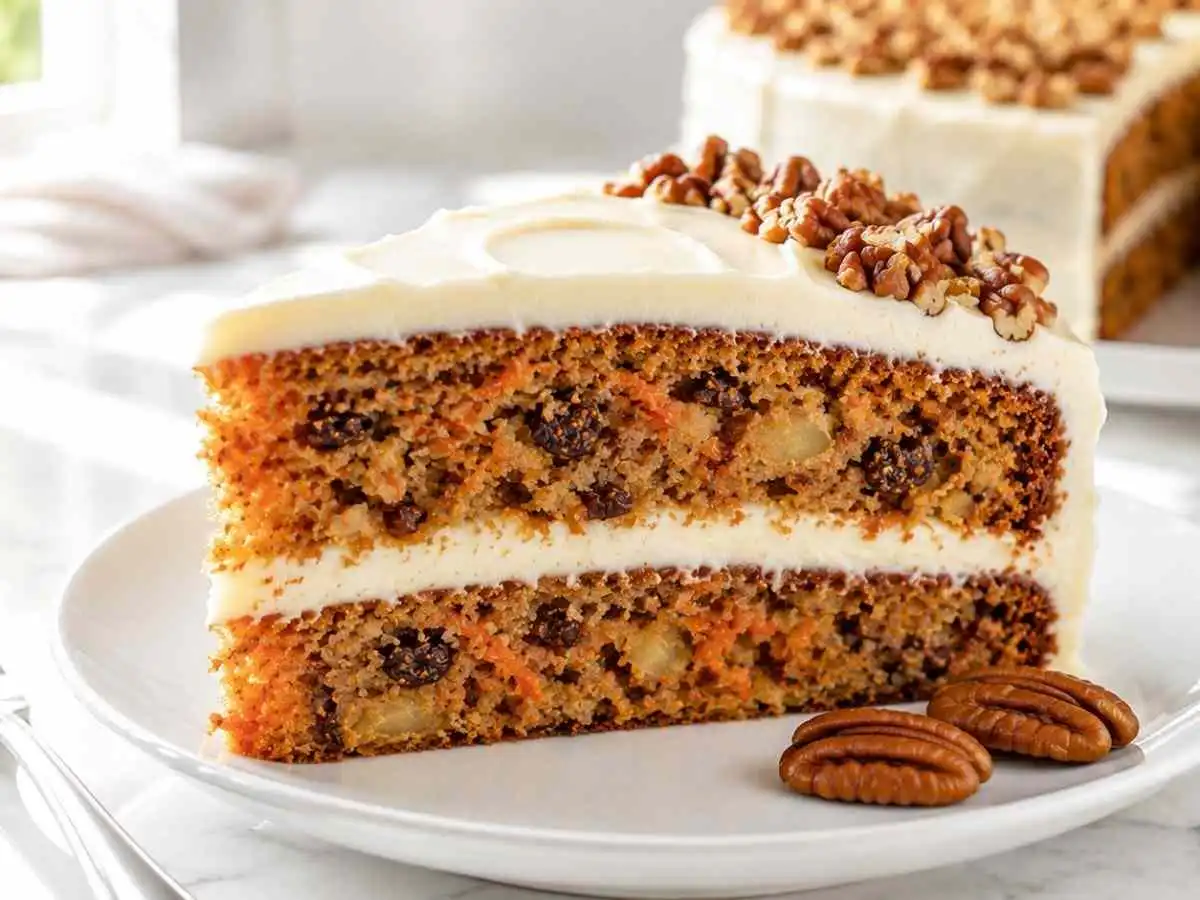
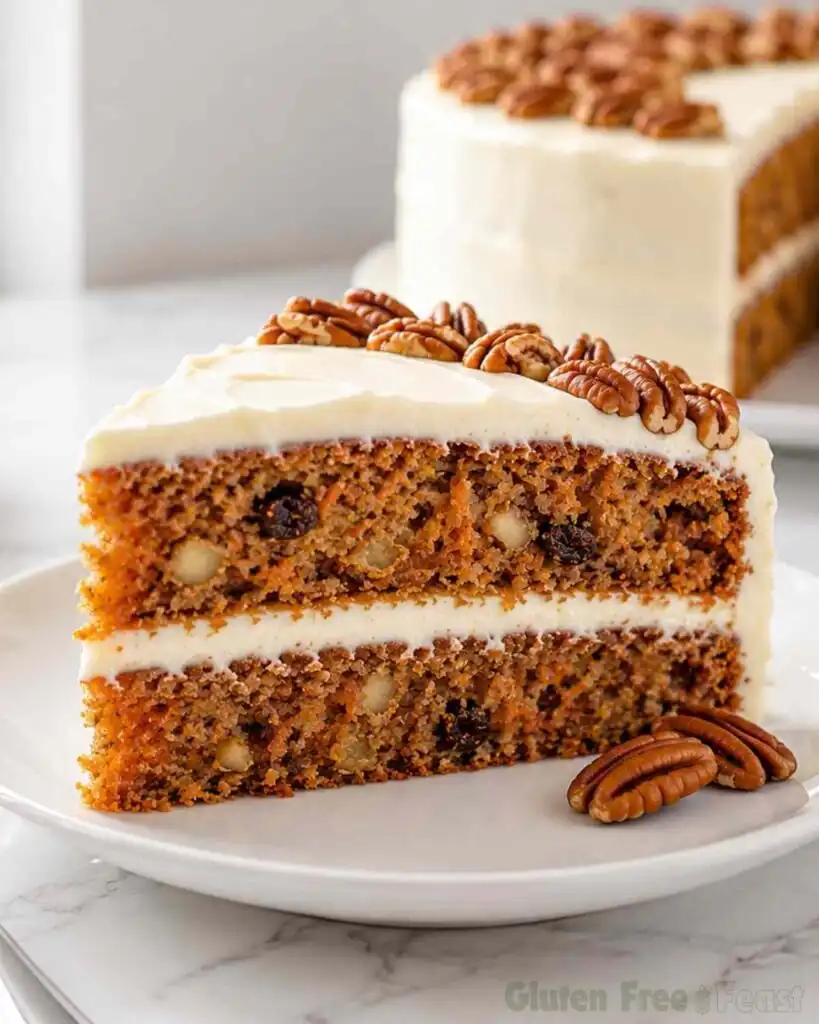
- A layer cake that slices cleanly: chilling the layers before frosting gives you those sharp, photogenic layers with visible carrot, coconut, and pecan throughout.
- Ready in 55 minutes: 15 minutes of prep, 40 minutes in the oven. No chilling required before baking, though a short rest before frosting gives you cleaner layers.
- Fully tested dairy-free option: Miyoko’s Creamery and Kite Hill produce a frosting that is nearly indistinguishable from the original.
- Three format options: layer cake, cupcakes, or sheet cake, all tested and timed.
Ingredients
For the Cake
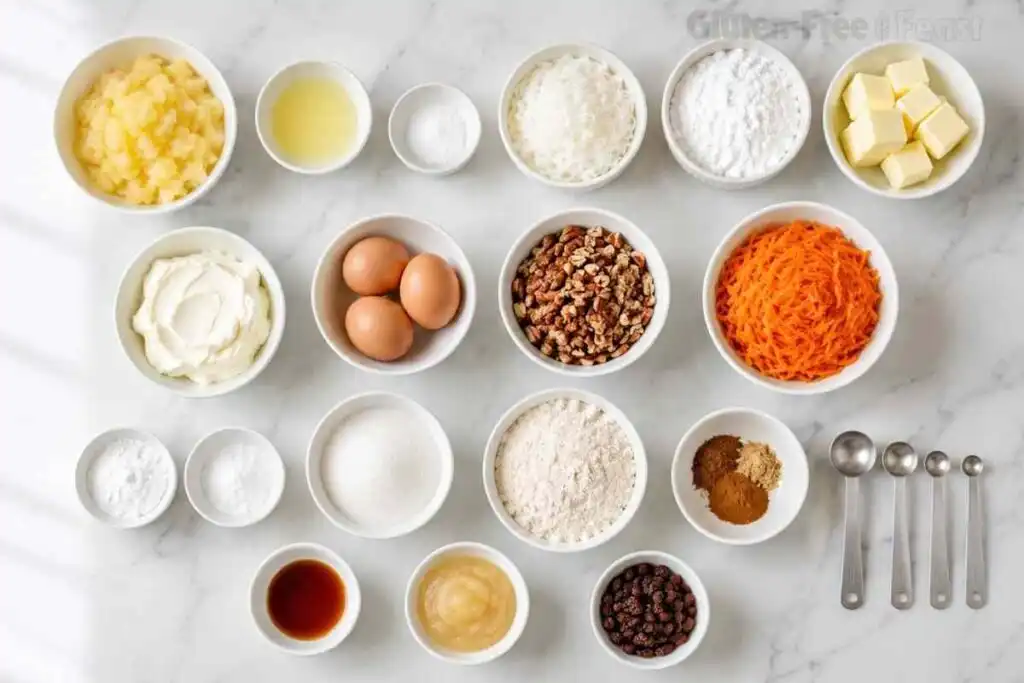
- 2 cups (280g) King Arthur Measure for Measure Gluten-Free Flour, GFCO certified, plus extra for dusting if needed
- 1 teaspoon certified gluten-free baking soda (Bob’s Red Mill)
- ½ teaspoon certified gluten-free baking powder (Bob’s Red Mill, GFCO certified)
- ½ teaspoon fine salt
- 2 teaspoons ground cinnamon (single-origin; no pre-blended spice mixes)
- ¼ teaspoon ground nutmeg
- ⅛ teaspoon ground cloves
- ¼ teaspoon ground allspice
- 2 cups (400g) granulated sugar
- 3 large eggs, room temperature
- 1½ cups (360g) unsweetened applesauce (Mott’s Unsweetened)
- 1 teaspoon pure vanilla extract (Nielsen-Massey, GFCO certified)
- 2 cups finely grated fresh carrots
- 1 cup crushed pineapple in juice, undrained (Dole)
- 1 cup sweetened shredded coconut (Bob’s Red Mill or Let’s Do Organic, certified GF)
- ½ cup raisins (Sun-Maid plain raisins)
- ½ cup chopped pecans (Bob’s Red Mill Raw Pecans; omit for nut-free)
For the Cream Cheese Frosting
- 1 cup (227g) unsalted butter, softened
- 16 oz (454g) cream cheese, softened
- 2 cups (240g) powdered sugar (C&H or Domino)
- 2 tablespoons fresh lemon juice
- 1 teaspoon pure vanilla extract (Nielsen-Massey, GFCO certified)
Ingredient Notes and Substitutions
King Arthur Measure for Measure Gluten-Free Flour: King Arthur Measure for Measure is my preferred flour for this recipe because it produces a tender crumb and is GFCO certified. Rice-flour-only blends can create a gritty texture, while almond flour blends change the recipe’s fat balance and require reformulation.
Use the spoon-and-level method: spoon flour into the measuring cup and level with a straight edge. Scooping directly from the bag compresses the flour and can add up to 20% more than the recipe needs, which dries the crumb.
Certified GF baking powder and baking soda: Standard baking powder is often gluten-free, but not all brands are produced in dedicated facilities. Bob’s Red Mill Gluten Free Baking Powder is GFCO certified. The same applies to baking soda: Bob’s Red Mill is the brand I use and trust. Do not substitute a generic store brand without checking for a certified GF symbol on the package, not just a front-label claim.
Unsweetened applesauce: Applesauce is roughly 88% water, and those water molecules bind to the starch in GF flour and stay in the crumb. Oil-based cakes feel moist on day one but dry out faster because oil is fat, not water. Applesauce cakes hold their moisture at day two and day three. Use Mott’s Unsweetened and check the label for added wheat-based thickeners, which are uncommon but worth confirming.
Crushed pineapple, undrained: Do not drain the pineapple. The juice contains bromelain, a natural enzyme that breaks down protein strands in the batter and tenderizes the crumb. It also contributes roughly 85 to 90 ml of liquid that hydrates the GF flour blend, which absorbs more liquid than wheat flour. Use Dole crushed pineapple packed in juice, not syrup, and verify the label for wheat-based thickeners.
Sweetened shredded coconut: Some coconut products run on shared lines with wheat-containing products. Bob’s Red Mill and Let’s Do Organic both carry certified GF labeling. Do not substitute unsweetened coconut without adjusting the sugar: the sweetened version contributes to the overall balance of the batter.
Vanilla extract: Use pure vanilla extract, never imitation. Imitation vanilla is often derived from wood pulp and can contain additives processed on shared lines. Nielsen-Massey Pure Vanilla Extract is GFCO certified and is what I use in all GFF baking.
Powdered sugar: Some generic brands use wheat starch as an anti-caking agent. C&H and Domino do not. Stick to these two brands or any powdered sugar that carries a certified GF symbol.
Dairy-free frosting: Miyoko’s Creamery butter and Kite Hill cream cheese style spread produce a frosting that is very close to the original. Keep both at cool room temperature before beating: too cold and the frosting will not smooth; too warm and it will not hold its shape.
Celiac Safety Note: Ensure all packaged ingredients carry a certified gluten-free label. For this recipe, check specifically: your GF flour blend (King Arthur Measure for Measure, GFCO certified), baking soda (Bob’s Red Mill GF), baking powder (Bob’s Red Mill, GFCO certified), vanilla extract (Nielsen-Massey, GFCO certified), crushed pineapple (Dole in juice, no wheat thickeners), shredded coconut (Bob’s Red Mill or Let’s Do Organic, certified GF), powdered sugar (C&H or Domino), raisins (Sun-Maid plain), and pecans (Bob’s Red Mill Raw).
Cross-contamination is a real and separate risk from ingredients: use mixing bowls, a box grater, cake pans, and an electric mixer dedicated exclusively to gluten-free baking. If your box grater has been used on wheat-based bread, wash it thoroughly or use a dedicated GF grater.

Gluten Free Carrot Cake with Cream Cheese Frosting
Ingredients
Equipment
Method
- Preheat the oven to 350°F (177°C). Line the bottoms of two 9-inch round cake pans with parchment paper. Lightly grease the pans and parchment. Use pans that have never been used with wheat-based batters to eliminate cross-contamination risk.
- In a large bowl, whisk together the sugar, eggs, applesauce, and vanilla until smooth and fully combined.
- In a separate bowl, whisk together the King Arthur GF flour, certified GF baking soda, certified GF baking powder, salt, cinnamon, nutmeg, cloves, and allspice until evenly combined.
- Add the finely grated carrots, undrained crushed pineapple, shredded coconut, raisins, and pecans to the wet ingredients. Fold until evenly distributed throughout the batter.
- Add the dry ingredients to the wet mixture and fold just until no dry flour remains. Stop mixing the moment the batter comes together: over-mixing activates the starches in GF flour blends and produces a gummy, dense crumb.
- Divide the batter evenly between the prepared pans. Bake for 35 to 40 minutes, until the edges begin pulling away from the pan and a toothpick inserted in the center comes out with a few moist crumbs attached. A clean toothpick means overbaked.
- Cool in the pans for 10 to 15 minutes, then carefully transfer to a cooling rack. Cool completely before frosting. For the cleanest layers, refrigerate the cooled cake rounds for 1 to 2 hours before assembling.
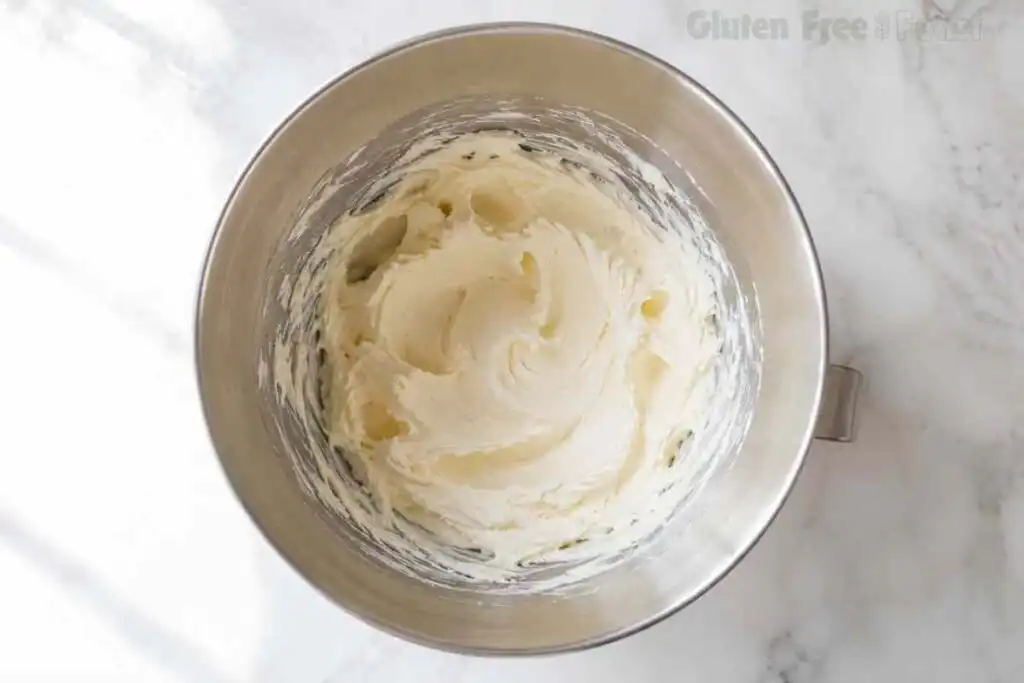
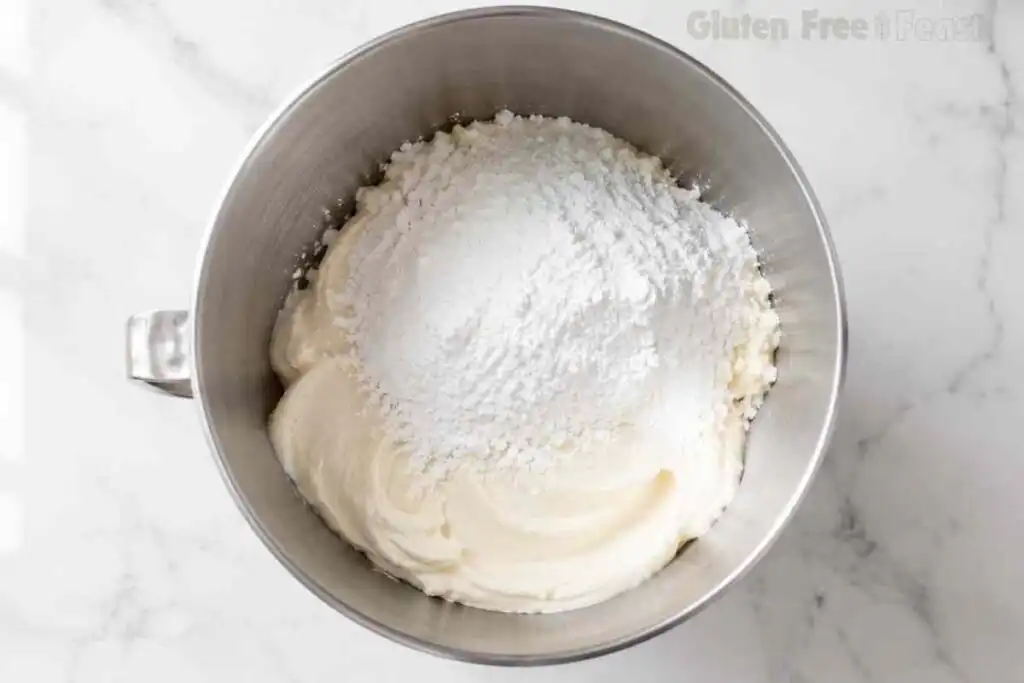
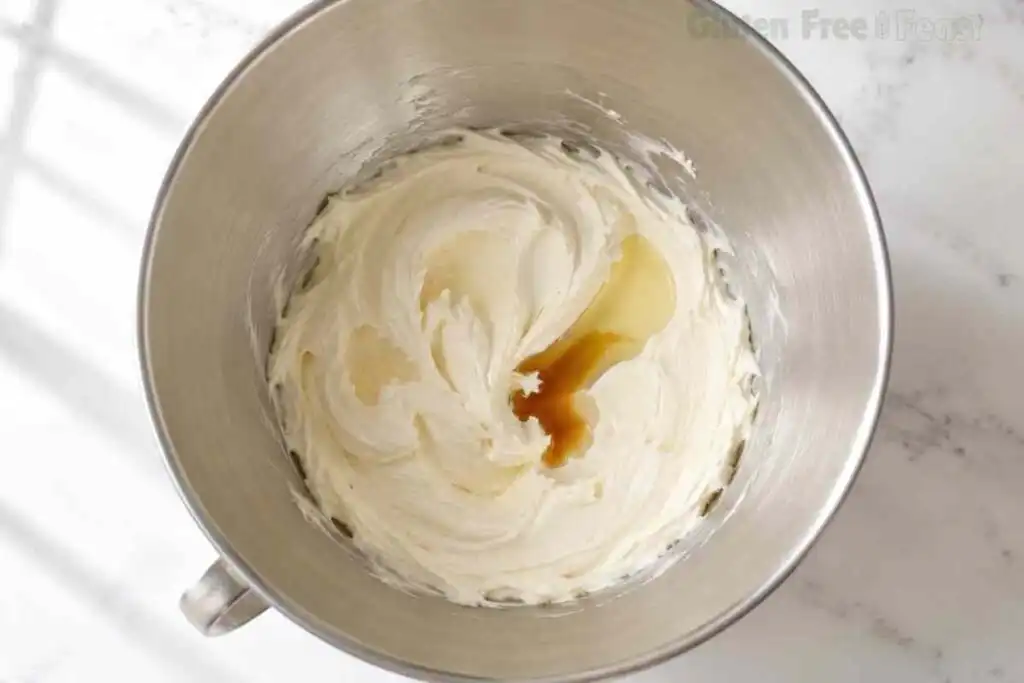
- Beat the softened butter and cream cheese together with an electric mixer until smooth and fluffy, about 2 minutes. Gradually add the powdered sugar and mix until incorporated. Add the lemon juice and vanilla, then beat for 1 to 2 minutes until the frosting is light and creamy.
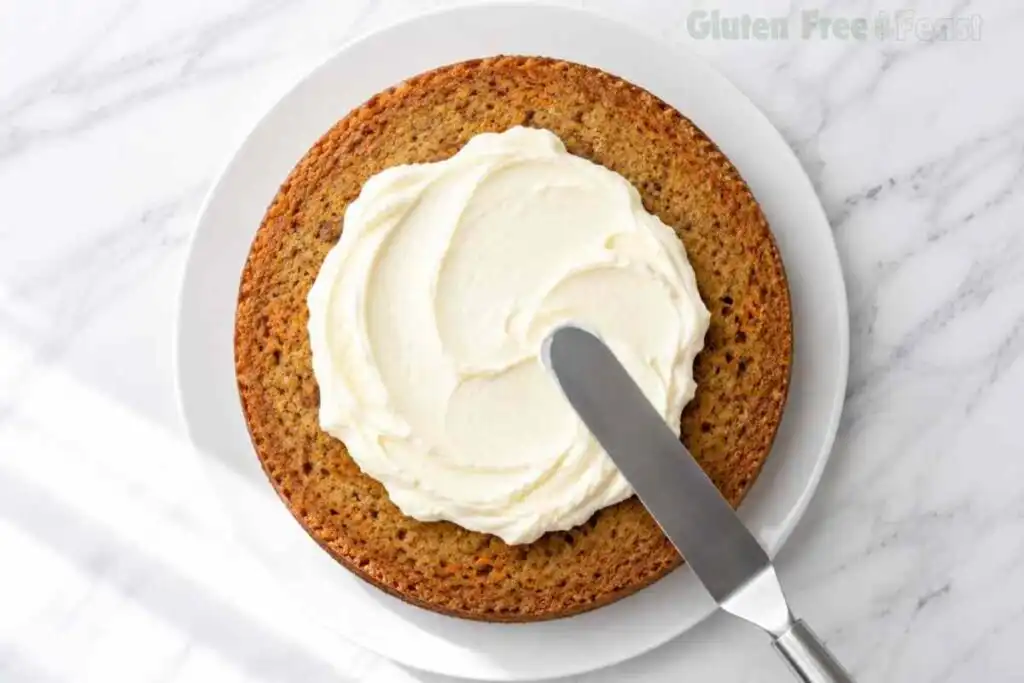
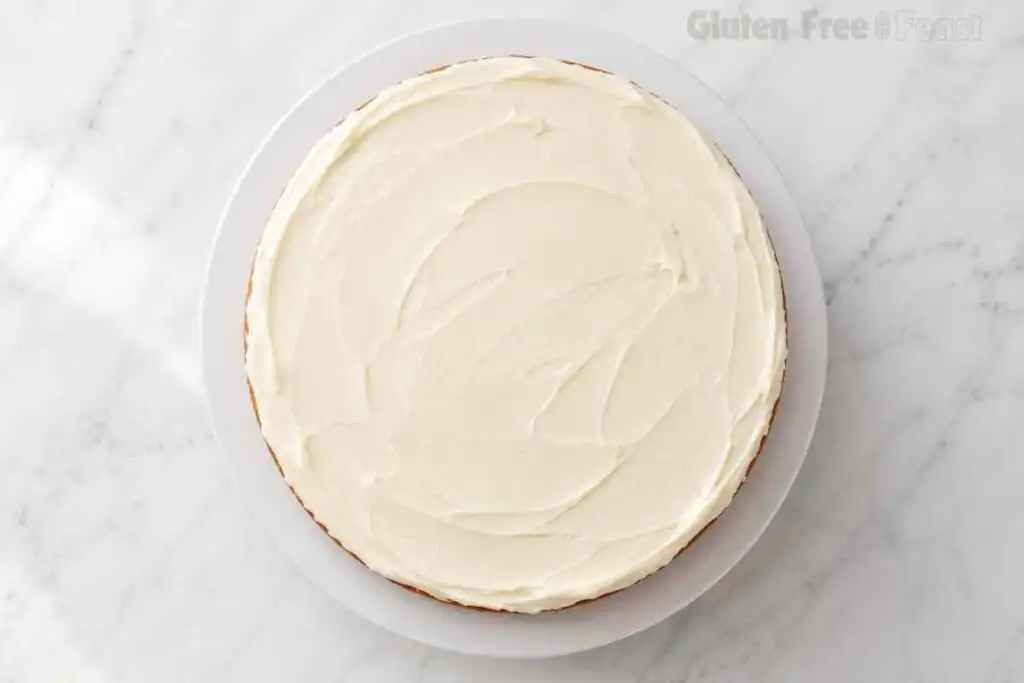
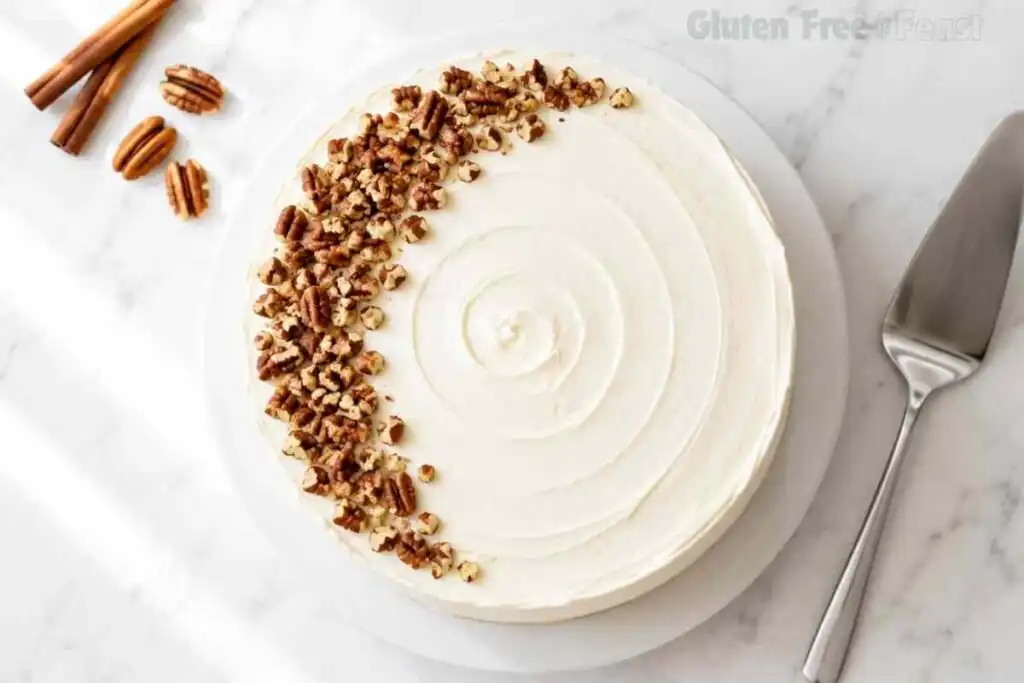
- Place one chilled cake layer on a serving plate. Spread an even layer of frosting over the top. Add the second layer and frost the top and sides. Garnish with chopped pecans, shredded coconut, or decorative frosting swirls if desired.
Nutrition
Notes
Gluten-Free Note
Tried this recipe?
Let us know how it was!How to Make Gluten Free Carrot Cake
Step 1: Prepare the Pans and Preheat
Preheat the oven to 350°F (177°C). Line the bottoms of two 9-inch round cake pans with parchment paper, then lightly grease the pans and parchment. Use pans that have never been used with wheat-based batters: scratched non-stick coatings can harbor gluten residue that survives normal washing.
Step 2: Mix the Wet Ingredients
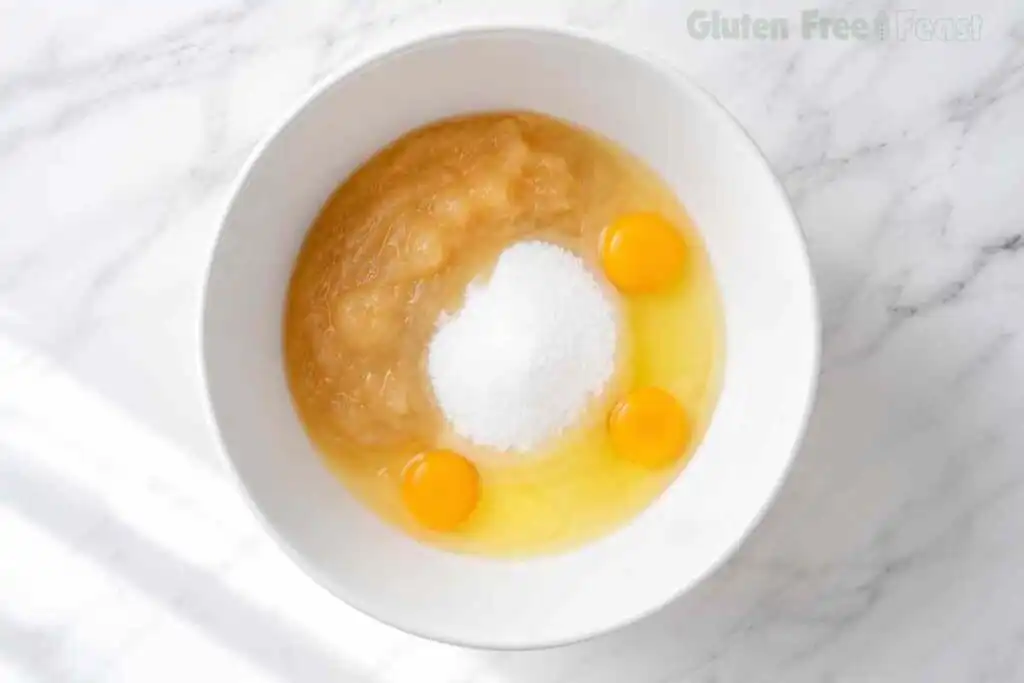
In a large bowl, whisk together the sugar, eggs, applesauce, and vanilla until the mixture is smooth and fully combined. The applesauce and sugar will look slightly grainy at first; keep whisking for about 30 seconds and they will come together into a uniform, lightly colored batter.
Step 3: Mix the Dry Ingredients
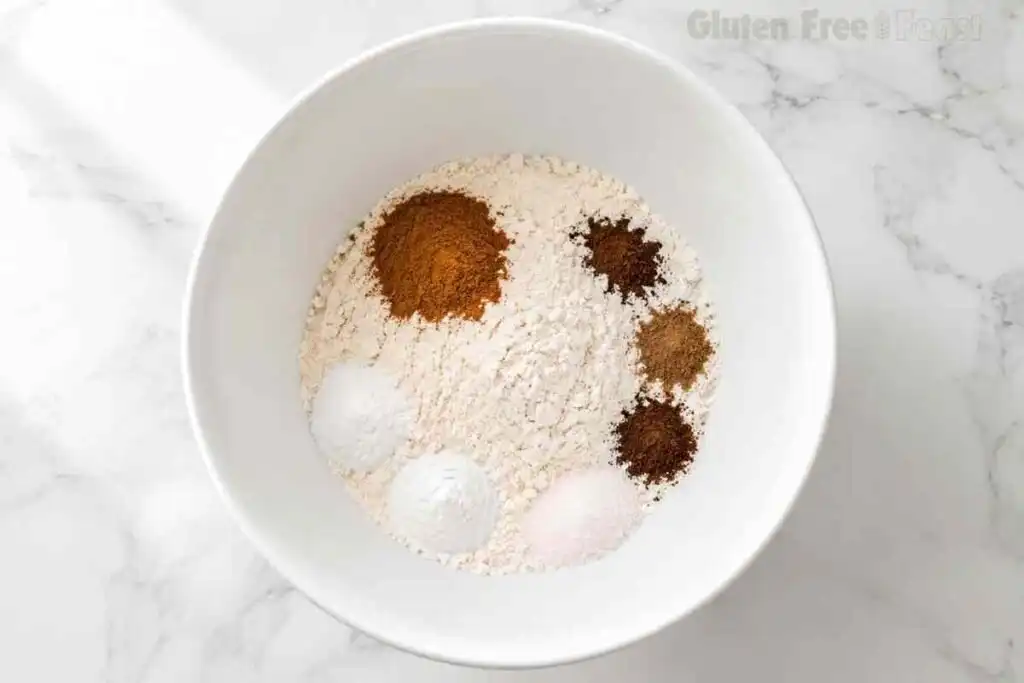
In a separate bowl, whisk together the King Arthur GF flour, certified GF baking soda, certified GF baking powder, salt, cinnamon, nutmeg, cloves, and allspice. A 30-second whisk is enough to distribute the leaveners evenly. Uneven distribution is one of the most common reasons gluten-free cakes rise on one side and not the other.
Step 4: Fold In the Add-Ins
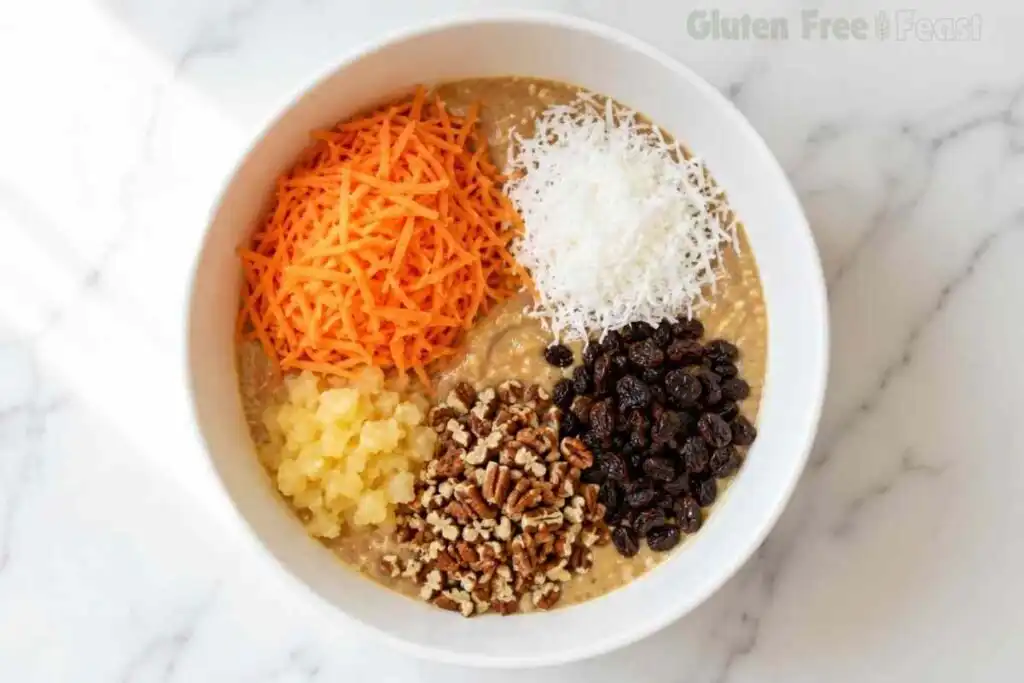
Add the finely grated carrots, undrained pineapple, shredded coconut, raisins, and pecans directly to the wet ingredients. Fold with a spatula until everything is evenly distributed throughout the batter. Most of the moisture, flavor, and texture variation enters the batter at this step. Take your time and make sure nothing is clumped at the bottom of the bowl.
Step 5: Combine and Bake
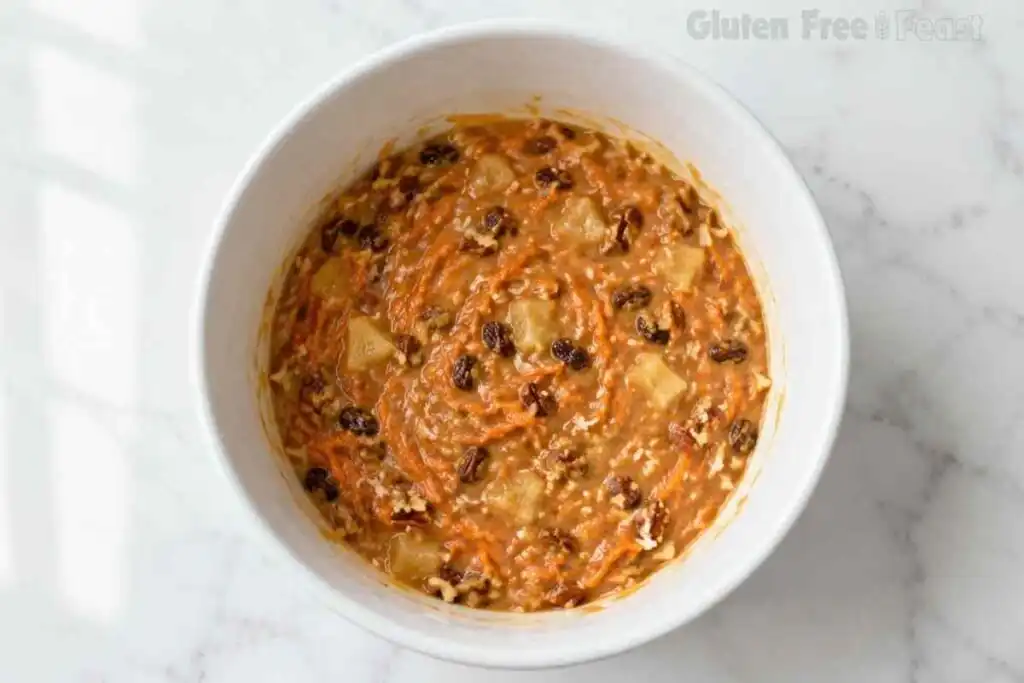
Add the dry ingredients to the wet mixture and fold just until no dry flour remains visible. Stop the moment the batter comes together. GF flour starches activate quickly under mixing pressure, and a batter worked past “just combined” will bake up gummy rather than tender. Divide the batter evenly between the prepared pans.
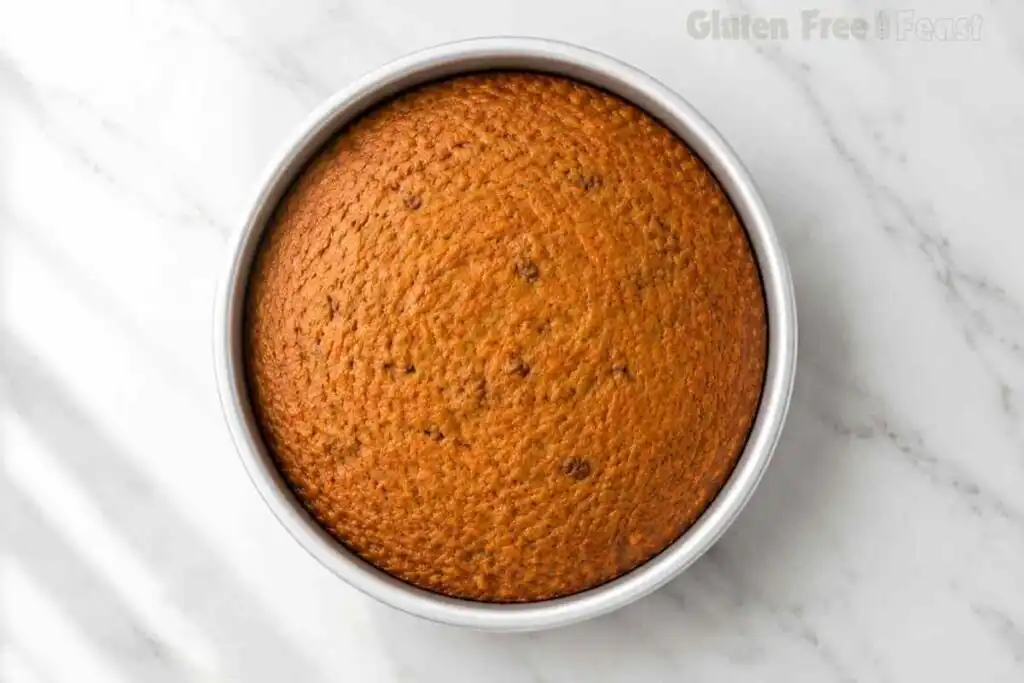
Bake for 35 to 40 minutes, until the edges begin pulling away from the pan and a toothpick inserted in the center comes out with a few moist crumbs. A completely clean toothpick is a sign of overbaking. Start checking at the 35-minute mark because every oven runs slightly differently.
Step 6: Cool and Frost
Cool the cakes in the pans for 10 to 15 minutes, then transfer to a cooling rack and cool completely. For the cleanest, most professional-looking layers, refrigerate the cooled cake rounds for 1 to 2 hours before assembling. In my testing, 2 hours produced noticeably sharper layer edges than 1 hour, especially on warmer days.
To make the frosting, beat the softened butter and cream cheese with an electric mixer until smooth and fluffy, about 2 minutes. Add the powdered sugar gradually, then add the lemon juice and vanilla. Beat for 1 to 2 more minutes until light and creamy.
Place one chilled cake layer on a serving plate and spread frosting over the top. Add the second layer, frost the top and sides, and garnish with chopped pecans, shredded coconut, or frosting swirls.
Expert Tips for the Best Gluten Free Carrot Cake
- Grate the carrots finely, not coarsely. Finely grated carrots have far more surface area than coarse shreds. More surface area means more contact between carrot cell walls and batter, which means more moisture released during baking and a more even crumb. A food processor grating disc works well here if you want to speed up the process.
- Bring eggs and cream cheese to room temperature. Cold eggs can partially set the fat in the batter before mixing is complete, producing uneven emulsification. Cold cream cheese creates a lumpy frosting no matter how long you beat it. Set both out 30 minutes before you begin.
- Do not overmix the batter after adding the dry ingredients. This is the single most important technique note for GF baking. Gluten-free flour blends contain pregelatinized starches that absorb moisture rapidly under agitation. A batter mixed past “just combined” will be dense before it hits the oven.
- Use the spoon-and-level method for the flour. Spoon the flour into the measuring cup and level with a straight edge. Scooping from the bag compresses the flour and can add 20% or more than the recipe intends, which makes the cake dry and crumbly.
- Refrigerate the layers before frosting. A warm or even cool-room-temperature GF cake layer is soft enough to pull apart under the pressure of frosting. One to two hours in the refrigerator firms the structure enough to give you clean, stable layers.
- Do not substitute unsweetened coconut for sweetened. The sweetened coconut contributes sugar that is part of the recipe’s overall balance. If you only have unsweetened, add 2 tablespoons of sugar to compensate.
- Use a box grater or food processor dedicated to GF baking. Graters and food processors are notoriously difficult to clean thoroughly. Wheat residue from shredding bread or hard cheese sits in the fine holes and does not come out with a standard wash.
Substitutions and Variations
Dairy-free: Replace the butter with Miyoko’s Creamery European Style Cultured Vegan Butter and the cream cheese with Kite Hill Plain Cream Cheese Style Spread. Both are used at the same quantities as the originals. The dairy-free frosting is slightly softer at room temperature, so keep the assembled cake refrigerated until serving.
Nut-free: Omit the pecans entirely. No other changes are needed. The cake bakes identically without them.
Raisin-free: Leave out the raisins without making any other adjustments. The batter is moist enough that their absence does not affect the texture.
Cupcakes: Divide the batter among lined muffin cups, filling each about two-thirds full. Bake at 350°F for 18 to 22 minutes, until a toothpick comes out with a few moist crumbs. Cool completely before frosting. This recipe makes approximately 24 standard cupcakes.
Sheet cake: Grease a 9×13-inch pan, pour in the batter, and bake at 350°F for 45 to 50 minutes, until a toothpick comes out with a few moist crumbs. Cool completely in the pan, then frost directly in the pan for easy serving. Use a pan never previously used with wheat-based batters.
What to Serve With Gluten Free Carrot Cake
This cake is complete on its own, but these pairings work particularly well for celebrations and seasonal tables.
- Coffee or chai: The warm spice profile of the cake sits well alongside a cup of black coffee or a spiced chai. The bitterness of the coffee cuts through the richness of the cream cheese frosting in a way that makes each bite feel lighter.
- Vanilla ice cream: A simple scoop alongside a slice turns this into a plated dessert. The temperature contrast between cold ice cream and room-temperature cake is particularly good. For more GFF dessert recipes, see gluten-free brownies and gluten-free chocolate mug cake.
- Fresh fruit: Sliced strawberries or pineapple alongside a slice echo the tropical note in the batter and add brightness to a rich plate.
- Easter or holiday table: The layer format, the carrot theme, and the make-ahead flexibility make this the natural centerpiece for an Easter dessert spread. It holds well in the refrigerator for 5 days, so you can bake it 2 days ahead and frost it the night before.
- Gluten-free baked goods spread: If you are building a full GF dessert table, this cake pairs well with other tested GFF baking recipes. Visit the gluten-free banana bread for a second make-ahead option, or browse gluten-free blueberry muffins for a lighter accompaniment.
Storage and Make-Ahead Instructions
Refrigerator: Store the frosted cake covered in the refrigerator for up to 5 days. The cream cheese frosting makes refrigeration necessary; this cake should not sit at room temperature for extended periods. Individual slices can be stored in an airtight container and brought to room temperature for 15 minutes before serving for the best texture.
Freezer (unfrosted layers): This is the best make-ahead method. Once the baked layers have cooled completely, wrap each one tightly in two layers of plastic wrap and freeze for up to 3 months. Thaw overnight in the refrigerator, then frost on the day you plan to serve. The thawed layers slice cleanly and the texture is indistinguishable from freshly baked.
Freezer (frosted slices): Individual frosted slices can be frozen on a parchment-lined sheet until solid, then transferred to a freezer bag. Thaw in the refrigerator for 2 to 3 hours. The frosting softens slightly but remains presentable.
Make-ahead baking: Bake the layers up to 2 days in advance. Wrap tightly and refrigerate. Frost on the day of serving for the cleanest presentation and the most stable layers.
Why Trust This Recipe
I develop recipes the same way I approached lab work: with documented testing, controlled variables, and results that hold up in any kitchen, not just mine.
This recipe was tested across six batches in my dedicated gluten-free kitchen. Specific rounds compared fine versus coarse carrot grating, 1-hour versus 2-hour pre-frost chilling, and three different GF flour blends. I record what fails alongside what works.
What that means for you:
- Six test batches before publishing, with variables documented
- Science-based notes on moisture, starch behavior, and enzyme activity at the steps where they matter
- Honest substitution guidance, not guesswork
- Safe for celiac disease, with certified brand names at every flagged ingredient and a cross-contamination section that covers equipment, not just labels
Frequently Asked Questions
What gluten-free flour is best for carrot cake?
The best GF flour for carrot cake is a certified 1:1 measure-for-measure blend that already contains xanthan gum. King Arthur Measure for Measure is GFCO certified and produced in a dedicated GF facility, and in my six rounds of testing it produced the most consistent crumb: tender, not gummy, with a proper rise. Avoid rice-flour-only blends: they produce a noticeably gritty texture in layer cakes. Almond flour-based blends change the fat content of the batter and require formula adjustments that go beyond a simple substitution.
What is the secret to moist gluten-free cake?
Multiple water-binding ingredients working together, rather than oil alone. Unsweetened applesauce is roughly 88% water; those water molecules bind to the starch in GF flour and stay in the crumb. Oil is 100% fat: it coats and lubricates, but oil-based cakes dry out faster because fat does not retain water.
Undrained crushed pineapple adds natural juice that hydrates the flour and tenderizes the protein matrix. Finely grated carrots distribute moisture evenly throughout the batter at the cellular level.
What cake can celiacs eat?
Any cake made with GFCO-certified ingredients in equipment not cross-contaminated with wheat. This means certified GF flour, certified GF baking powder, pure vanilla extract (not imitation), and verified-safe add-ins like certified GF coconut and plain raisins. Every ingredient in this gluten free carrot cake is selected and named for celiac safety: not just “labeled gluten-free,” but certified by an accredited third-party body like the Gluten-Free Certification Organization. The equipment section in this recipe covers graters, pans, and mixers specifically because those are the cross-contamination points most recipes skip.
Can carrot cake be made gluten-free?
Yes, with results that are indistinguishable from the wheat-flour original when you use the right flour blend and moisture approach. A high-quality 1:1 GF blend with built-in xanthan gum handles structure, and the natural moisture builders in this recipe (carrots, applesauce, and undrained pineapple) handle the texture that gluten would otherwise provide. This is not a recipe adapted from a wheat-flour version. It was developed and tested as a gluten-free recipe from the first batch, with ratios built around GF flour behavior from the start.
Which gluten-free flour is closest to regular flour?
A measure-for-measure (1:1) blend comes closest in function. These blends combine rice flour, sorghum, tapioca starch, and xanthan gum to replicate wheat gluten’s structural and binding role. In my testing across three flour blends for this recipe, King Arthur Measure for Measure produced the most consistent layer cake crumb: tender, not gummy, with a rise that held its shape after cooling. Single-flour alternatives like almond or coconut flour behave very differently and cannot substitute in a recipe designed for a 1:1 blend without significant reformulation.
How do you keep gluten-free cake moist?
Two strategies: the right ingredients at mixing, and proper storage after baking. At mixing, applesauce and pineapple juice bind water into the crumb in a way that oil cannot. At storage, cover the frosted cake and refrigerate it: cream cheese frosting does not hold safely at room temperature for long, and the refrigerator slows the staling process. Unfrosted layers freeze exceptionally well for up to 3 months; thaw overnight in the refrigerator before frosting for a cake that tastes freshly baked.
Final Thoughts
This gluten free carrot cake is the recipe I make when I want to put something on the table that does not ask to be identified as gluten free. The certified ingredients, the tested moisture builders, and the science behind every key step combine into a cake that holds up to any comparison. Make the layers ahead, refrigerate them overnight, and frost on the day you need it.