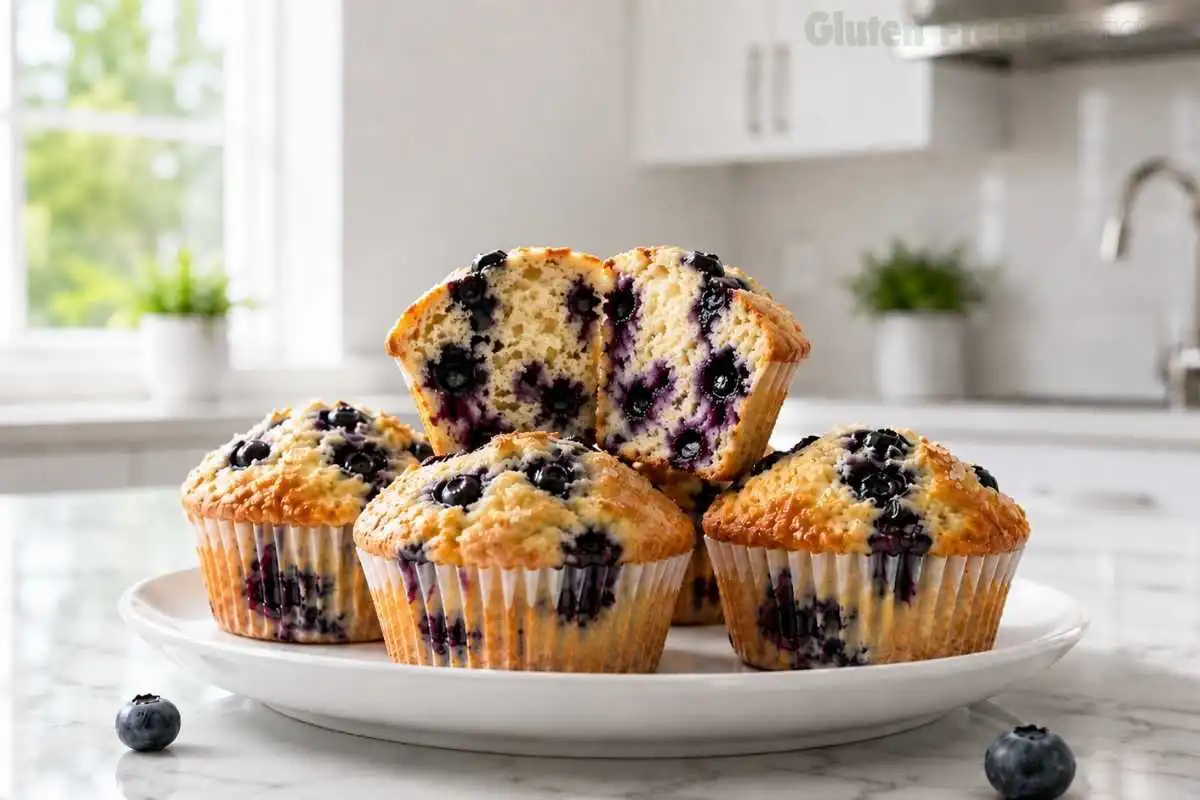
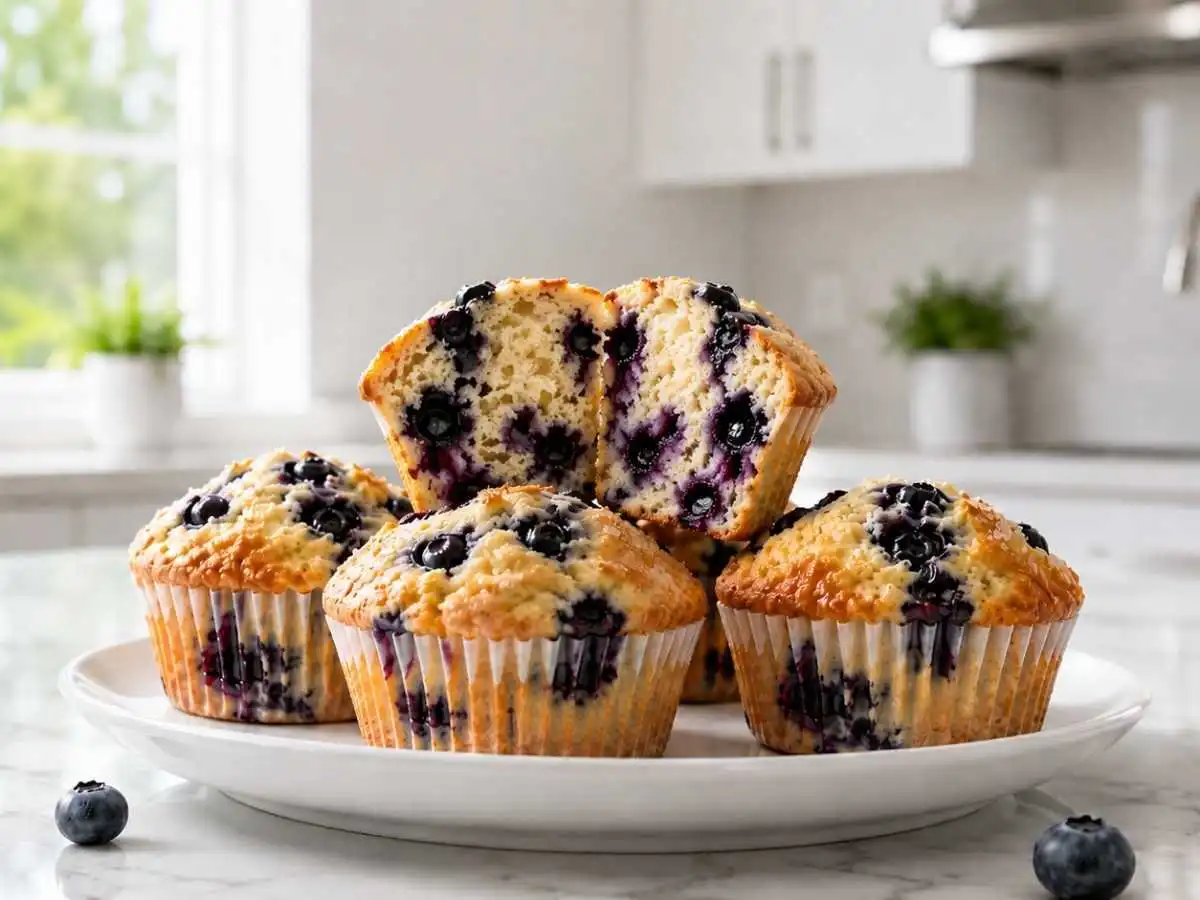
These gluten free blueberry muffins come out of the oven with tall golden domes, a soft crumb that stays moist, and juicy berries in every single bite. The batter smells like lemon and vanilla before it ever hits the oven, and the tops crackle lightly where the raw sugar melts. In my test batches, one step separated flat, ordinary muffins from true bakery-style tops: chilling the batter for 20 minutes before baking.
It feels like a delay you will want to skip. Do not skip it. That short rest gives the gluten-free flour time to drink up the liquid, and it is the single biggest reason these muffins rise the way they do.
Every ingredient below is specified celiac-safe, down to the certified gluten-free baking powder, so you can bake these for anyone at your table. This is the newest addition to my gluten free breakfast lineup, and below I will show you exactly how the batter should look, feel, and behave at every step.
Key takeaways
Gluten free blueberry muffins turn out soft and bakery-tall when you combine a measure-for-measure gluten-free flour blend (such as King Arthur Measure for Measure or Bob’s Red Mill 1-to-1) with almond flour, whole milk yogurt, and oil, then chill the batter for 20 minutes before baking. Bake at 425°F for 10 minutes, then lower the oven to 375°F for 10 to 15 more minutes; the high initial heat sets tall domes while the thick chilled batter keeps the blueberries from sinking. The recipe makes 12 muffins at 244 calories each, works with fresh or frozen blueberries, and is celiac-safe when made with certified gluten-free baking powder and pure vanilla extract.
Flour: 1:1 GF blend + almond flour · Bake: 425°F then 375°F · Chill: 20 min · Yield: 12 muffins
Why You Will Love This Recipe
- Real bakery domes. The 20-minute chill plus a hot 425°F start produces tall, rounded tops, not the flat lids most gluten-free muffins settle for
- Soft, moist crumb. Yogurt and oil keep the texture tender where butter-based gluten-free muffins turn dry and crumbly
- Fresh or frozen blueberries both work, straight from the freezer with no thawing needed
- 100% celiac-safe when made with the certified gluten-free ingredients specified below, including the baking powder most recipes forget to flag
- 20 minutes of active work. The mixer does the heavy lifting, and the chill time is completely hands-off
- Make-ahead friendly. The filled pan can chill overnight and go straight into the oven for fresh muffins before anyone else is awake
- Honest troubleshooting included. I will tell you where this recipe can go wrong and how to catch it before it does

Gluten-Free Blueberry Muffins
Ingredients
Equipment
Method
- Line a standard 12-cup muffin pan with paper liners.
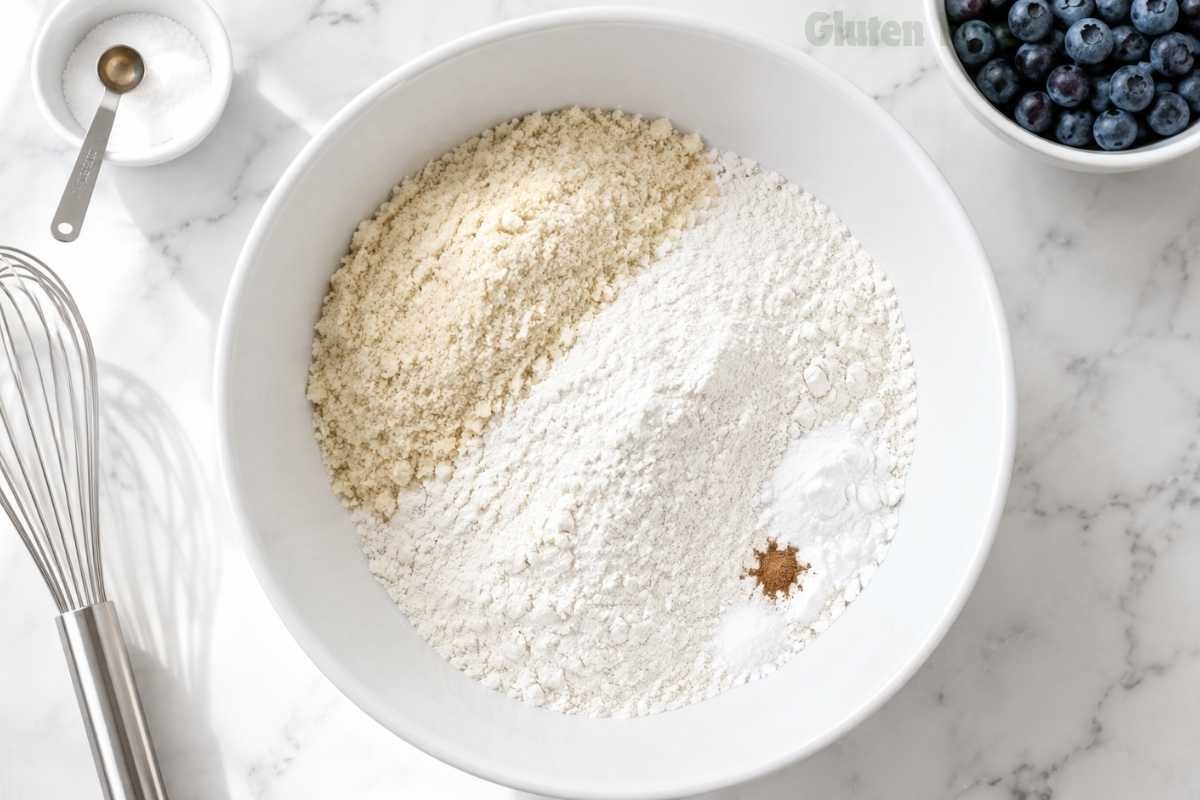
- In a medium bowl, whisk the gluten-free flour blend, almond flour, certified GF baking powder, baking soda, salt, and nutmeg until evenly combined.
- In the bowl of a stand mixer, or with a hand mixer, beat the eggs and granulated sugar on medium-high speed for 2 to 3 minutes, until pale, thick, and fluffy. The foam should fall off the beater in a slow ribbon; this foam is the muffin’s structure.
- With the mixer on low, drizzle in the oil in a slow, steady stream so the egg foam stays airy. Mix in the lemon juice and vanilla.
- Still on low, add one third of the dry ingredients, then half of the yogurt. Repeat, ending with the final third of dry ingredients. Scrape down the bowl and mix 15 to 20 seconds more, until the batter is smooth and thick.
- Fold in the blueberries by hand with a rubber spatula. Divide the batter evenly among the 12 cups and sprinkle the raw sugar over the tops, if using.
- Refrigerate the filled pan for 20 minutes, or cover and chill overnight. Preheat the oven to 425°F during the last 10 minutes of the chill. The batter should visibly stiffen; a spoon track dragged across the top should hold its shape.
- Bake for 10 minutes at 425°F without opening the oven door, then lower the temperature to 375°F and bake 10 to 15 minutes more, until the tops are golden and a toothpick inserted in the center comes out clean.
- Cool the muffins in the pan for 5 minutes, then transfer to a wire rack to cool completely.
Notes
Ingredients
Dry ingredients:
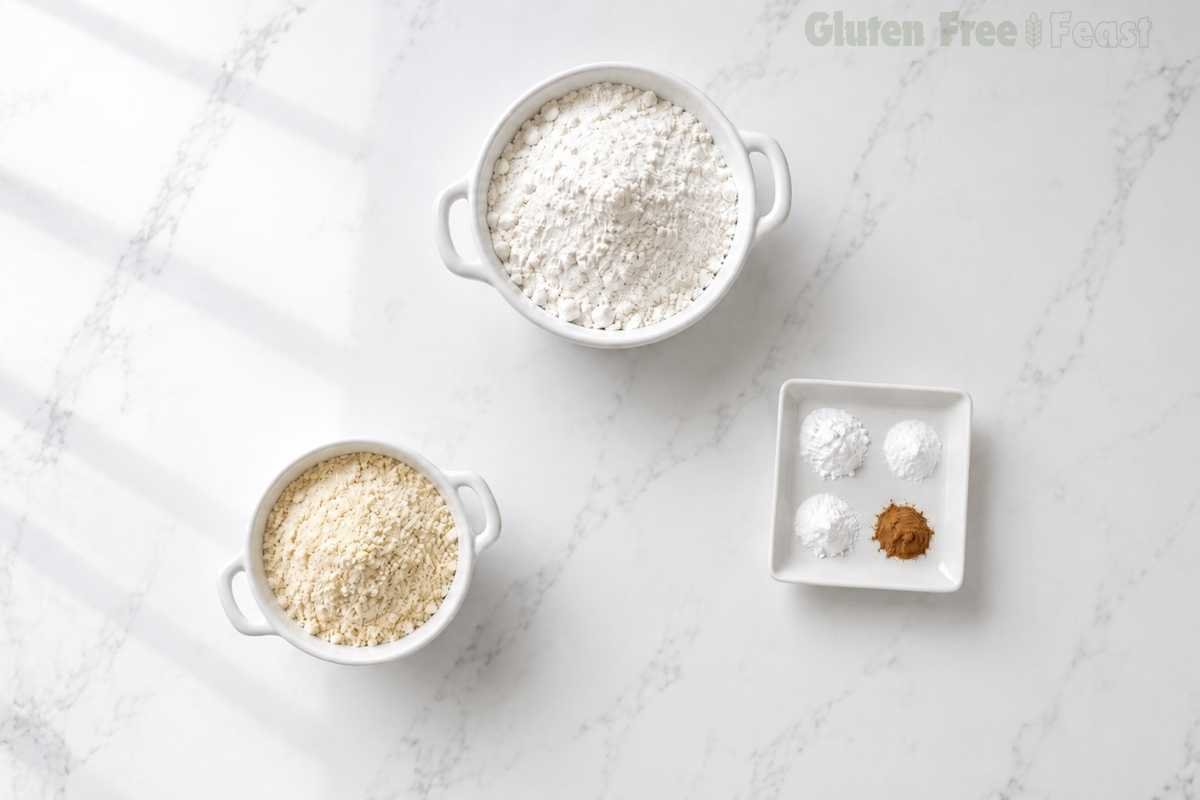
- 1 1/2 cups (225g) gluten-free measure-for-measure flour blend (certified GF, containing xanthan gum)
- 1/2 cup (50g) almond flour (certified GF label)
- 1 1/2 teaspoons certified gluten-free baking powder
- 1/2 teaspoon baking soda
- 1/2 teaspoon kosher salt
- 1/4 teaspoon ground nutmeg
Wet ingredients and mix-ins:
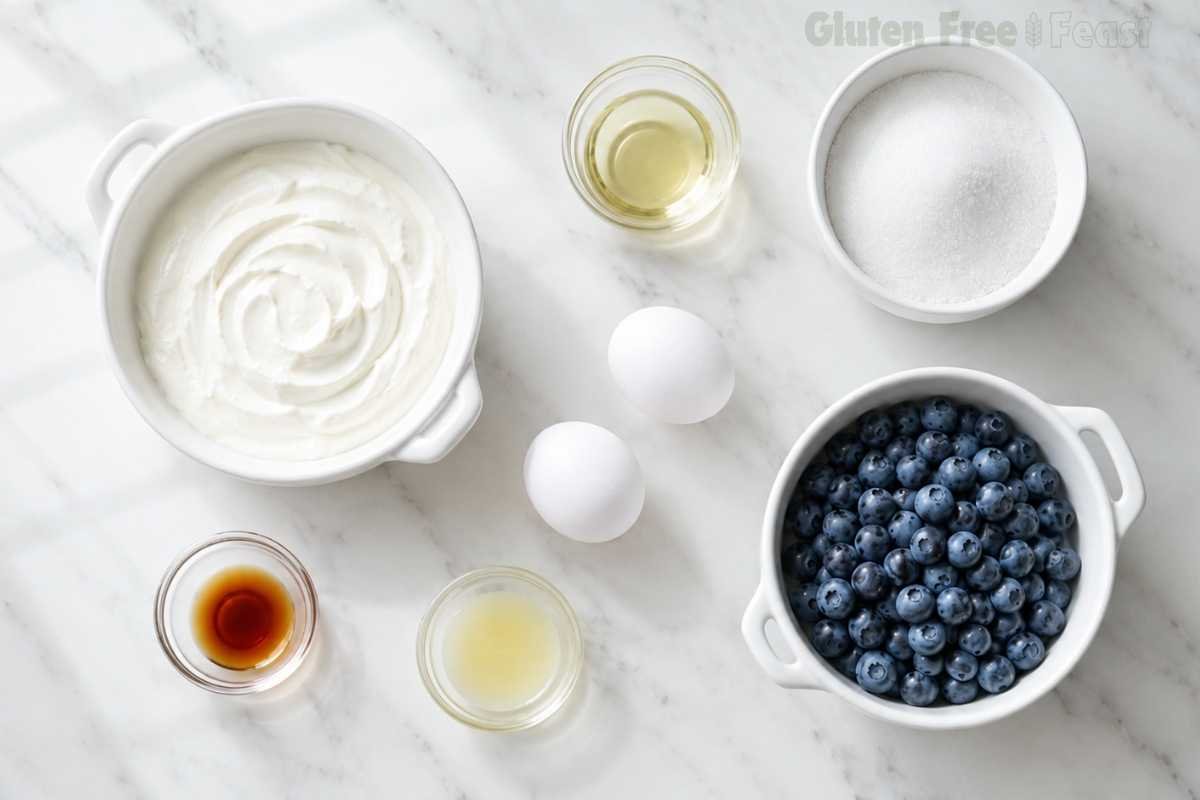
- 2 large eggs, room temperature
- 3/4 cup (150g) granulated sugar
- 1/2 cup (120ml) neutral oil
- 1 tablespoon lemon juice
- 1 teaspoon pure vanilla extract (certified GF, never imitation)
- 1 cup (240g) whole milk yogurt
- 1 cup (140g) blueberries, fresh or frozen
- 2 tablespoons raw or turbinado sugar, optional, for topping
Ingredient Notes and Substitutions
Gluten-free measure-for-measure flour blend. Use a blend that already contains xanthan gum, such as King Arthur Measure for Measure or Bob’s Red Mill 1-to-1. Without gluten, xanthan gum builds the elastic network that holds the rise; a single flour like plain rice flour cannot do that job alone. These are the same blends I reach for across my gluten free baking.
Almond flour. This is the quiet hero of the crumb. Its natural fat shortens the texture and protects against the dryness that gluten-free muffins are famous for. Buy a bag with a certified GF label, since nut flours can be processed on shared lines.
Whole milk yogurt and lemon juice. The acid in both does two things: it tenderizes the xanthan-bound crumb and reacts with the baking soda for extra lift. The fat in the yogurt keeps the muffins moist well after baking.
Certified gluten-free baking powder. This is the ingredient most recipes get wrong. Some baking powder brands use wheat starch as an anti-caking filler, one of the lesser-known sources of gluten, which makes an otherwise gluten-free muffin unsafe. Check the label every time.
Celiac Safety Note: Please ensure all packaged ingredients carry a certified gluten-free label. For this recipe, check specifically: the measure-for-measure flour blend, the almond flour, the baking powder, the vanilla extract, and your yogurt’s label. Cross-contamination at packaging facilities is a real risk for people with celiac disease. When in doubt, look for the certified GF symbol and check the FDA gluten-free labeling rule for what the claim legally guarantees.
Quick substitutions: Use unsweetened dairy-free yogurt for a dairy-free version. For nut-free, replace the almond flour with 1/2 cup more of the GF flour blend. Frozen blueberries go in straight from the freezer.
How to Make Gluten Free Blueberry Muffins
Mix the Dry Ingredients
- Line a standard 12-cup muffin pan with paper liners.
- In a medium bowl, whisk together the flour blend, almond flour, certified GF baking powder, baking soda, salt, and nutmeg until no streaks remain.
Build the Batter
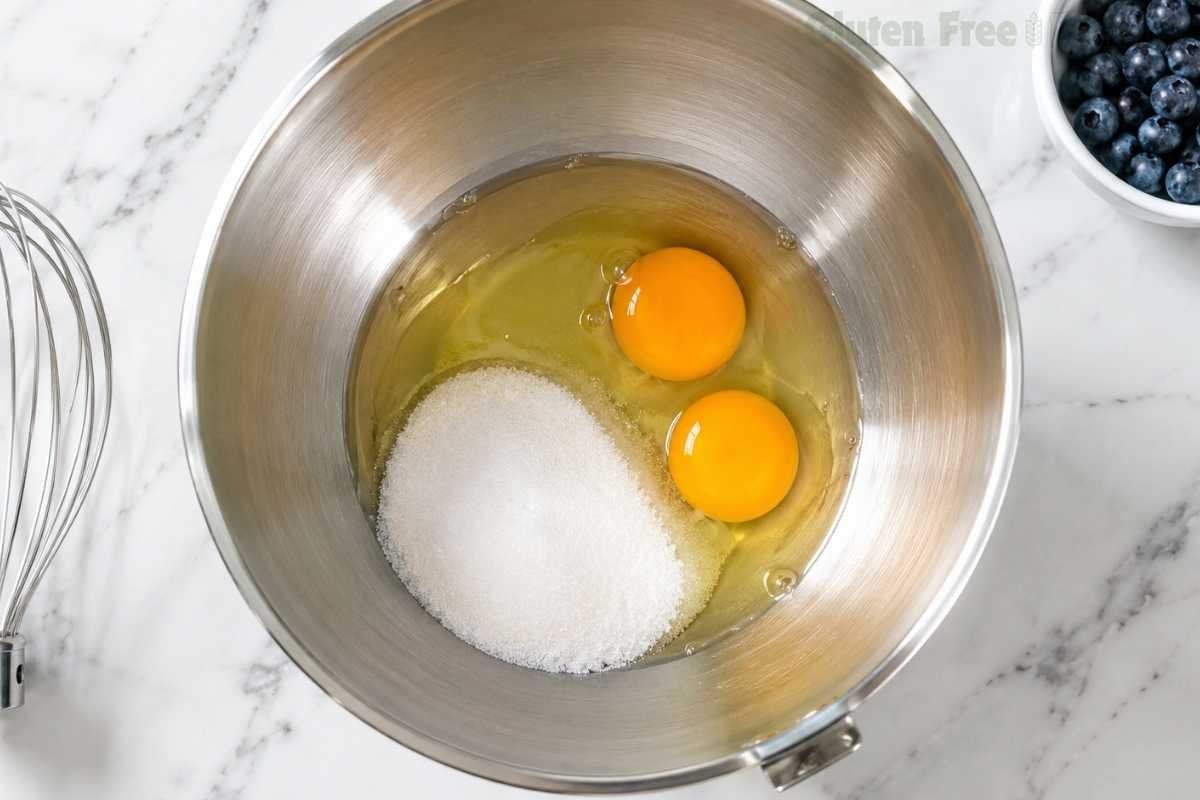
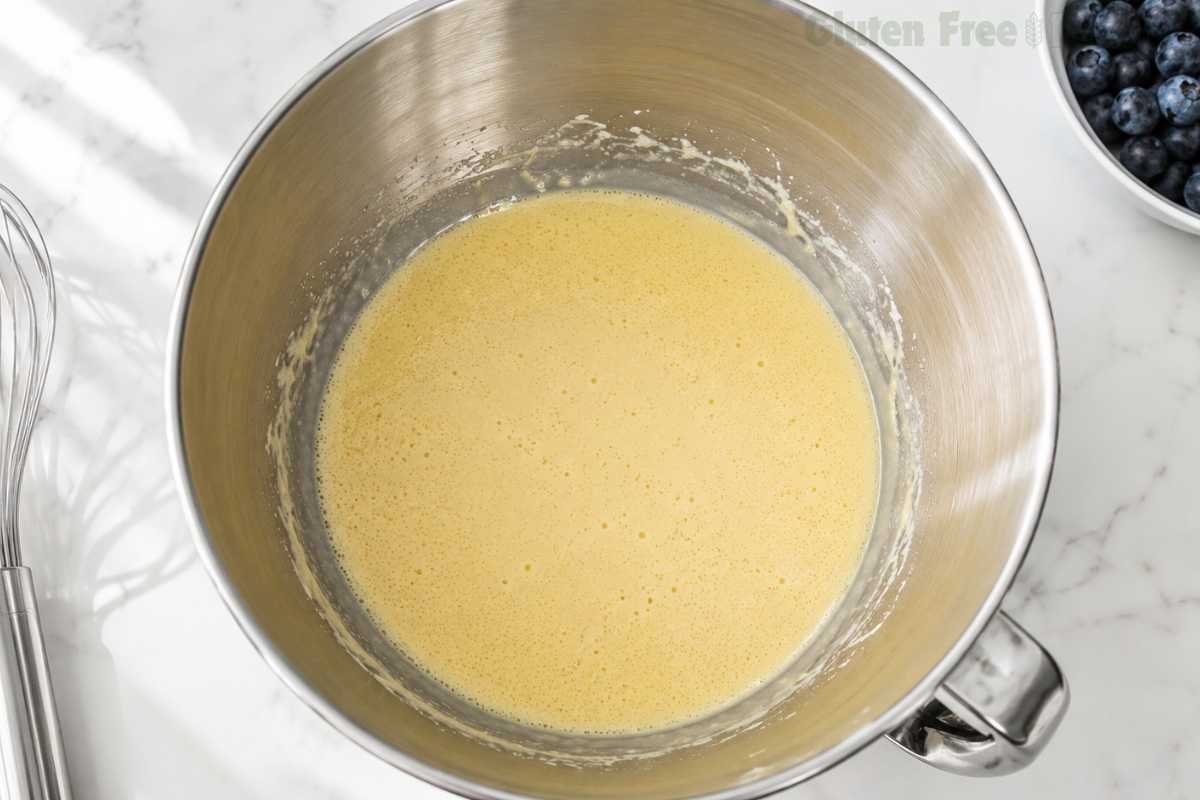
- In the bowl of a stand mixer, or with a hand mixer, beat the eggs and sugar on medium-high for 2 to 3 minutes, until pale, thick, and noticeably fluffy. The foam should fall off the beater in a slow ribbon. In my testing, stopping short of this stage is where flat muffins begin, because without gluten this egg foam is your structure and those trapped air bubbles are what the oven inflates.
- With the mixer on low, pour in the oil in a slow, steady stream so the foam stays airy, then mix in the lemon juice and vanilla.
- Still on low, add one third of the dry mix, then half the yogurt. Repeat, finishing with the last third of dry. Scrape the bowl and mix another 15 to 20 seconds until the batter is smooth. It should feel thick on the spatula, closer to soft frosting than pancake batter.
Fold, Fill, and Chill
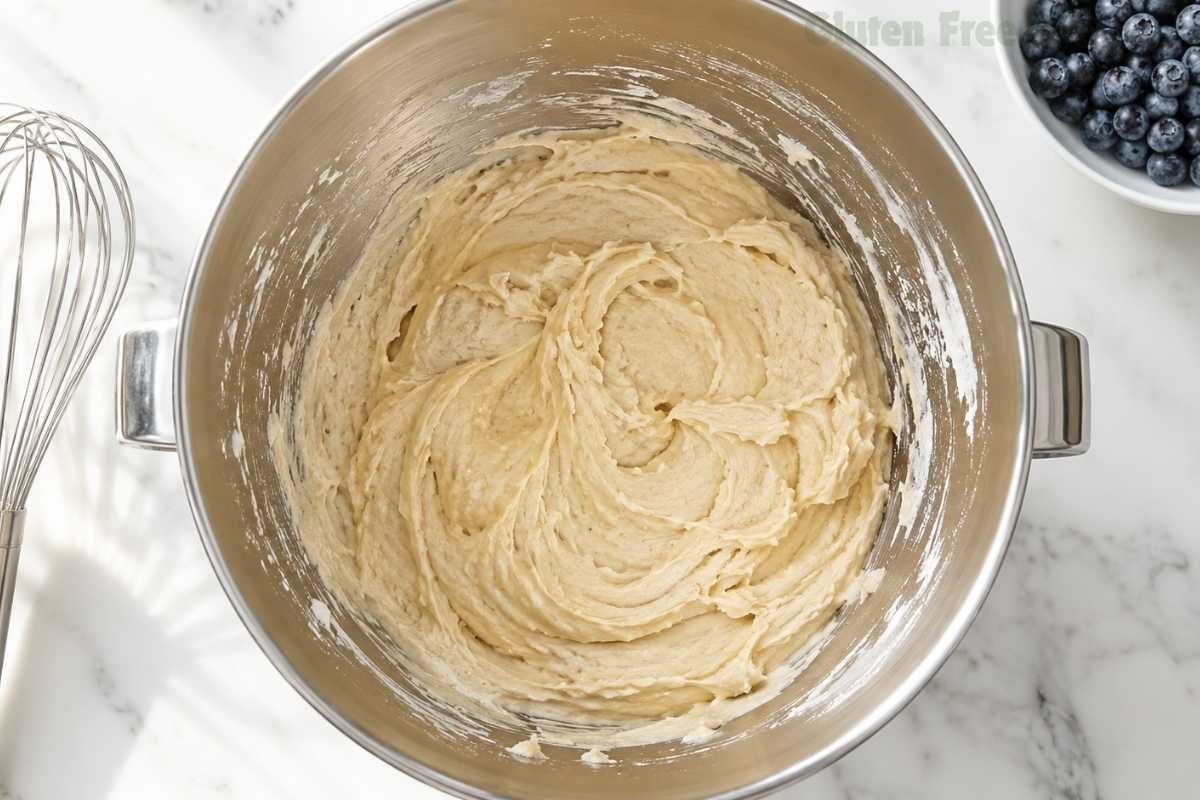
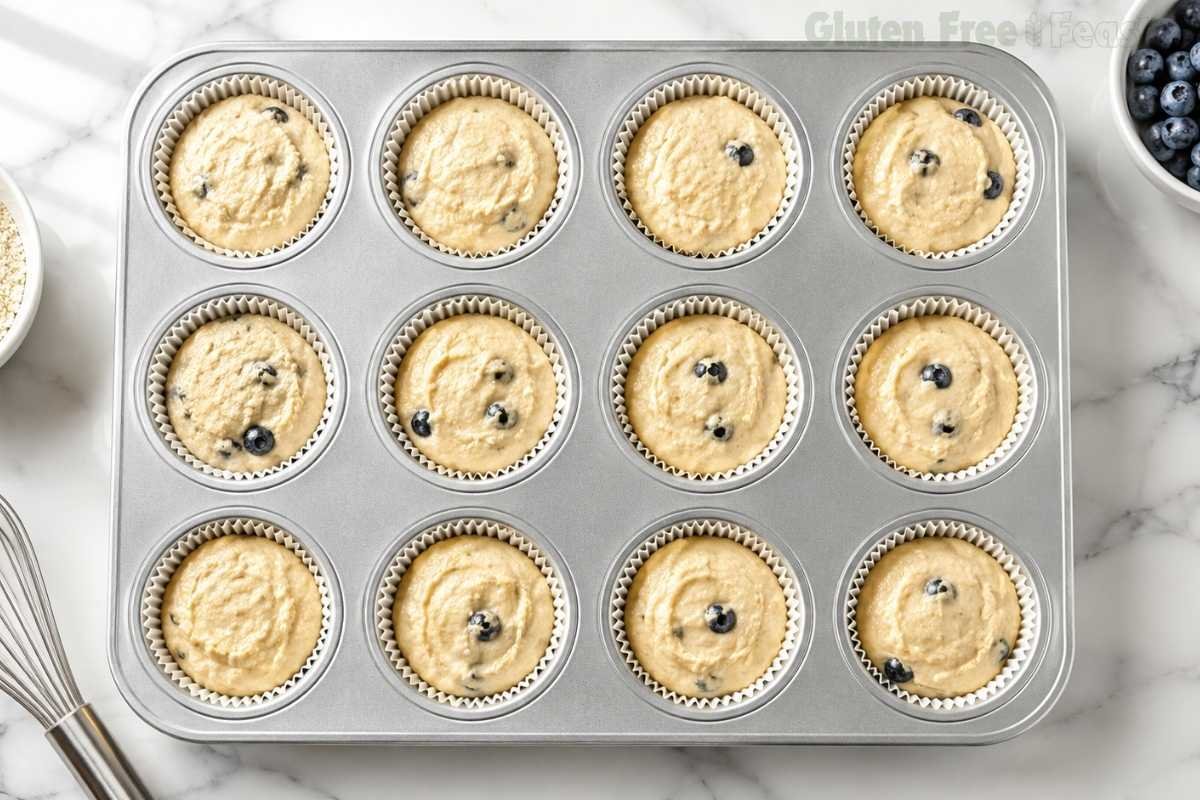
- Fold in the blueberries by hand with a rubber spatula. Scoop the batter evenly into the 12 cups and sprinkle the raw sugar over the tops, if using.
- Refrigerate the filled pan for 20 minutes, and preheat the oven to 425°F during the last 10 minutes of the chill (overnight works too: cover the pan, refrigerate, and preheat in the morning). This rest is the science step: gluten-free starches absorb liquid more slowly than wheat flour, and the chill gives them time to fully hydrate. By the end of the chill the batter visibly stiffens, and a spoon dragged across the top leaves a track that holds its shape. That thickness is what domes the tops and keeps the berries suspended exactly where you folded them.
Bake
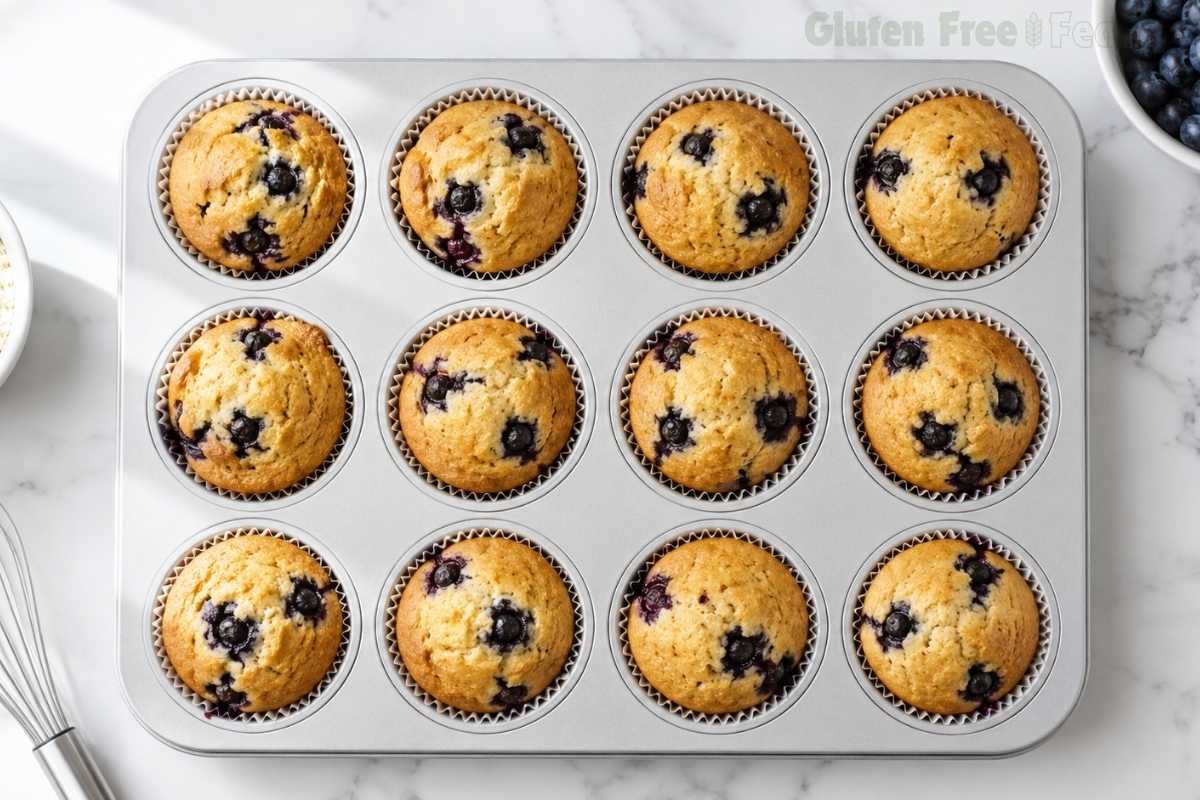
- Bake for 10 minutes at 425°F, then drop the oven to 375°F and bake 10 to 15 minutes more, until the tops are golden and a toothpick in the center comes out clean. Resist opening the oven door during the first 10 minutes. That initial blast of high heat is what sets the tall domes, and every peek lets it escape.
- Cool in the pan for 5 minutes, then move the muffins to a wire rack. Trust me on the wire rack; muffins left in the hot pan steam themselves soggy from the bottom up.
Expert Tips for Best Results
- Weigh your flour. Scooping straight from the bag compacts GF flour and can add far more than the recipe intends, which is the fastest route to a dense, dry muffin. If you have no scale, spoon the flour into the cup and level it.
- Do not shortcut the chill. A warm, thin batter lets berries sink and tops spread flat. The 20-minute chill thickens the batter enough that the berries barely move.
- Frozen berries go in frozen. Thawed berries bleed and water down the batter. Straight from the freezer, they hold their shape; just expect a minute or two more in the oven.
- Watch the toothpick, not the color. This is where gluten-free bakes fool people: the tops look done before the center has set. A muffin pulled early collapses into a gummy middle as it cools. Test the center of a middle muffin, not an edge one.
- Drizzle the oil slowly. Dumping it in at once deflates the egg foam you spent 3 minutes building, and the muffins bake up shorter.
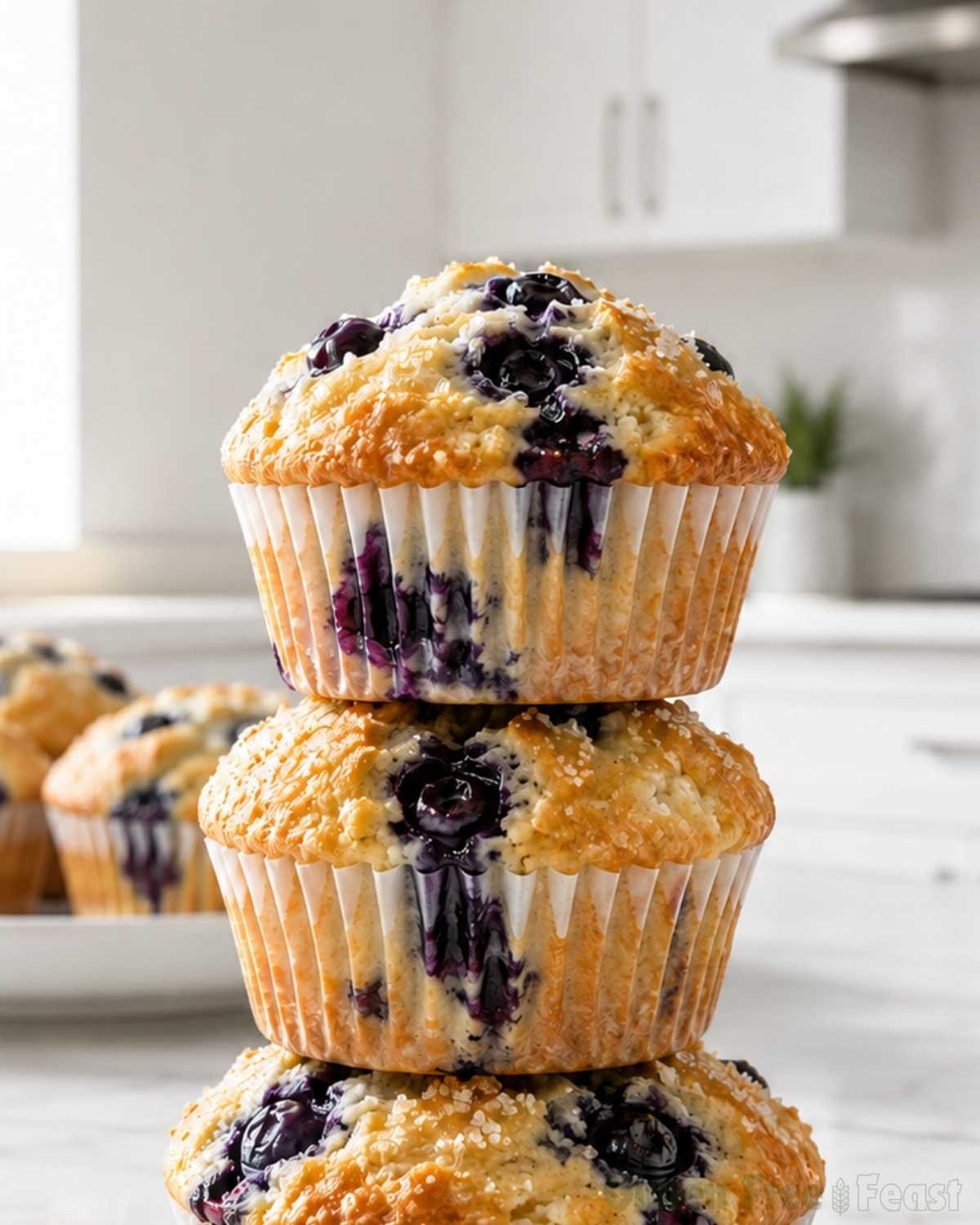
- The raw sugar topping is worth it. Two tablespoons across 12 muffins adds the crackly, bakery-counter top that granulated sugar cannot replicate.
Substitutions and Variations
- Dairy-free: swap the whole milk yogurt for an equal amount of unsweetened dairy-free yogurt. Celiac safety holds as long as the label is certified GF.
- Nut-free: replace the almond flour with 1/2 cup more measure-for-measure blend. The crumb is slightly less rich but still moist.
- Lemon blueberry: add 1 teaspoon of lemon zest with the vanilla for a brighter, citrus-forward muffin.
- Mixed berry: swap up to half the blueberries for raspberries or chopped strawberries; keep the total at 1 cup so the batter is not overloaded with moisture.
- Less sweet: the 2 tablespoons of raw sugar topping can simply be omitted with no change to the recipe.
All of these keep the recipe fully celiac-safe when made with certified GF-labeled products.
What to Serve With Gluten Free Blueberry Muffins
These muffins anchor a weekend brunch beautifully. A warm stack of gluten free pancakes next to a basket of these muffins covers both the fork crowd and the grab-and-go crowd at the same table. Round out the spread with scrambled eggs or an omelet for protein, crispy bacon or certified GF breakfast sausage, a bowl of Greek yogurt with honey, and fresh fruit with strong coffee. For an afternoon version, one muffin with a cup of tea is exactly the right amount of sweet.
Storage and Make-Ahead
These muffins are at their absolute best the day they are baked. Store leftovers in a zip-top bag at room temperature for up to 1 day. For longer storage, wrap each cooled muffin individually in plastic wrap, place them in a freezer bag, and freeze for up to 2 months. To reheat, unwrap and microwave for 20 to 30 seconds straight from frozen.
My favorite make-ahead move: prepare the batter the evening before, fill the pan, cover, and refrigerate overnight. The extended chill deepens the hydration effect, and the muffins bake even taller in the morning.
Why Trust This Recipe
I develop every recipe the way I once ran lab work: documented testing, controlled variables, and results you can replicate in your own kitchen.
This recipe went through six full test batches in my dedicated gluten-free kitchen before publishing.
What that means for you:
- Multiple test batches before publishing
- Science-based notes on key steps throughout
- Honest substitution guidance, not guesswork
- Safe for celiac disease, with cross-contamination taken seriously at every step
Frequently Asked Questions
What are the most common mistakes with gluten-free muffins?
The big three are measuring flour by scooping instead of weighing (too much GF flour means a dense, dry crumb), overmixing after the flour meets the liquid, and skipping the chill that lets the starches hydrate. Underbaking is a close fourth, since gluten-free batters look done on top before the center has set.
How do you keep blueberries from sinking in gluten-free batter?
Batter thickness is the real answer. A properly thick, chilled batter holds the berries in place on its own, which is exactly what the 20-minute refrigeration in this recipe produces. If your batter ever turns out on the thin side, tossing the berries in a spoonful of the dry flour mix gives them extra grip.
What is the secret to moist gluten-free muffins?
Liquid fat and acidity. Oil stays liquid at room temperature, so the crumb reads as moist for longer than butter-based muffins, and the yogurt and lemon juice tenderize the crumb while feeding the leavening. A full hydration rest before baking also eliminates the gritty, dry texture gluten-free flour is known for.
What flour works best in gluten-free muffins?
A 1:1 measure-for-measure blend that already contains xanthan gum, such as King Arthur Measure for Measure or Bob’s Red Mill 1-to-1. Avoid using a single flour like plain rice flour or almond flour alone; neither has the binding structure to hold a muffin together.
How do you make blueberry muffins gluten-free?
Replace the wheat flour with a xanthan-containing 1:1 gluten-free blend measured by weight, confirm that your baking powder and vanilla extract are certified gluten-free, and rest the batter 20 minutes so the flours hydrate fully. Every other part of a classic blueberry muffin stays the same.
Can I use frozen blueberries?
Yes, and you should add them straight from the freezer without thawing so they do not bleed into the batter or release extra moisture. Plan on 1 to 2 extra minutes of bake time and check with a toothpick.
Final Thoughts
These have become the muffins I bake when I want the kitchen to smell like a weekend. Make a batch, and when that first tall, crackly top comes off the cooling rack, come back and tell me how it went in the comments. I read and answer every single one.