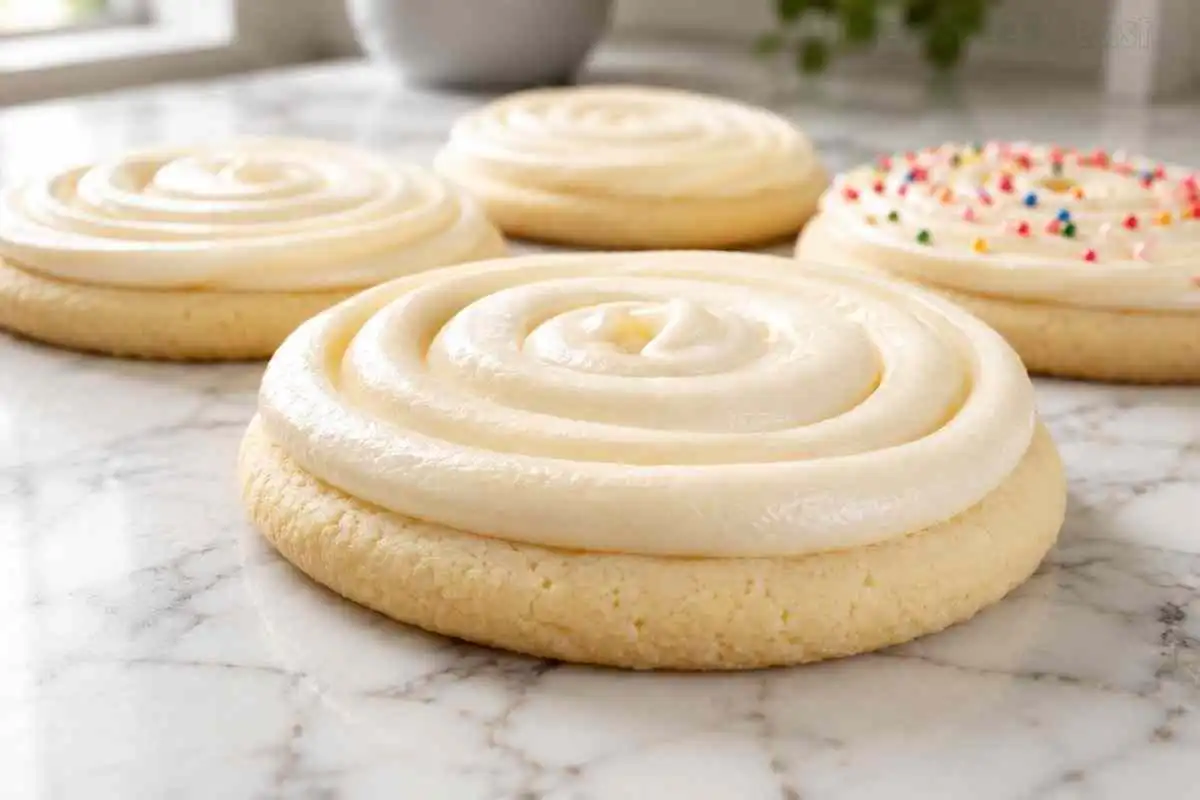
Gluten free sugar cookies should be soft and slightly chewy, with a clean vanilla flavor and enough structure to hold together through frosting and stacking. Getting there took me six test batches, because the early rounds kept coming out either cakey or crumbly. The dough spread flat, and the texture crumbled when you picked the cookie up.
What fixed it was paying closer attention to the flour. Not constantly switching brands, but understanding what a certified gluten free all-purpose blend with xanthan gum actually does in a cookie dough. That understanding, plus the spoon-and-level measuring method, is what finally locked in a consistent result.
After those six batches, I landed on a formula that produces a soft cookie with clean edges and structure that holds through frosting and stacking. These are drop cookies: no rolling pin, no chill time, no cookie cutters. You scoop, bake, and have gluten free sugar cookies on the table in 20 minutes. The dairy-free version works just as well, and the celiac safety notes cover every ingredient where hidden gluten is a real risk.
Key takeaways
These gluten free sugar cookies are a drop-cookie recipe that bakes at 375°F for 10 to 12 minutes and yields 24 soft, slightly chewy cookies with no chill time required. They use a certified gluten free all-purpose flour blend with xanthan gum (Pillsbury Gluten Free Flour or Bob’s Red Mill 1-to-1, blue bag), certified gluten free baking powder (Bob’s Red Mill GF or Rumford), and pure vanilla extract (Nielsen-Massey or McCormick Pure) to eliminate every hidden gluten source. Xanthan gum acts as the structural binder that replaces gluten’s elasticity; without it, the cookies crumble rather than hold their shape. The recipe includes a fully tested dairy-free option using Smart Balance or Earth Balance block butter at a 1:1 swap, and the cookies freeze well both baked and unbaked.
Prep Time: 10 mins · Cook Time: 12 mins · Total Time: 22 mins
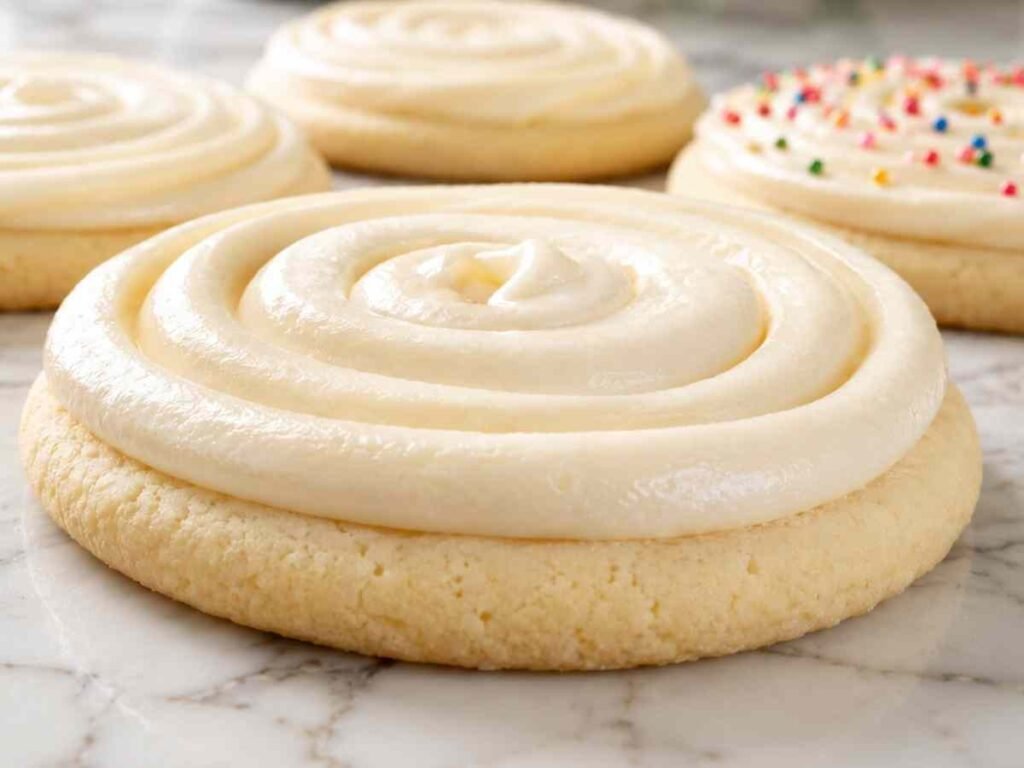
Table of Contents
Why You Will Love This Gluten Free Sugar Cookies Recipe
- No chill time, 20 minutes start to finish: drop-cookie format means no rolling, no refrigerating the dough, and no waiting. Scoop, bake, done.
- Soft and slightly chewy texture: the butter-to-flour ratio and a short bake at 375°F give these cookies a tender interior and lightly golden edges without going crisp.
- Certified gluten free at every flagged ingredient: this recipe names the specific brands for baking powder and vanilla extract, not just a generic GF label. Every hidden gluten risk is addressed by name.
- Dairy-free option that actually works: Smart Balance or Earth Balance block butter (not tub) is a direct 1:1 swap with no changes to the rest of the recipe.
- Only 8 ingredients: everything on the list is a standard pantry staple for anyone who bakes gluten free regularly.
- Naturally scalable: the recipe doubles cleanly for a larger batch and the cookies freeze well both baked and unbaked. If you enjoy drop cookies, my gluten free peanut butter cookies use the same technique and come together just as fast.
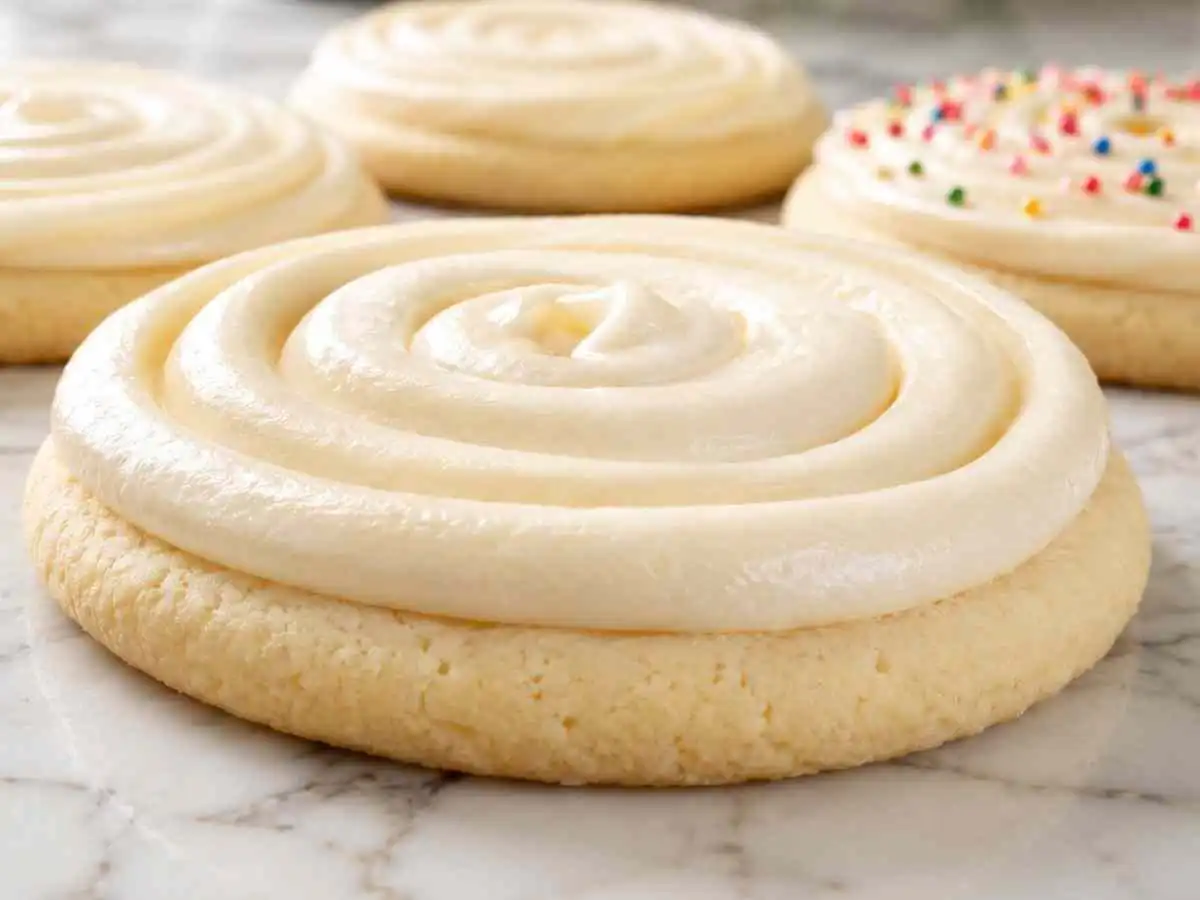

Gluten Free Sugar Cookies
Ingredients
Equipment
Method
- Preheat the oven to 375°F (190°C). Line two baking sheets with parchment paper.
- In a large bowl, beat the butter and granulated sugar together on medium speed until smooth and noticeably lighter in color, about 2 minutes. The butter should be at room temperature, not cold and not melted.
- Add the egg, pure vanilla extract, and pure almond extract to the creamed butter and sugar. Mix on medium speed until fully combined, about 30 seconds.
- In a separate bowl, whisk together the certified gluten free flour, certified gluten free baking powder, and salt. Gradually add the dry ingredients to the wet ingredients and mix until a soft dough forms. Stop mixing as soon as no dry patches remain.
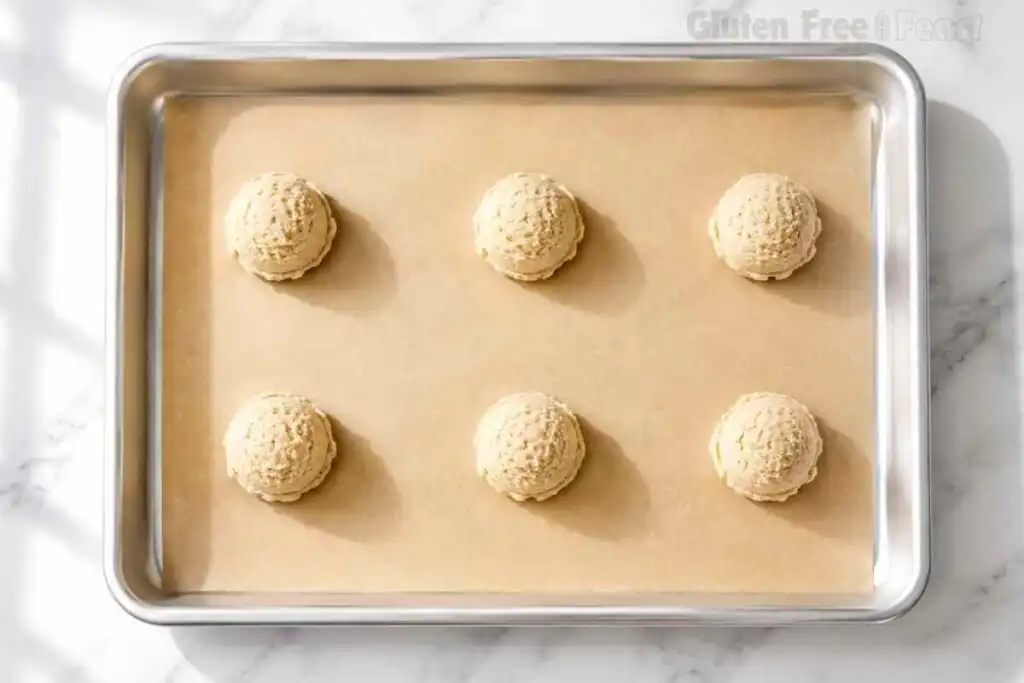
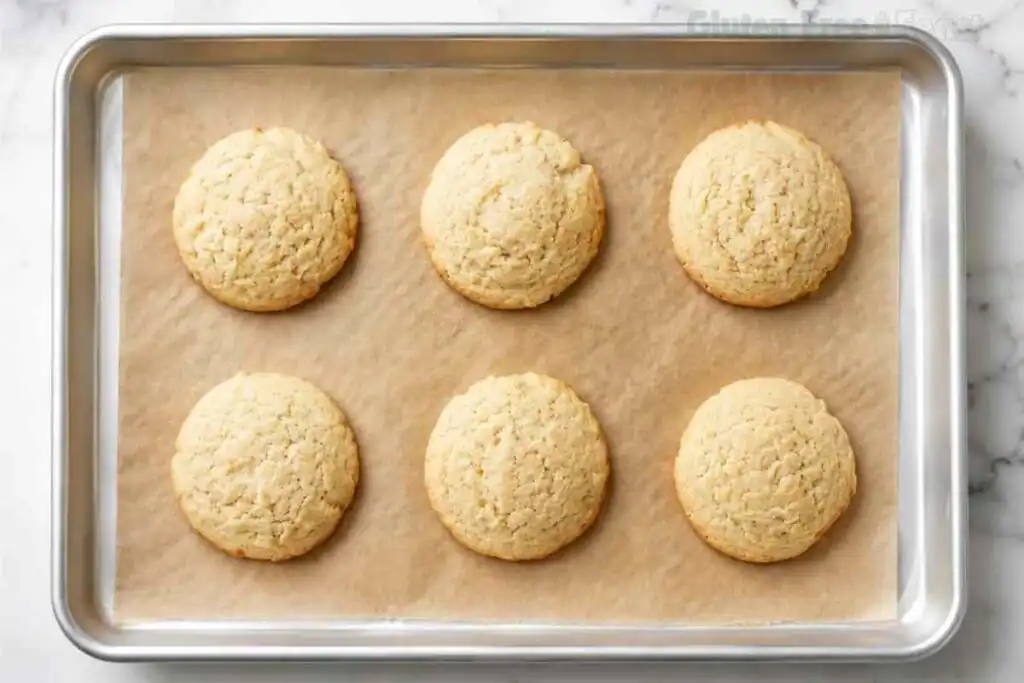
- Use a greased 1½-tablespoon cookie scoop to portion the dough. Place scoops 2 inches apart on the prepared baking sheets. Bake for 10 to 12 minutes, until the edges are very lightly golden. The centers will look slightly underdone when you pull them out.
- Let the cookies cool on the baking sheet for 2 to 3 minutes, then transfer to a wire rack to cool completely before frosting or serving.
Nutrition
Notes
Gluten-Free Note
Tried this recipe?
Let us know how it was!Ingredients
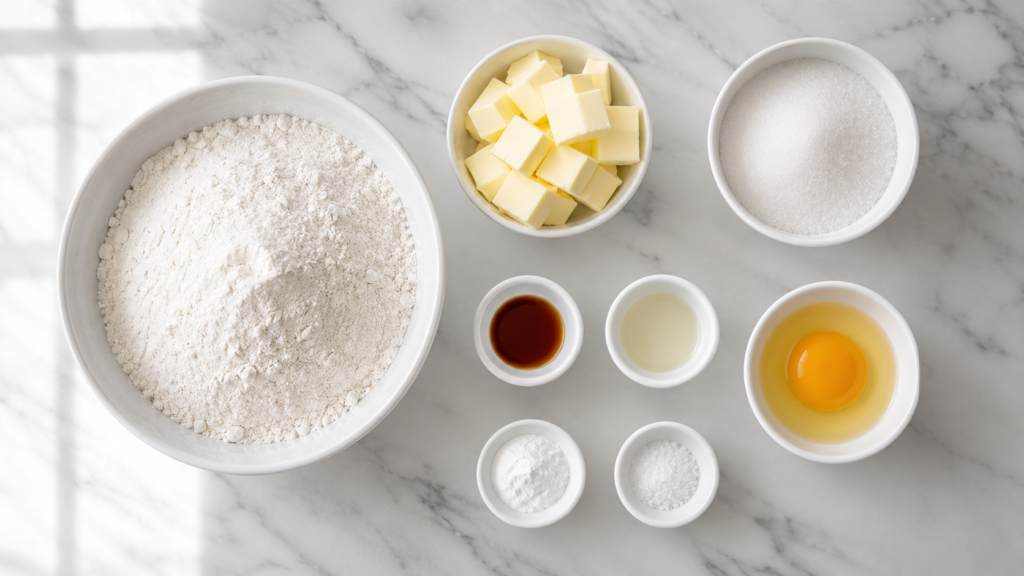
For the Cookies
- ¾ cup (170g) unsalted butter, at room temperature (or dairy-free block butter; see notes)
- ¾ cup (150g) granulated sugar
- 1 large egg
- 1 tablespoon pure vanilla extract (Nielsen-Massey Pure Vanilla Extract or McCormick Pure Vanilla Extract; see notes)
- ⅛ teaspoon pure almond extract
- 1½ cups (180g) certified gluten free all-purpose flour blend with xanthan gum (Pillsbury Gluten Free Flour or Bob’s Red Mill 1-to-1 GF Baking Flour, blue bag)
- 1 teaspoon certified gluten free baking powder (Bob’s Red Mill Gluten Free Baking Powder or Rumford)
- ⅛ teaspoon salt
Ingredient Notes and Substitutions
Certified gluten free all-purpose flour blend: This recipe requires a blend that already contains xanthan gum. Pillsbury Gluten Free Flour and Bob’s Red Mill 1-to-1 GF Baking Flour (blue bag) both work well. Do not substitute almond flour or coconut flour: these behave entirely differently and require a separate recipe structure. The same flour blend works equally well in my gluten free chocolate chip cookies if you want a second recipe to test it in.
Use the spoon-and-level method every time: spoon the flour into the measuring cup and level it off with a knife. Scooping directly from the bag packs in more flour than the recipe calls for, which produces a dry, dense cookie.
Why xanthan gum matters: Gluten forms a stretchy protein network in wheat dough that traps gas bubbles, giving baked goods their rise and structure. A gluten free flour blend cannot do this on its own. Xanthan gum is a plant-derived binder that mimics that network, holding the cookie together through baking and cooling.
Without xanthan gum, GF cookies crumble rather than hold their shape. If your blend does not contain it, add ¼ teaspoon per cup of flour.
Certified gluten free baking powder: Standard baking powder is usually gluten free, but not all brands are manufactured in dedicated facilities. Bob’s Red Mill Gluten Free Baking Powder and Rumford Baking Powder are the two I trust. Check the label of any other brand for a certified GF symbol before using it. I use the same certified GF baking powder in my gluten free biscuits, where leavening reliability matters just as much.
Pure vanilla extract: Imitation vanilla extract can contain caramel color and other additives with gluten-containing sources. Use pure vanilla extract only. Nielsen-Massey Pure Vanilla Extract and McCormick Pure Vanilla Extract are both reliably safe. This is a small amount but the flavor difference between pure and imitation is noticeable in a simple cookie like this.
Dairy-free butter: Smart Balance Original Butter Blend (block form) and Earth Balance Vegan Buttery Sticks are both certified gluten free. Both substitute at a 1:1 ratio. Do not use the tub/spread versions: they contain too much water and will make the cookie spread flat. For more gluten free baking options that work with dairy-free ingredients, browse GFF baking recipes.
Celiac Safety Note: Please ensure all packaged ingredients carry a certified gluten free label. For this recipe, check specifically: your gluten free all-purpose flour blend, baking powder, vanilla extract, and any sprinkles or powdered sugar used for decorating. Cross-contamination at packaging facilities is a real risk for people with celiac disease. Look for the certified GF symbol on the package, not only a “gluten-free” marketing claim.
How to Make Gluten Free Sugar Cookies
Step 1: Prep the Oven and Pans
Preheat the oven to 375°F (190°C). Line two baking sheets with parchment paper. Parchment prevents sticking and insulates the bottom of the cookie from direct pan heat. That insulation is one of the easiest ways to avoid overbrowning on the underside before the centers have set.
Step 2: Cream Butter and Sugar
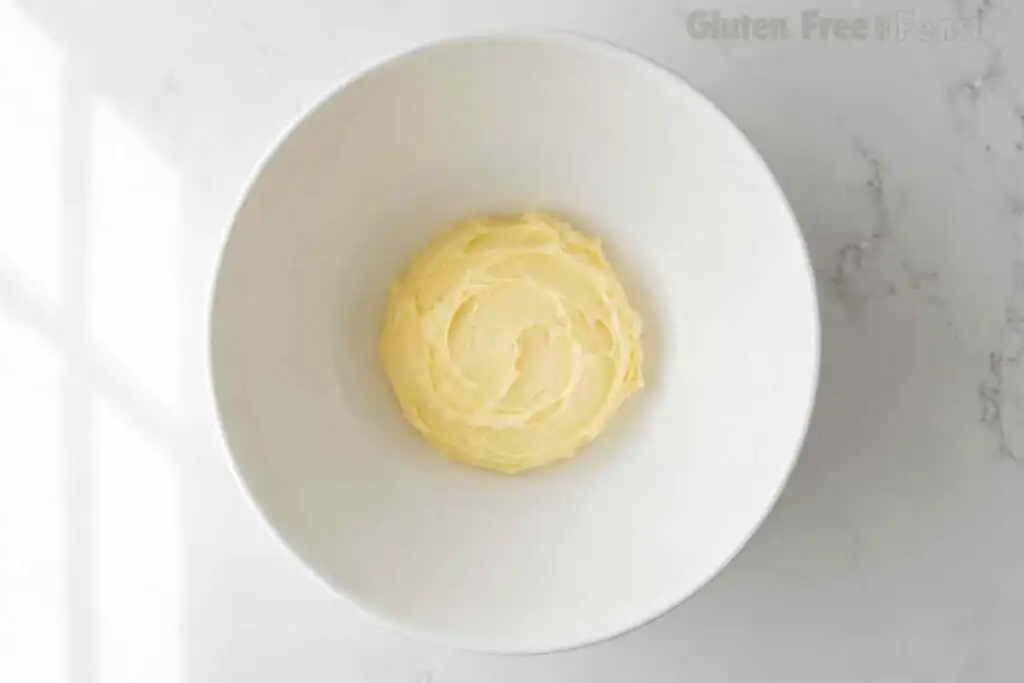
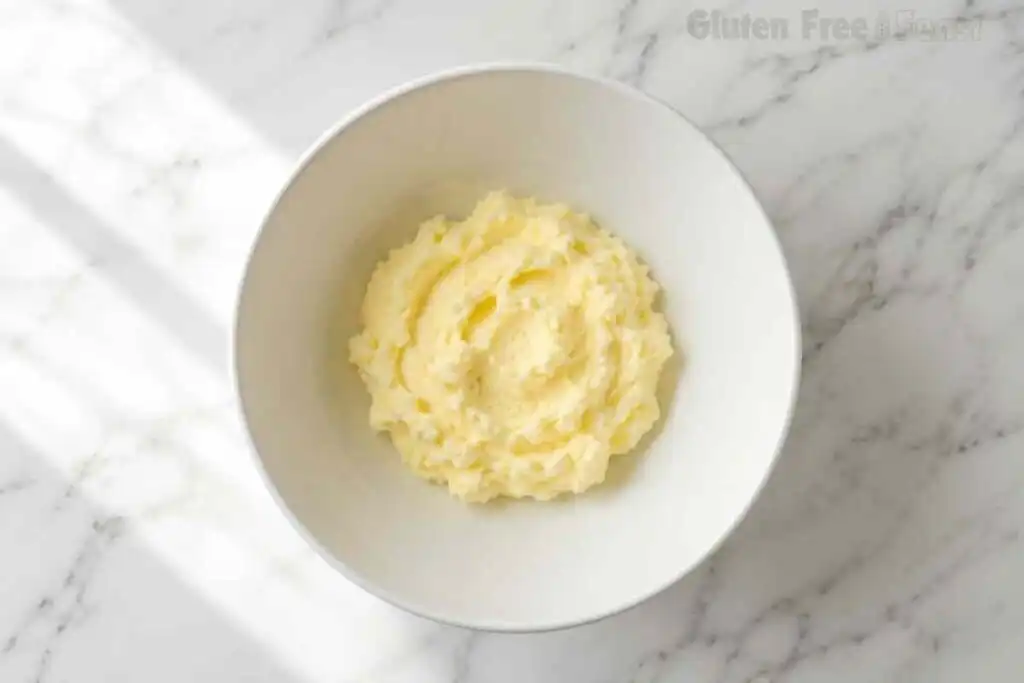
In a large bowl, beat the butter and granulated sugar together on medium speed until smooth and noticeably lighter in color, about 2 minutes. The butter should be at room temperature, not cold and not melted. Cold butter will not cream properly; melted butter will make the cookies spread flat. This step builds the structure the cookies need to hold their shape.
Step 3: Add Wet Ingredients
Add the egg, pure vanilla extract, and pure almond extract to the creamed butter and sugar. Mix on medium speed until fully combined. The mixture may look slightly broken at this stage, especially if the egg was cold. Keep mixing for another 30 seconds and it will come together.
Step 4: Mix Dry Ingredients and Combine
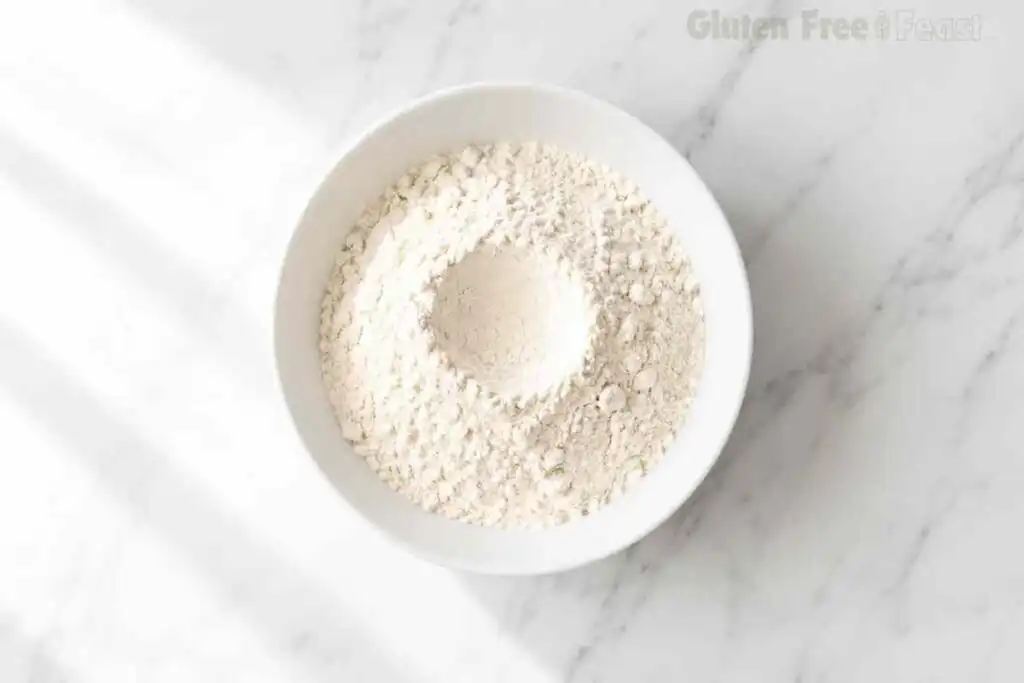
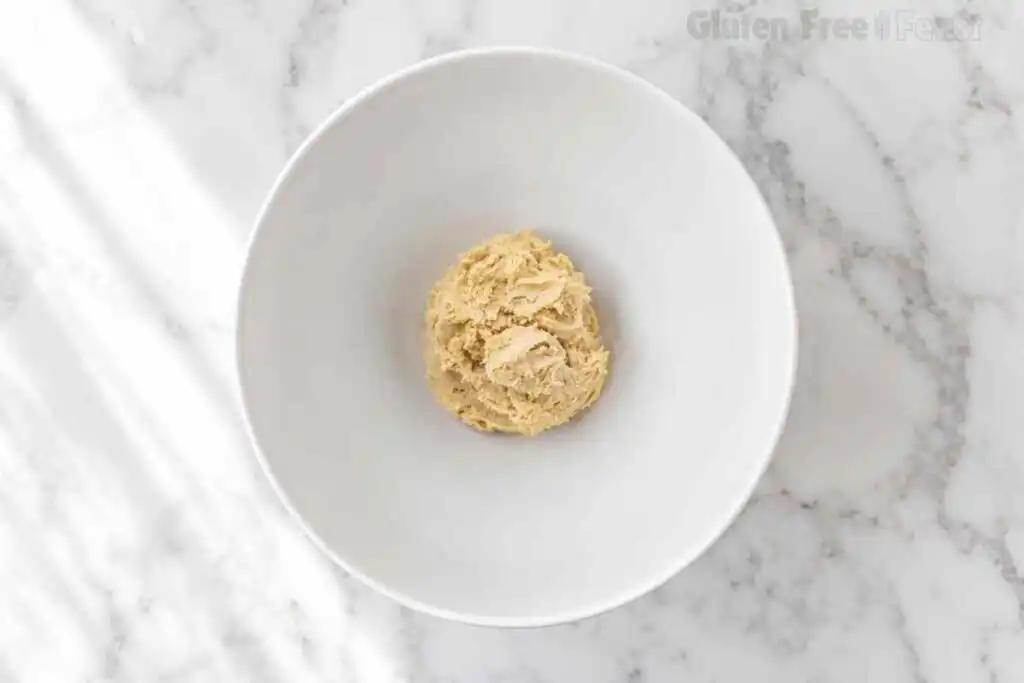
In a separate bowl, whisk together the certified gluten free flour, certified gluten free baking powder, and salt. Gradually add the dry ingredients to the wet ingredients and mix until a soft dough forms. Stop as soon as you no longer see dry patches. Over-mixing a GF dough activates the starches and can make the finished cookie dense.
Step 5: Scoop and Bake
Use a greased 1½-tablespoon cookie scoop to portion the dough and place scoops 2 inches apart on the prepared baking sheets. Greasing the scoop prevents sticking and gives you consistent portion sizes, which means consistent bake times across the whole batch. Bake for 10 to 12 minutes, until the edges are very lightly golden. The centers will still look slightly underdone when you pull them out.
Step 6: Cool Before Moving
Let the cookies cool on the baking sheet for 2 to 3 minutes before transferring to a wire rack. This cooling period on the pan is important: gluten free cookies are fragile when they first come out of the oven. GF flour blends are starch-heavy, and those starches continue to set as the temperature drops. What looks underdone at the 10-minute mark will be fully set and properly chewy once the cookie reaches room temperature.
Expert Tips for Best Results
- Always spoon-and-level your flour. Spoon the flour into the measuring cup and level it off with a knife. Never scoop the measuring cup directly into the flour bag. Over-packing is the single most common cause of dry, dense gluten free sugar cookies.
- Use room-temperature butter. Butter that is too cold will not cream properly and leaves uneven sugar crystals in the dough. Butter that is too warm melts and causes the cookies to spread flat. Press a finger into the butter: it should leave an indent without feeling greasy or slippery.
- Grease the cookie scoop every 6 to 8 scoops. GF dough is stickier than wheat dough. A quick spray of cooking oil on the scoop keeps the portions releasing cleanly and uniform in size.
- Pull them before they look done. The edges should be very lightly golden, but the centers should still look soft. GF cookies firm up significantly as they cool: trust the timer over your eyes.
- Use dedicated gluten free equipment. Wooden spoons are porous and harbor gluten protein even after washing. Use metal or silicone utensils. If your baking bowls or mixers are shared with wheat-containing doughs, wash them thoroughly with hot soapy water before GF use.
- Wait for full cooling before frosting. Frosting applied to a warm cookie will melt and slide. Give the cookies at least 20 minutes on a wire rack before decorating.
Substitutions and Variations
Dairy-free cookies: Use Smart Balance Original Butter Blend or Earth Balance Vegan Buttery Sticks in block form, 1:1 for the butter. Both are certified gluten free. Do not use tub-style spreads, which have too high a water content for proper cookie structure.
Egg-free cookies: Bob’s Red Mill Gluten Free Egg Replacer (follow the package directions for 1 egg) works in this recipe. The cookies will be very slightly less golden on top but hold their structure well. This is the only egg replacer I have tested here.
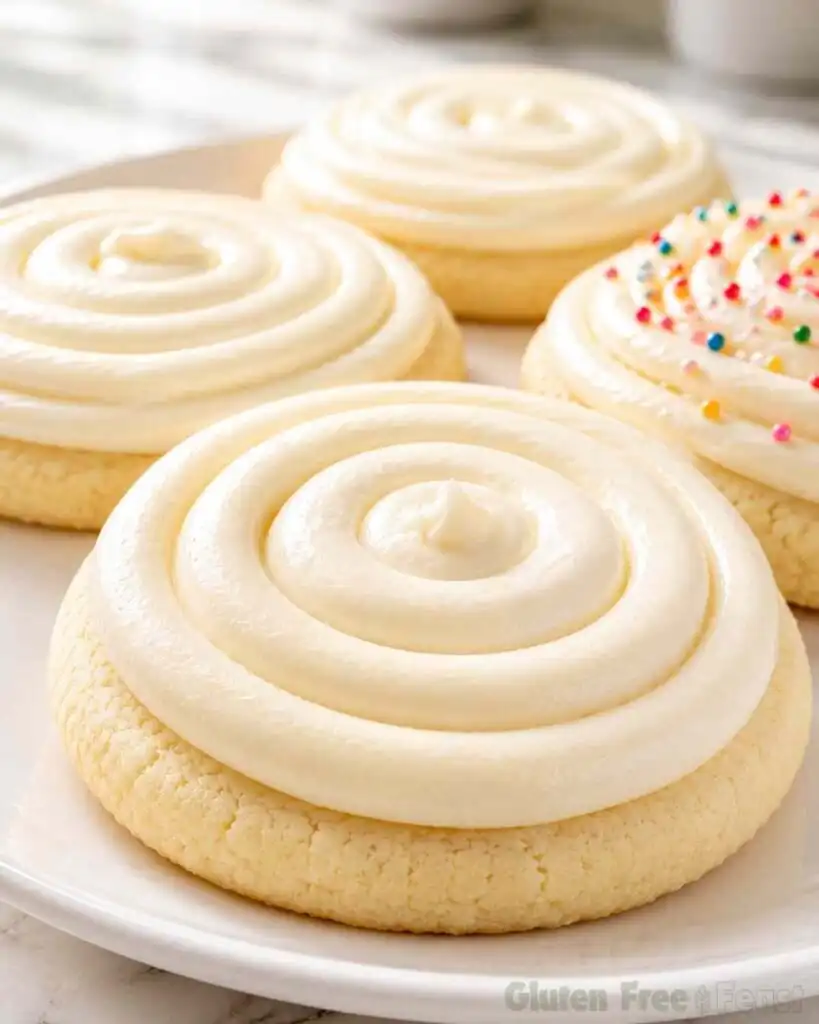
Sprinkles and frosting: If you are decorating, use certified gluten free sprinkles. Supernatural Sprinkles and Let’s Do Organic are both safe. Many standard grocery store sprinkle brands contain wheat starch, including some that do not list it obviously on the front of the label. For powdered sugar in buttercream or glaze, buy packaged GF-labeled powdered sugar: bulk-bin powdered sugar carries a high cross-contamination risk from shared scoops.
Flour blend alternatives: If you use a sorghum-based blend, the dough may absorb liquid faster and feel stiffer. You can add 1 teaspoon of dairy or dairy-free milk to loosen it. Avoid blends that list cornstarch as the first ingredient: these tend to go gummy in drop cookies. For more gluten free dessert baking ideas, visit GFF gluten free desserts.
What to Serve With Gluten Free Sugar Cookies
These cookies are versatile enough to work as a simple afternoon snack or as part of a larger spread. A few combinations that work well:
- Holiday cookie boxes: Pair these with my gluten free chocolate chip cookies and a shortbread for a mixed tin. Sugar cookies ship and stack particularly well because of their sturdy structure.
- Coffee and tea service: The mild vanilla flavor is a natural companion to both black coffee and herbal tea. Serve alongside my gluten free blueberry muffins for a simple coffee spread that covers both a sweet cookie and a soft muffin.
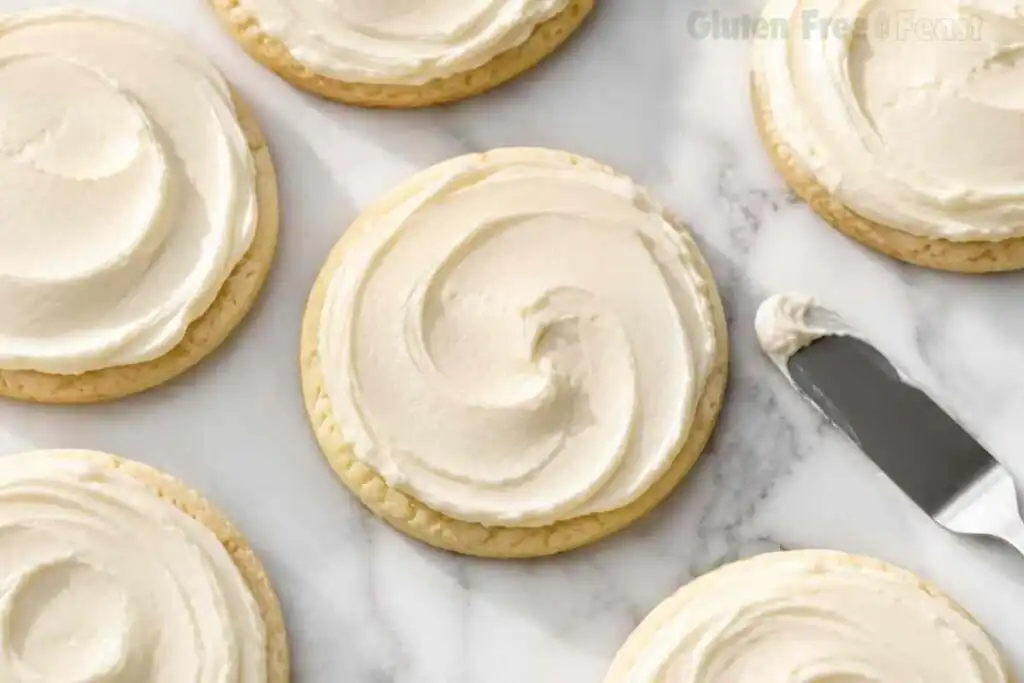
- Decorated for celebrations: Frost with GF buttercream (made with GF-labeled powdered sugar) and certified GF sprinkles. These also work as the base for a birthday dessert spread.
- Paired with ice cream: Press a scoop of vanilla ice cream between two cookies for a simple ice cream sandwich. Freeze for 30 minutes to let the ice cream firm up before serving.
- GFF snack recipes: For more ideas on what to bake alongside these cookies, browse GFF gluten free snack recipes.
Storage and Make-Ahead Instructions
Room temperature: Store baked, cooled cookies in an airtight container at room temperature for up to 3 days. Place a piece of parchment between layers if stacking frosted cookies.
Refrigerator: Unfrosted baked cookies keep in the refrigerator in an airtight container for up to 5 days. Bring to room temperature for 10 minutes before serving: cold cookies can taste a little drier than they actually are.
Freezer (baked): Cool completely, then freeze in a single layer before transferring to a zip-top freezer bag with parchment between layers. Baked cookies freeze well for up to 2 months. Thaw at room temperature for 20 to 30 minutes. The same freeze method works for my gluten free banana muffins, so both are good candidates for a batch-bake day.
Make-ahead unbaked dough: Refrigerate the scooped dough balls on a parchment-lined sheet for up to 2 days. Bake directly from the fridge, adding 1 to 2 minutes to the bake time. This is my preferred make-ahead method because the cookies come out of the oven fresh without any prep work on the day of baking.
Why Trust This Recipe
I develop recipes the same way I approached lab work: documented testing, controlled variables, and results that hold up in any kitchen, not just mine.
This recipe went through six test batches in my dedicated gluten free kitchen. I kept notes on what failed and why, so you are not just following steps but understanding the process.
What that means for you:
- Multiple test batches before publishing
- Science-based notes on key steps throughout
- Honest substitution guidance, not guesswork
- Safe for celiac disease, with cross-contamination taken seriously at every step
Frequently Asked Questions
Can sugar cookies be made gluten free?
Yes. Sugar cookies rely on fat, sugar, and eggs for structure rather than gluten, which makes them one of the most straightforward cookies to convert. Swapping in a certified gluten free all-purpose flour blend with xanthan gum produces the same soft, slightly chewy result. The two critical changes are certified gluten free baking powder and pure (not imitation) vanilla extract: both carry hidden gluten risk in their standard forms.
Which gluten free flour is best for sugar cookies?
Use a certified gluten free all-purpose flour blend that already contains xanthan gum. Pillsbury Gluten Free Flour and Bob’s Red Mill 1-to-1 GF Baking Flour (blue bag) are both reliable choices. These blends replicate the binding and structure that gluten provides.
Almond flour and coconut flour behave completely differently and are not substitutes in a 1:1 swap; they require a separate recipe. If your blend does not contain xanthan gum, add ¼ teaspoon per cup of flour.
What is the trick to gluten free baking?
The most important single technique is accurate flour measurement. Spoon flour into the measuring cup and level it off with a knife: never scoop the cup directly into the bag. Scooping packs in up to 20% more flour than the recipe requires, which produces dry, dense cookies in any GF recipe. Using a quality certified GF flour blend with xanthan gum is the second essential factor, since not all blends perform the same.
What cookies are gluten free and sugar free?
This recipe is gluten free but not sugar free: it uses ¾ cup of granulated sugar. A gluten free and sugar-free cookie would require a granulated sugar alternative such as erythritol or monk fruit sweetener. This recipe has not been tested with those substitutes and results will vary. Search specifically for gluten free sugar-free cookie recipes designed for sugar alternative baking if that is your goal.
What common cookies are gluten free?
Many classic cookies can be made gluten free by swapping in a certified GF flour blend. Sugar cookies, peanut butter cookies, chocolate chip cookies, and shortbread are all GF-friendly with the right flour. Macarons and meringues are naturally gluten free without any modification. The key step in every case is checking all add-ins, such as chocolate chips, sprinkles, and extracts, for hidden gluten sources before baking.
Can I make these gluten free sugar cookies ahead of time?
Yes, two ways. Refrigerate the scooped, unbaked dough balls for up to 2 days and bake from the fridge, adding 1 to 2 minutes to the bake time. Alternatively, bake and fully cool the cookies, then freeze them for up to 2 months in an airtight container with parchment between layers. Thaw at room temperature for 20 to 30 minutes before serving or frosting.
Final Thoughts
These gluten free sugar cookies are the kind of simple recipe that earns a permanent spot in your rotation precisely because they are not complicated. The technique is straightforward once you understand why each step matters, and the result is a cookie that holds up to frosting, stacking, and sharing. Bake a batch this week, freeze half the dough balls unbaked, and you have fresh cookies ready in 12 minutes any time you need them.