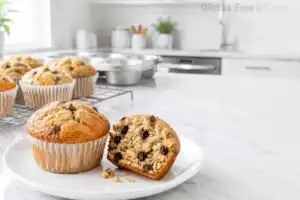
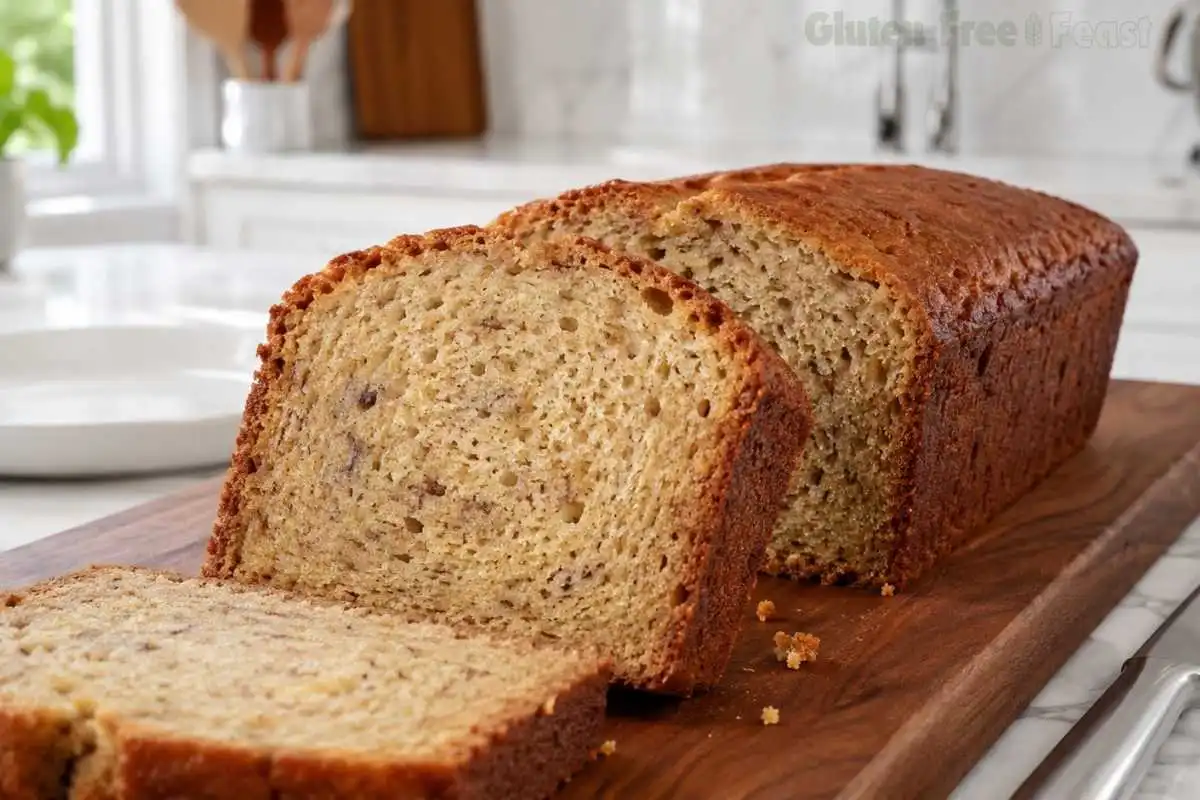
There is a particular kind of disappointment that comes from pulling a gluten-free banana bread out of the oven and watching it deflate. You know exactly what I mean: the gummy center, the crumbly edges, the dense texture that tastes nothing like the real thing. I spent six test batches getting this recipe right before I was happy with it, and the difference comes down to two things: using the correct flour blend, and letting the batter rest before it goes into the oven.
This gluten free banana bread is thick, tender, and genuinely moist from edge to center. It bakes up in one bowl with ingredients you already have on hand, and the entire kitchen smells incredible for the full hour it is in the oven. My sister, who has managed celiac disease for twelve years, told me this is the first banana bread she has eaten without mentally comparing it to the wheat version. That was the moment I knew this recipe was ready to publish.
Key takeaways
Moist gluten-free banana bread requires three things: a certified GF 1:1 flour with xanthan gum, a 10-minute batter rest before baking, and a full 45-minute cool before slicing.
Best flour: Bob’s Red Mill 1-to-1 or King Arthur Measure for Measure. Banana ripeness: heavily spotted to fully black peel only.
Table of Contents
Why You Will Love This Gluten Free Banana Bread
- One bowl, minimal cleanup: Every ingredient goes into the same bowl in the right order. No mixer needed.
- Genuinely moist crumb: The combination of overripe bananas, melted butter, and brown sugar creates a tight, tender crumb that holds together when you slice it.
- Kitchen-tested through six rounds: Every failure taught me something. The notes throughout this recipe reflect what actually goes wrong and why.
- Celiac-safe and certified gluten-free: Made entirely with certified GF ingredients in a dedicated gluten-free kitchen.
- Freezes beautifully: Slice before freezing and you have a ready breakfast for weeks.
- Dairy-free option included: A simple swap makes this completely dairy-free without changing the texture.
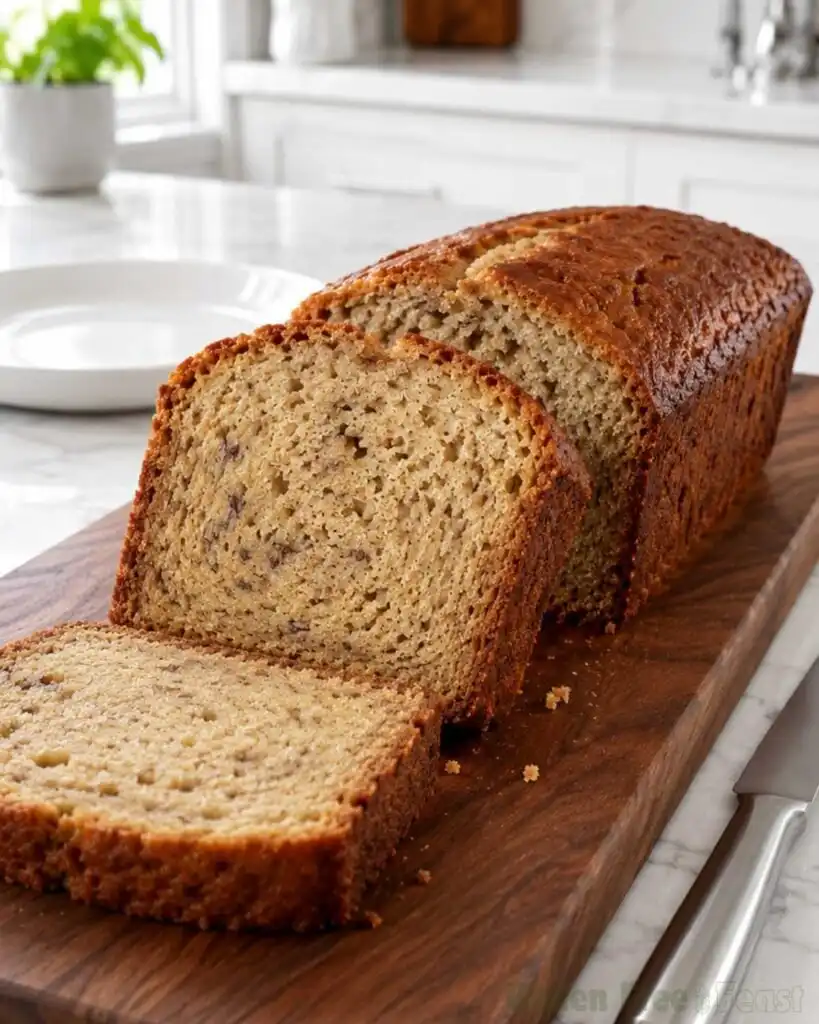
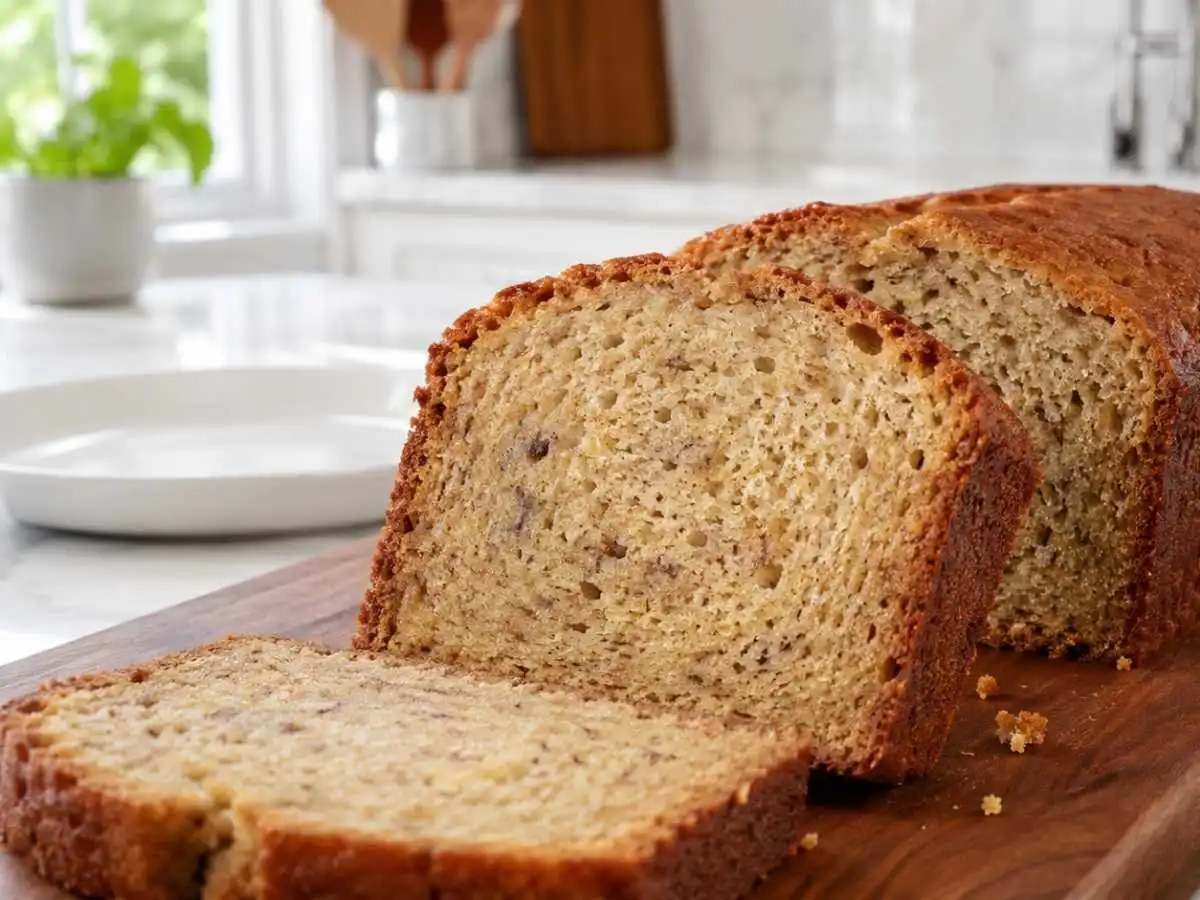

Gluten Free Banana Bread (Moist Every Time)
Ingredients
Equipment
Method
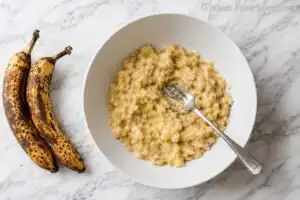
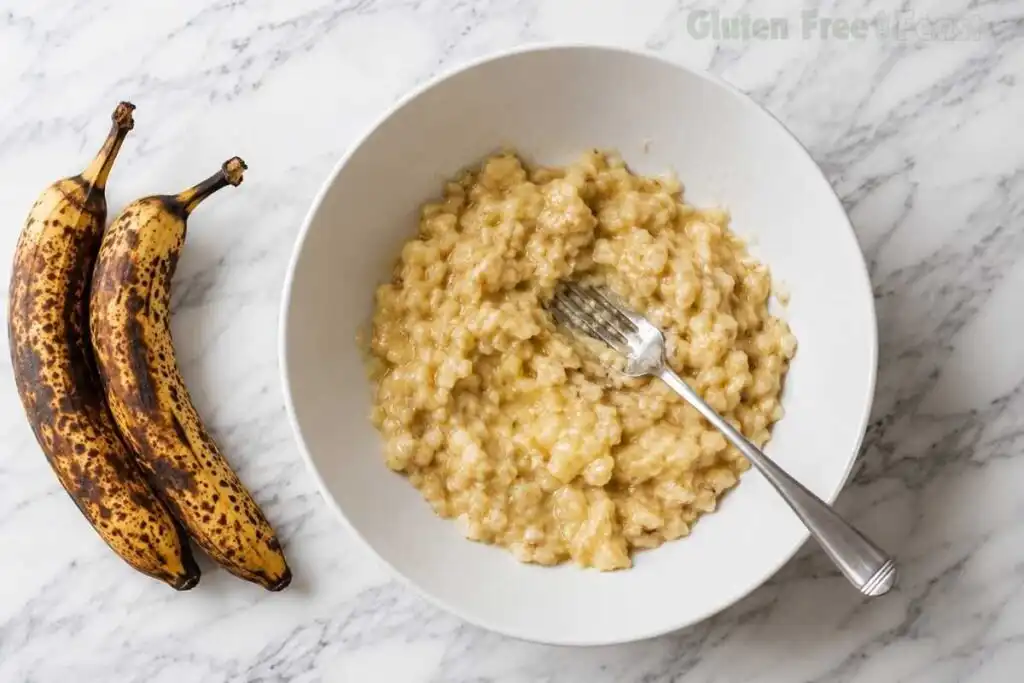
- Peel the overripe bananas into a large mixing bowl and mash thoroughly with a fork until you have a mostly smooth puree. A few small lumps are fine.
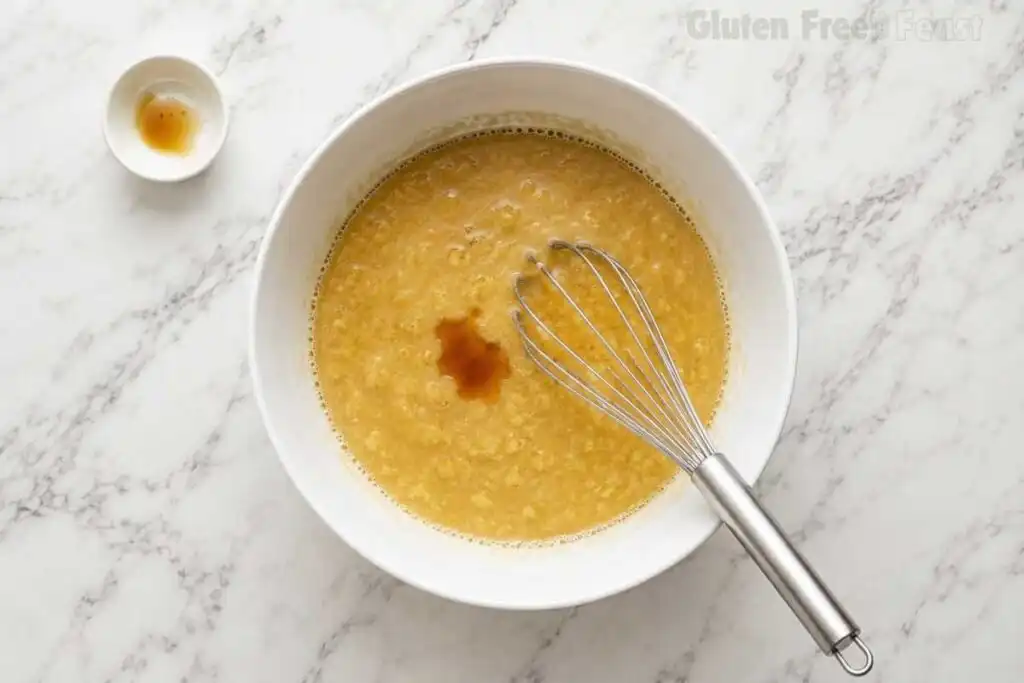
- Add the melted butter, brown sugar, white sugar, eggs, and vanilla extract to the mashed bananas. The butter should be melted but not hot.
- Whisk until the mixture is smooth and uniformly combined.

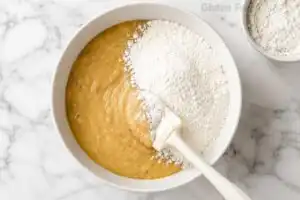
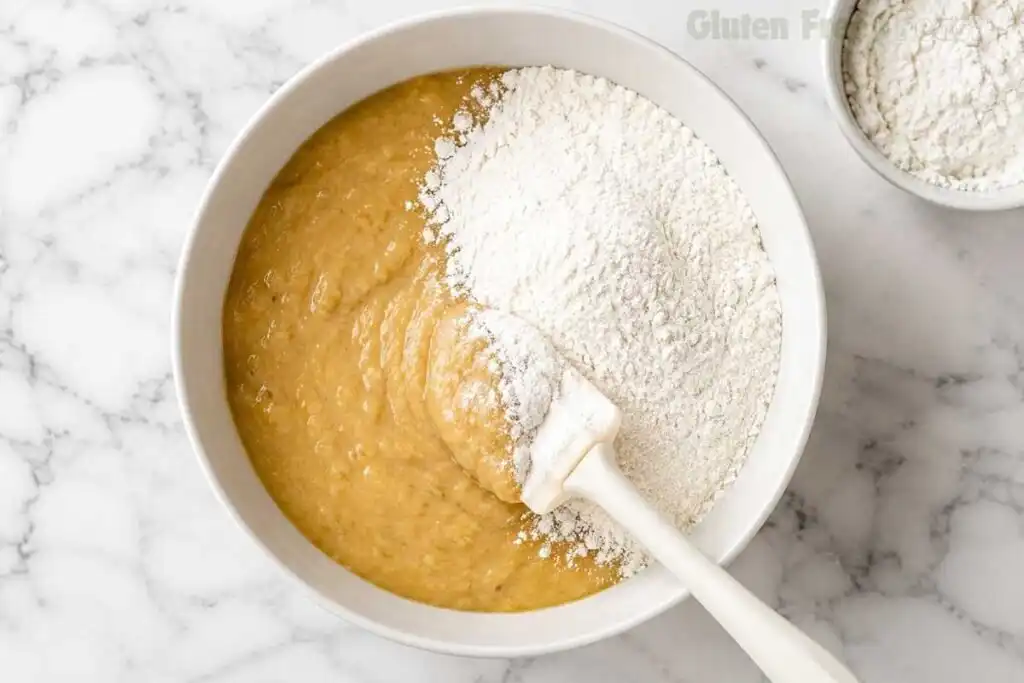
- Sprinkle the certified GF 1:1 flour, baking soda, and salt over the wet mixture.
- Fold the dry ingredients in with slow, wide strokes using a silicone spatula, about 12 to 15 folds. Stop the moment you can no longer see dry flour streaks. Overmixing produces a dense, gummy loaf.
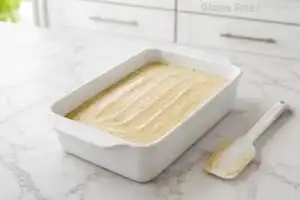
- Pour the batter into a greased 9×5-inch loaf pan and let it rest at room temperature for 10 minutes so the gluten-free starches can hydrate. While it rests, preheat the oven to 350°F (175°C).
- Bake for 55 to 65 minutes, until a toothpick inserted into the center comes out clean with no wet batter attached. If the top browns too quickly, tent loosely with foil.
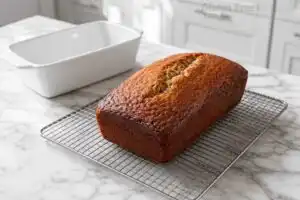
- Cool the loaf in the pan on a wire rack for 15 minutes.
- Turn the loaf out onto the rack and cool completely, at least 45 minutes, before slicing. Slicing early breaks the starch gel and produces a gummy texture.
Notes
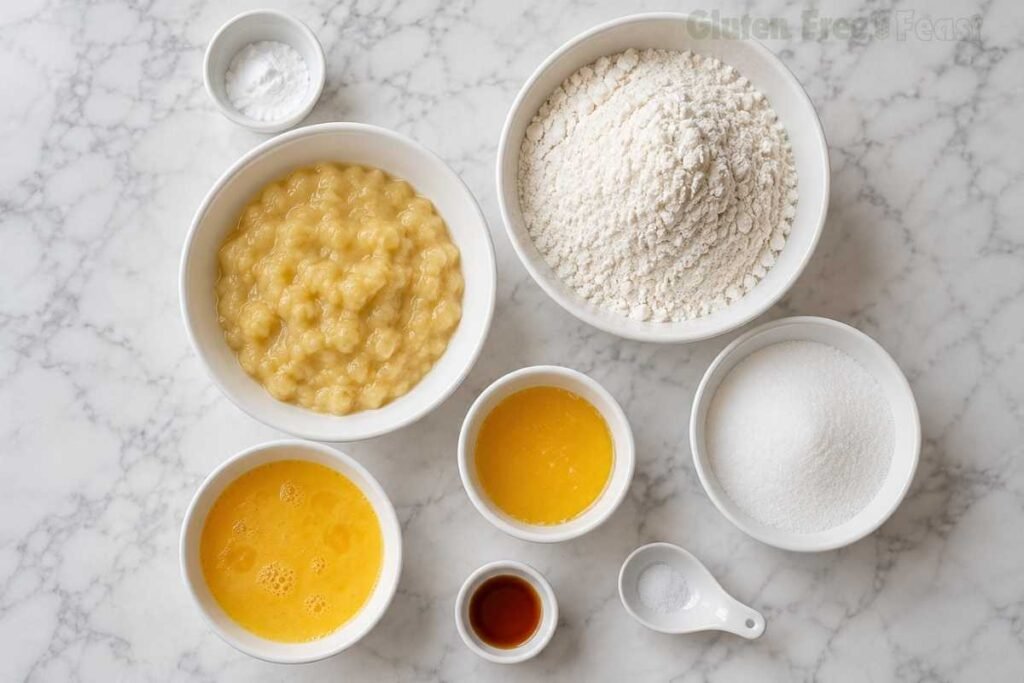
Ingredients
For the Batter
- 3 large overripe bananas (heavily spotted or fully brown), mashed
- 2 cups (240g) certified gluten-free 1:1 baking flour (must contain xanthan gum)
- 1/2 cup (113g) unsalted butter, melted (or melted coconut oil for dairy-free)
- 1/2 cup (100g) packed brown sugar
- 1/4 cup (50g) white granulated sugar
- 2 large eggs, room temperature
- 1 teaspoon pure vanilla extract
- 1 teaspoon baking soda
- 1/2 teaspoon fine salt
Ingredient Notes and Substitutions
Certified gluten-free 1:1 baking flour: This is the single most important ingredient in the recipe. A 1:1 blend is formulated to replace wheat flour in a one-to-one swap and includes starches that mimic the structure wheat gluten provides. You need a blend that lists xanthan gum in the ingredients. Without it, the loaf will not hold its structure and will crumble on cooling. My go-to brands are Bob’s Red Mill 1-to-1 and King Arthur Measure for Measure, both certified gluten-free.
The bananas: Do not use yellow bananas. The starch in a yellow banana has not fully converted to sugar yet, which means less sweetness and significantly less moisture. You want bananas with heavy brown or black spotting. The riper the banana, the more natural fructose it contains, and fructose is hygroscopic, meaning it actively holds onto water molecules during baking. This is why ripe bananas produce a moister crumb than any other fruit or fat addition.
Brown sugar vs. white sugar: The molasses content in brown sugar adds a depth of flavor and, more importantly, additional moisture retention during baking. Using only white sugar produces a flatter, less complex flavor and a slightly drier crumb.
Dairy-free swap: Replace the melted butter with an equal amount of melted coconut oil or a certified dairy-free butter alternative. The texture difference is minimal and the loaf remains fully moist.
Coeliac Safety Note: Please ensure all packaged ingredients carry a certified gluten-free label. For this recipe, check specifically: gluten-free 1:1 baking flour (verify the GF certification symbol on the bag), baking soda (most are naturally GF but check for shared facility warnings), and vanilla extract (use pure vanilla extract, not imitation, as some imitation versions use a wheat-derived alcohol base). Cross-contamination at packaging facilities is a real risk for people with coeliac disease. When in doubt, look for the certified GF symbol.
How to Make Gluten Free Banana Bread
Step 1: Prepare and Mash the Bananas
Peel your overripe bananas into a large mixing bowl. Use a fork to mash them thoroughly until you have a mostly smooth puree. A few small lumps are fine and will not affect the final texture. This is your wet base and the more completely mashed the bananas are, the more evenly the moisture distributes through the batter.
Step 2: Build the Wet Mixture
Add the melted butter, brown sugar, white sugar, eggs, and vanilla extract directly to the mashed bananas. Whisk everything together until the mixture is smooth and uniformly combined. The butter should be melted but not hot; if it is too warm it will begin to cook the eggs before baking. Room temperature eggs are important here, as cold eggs can cause the melted butter to seize and solidify in streaks.
Step 3: Add the Dry Ingredients
Sprinkle the certified GF 1:1 flour, baking soda, and salt over the wet mixture. Use a silicone spatula to fold the dry ingredients in with slow, wide strokes. Stop folding the moment you can no longer see dry flour streaks. After four rounds of testing, I found that 12 to 15 folds is typically enough. Overmixing activates the starches in the flour and develops more structure than is needed, which produces a dense, gummy loaf rather than a tender one.
Step 4: Rest the Batter, Then Bake
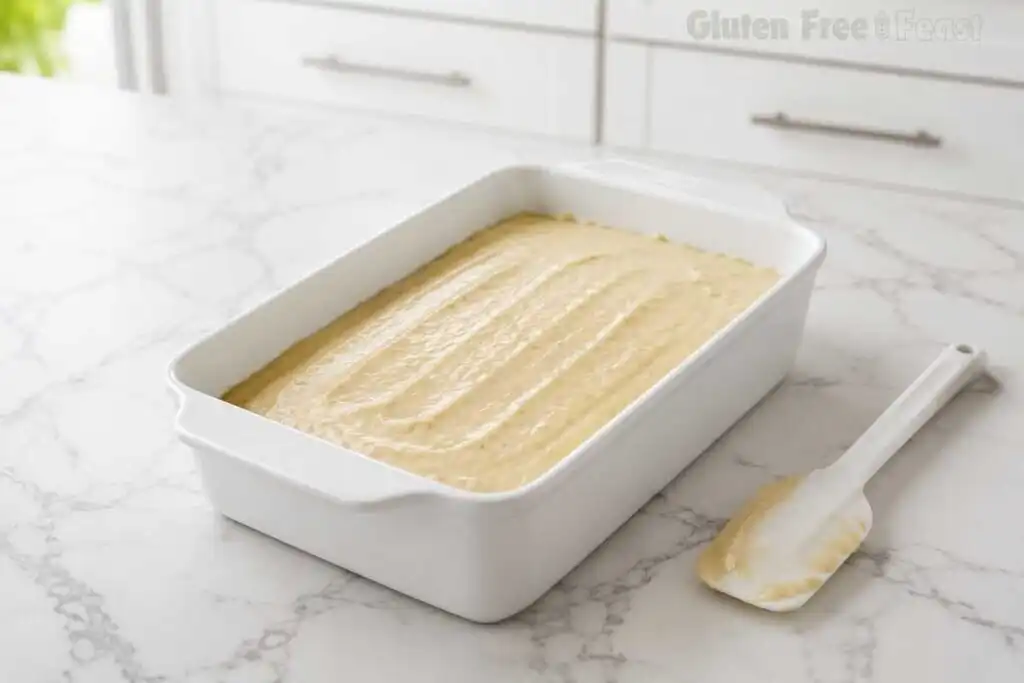
Pour the batter into a greased 9×5-inch loaf pan. Before placing it in the oven, let the batter rest in the pan for 10 minutes at room temperature. Gluten-free starches need time to hydrate and begin absorbing the liquid in the batter. Skipping this rest produces a loaf with an uneven rise and a denser center. Set your oven to 350°F (175°C). Bake for 55 to 65 minutes, or until a toothpick inserted into the center comes out clean with no wet batter attached.
Step 5: Cool Completely Before Slicing
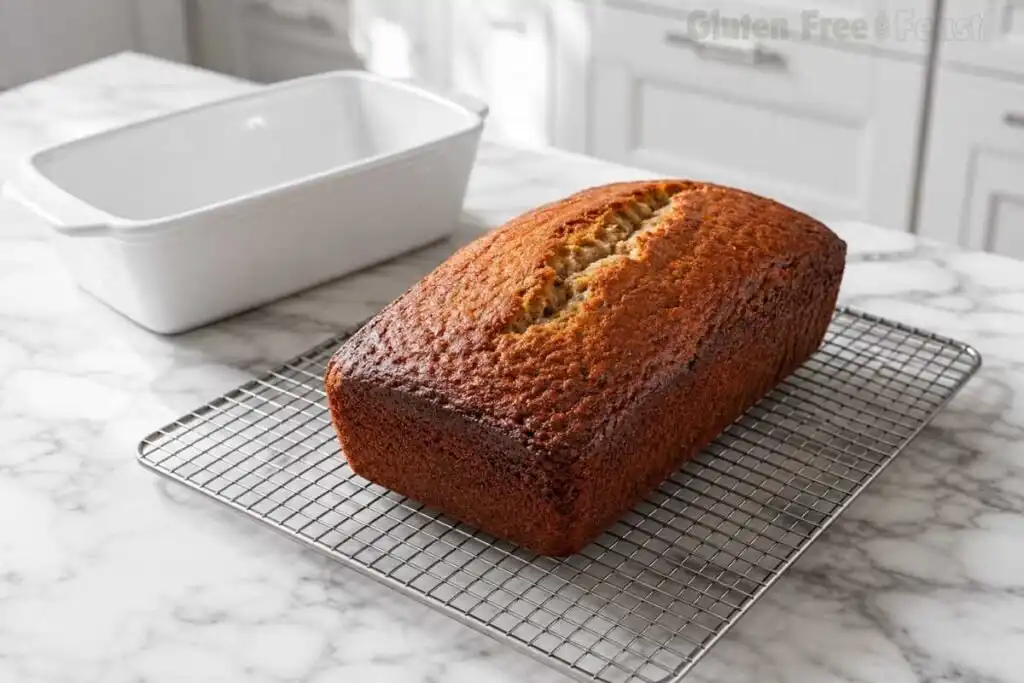
Remove the loaf from the oven and let it cool in the pan on a wire rack for 15 minutes. Then turn it out onto the rack and let it cool completely, at least 45 minutes. Gluten-free baked goods continue to set as they cool because the starch gel that forms during baking needs time to stabilize. Slicing too early breaks that gel structure and produces the gummy texture that gives gluten-free baking a bad reputation.
Expert Tips for Best Results
These are the details that separate a good gluten free banana bread from a gummy one.
- Use the spoon-and-level method for flour: Scoop GF flour directly from the bag with your measuring cup and you will compact it, adding an extra 20 to 30 percent more flour than the recipe calls for. Instead, spoon flour into the measuring cup until it mounds, then sweep a flat edge across the top to level it.
- Check for doneness with a toothpick, not the timer: Oven temperatures vary. Start checking at 55 minutes. If the toothpick comes out with wet batter, give it another 5 minutes and check again.
- Tent with foil if browning too fast: If the top is deep brown but the center is not done, loosely lay a sheet of aluminum foil over the top of the pan. This prevents over-browning without trapping steam.
- Room temperature eggs matter: Cold eggs mixed with melted butter will cause the butter to firm up in the batter. Take your eggs out 30 minutes before you start.
- Weigh your flour if possible: 2 cups of GF 1:1 flour should weigh approximately 240 grams. If you have a kitchen scale, use it. It removes all measuring error and produces a more consistent result every time.
Substitutions and Variations
Vegan version: Replace the 2 eggs with 2 flax eggs. To make a flax egg, combine 1 tablespoon of ground flaxseed with 3 tablespoons of warm water. Let it sit for 5 to 10 minutes until it forms a gel. Use 2 of these in place of the 2 eggs. Combine with the dairy-free butter swap above for a fully vegan, celiac-safe loaf.
Lower-fat version: Replace half of the melted butter (1/4 cup) with an equal amount of unsweetened applesauce. The loaf will be slightly less rich but still moist. Do not replace all the butter with applesauce, as you need the fat content for proper crumb structure.
Chocolate chip banana bread: Fold in 1/2 cup of certified gluten-free chocolate chips after combining the wet and dry ingredients. Check the packaging for a GF certification symbol, as some chocolate chips are produced on shared lines with wheat products.
Walnut banana bread: Fold in 1/2 cup of roughly chopped walnuts at the same point. Walnuts add a pleasant bitterness that balances the sweetness of the ripe bananas.
What to Serve With Gluten Free Banana Bread
Banana bread is one of those rare baked goods that works equally well as a breakfast, a snack, or a dessert depending on what you serve alongside it.
For a proper weekend breakfast, pair a thick slice with a plate of my fluffy gluten free pancakes for a spread that will satisfy the whole table. Both come together quickly and the contrast between the soft pancakes and the denser, more structured banana bread makes for a genuinely good combination.
If you are serving the banana bread as a snack, a spread of peanut butter or almond butter works well. Both add protein and healthy fat, which slows the absorption of the natural sugars and keeps you fuller for longer.
For a dessert presentation, warm a slice in a low oven for 5 minutes and serve with a scoop of vanilla ice cream and a drizzle of honey. The warmth reactivates the banana flavor and makes a very simple slice of bread feel like a proper dessert.
For more inspiration, explore our gluten free desserts collection for more recipes that work the same way.
Browse more recipes from our gluten free baking collection for breads, muffins, and sweet baked goods that work the same way this one does.
Storage and Make-Ahead Instructions
Room temperature: Gluten free banana bread stores beautifully if you wrap it while fully cooled. Store in an airtight container at room temperature for up to 3 days.
Refrigerator: Tightly wrapped, the loaf will keep in the refrigerator for up to 7 days. Bring a slice to room temperature before eating or warm it briefly in a toaster.
Freezer: Slice the fully cooled loaf and place a sheet of parchment paper between each slice before stacking them in a freezer-safe bag. Freeze for up to 3 months. Pull individual slices directly from the freezer and toast them from frozen.
Make-ahead tip: The batter can be made the night before, covered, and refrigerated overnight. The cold batter will need an extra 10 to 15 minutes of bake time compared to batter that goes into the oven at room temperature.
Why Trust This Recipe
As a molecular biologist and former laboratory analyst, I develop recipes the same way I approached lab work: with documented testing, controlled variables, and results that can be replicated in any home kitchen.
This recipe has been tested multiple rounds in my dedicated gluten-free kitchen. I have noted what fails, what works, and why, so you are not just following steps but understanding the process.
What that means for you:
- Multiple test batches before publishing
- Science-based notes on key steps throughout
- Honest substitution guidance, not guesswork
- Safe for celiac disease, with cross-contamination taken seriously at every step
Frequently Asked Questions
Why is my gluten free banana bread gummy in the middle?
Three usual causes: slicing before the loaf is fully cool, overmixing the batter, or skipping the 10-minute rest. The starch gel inside the loaf needs time to set after baking, so a full 45-minute cool is not optional.
Can I use almond flour or coconut flour instead of a 1:1 blend?
Not in this recipe. Almond and coconut flours absorb liquid completely differently and contain no binding starches, so a direct swap collapses. This formula is built around a certified GF 1:1 blend with xanthan gum.
How ripe should the bananas be?
Heavily spotted to fully brown. The darker the peel, the more starch has converted to sugar, which means more sweetness and more moisture held in the crumb during baking.
Do I need xanthan gum?
Yes, but it should come from your flour blend. If your blend does not list xanthan gum, the loaf will crumble on cooling. Choose a blend that includes it rather than adding it separately, since blends are formulated around a specific amount.
Can I make this without eggs?
Yes. Two flax eggs work well here because the banana already provides binding moisture. The crumb is slightly denser but holds together cleanly.
How do I know when it is done?
Your gluten free banana bread is done when a toothpick in the center comes out clean with no wet batter, usually between 55 and 65 minutes. Moist crumbs are fine; wet streaks mean it needs more time.
Six test batches taught me that great gluten free banana bread is not about exotic ingredients, just the right blend, a short rest, and the patience to let it cool. If you bake this loaf, leave a comment and tell me how it turned out. I read and answer every single one.