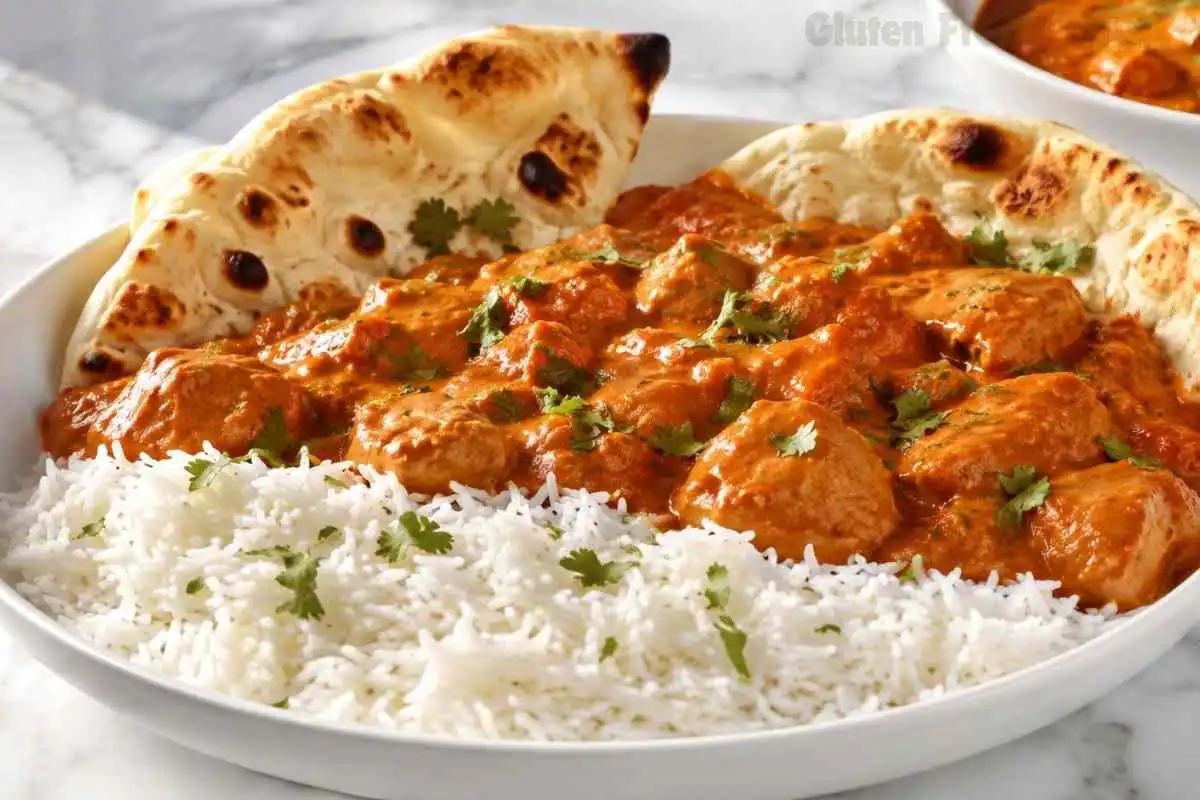
There is a moment about ten minutes into cooking this gluten free dairy free butter chicken when the garam masala hits the hot oil. The whole kitchen smells like a restaurant. That smell is the reason I kept testing this recipe. I wanted the coconut cream version to match the richness of the dairy original, without a single ingredient that puts celiac disease at risk.
Traditional butter chicken leans on heavy cream and, depending on the kitchen, a seasoning blend with no gluten-free guarantee attached. This version swaps in full-fat coconut cream and certified gluten free spices. The richness stays intact, and the safety question is already answered before you start cooking.
I tested the marinade at both 30 minutes and overnight, and the difference in texture surprised me. Overnight chicken came out noticeably more tender, without turning mushy the way over-marinated chicken sometimes does. If you have the time, let it sit.
Key takeaways
This gluten free dairy free butter chicken uses full-fat coconut cream instead of heavy cream and certified gluten free garam masala and chili powder (Spicely Organics) for a celiac-safe, restaurant-style curry. Marinating overnight rather than 30 minutes noticeably improves the chicken’s tenderness, and searing before simmering builds deeper flavor through the Maillard reaction. The recipe takes 1 hour 25 minutes total, including marinating, and yields 6 servings at 586 calories each. Vegan butter must be a certified gluten free product, such as Miyoko’s Creamery European Style in the cashew, unsalted SKU, since the oat milk version is not GFCO-certified. No GFCO-certified full-fat coconut cream currently exists on the market, so this recipe uses a labeled gluten free brand, Native Forest, and flags that gap honestly rather than implying a certification that does not exist. Serve over basmati rice with certified gluten free naan for a complete dairy-free Indian-inspired dinner.
Prep Time: 10 mins · Cook Time: 45 mins · Marinating Time: 30 mins · Total Time: 85 mins
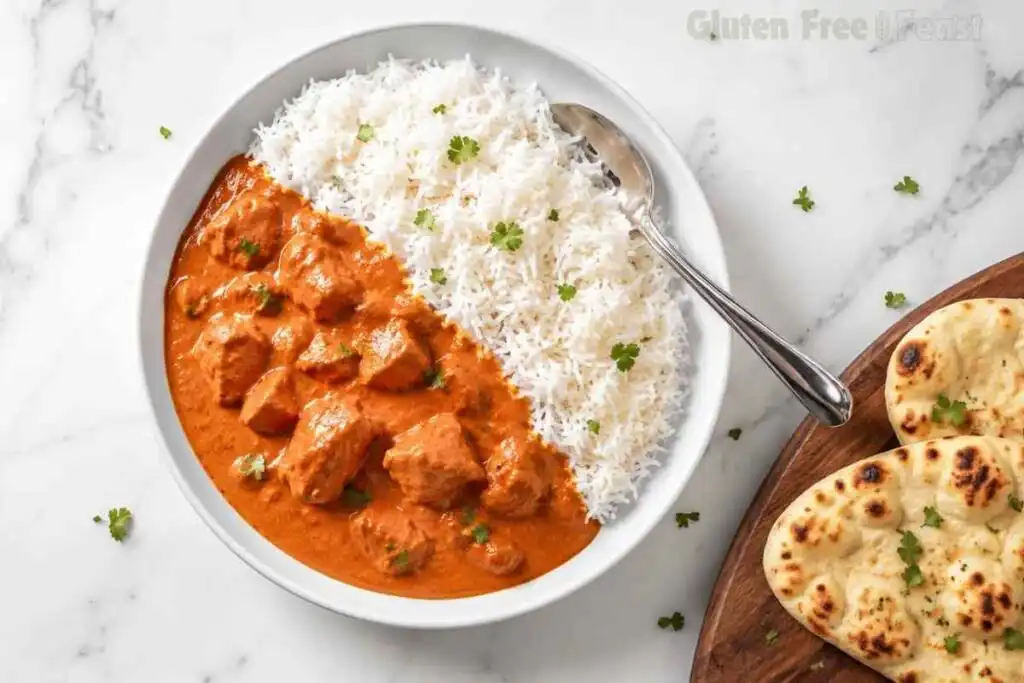
Table of Contents
Why You Will Love This Gluten Free Dairy Free Butter Chicken
- Rich and creamy without dairy: full-fat coconut cream replaces heavy cream and delivers the same silky sauce.
- Celiac-safe by design: certified gluten free garam masala and chili powder, plus a full ingredient-level safety note, so nothing is left for you to guess.
- Restaurant-depth flavor at home: searing the chicken first and blooming the spices in oil builds layers of flavor most weeknight curries skip.
- Ready in about 1 hour 25 minutes, most of it hands-off marinating time.
- Freezes beautifully: make a double batch and keep half in the freezer for a night you do not want to cook.
- Kitchen-tested twice on marinating time so you know exactly what overnight resting does to the texture.
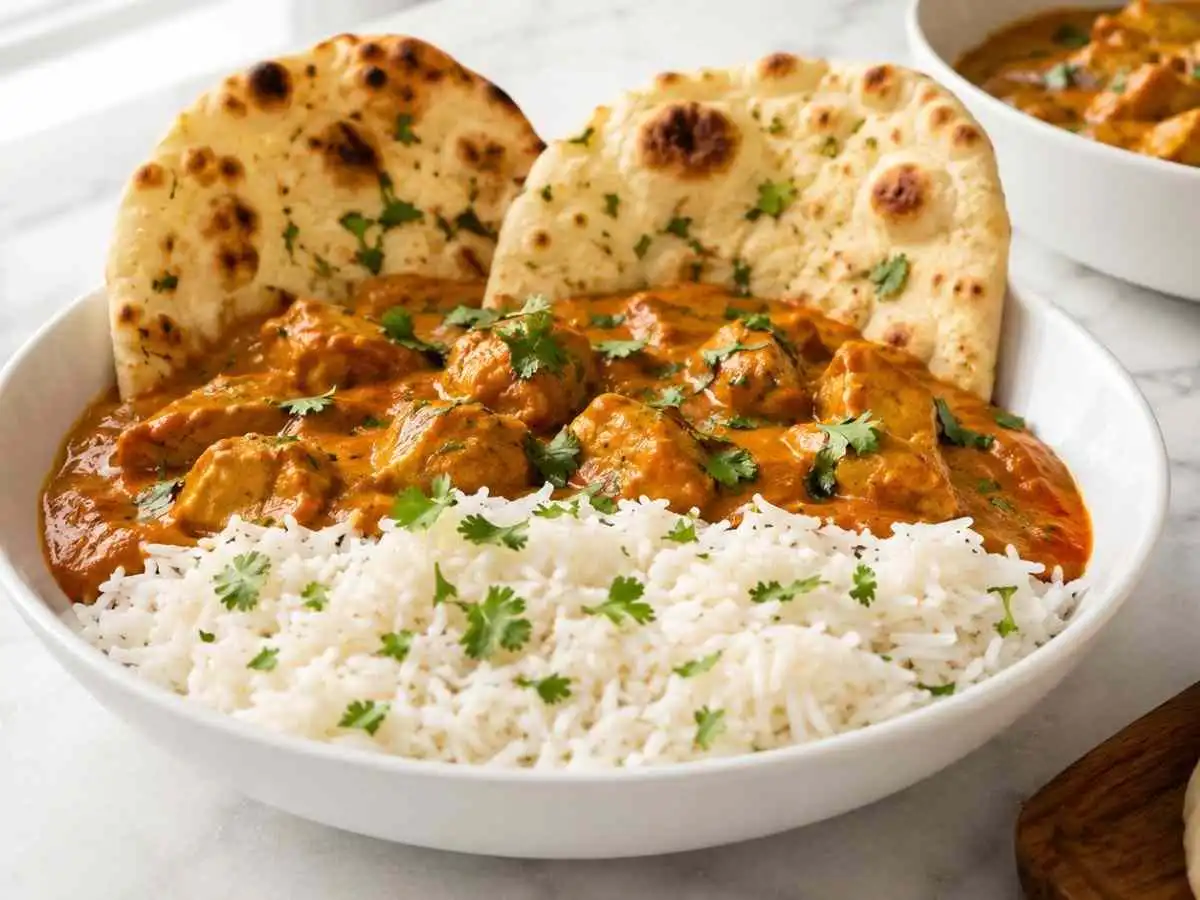

Gluten Free Dairy Free Butter Chicken
Ingredients
Equipment
Method
- Whisk the coconut cream, lemon juice, ginger, garlic, garam masala, salt, and chili powder together in a large bowl. Add the chicken and stir to coat. Cover and refrigerate at least 30 minutes, preferably 2 hours to overnight.
- Heat 2 tablespoons olive oil in a large skillet over medium-high heat. Cook the chicken in batches for 6 to 7 minutes, turning occasionally, until browned on all sides. It does not need to be fully cooked through yet. Transfer to a plate.
- Reduce the heat to medium-low. Add the remaining 2 tablespoons olive oil to the same skillet. Cook the onion for 8 to 10 minutes, stirring frequently, until softened and translucent.
- Add the garlic and ginger and cook 1 minute. Stir in the garam masala, cumin, paprika, salt, chili powder, and coriander. Cook 1 more minute until fragrant.
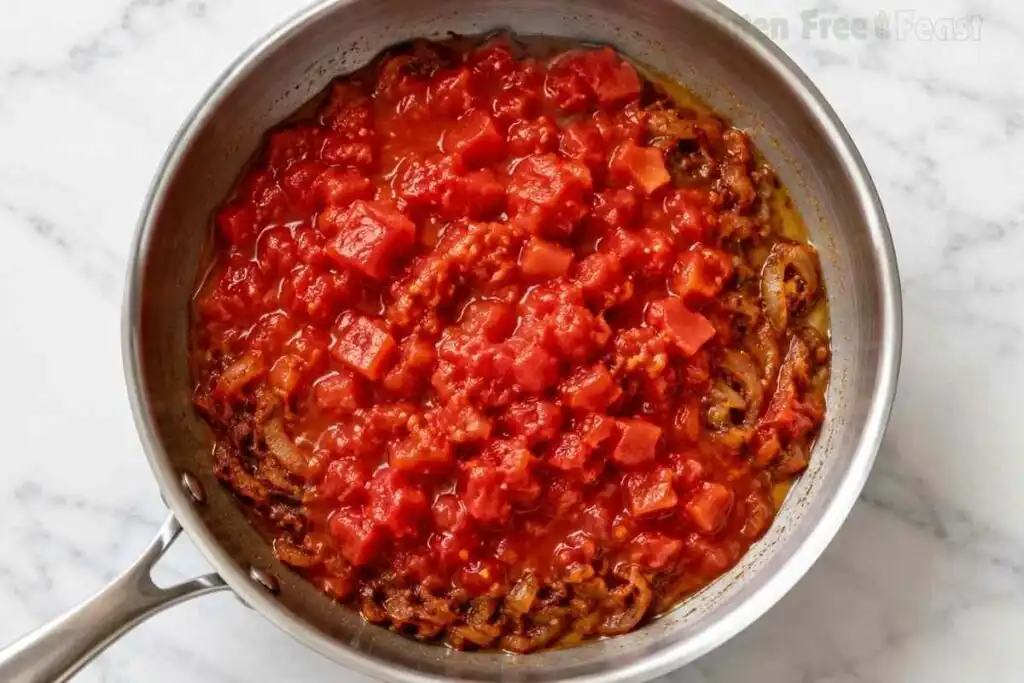
- Add the diced tomatoes and stir well. Simmer 5 to 8 minutes, until the tomatoes darken slightly and the sauce thickens.
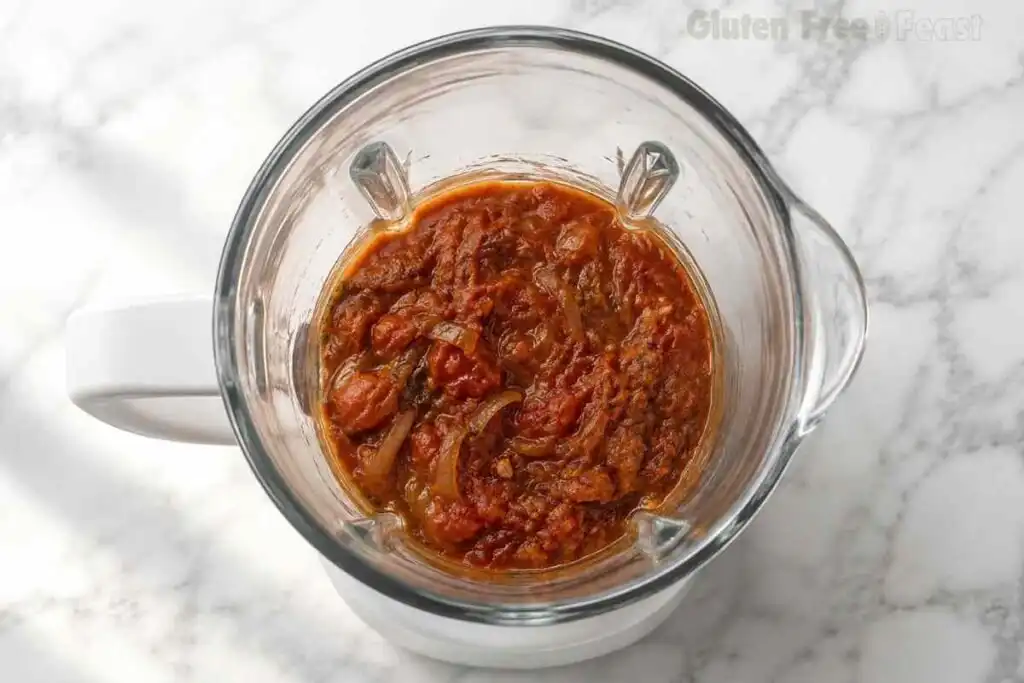
- Transfer the tomato mixture to a blender and blend until smooth. Return the sauce to the skillet.
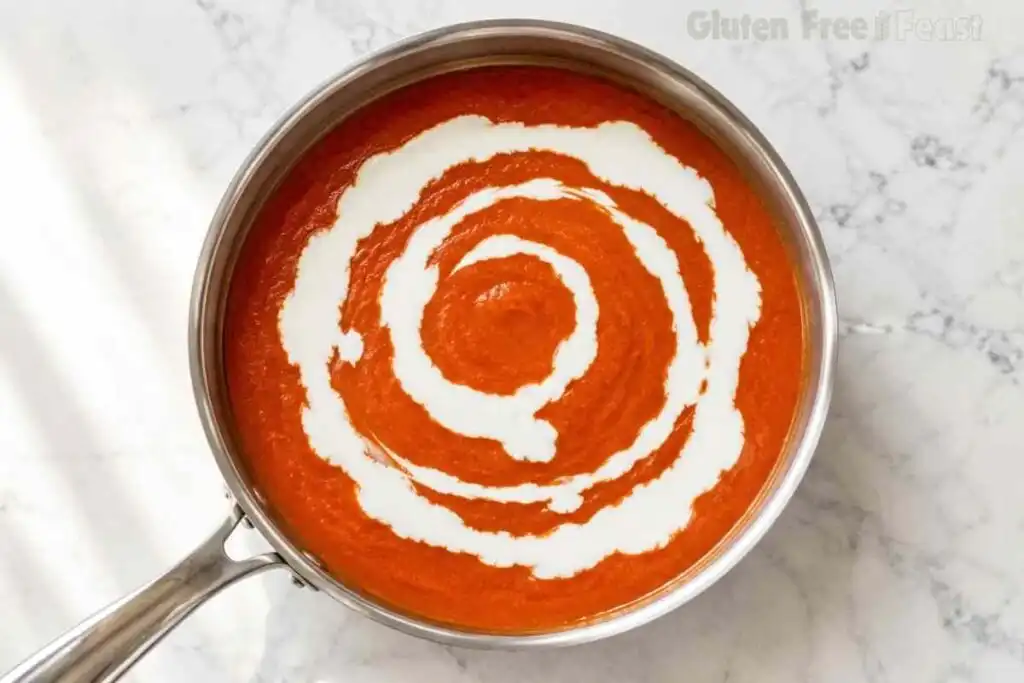
- Stir in the coconut cream until smooth. Return the chicken and any collected juices to the pan. Cover and simmer on low for 10 minutes, or until the chicken reaches 165F (74C) internal temperature.
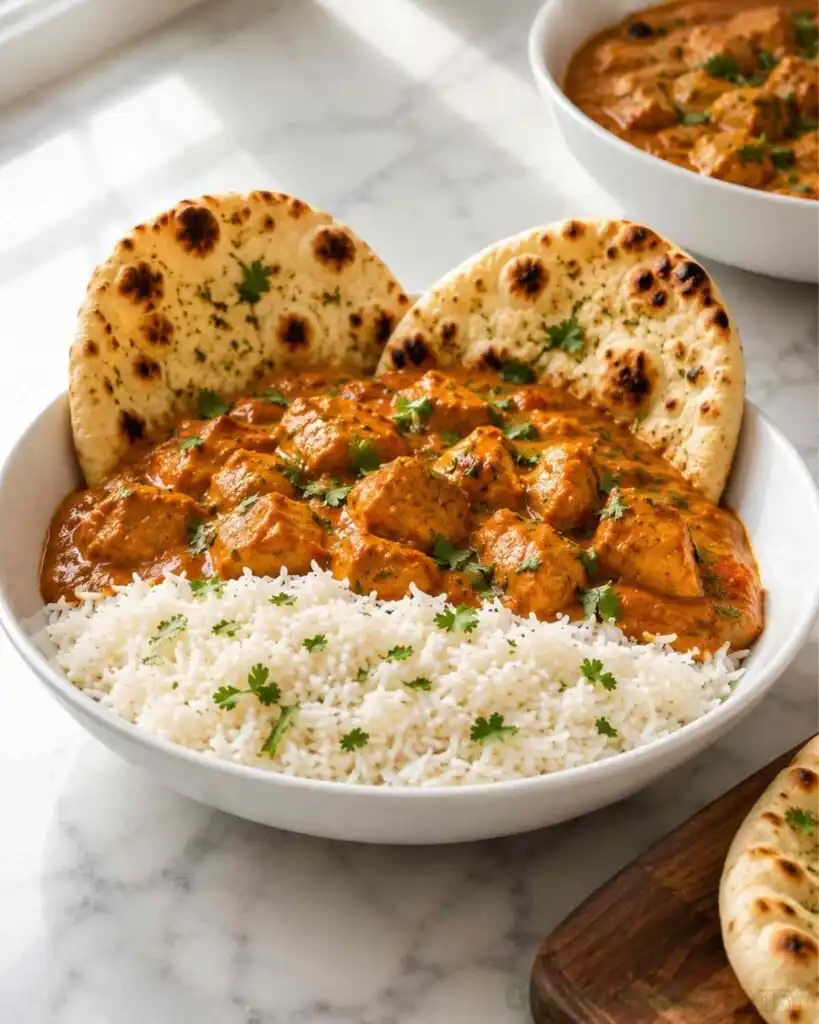
- Remove the lid and stir in the fenugreek and vegan butter until melted. Garnish with cilantro if desired. Serve hot over basmati rice with dairy-free naan or a certified gluten free flatbread.
Nutrition
Notes
Gluten-Free Note
Tried this recipe?
Let us know how it was!Ingredients
For the Chicken Marinade
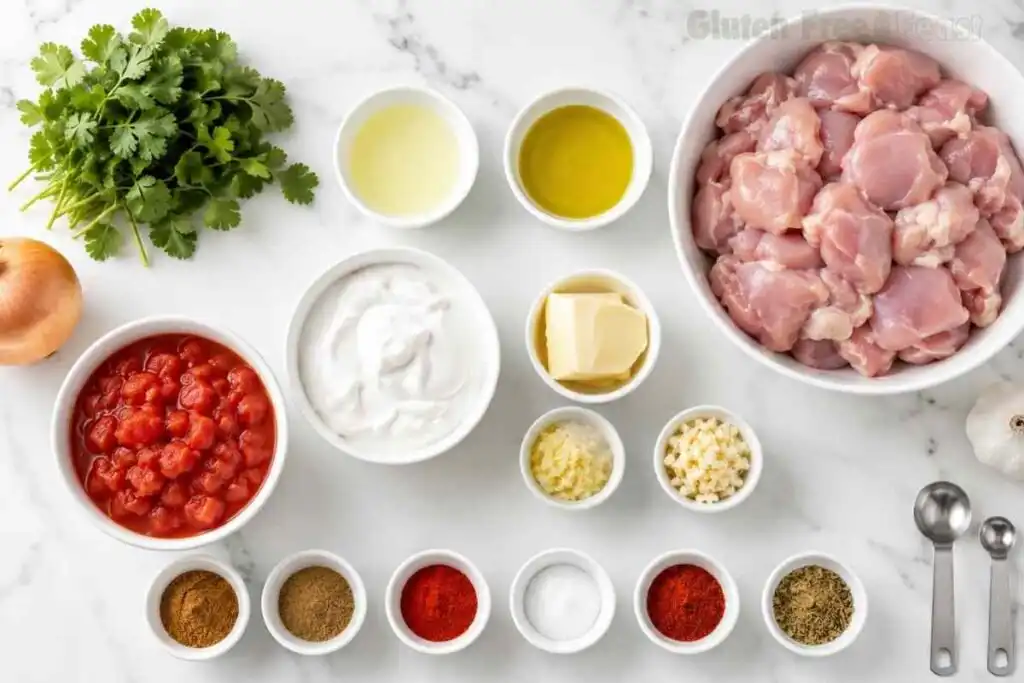
- ½ cup labeled gluten free coconut cream (we use Native Forest; see notes on certification)
- 2 tablespoons lemon juice
- 1 tablespoon fresh ginger, minced
- 3 garlic cloves, minced
- 1 tablespoon certified gluten free garam masala (we use Spicely Organics)
- 1 teaspoon salt
- 1 teaspoon certified gluten free chili powder (we use Spicely Organics)
- 2½ pounds boneless, skinless chicken breasts or thighs, cut into bite-sized pieces
- 2 tablespoons olive oil, for cooking
For the Sauce
- 2 tablespoons olive oil
- 1 large yellow onion, finely chopped
- 5 garlic cloves, minced
- 1 tablespoon fresh ginger, minced
- 1 tablespoon certified gluten free garam masala (we use Spicely Organics)
- 2 teaspoons ground cumin
- 2 teaspoons paprika
- 2 teaspoons salt
- 1 teaspoon certified gluten free chili powder (we use Spicely Organics)
- 1 teaspoon ground coriander
- 2 (14.5-ounce) cans diced tomatoes
- 1 cup labeled gluten free coconut cream (we use Native Forest)
- ½ teaspoon dried fenugreek (kasuri methi)
- 2 tablespoons certified gluten free vegan butter (Miyoko’s Creamery European Style, cashew or unsalted SKU only)
- Fresh cilantro, chopped, optional for garnish
Ingredient Notes and Substitutions
Coconut cream: This is the one honest gap in this recipe. No GFCO-certified full-fat coconut cream currently exists on the market. I use a labeled gluten free brand, Native Forest, and recommend checking the label on your can for any shared-facility wheat statement. Full-fat cream gives the sauce its body; light coconut milk will taste thinner and less rich.
Garam masala and chili powder: Both are pre-packaged spice blends, which puts them on the hidden-gluten watch list. Spicely Organics is GFCO-certified for both. That is why I name the brand instead of a generic “gluten-free garam masala.” A generic label claim is not the same as third-party certification.
Vegan butter: Miyoko’s Creamery European Style is GFCO-certified, but only in the cashew, unsalted SKU. Their oat milk version is not certified gluten free, so check the package carefully before buying.
Canned diced tomatoes: Tomatoes themselves are naturally gluten free, but always scan the label for a shared-facility wheat statement before buying a new brand.
Chicken thighs work as a substitute for chicken breasts if you want a slightly more forgiving cut. They hold up well to the sear-then-simmer method used here, similar to the technique in our gluten free chicken and dumplings.
Celiac Safety Note: Please ensure all packaged ingredients carry a certified gluten free label. For this recipe, check specifically: garam masala, chili powder, coconut cream, vegan butter, and canned diced tomatoes. Cross-contact at packaging facilities is a real risk for people with celiac disease. When in doubt, look for the certified GF symbol on the package rather than relying on a marketing claim alone.
Clean any shared spice jars, cutting boards, and your blender or food processor thoroughly before this recipe if your kitchen also prepares gluten-containing foods.
How to Make Gluten Free Dairy Free Butter Chicken
Step 1: Marinate the Chicken
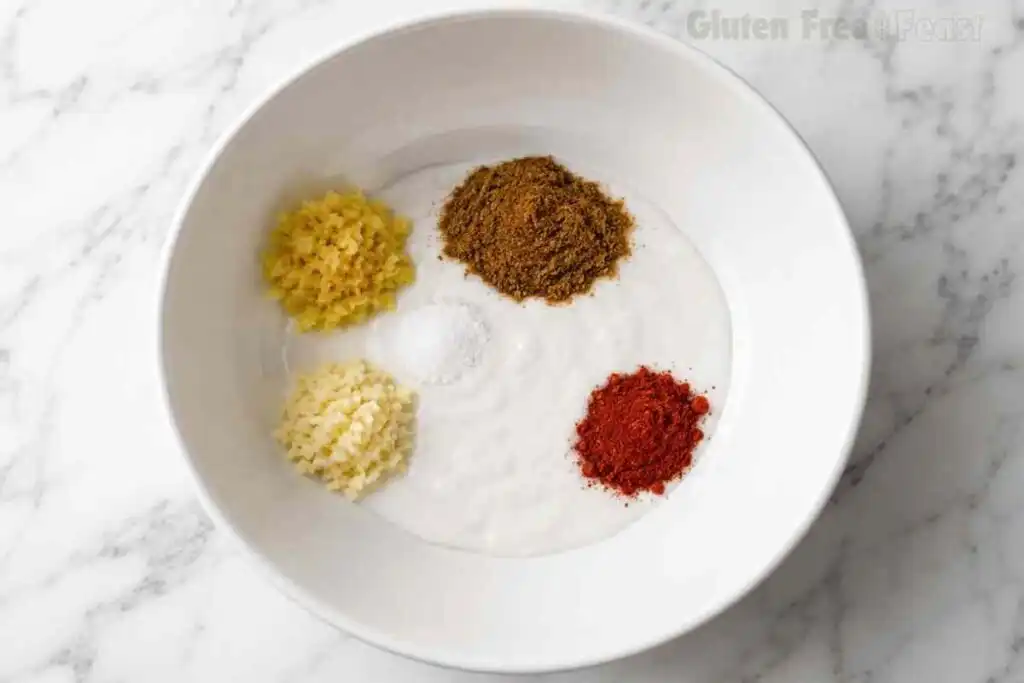
Whisk the coconut cream, lemon juice, ginger, garlic, garam masala, salt, and chili powder together in a large bowl. Add the chicken and stir until every piece is coated. Cover and refrigerate at least 30 minutes, preferably 2 hours to overnight.
I tested this step at both ends of that range. Thirty minutes gives you a good, flavorful result, but overnight marinating noticeably improved tenderness without turning the chicken mushy or overly soft.
Step 2: Sear the Chicken
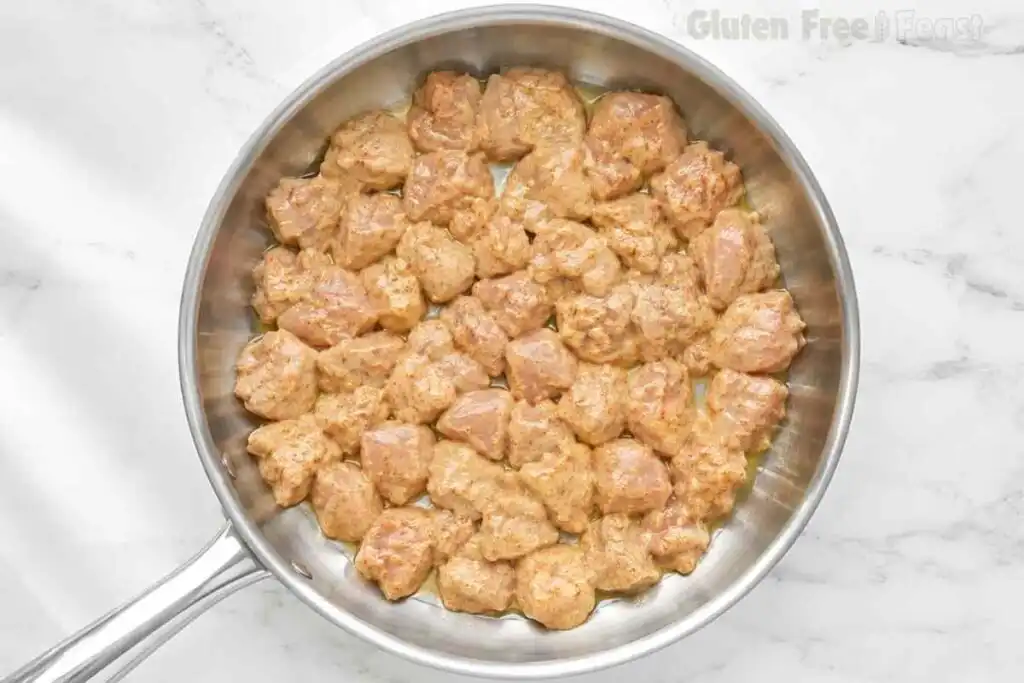
Heat 2 tablespoons of olive oil in a large skillet over medium-high heat. Cook the chicken in batches for 6 to 7 minutes, turning occasionally, until browned on all sides. It does not need to be fully cooked through at this point. Transfer it to a plate.
Searing before simmering matters more than it looks like it should. The Maillard reaction that browns the chicken creates deeper, roasted flavor compounds. Those compounds survive the later simmering step, which is how this stovetop method mimics the char of traditional tandoor cooking.
Step 3: Cook the Onion and Bloom the Spices
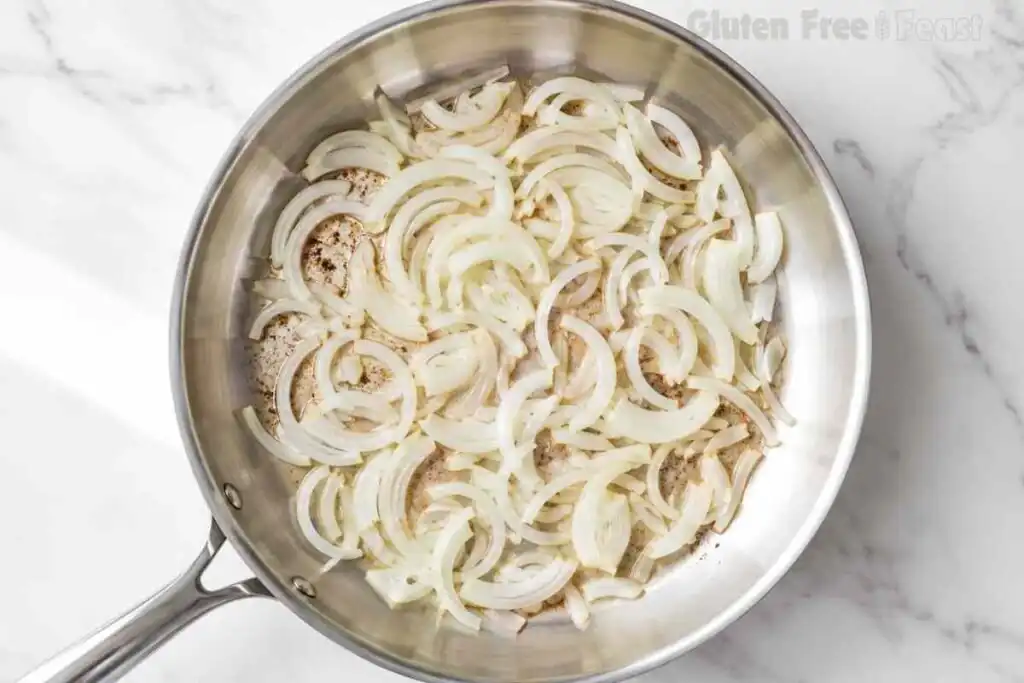
Reduce the heat to medium-low and add the remaining 2 tablespoons of olive oil to the same skillet. Cook the onion for 8 to 10 minutes, stirring frequently, until softened and translucent.
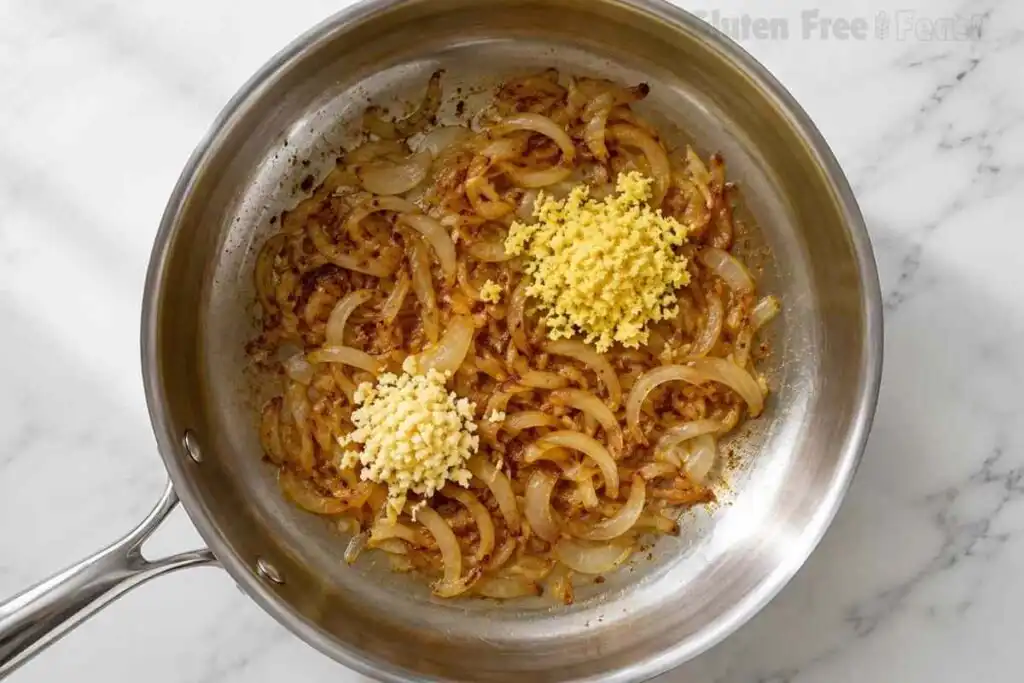
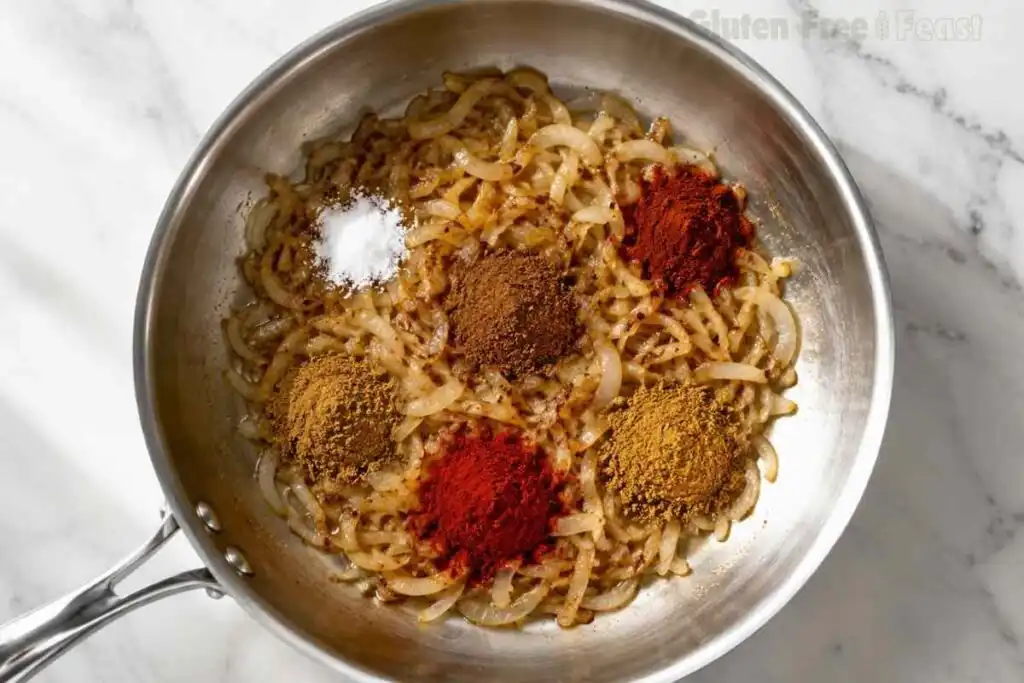
Add the garlic and ginger and cook for 1 minute. Stir in the garam masala, cumin, paprika, salt, chili powder, and coriander, and cook 1 more minute until fragrant.
Many of garam masala’s aromatic compounds are fat-soluble, meaning they need oil, not liquid, to fully release. Blooming the spice blend here for even 60 seconds unlocks flavor that stirring the same spices directly into the tomatoes would leave mostly inert.
Step 4: Simmer and Blend the Sauce
Add the diced tomatoes and stir well. Simmer for 5 to 8 minutes, until the tomatoes darken slightly and the sauce thickens.
Transfer the tomato mixture to a blender and blend until smooth, then return the sauce to the skillet. If you are using a countertop blender, fill it no more than halfway with the hot sauce. Vent the lid slightly and cover it with a kitchen towel to release steam safely.
Step 5: Finish the Curry
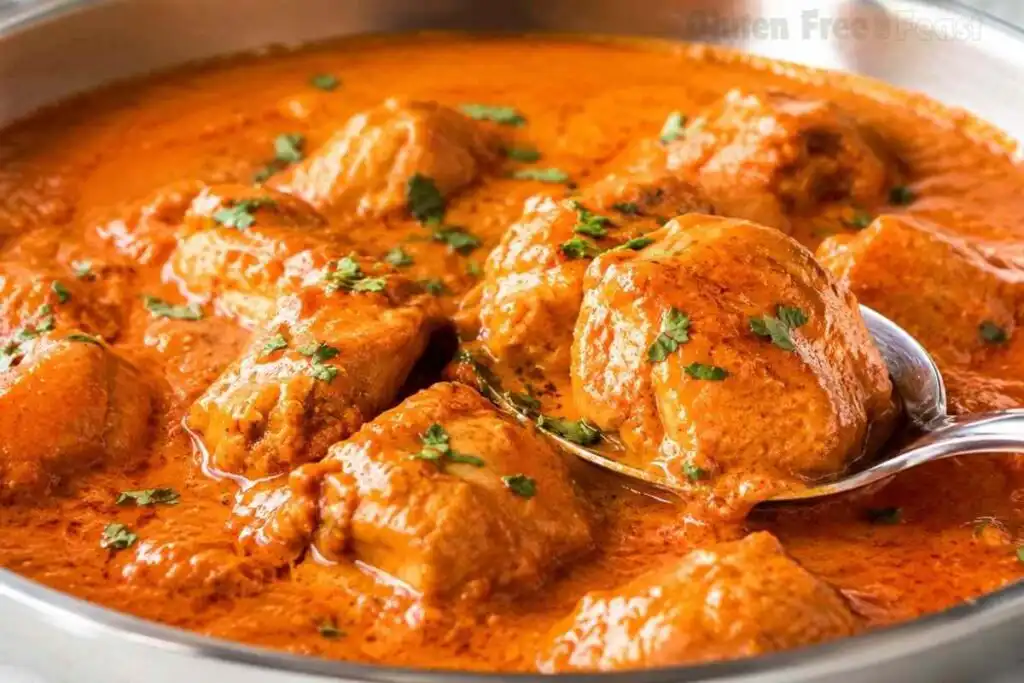
Stir the coconut cream into the sauce until smooth. Return the chicken and any collected juices to the pan. Cover and simmer on low for 10 minutes, or until the chicken reaches 165F (74C) internal temperature.
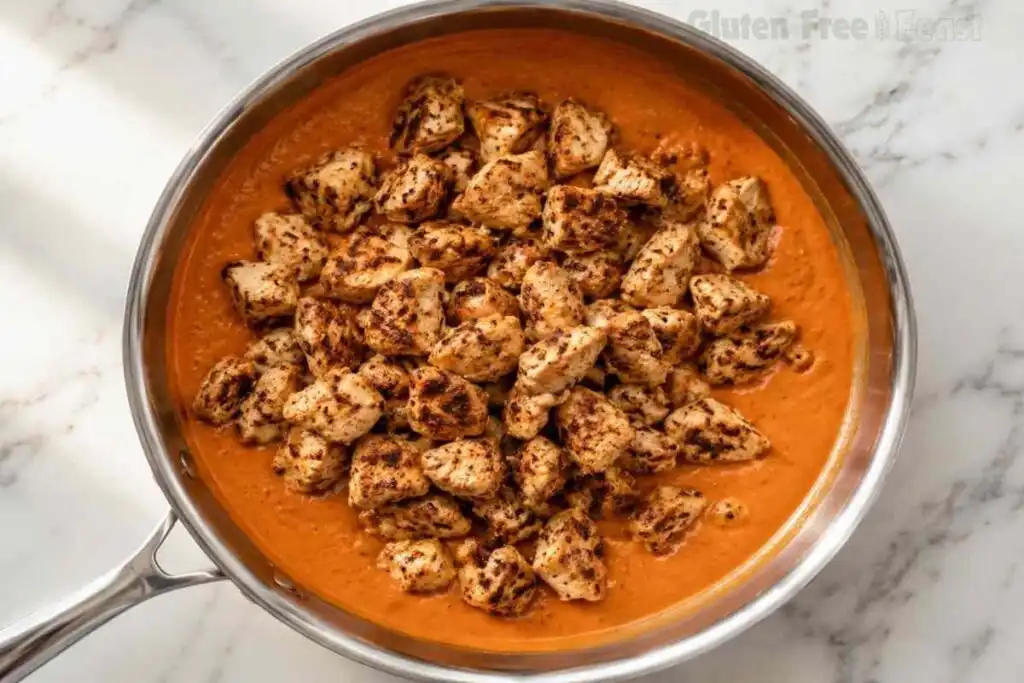
Remove the lid and stir in the fenugreek and vegan butter until melted. Garnish with cilantro if you like, and serve hot.
Expert Tips for Best Results
- Marinate overnight if you can. The tenderness difference between 30 minutes and overnight is the biggest single factor in how the finished chicken feels.
- Do not skip the sear. Even a rough sear that leaves the chicken undercooked builds flavor that a straight simmer cannot replicate.
- Watch the blender fill line. Hot liquid expands quickly; overfilling a countertop blender is the most common way this recipe goes wrong.
- Taste before adding all the salt. Canned tomato brands vary widely in sodium, so add the sauce salt in two additions and taste between them.
- Use a named certified brand for every flagged ingredient. A generic “gluten-free” spice label is not the same safety guarantee as third-party certification.
- Keep a dedicated gluten-free blender if your kitchen is shared. Blending is one of the easiest places for cross-contact to happen unnoticed.
- Reheat gently. Coconut cream sauces can separate slightly over high heat; a low, slow reheat brings it back together.
Substitutions and Variations
Chicken thighs instead of breasts: Thighs are more forgiving if you simmer a few minutes longer than the recipe calls for, and they stay juicier.
Light coconut milk instead of coconut cream: This works in a pinch, but the sauce will be noticeably thinner and less rich. Full-fat cream is worth seeking out for this recipe.
Extra vegetables: Stir in a couple of handfuls of frozen peas or fresh spinach during the final few minutes of simmering. We use the same trick to bulk up our gluten free chicken noodle soup.
Spice level: The chili powder amount here is mild to medium. Add an extra ¼ teaspoon if you prefer more heat, or omit it entirely for a very mild version for kids.
What to Serve With Gluten Free Dairy Free Butter Chicken
This curry is rich enough to be the centerpiece of the meal, so the sides are mostly about soaking up the sauce.
- Basmati rice is the classic pairing and the best vehicle for the sauce itself.
- Certified gluten free naan or flatbread works well for scooping, as long as the brand is specifically labeled gluten free rather than assumed safe.
- A simple cucumber salad on the side balances the richness of the coconut cream.
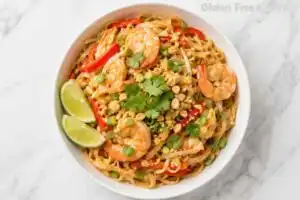
- For another slow-simmered, spice-forward dinner on busy weeks, our gluten free pad thai follows a similar sauce-first approach.
- If you are building out a full Indian-inspired dinner rotation, our gluten free chicken tenders make a kid-friendly side dish for picky eaters at the same table.
- Leftover sauce also works spooned over gluten free potato soup night as a flavor-packed topping if you want to mix things up.
Storage and Make-Ahead Instructions
Refrigerator: Store in an airtight container for up to 4 days. The flavor actually deepens by day two.
Freezer: Freezes well for up to 3 months. Thaw overnight in the refrigerator before reheating.
Reheating: Warm gently on the stovetop over medium-low heat, or microwave in a covered dish in 30-second intervals, stirring between each.
Make-ahead tip: The chicken can marinate up to 24 hours ahead. The sauce itself can be made a day in advance and reheated with the seared chicken right before serving.
Why Trust This Recipe
I develop recipes the same way I approached lab work, with documented testing and controlled variables. The results should hold up in any kitchen, not just mine.
This recipe has been tested multiple rounds in my dedicated gluten-free kitchen, including a direct comparison of 30-minute versus overnight marinating. I have noted what fails, what works, and why, so you are not just following steps but understanding the process.
What that means for you:
- Multiple test batches before publishing
- Science-based notes on key steps throughout
- Honest substitution guidance, not guesswork
- Safe for celiac disease, with cross-contact taken seriously at every step
Frequently Asked Questions
Is butter chicken gluten and dairy free?
Traditional butter chicken is not reliably either: it typically uses heavy cream and can include seasoning blends with no gluten-free guarantee. This recipe is both, using coconut cream in place of dairy and certified gluten free spices throughout.
Is there a gluten free and dairy free butter?
Yes. Look for a certified gluten free vegan butter such as Miyoko’s Creamery European Style, cashew unsalted SKU. That is the one used in this recipe’s finishing step.
Can celiacs eat butter?
Dairy butter is naturally gluten free, but cross-contact risk varies by brand and facility. This recipe avoids that question entirely by using a certified gluten free vegan butter instead.
What is a substitute for cream in butter chicken?
Full-fat coconut cream is the substitute used here. It delivers a similarly rich, silky texture to heavy cream without any dairy.
Can butter chicken be made without cream?
Not really without losing the dish’s signature richness, but coconut cream fills that role completely in a dairy-free version like this one.
What is the secret ingredient in butter chicken?
Dried fenugreek, also called kasuri methi. A small amount stirred in at the end adds the slightly sweet, slightly bitter depth that traditional butter chicken is known for.
Final Thoughts
This gluten free dairy free butter chicken is the recipe I reach for when I want something that tastes like a restaurant order. It comes with a full accounting of every ingredient, too. Make a batch this week, and freeze half so a rich, celiac-safe dinner is ready on a night you do not feel like cooking.