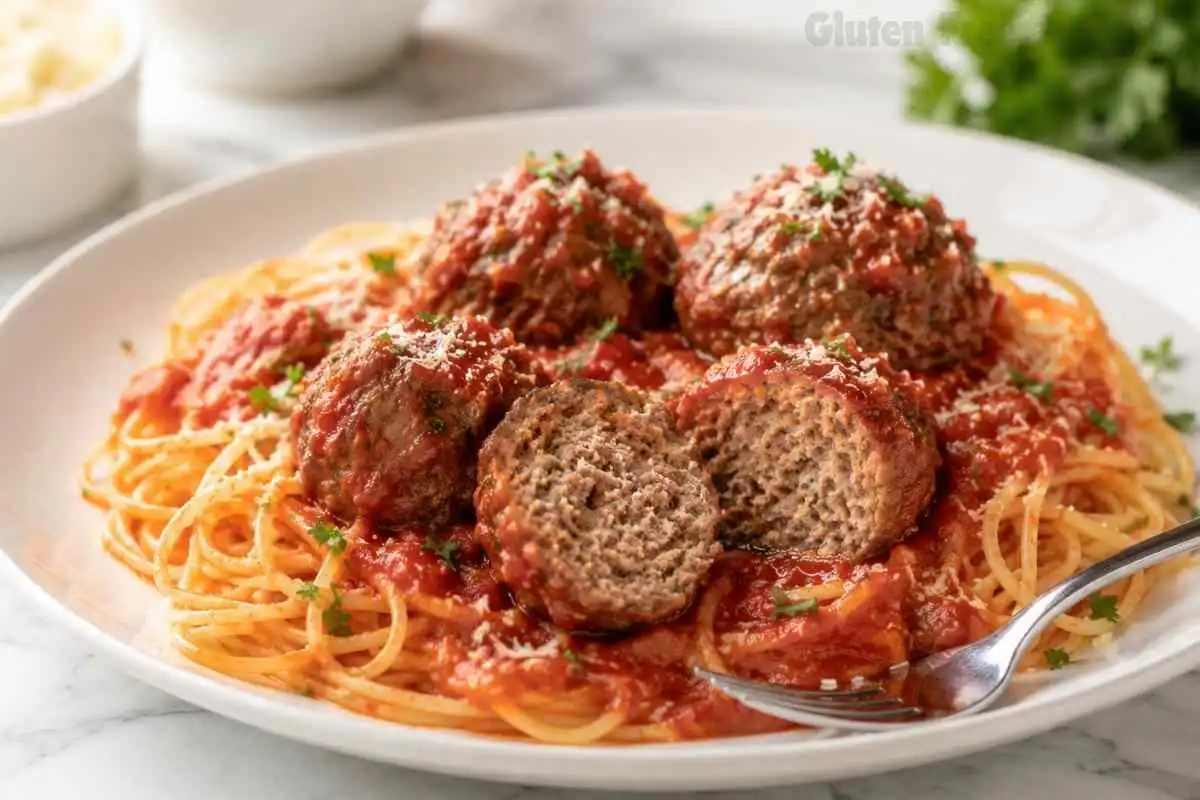
These gluten free meatballs are tender in the center, golden on the outside, and ready in 30 minutes from one bowl. I bake this gluten free meatball recipe at 375°F on parchment-lined sheets. No standing over a stovetop, no splatter, and no guesswork about whether they are cooked through.
Every celiac-safety detail in this gluten free meatball recipe is deliberate. The breadcrumbs are GFCO-certified. The Italian seasoning is either a labeled gluten free blend or a homemade mix I give you below. The baking sheet gets fresh parchment every time, which eliminates surface contact risk entirely.
If you have made gluten free meatballs before and ended up with something dense or dry, this recipe explains why. I tested four fat percentages, the breadcrumb soak, and the overmix variable. The answers are in every step.
Key takeaways
These gluten free meatballs bake at 375°F for 20 to 25 minutes and yield approximately 24 to 26 meatballs from 2 pounds of 85/15 ground beef, using GFCO-certified breadcrumbs (Aleia’s Plain Gluten Free Bread Crumbs) and a 2 to 3 minute milk soak that creates a moisture reservoir inside each meatball for a tender, juicy center.
The 85/15 fat percentage is the tested recommendation: 80/20 runs too greasy, and 90/10 or leaner produces a noticeably drier result. Mixing the meat for no more than 30 seconds prevents the myosin proteins in ground beef from linking into the dense network that causes tough, rubbery meatballs. The recipe is celiac-safe when all flagged ingredients carry a labeled or GFCO-certified gluten free designation, and includes fully tested dairy-free and egg-free options.
Prep Time: 10 mins · Cook Time: 20 mins · Total Time: 30 mins · Yield: 24–26 meatballs (8 servings)
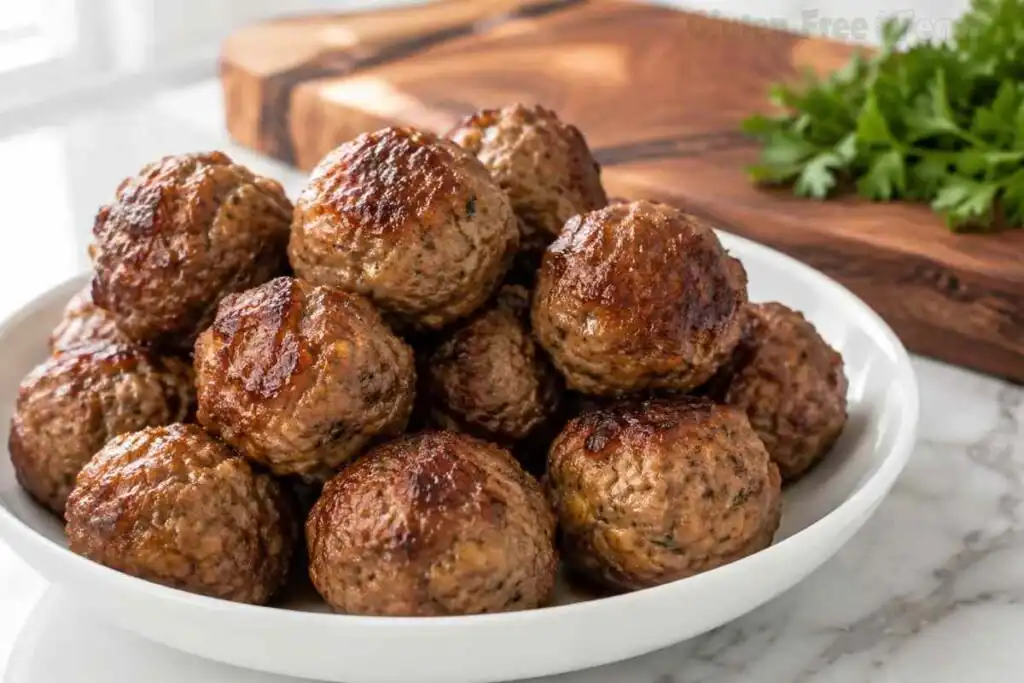
Table of Contents
Why You Will Love This Gluten Free Meatballs Recipe
- Ready in 30 minutes from one bowl: no frying, no multiple pans, no complicated prep. Mix, shape, bake.
- GFCO-certified breadcrumbs named at the ingredient line: Aleia’s Plain Gluten Free Bread Crumbs. No guessing, no sending you off-page to find a safe brand for your gluten free meatballs.
- Fat percentage tested and confirmed: 85/15 ground beef is the sweet spot. I tested 80/20, 85/15, 90/10, and 93/7 side by side. The results are in the tips section.
- Science-backed technique at every key step: the breadcrumb soak, the 30-second mixing rule, and the temperature check all have a reason behind them.
- Freezes beautifully raw or cooked: bake these gluten free meatballs from frozen at 375°F in 30 to 35 minutes, no thawing required.
- Dairy-free option included: swap the milk for any labeled gluten free unsweetened non-dairy milk and keep everything else the same.
- Cross-contamination guidance for shared kitchens: a full equipment checklist covers every item that needs attention before you start.

Gluten Free Meatballs
Ingredients
Equipment
Method
- Preheat the oven to 375°F (190°C). Line two rimmed baking sheets with parchment paper. Lightly coat the parchment with a cooking spray labeled gluten free, or brush with olive oil or avocado oil.
- In a small bowl, combine the gluten free breadcrumbs, Italian seasoning, onion powder, salt, nutmeg, and minced garlic. Pour in the milk and stir until evenly moistened. Let sit for 2 to 3 minutes so the breadcrumbs fully absorb the liquid.
- In a large mixing bowl, combine the ground beef and beaten eggs. Add the soaked breadcrumb mixture and gently mix until just combined, about 30 seconds with your hands. Do not overmix.
- With slightly wet hands or a large greased cookie scoop, portion the mixture into 2-inch balls. Place evenly spaced on the prepared baking sheets.
- Bake for 20 to 25 minutes, until golden brown on the outside and the internal temperature reaches 165°F (74°C) on an instant-read thermometer. Begin checking at 20 minutes.
- Serve immediately with a marinara or pasta sauce that is explicitly labeled gluten free.
Nutrition
Notes
Gluten-Free Note
Tried this recipe?
Let us know how it was!Ingredients for Gluten Free Meatballs
For the Meatballs
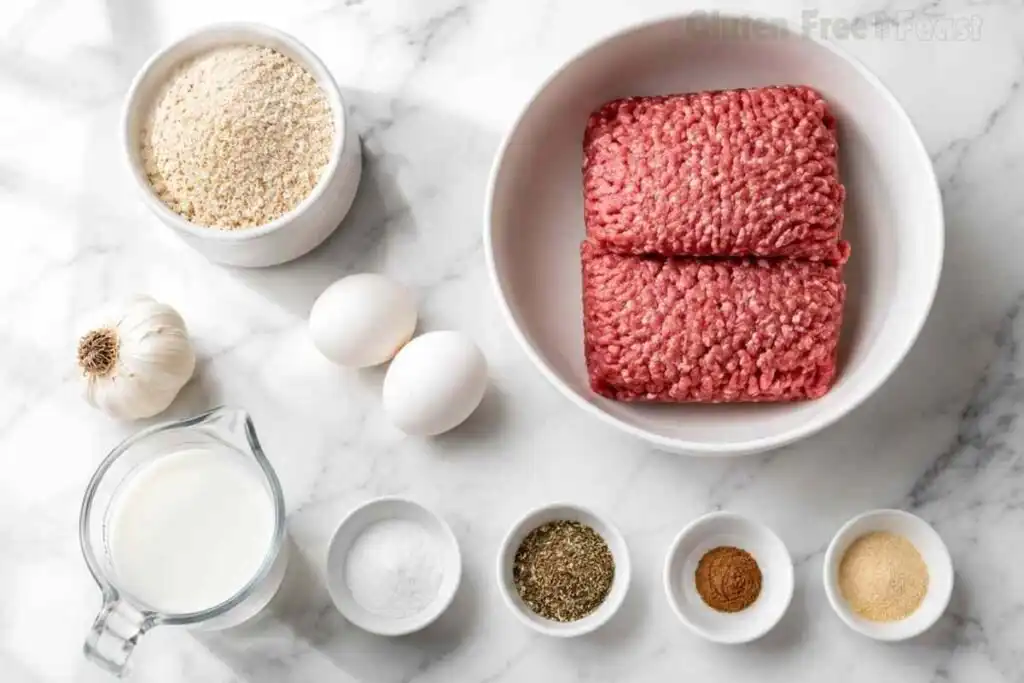
- 1 cup (110 g) GFCO-certified gluten free breadcrumbs (Aleia’s Plain Gluten Free Bread Crumbs recommended)
- 2 tablespoons (10 g) Italian seasoning, labeled gluten free (or use the homemade blend below)
- 1 tablespoon (8 g) onion powder, labeled gluten free
- 1 teaspoon (6 g) fine sea salt
- ¼ teaspoon (0.5 g) ground nutmeg
- 2 tablespoons (16 g) fresh garlic, minced
- ¾ cup (183 g) whole milk (see notes for dairy-free swap)
- 2 pounds (907 g) ground beef, 85/15 lean
- 2 large eggs (100 g without shells), lightly beaten
Ingredient Notes and Substitutions
Gluten free breadcrumbs: This is the highest-risk ingredient in this recipe. I use Aleia’s Plain Gluten Free Bread Crumbs, which are GFCO-certified and produced in a dedicated gluten free facility. Ian’s Original Gluten Free Panko Breadcrumbs are also GFCO-certified and work well if you prefer a lighter texture. Do not use any breadcrumbs that are not labeled or certified gluten free.
Italian seasoning: Many pre-made Italian seasoning blends are not labeled gluten free. Blends can contain anti-caking agents, and their labeling varies widely by brand and facility. Use a blend that explicitly states gluten free on the packaging, or make your own using the blend below.
Homemade gluten free Italian seasoning blend: Combine 1 teaspoon dried oregano, 1 teaspoon dried basil, ½ teaspoon dried thyme, ½ teaspoon dried rosemary, ¼ teaspoon dried sage, and ¼ teaspoon dried marjoram (optional). This makes 2 tablespoons. Verify that each individual dried herb is labeled gluten free. Single-ingredient herbs carry lower risk than blends, but labels still vary by brand.
Onion powder: A single-ingredient spice carries lower risk than a blend, but facilities and labels still vary. Verify that yours is labeled gluten free before using it.
Ground beef: Use fresh, plain unprocessed ground beef. Pre-seasoned or pre-mixed products may contain wheat-based fillers, so check the label before buying. This recipe is written for 85/15 lean, which produced the best balance of moisture and shape in testing.
Dairy-free option: Replace the whole milk with an equal weight (183 g) of unsweetened almond milk or any non-dairy milk labeled gluten free. Use dairy-free gluten free breadcrumbs. All other ingredients and quantities stay the same.
Celiac Safety Note: Before making these gluten free meatballs, verify that your breadcrumbs, Italian seasoning blend (or each dried herb), and onion powder all carry a labeled or GFCO-certified gluten free designation. If using a cooking spray, confirm it is labeled gluten free, or substitute olive oil or avocado oil. When serving, choose a marinara that is explicitly labeled gluten free. If adding Parmesan, use freshly grated rather than pre-shredded, as pre-shredded products can contain starch-based anti-caking agents.
How to Make Gluten Free Meatballs
Preheat your oven to 375°F (190°C). Line two rimmed baking sheets with parchment paper. Lightly coat the parchment with a cooking spray labeled gluten free, or brush it with olive oil or avocado oil.
Parchment paper is not optional for celiac safety. It eliminates all direct contact between the raw meatball mixture and the pan surface. This matters especially in a shared kitchen where pans may have processed gluten-containing food.
Step 2: Make the Breadcrumb Mixture
In a small bowl, combine the GFCO-certified breadcrumbs, Italian seasoning, onion powder, salt, nutmeg, and minced garlic. Pour in the milk and stir until evenly moistened. Let sit for 2 to 3 minutes so the breadcrumbs fully absorb the liquid.
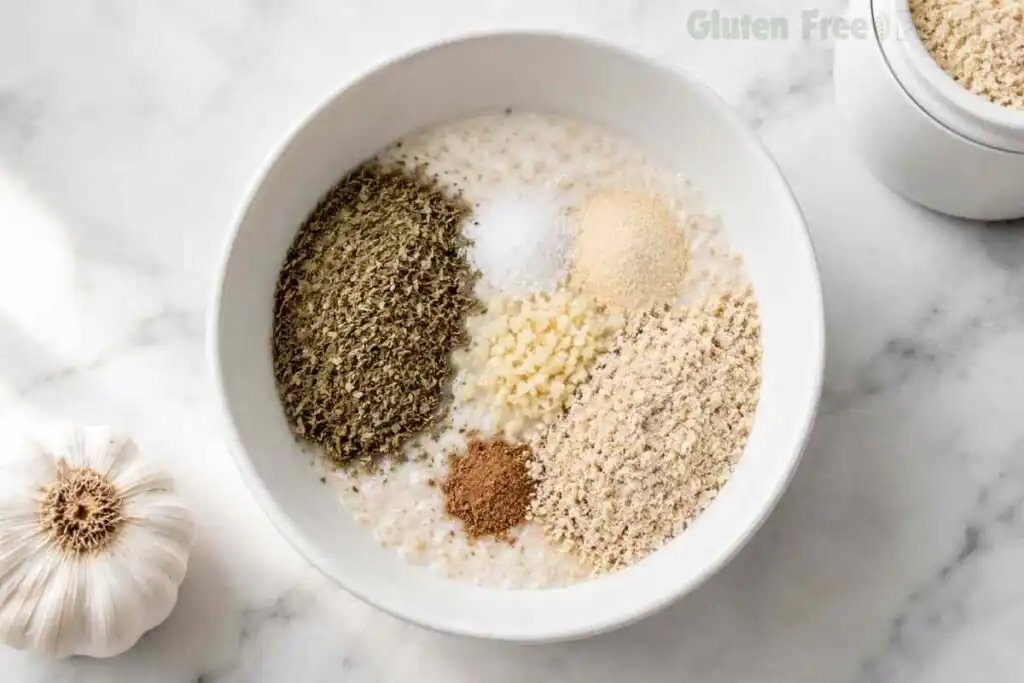
This soak is not a suggestion. When breadcrumbs absorb the milk, they swell and form a moisture reservoir inside each gluten free meatball. During baking, that liquid releases slowly from the inside out, keeping the center tender throughout. Breadcrumbs added dry cannot do this, and the difference in texture is noticeable.
Step 3: Combine and Mix
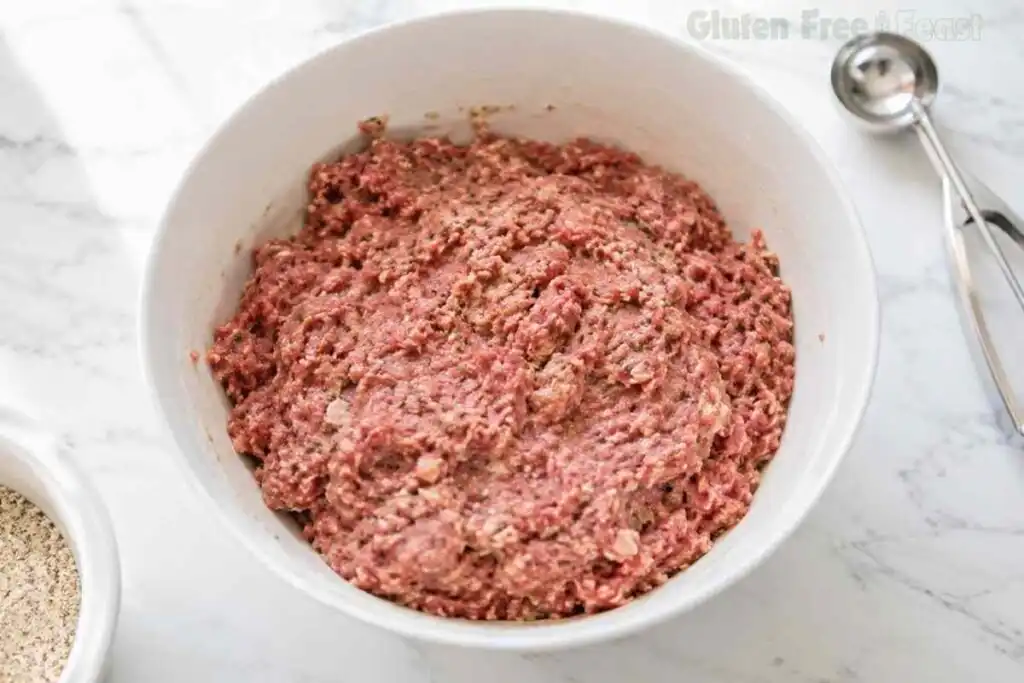
In a large mixing bowl, combine the ground beef and beaten eggs. Add the soaked breadcrumb mixture and gently mix until just combined, about 30 seconds with your hands. Stop the moment you can no longer see dry pockets.
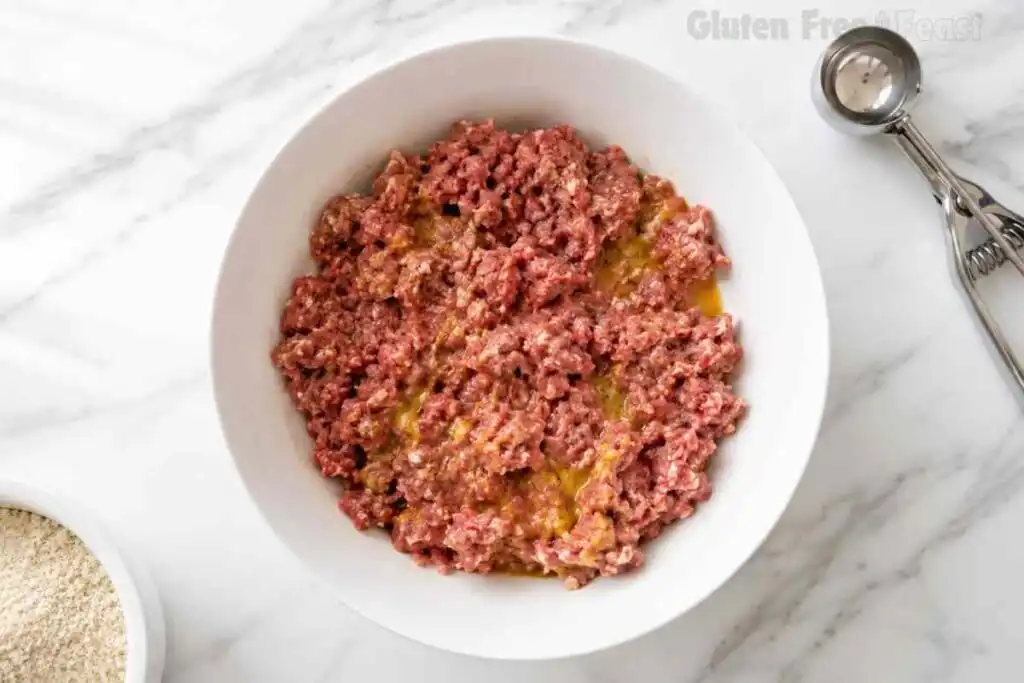
Overworking ground meat activates the myosin proteins in the muscle fibers, causing them to link into a dense, rubbery network. The result is a tough gluten free meatball instead of a tender one. A light hand here is the most important technique decision in this recipe.
Step 4: Shape the Meatballs
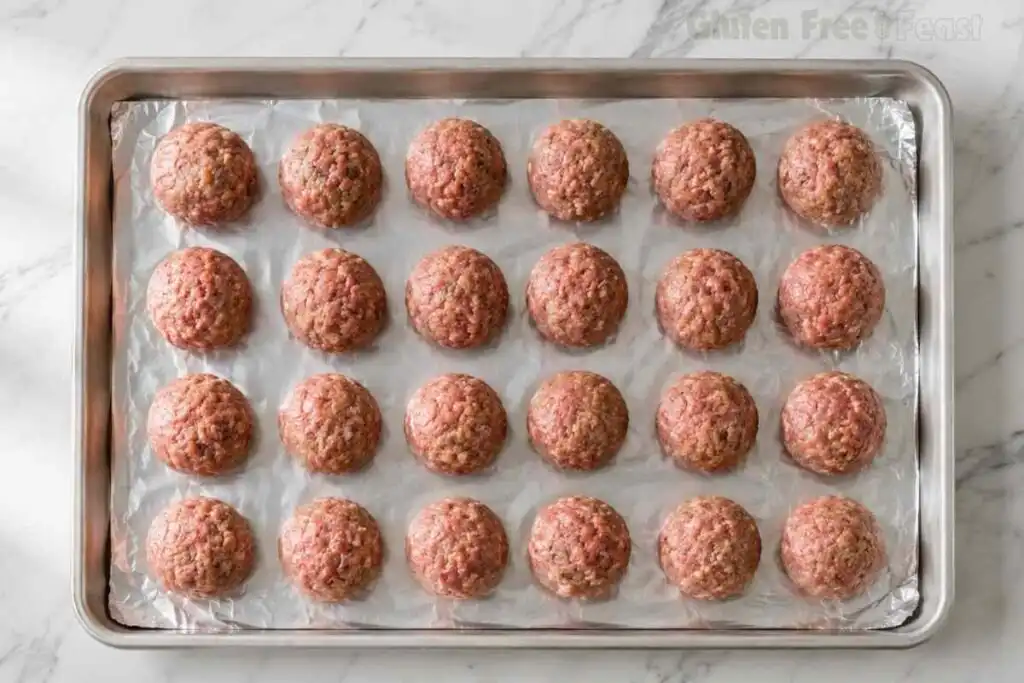
Wet your hands slightly to prevent sticking. Using a large greased cookie scoop or damp hands, portion the mixture into 2-inch balls. Place them evenly spaced on the prepared baking sheets.
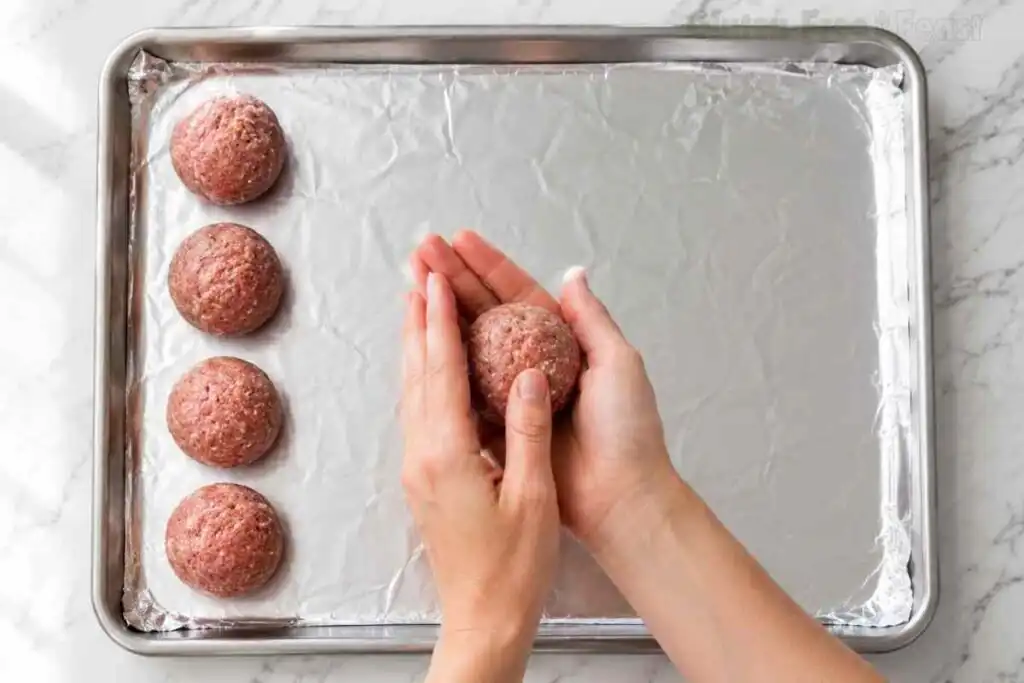
Uniform size matters here. Meatballs that vary in size will finish at different times, which means smaller ones overcook before larger ones are safe to eat. A cookie scoop removes the guesswork.
Step 5: Bake
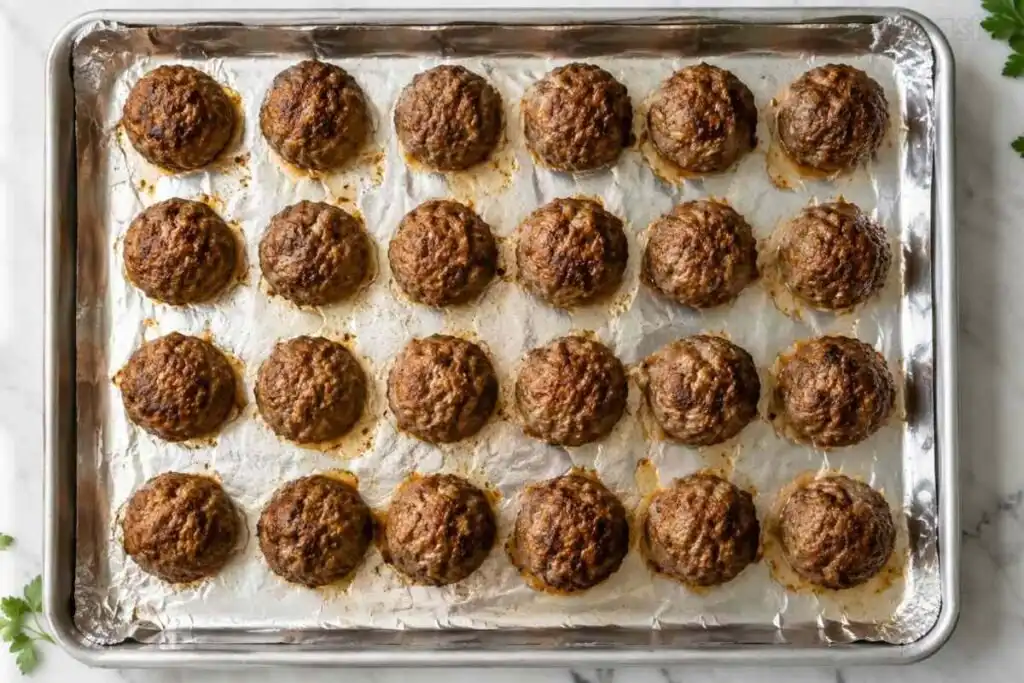
Bake the gluten free meatballs for 20 to 25 minutes, until golden brown on the outside. The internal temperature must read 165°F (74°C) on an instant-read thermometer. Begin checking at 20 minutes, as oven temperatures vary.
Visual cues alone are not reliable for ground beef. An internal thermometer is the only way to confirm doneness with certainty.
Step 6: Serve
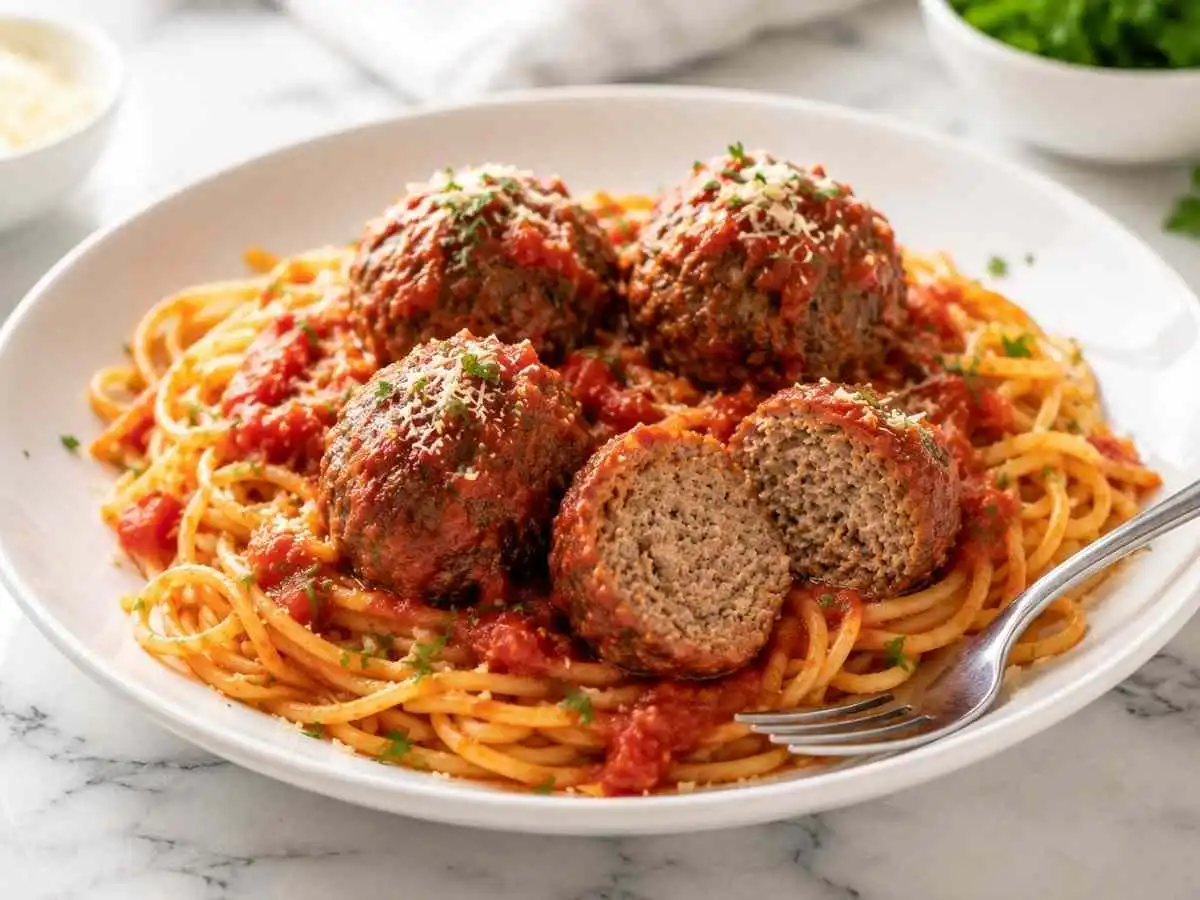
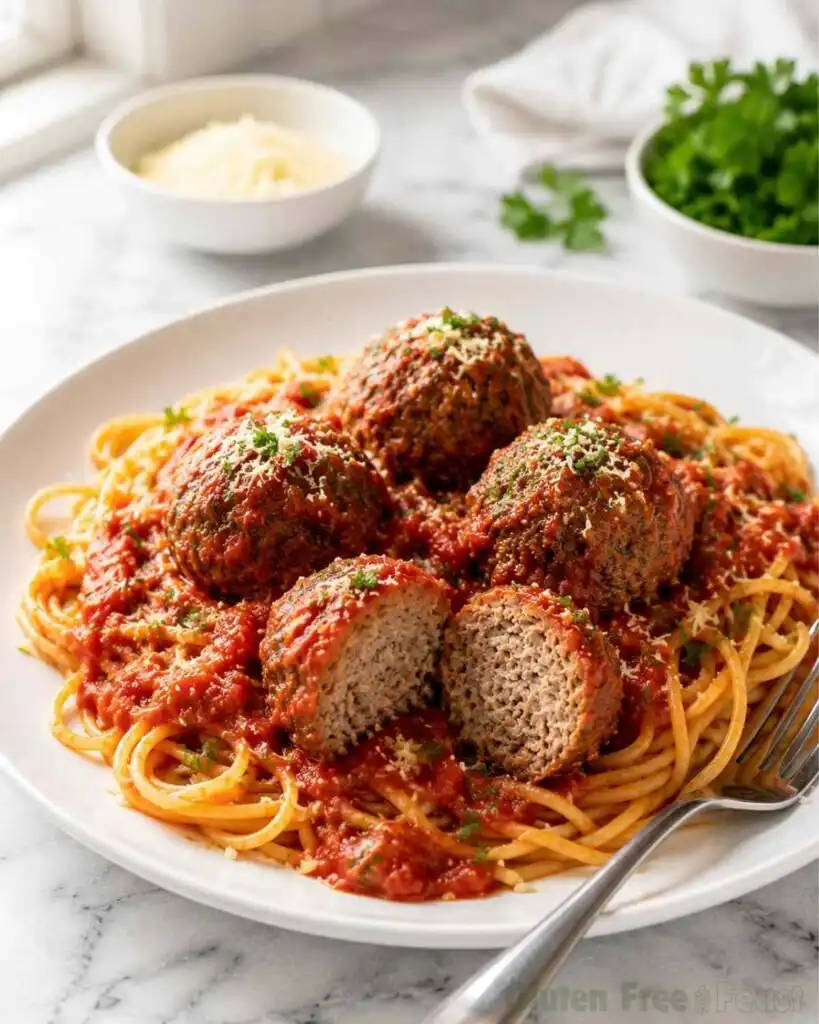
Serve these gluten free meatballs immediately with a marinara or pasta sauce that is explicitly labeled gluten free. Many popular jarred sauces are made from naturally gluten free ingredients but are not labeled gluten free. For celiac disease, the label is what matters, not the ingredient list alone.
Expert Tips for the Juiciest Gluten Free Meatballs
Use 85/15 ground beef. I tested four fat percentages side by side to find the best gluten free meatball texture. 80/20 produced a flavorful result but released too much grease during baking. 85/15 was the sweet spot: juicy interior, clean shape, minimal grease.
90/10 produced a slightly firmer and drier center. 93/7 was too lean, with a noticeably less tender texture throughout.
If you can only find lean beef, reduce the bake time by 2 to 3 minutes and check the internal temperature at 18 minutes. The meatballs will be slightly less tender, but the technique still works.
Do not rush the breadcrumb soak. Two to three minutes is enough for the breadcrumbs to fully absorb the milk. Rushing produces breadcrumbs that are still dry at their core, which undermines both the moisture-trapping effect and the binding.
Use a cookie scoop for uniform size. Even sizing is not just about appearance. A large cookie scoop sized to about 2 inches produces consistent results and eliminates the variance that leads to uneven cooking.
Use a thermometer, not a timer alone. 165°F (74°C) is the only reliable doneness signal for ground beef. Color and firmness vary with fat percentage and oven calibration. A quick check takes five seconds and removes all guesswork.
Parchment paper on every pan, every time. Beyond easy cleanup, parchment provides a physical barrier between the meat mixture and the pan surface. In a mixed-gluten kitchen, this single step eliminates the most direct path for cross-contact from the pan itself.
Substitutions and Variations
Dairy-free: Replace the whole milk with the same weight of any labeled gluten free unsweetened non-dairy milk. Almond milk works well. If you use oat milk, verify that it is certified gluten free. Standard oat milk is processed in facilities that handle wheat and is not safe for celiac disease.
Egg-free: Replace each egg with a flax egg. Combine 1 tablespoon of ground flaxseed with 3 tablespoons of water, stir, and let sit for 5 minutes until gel-like. The meatball exterior will be slightly less golden, but the structure holds well.
Breadcrumb alternatives: GFCO-certified gluten free panko (Ian’s Original) gives a lighter texture. Finely crushed labeled gluten free crackers are an easy swap. Almond flour works at a 1:1 ratio but produces a slightly denser result. Cooked cooled rice (½ cup in place of 1 cup breadcrumbs) is a third option.
Whatever substitute you choose, soak it in the milk before mixing to preserve the moisture-trapping effect that keeps the center tender.
Beef and pork blend: Replace half the ground beef with ground pork for a richer flavor. Keep the combined fat percentage close to 85/15 and follow the same technique. Bake time does not change.
Added Parmesan: Stir ¼ cup of freshly grated Parmesan into the breadcrumb mixture before adding the milk. Use freshly grated only. Pre-shredded Parmesan can contain starch-based anti-caking agents, so check the label of any pre-shredded product.
What to Serve With Gluten Free Meatballs
These gluten free meatballs work across a wide range of meals. Here is what pairs best in my kitchen.
- Gluten free pasta: rice, corn, or chickpea-based pasta are all reliable. Check the packaging for a labeled gluten free claim, as some pasta made from naturally GF grains is produced in shared facilities. For more ideas on building complete gluten free dinners, see the gluten free quiche recipe or browse all GFF recipes.
- Zoodles: spiralized zucchini or butternut squash noodles are a naturally gluten free base. A fast option for a lighter meal that still pairs well with a labeled gluten free marinara.
- Mashed potatoes: a hearty, naturally gluten free pairing. Spoon the meatballs over mashed potatoes with a ladle of the marinara sauce for something genuinely comforting.
- Meatball sub sandwiches: use a gluten free hoagie roll or gluten free bread labeled gluten free. These gluten free biscuits also work well split open as a sturdy base. Fill with meatballs, labeled gluten free marinara, and melted cheese.
- Polenta: creamy polenta is naturally gluten free and makes an elegant base. Serve the meatballs on top with sauce spooned over.
- Rice: plain cooked rice absorbs the sauce cleanly and makes these suitable for a simple weeknight dinner with no extra prep.
Storage and Make-Ahead Instructions
Refrigerator: Store cooked gluten free meatballs in an airtight container for up to 4 days. Reheat in a 350°F oven until heated through, in the microwave, or by simmering in a labeled gluten free marinara sauce on the stovetop.
Freezer (cooked): Cool completely, then arrange in a single layer on a parchment-lined sheet. Freeze until solid, about 1 hour, then transfer to a freezer bag. Cooked meatballs keep for up to 3 months. Reheat from frozen in a 350°F oven for 12 to 15 minutes.
Freezer (raw, make-ahead): This is the method I use most. Shape the meatballs, arrange on a parchment-lined sheet, and freeze until solid. Transfer to a freezer bag.
Bake from frozen at 375°F for 30 to 35 minutes to an internal temperature of 165°F. No thawing required. Fresh-from-the-oven meatballs on demand with no prep work the night you need them.
Make-ahead (fresh): Shape the meatballs, place on the parchment-lined baking sheet, and refrigerate uncovered for up to 24 hours before baking. Bake as directed when ready.
Celiac Safety Guide for Gluten Free Meatballs
Making gluten free meatballs involves several surfaces and tools that deserve attention before you start, especially in a kitchen that also processes gluten-containing food. None of these steps take more than a few minutes.
Mixing bowl: In a shared kitchen, use a glass or stainless steel bowl washed with hot water and dish soap immediately before use. Avoid scratched plastic bowls. Scratched plastic can harbor residue even after washing, and a dedicated gluten free bowl removes the question entirely.
Cookie scoop: Spring-loaded scoops have a seam between the bowl and the release mechanism where residue can accumulate. If your scoop is shared with gluten-containing doughs, wash it thoroughly with hot water and dish soap before use. Wet hands work just as well and eliminate this risk entirely.
Baking sheets: Line with parchment paper every time, regardless of how clean the pan appears. Scratched or well-used non-stick pans are not celiac-safe without a physical barrier. Parchment eliminates all direct contact between the meat mixture and the pan surface.
Counter surfaces: Wipe down the counter before rolling. In a mixed-gluten household, flour dust from earlier baking can settle on surfaces and transfer during rolling. A damp cloth wipe-down takes 30 seconds.
For a broader reference on cross-contact risks in the kitchen, Beyond Celiac maintains a detailed guide
Why Trust This Recipe
I develop recipes the same way I approached lab work: with documented testing, controlled variables, and results that hold up in any kitchen, not just mine.
This gluten free meatball recipe has been tested across multiple rounds in my dedicated gluten free kitchen. I have noted what fails, what works, and why, so you are not just following steps but understanding the process.
What that means for you:
- Multiple test batches before publishing
- Science-based notes on key steps throughout
- Honest substitution guidance, not guesswork
- Safe for celiac disease, with cross-contamination taken seriously at every step
Frequently Asked Questions
What is a gluten free binder for meatballs?
Two things work together as the binder in this recipe: eggs and soaked breadcrumbs. Eggs coagulate during baking and provide the primary structural hold. The soaked breadcrumbs form a moisture-rich matrix that distributes through the meat and holds everything together from the inside. The soak is the key step: dry breadcrumbs added straight to the meat cannot bind properly. If you need an egg-free option, use a flax egg. Combine 1 tablespoon ground flaxseed with 3 tablespoons water, rest for 5 minutes until gel-like, then use in place of one egg.
What is the best flour for gluten free meatballs?
Traditional meatball recipes do not use flour at all. The binder is eggs and breadcrumbs, and this recipe achieves the right texture without any added flour. If you want to add a small amount for extra body, use a certified gluten free 1:1 flour blend with a GFCO certification mark. Do not use oat flour unless it is explicitly certified gluten free. For most people following this recipe, flour is not needed.
What can I use instead of breadcrumbs for gluten free meatballs?
Several options work well. GFCO-certified gluten free panko (Ian’s Original) gives a lighter texture. Finely crushed labeled gluten free crackers are an easy swap. Almond flour works at a 1:1 ratio and produces a slightly denser meatball. Cooked cooled rice (½ cup in place of 1 cup breadcrumbs) is a third option. If you want to use oatmeal, it must be certified gluten free. Regular oats carry a high cross-contact risk for celiac disease. Whatever substitute you use, soak it in the milk before mixing to preserve the moisture-trapping effect.
How do I get my meatballs to stick together?
Three things keep gluten free meatballs from falling apart. First, do not skip the eggs: they are the primary structural binder. Second, soak the breadcrumbs in the milk for the full 2 to 3 minutes before adding them to the meat. Third, do not overmix: work the mixture only until combined, about 30 seconds. If meatballs are still crumbling, the most common causes are too little egg, a rushed breadcrumb soak, or a breadcrumb-to-meat ratio that is off. Wet hands when rolling also help the surface hold together cleanly.
Can I make these gluten free meatballs without breadcrumbs?
Yes. The most effective no-breadcrumb approach is a panade. Soak a slice of labeled gluten free bread (crusts removed) in the egg and milk mixture, then combine with the meat. The bread creates the same moisture-trapping effect as the breadcrumb soak. Almond flour is a grain-free alternative at a 1:1 ratio; it works but produces a slightly denser result. Cooked cooled rice is a third option. With any substitute, verify that the ingredient is labeled gluten free, as even naturally gluten free foods can come from shared facilities.
Are there any store-bought gluten free meatballs?
Yes, frozen gluten free meatballs are available at most major grocery stores, but labeling varies significantly. For celiac safety, look for a product that carries a certified gluten free seal such as the GFCO mark. Always read the full ingredient list and check specifically for breadcrumbs, wheat starch, modified food starch, or natural flavors from unspecified sources. Homemade gluten free meatballs remain the safest choice for celiac disease because you control every ingredient and every surface.
Final Thoughts
These gluten free meatballs are the kind of recipe worth keeping in regular rotation. The technique is simple once you understand why each step matters. The make-ahead and freezer options make this gluten free meatball recipe genuinely practical for busy weeks. Make a full batch this weekend, freeze half raw, and you have a celiac-safe dinner ready on a weeknight with no prep work at all.