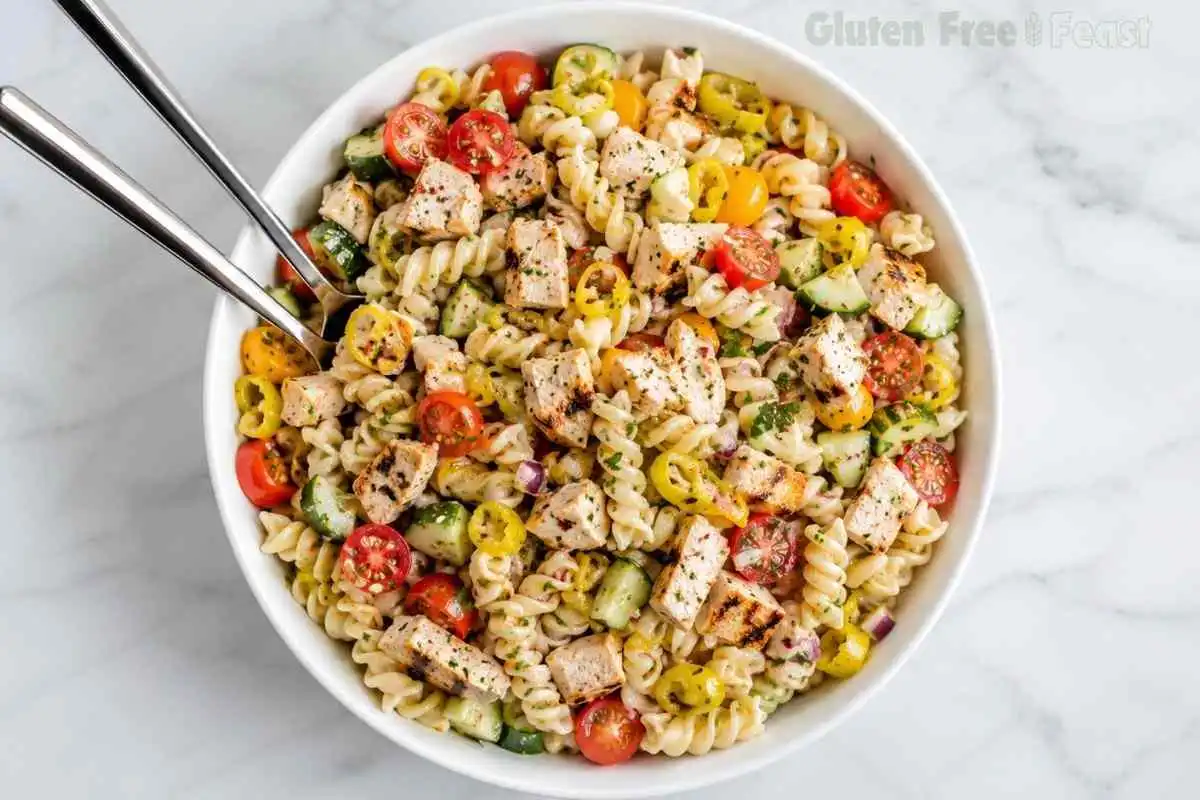
Summer BBQs, weeknight meal prep, potluck tables, and packed lunches on a hot afternoon. A great gluten free pasta salad belongs in every one of those situations. For people with celiac disease, finding one that is actually safe at every ingredient level has always been harder than it should be.
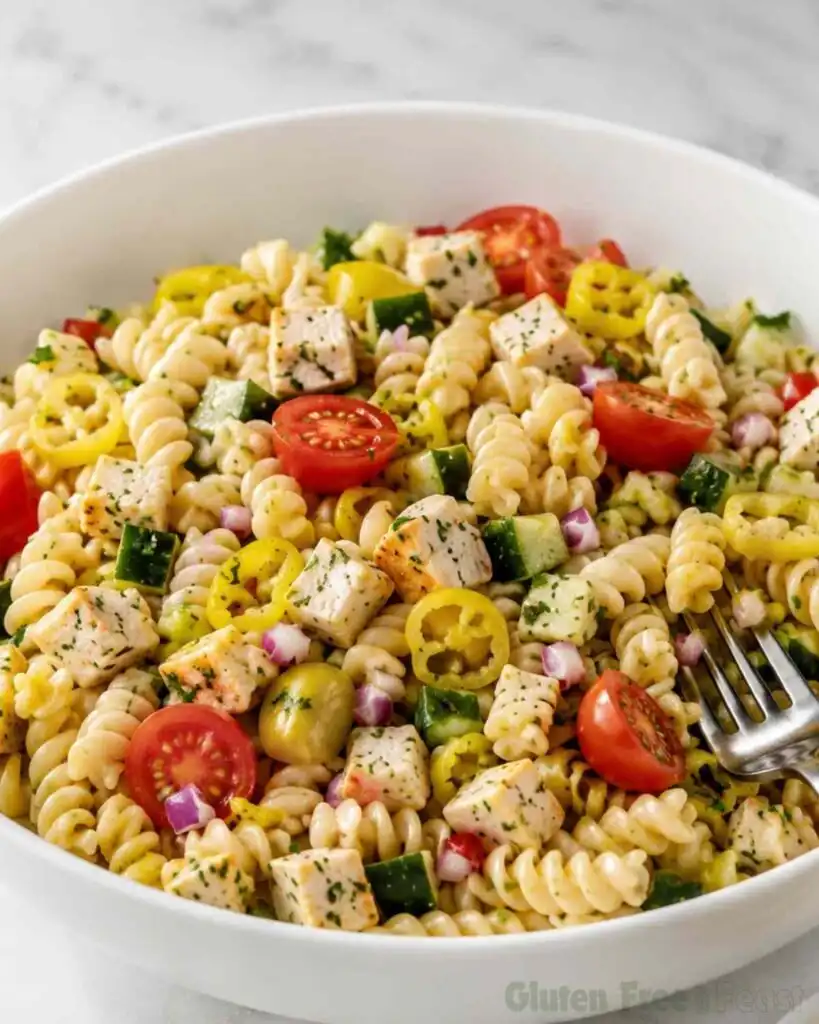
This gluten free pasta salad recipe fixes that. It is ready in 20 minutes, built around GFCO-certified pasta and a bright homemade Italian vinaigrette. It holds its texture in the refrigerator without going stiff or falling apart.
I tested this gluten free pasta salad over multiple rounds in my dedicated gluten free kitchen. That included a careful cook-time study on Jovial Organic Brown Rice Pasta at three different times, refrigerated for 24 hours after each test. One extra minute past the package time produced a pasta salad that was still tender and well-dressed after a full day in the fridge.
Two extra minutes produced something mushy by the next day. The one-minute mark is precise and non-negotiable, and I will explain exactly why below.
If you have struggled with gluten free pasta turning stiff and dry in the fridge, this recipe covers the fix. If you have been burned by a “gluten free” dressing that contained malt vinegar, it covers that too.
Key takeaways
This gluten free pasta salad is ready in 20 minutes, uses GFCO-certified Jovial Organic Brown Rice Pasta cooked exactly one minute past the package time, and stays tender in the refrigerator for up to three days because the homemade vinaigrette coating slows the starch recrystallization that makes refrigerated GF pasta hard and dry.
The dressing is built from GFCO-certified Organicville Organic Dijon Mustard and Spicely Organics Organic Italian Seasoning, which eliminates the malt vinegar risk found in most bottled Italian dressings and removes a hidden gluten source that affects many celiacs using store-bought products. Before serving leftovers, a quick drizzle of olive oil and red wine vinegar over each portion re-emulsifies the dressing and restores any pasta that has firmed; a dedicated gluten free colander and cutting board are required at every stage to prevent cross-contact.
Prep time: 5 mins · Cook time: 15 mins · Total time: 20 mins · Yield: 6 servings
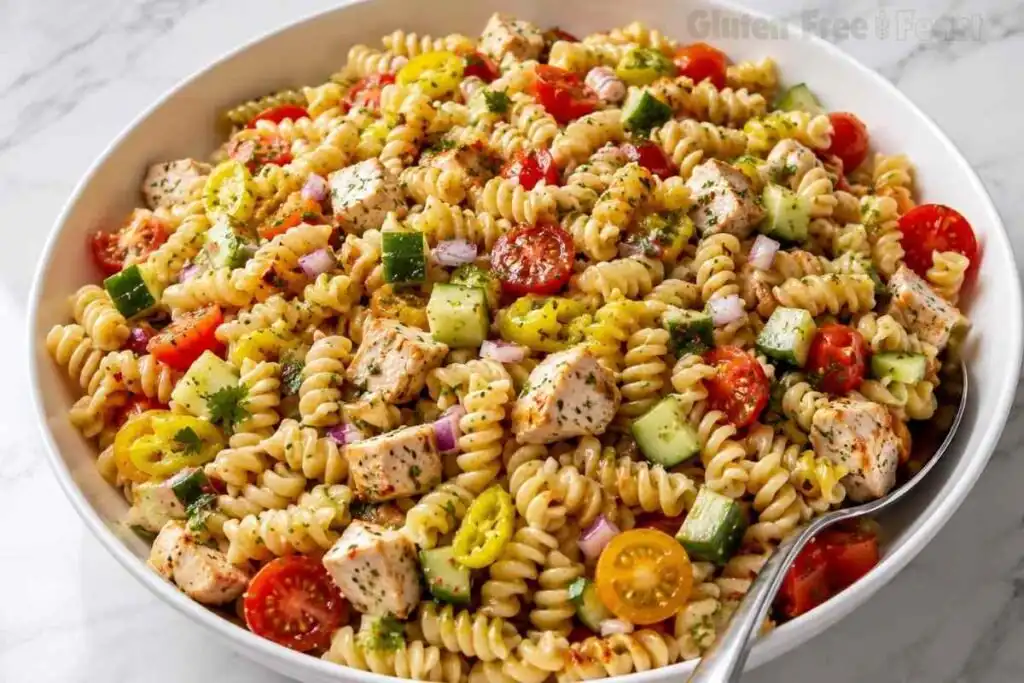
Table of Contents
Why You Will Love This Gluten Free Pasta Salad
- Ready in 20 minutes: five minutes of prep while the pasta cooks, a quick toss, and this gluten free pasta salad is done. It is the fastest option in this recipe category by 20 minutes.
- GFCO-certified pasta at the ingredient level: Jovial Organic Brown Rice Pasta carries GFCO certification from gfco.org, not just a self-declared label. That distinction matters for celiac disease.
- Tested texture after refrigeration: the one-minute overcook method is based on documented testing across three cook times, refrigerated 24 hours each. It works consistently across brown rice, chickpea, and lentil pasta.
- Three days of good leftovers: with a simple olive oil and vinegar drizzle before serving, this gluten free pasta salad stays tender on day two and day three.
- Fully customizable protein: grilled chicken, rotisserie chicken, or chickpeas for a vegan version. The recipe structure handles all of them.
- Cross-contamination guidance built in: dedicated colander, wooden board warnings, and potluck safety all covered in one place.
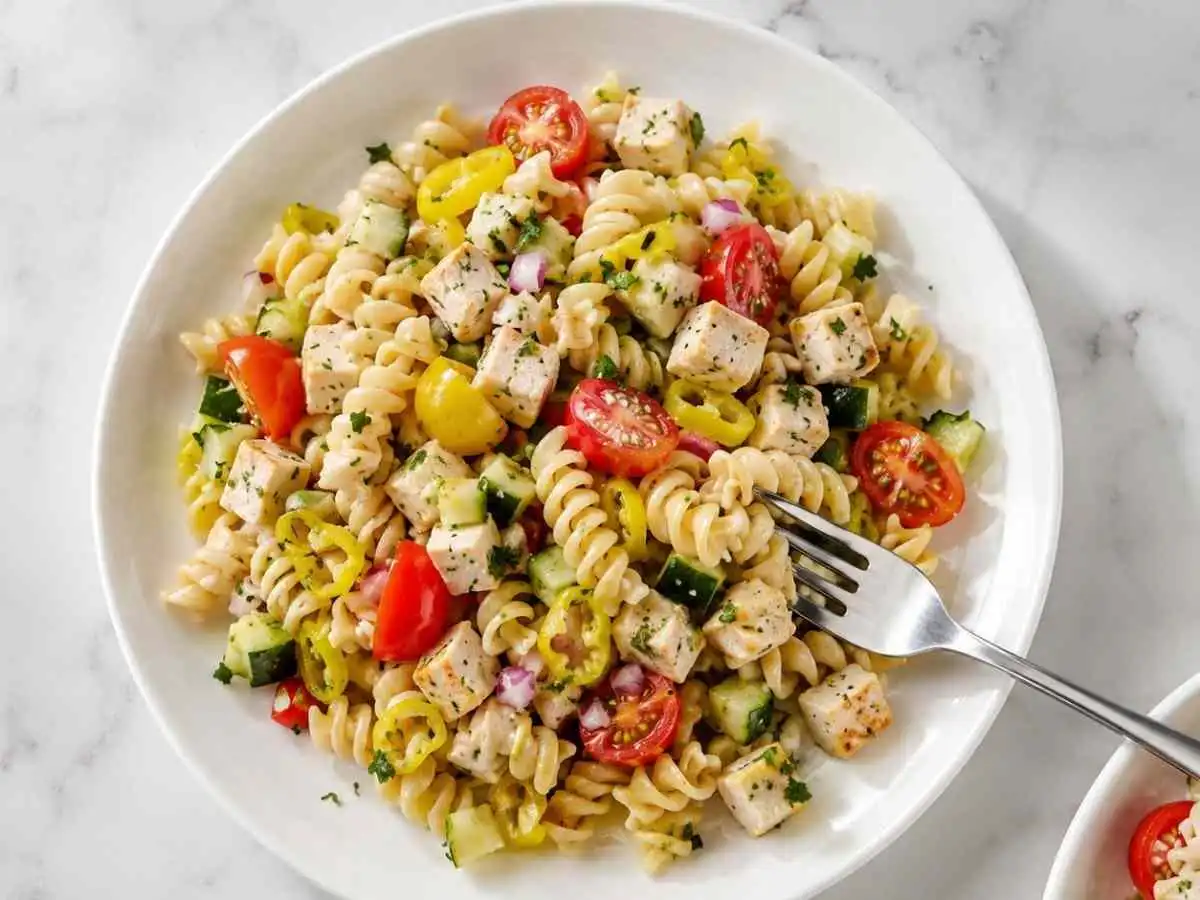

Gluten Free Pasta Salad
Ingredients
Equipment
Method
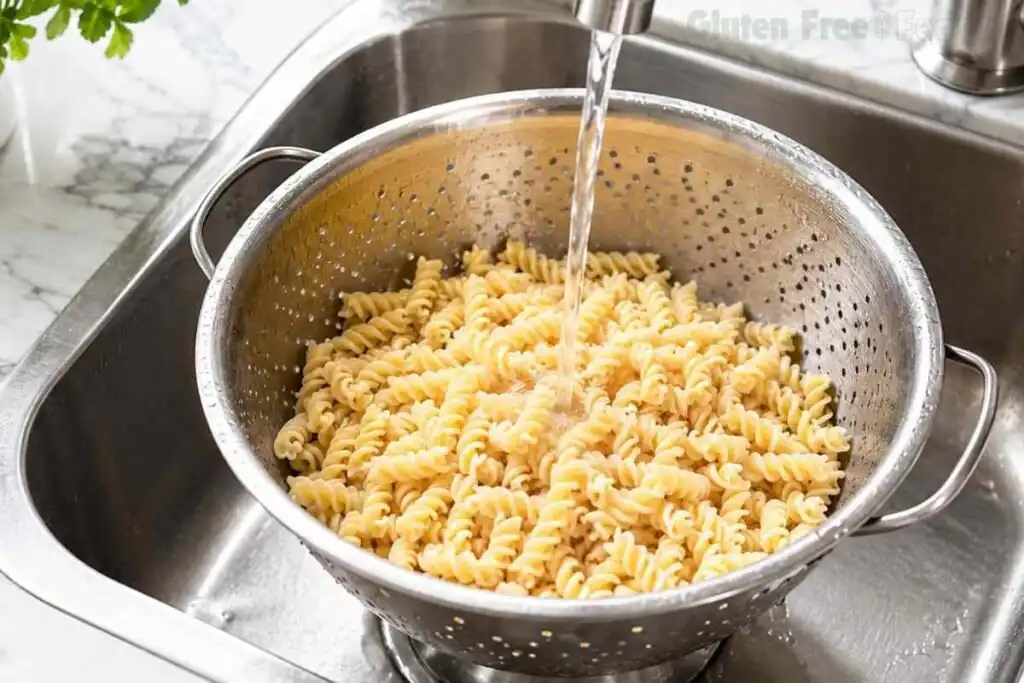
- Bring a large pot of water to a boil and salt it generously. Cook the Jovial pasta according to the package directions, then set a timer for exactly one additional minute. Drain through a dedicated gluten free colander and rinse immediately under cold water.
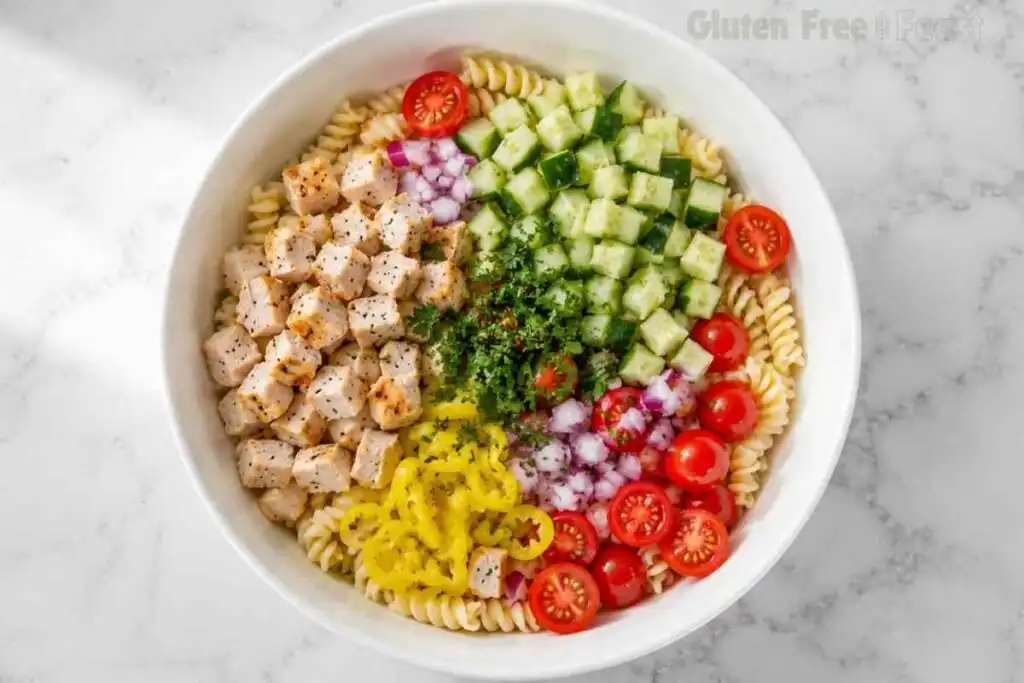
- While the pasta cooks, dice the cucumber, halve the tomatoes, and finely dice the red onion. Place in a large mixing bowl with the sliced pepperoncini, chopped chicken, fresh parsley, and feta if using.
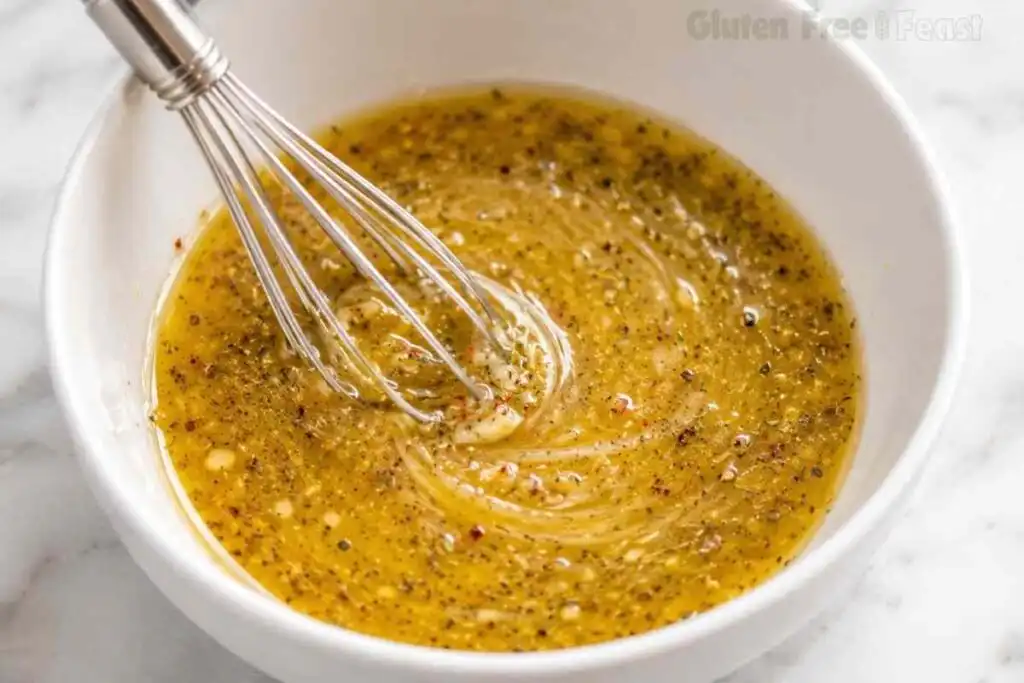
- In a small jar or bowl, combine the olive oil, red wine vinegar, lemon juice, Organicville Dijon mustard, honey, Spicely Organics Italian seasoning, garlic, salt, and pepper. Whisk or shake until fully combined and emulsified.
- Add the cooled pasta to the salad bowl. Pour the dressing over everything and toss until evenly coated. Serve immediately, or refrigerate. Before serving leftovers, drizzle each portion with olive oil and a splash of red wine vinegar to restore the dressing and soften the pasta.
Nutrition
Notes
Gluten-Free Note
Tried this recipe?
Let us know how it was!Ingredients
For the Salad
- 12 oz (340 g) Jovial Organic Brown Rice Pasta, fusilli or rotini (GFCO-certified; see notes)
- ½ cup (75 g) red onion, finely diced
- 12 oz (340 g) cherry or grape tomatoes, halved
- 1 large cucumber (300 g), diced
- ½ cup (60 g) sliced pepperoncini (check label: avoid malt vinegar brine)
- 2 grilled chicken breasts (280 g), chopped (plain grilled only; no marinade, or verify marinade is gluten free)
- ⅓ cup (15 g) fresh parsley, chopped
- ½ cup (75 g) feta cheese, optional (plain feta; check label for wheat starch anti-caking agents)
For the Dressing
- ⅓ cup (72 g) olive oil
- 3 tablespoons (45 g) red wine vinegar
- 1 tablespoon (15 g) fresh lemon juice
- 2 teaspoons (10 g) Organicville Organic Dijon Mustard (GFCO-certified)
- 2 teaspoons (14 g) honey
- 2 teaspoons (4 g) Spicely Organics Organic Italian Seasoning (GFCO-certified, dedicated gluten free facility)
- 2 teaspoons (6 g) minced garlic
- ½ teaspoon (3 g) salt
- ¼ teaspoon (0.5 g) black pepper
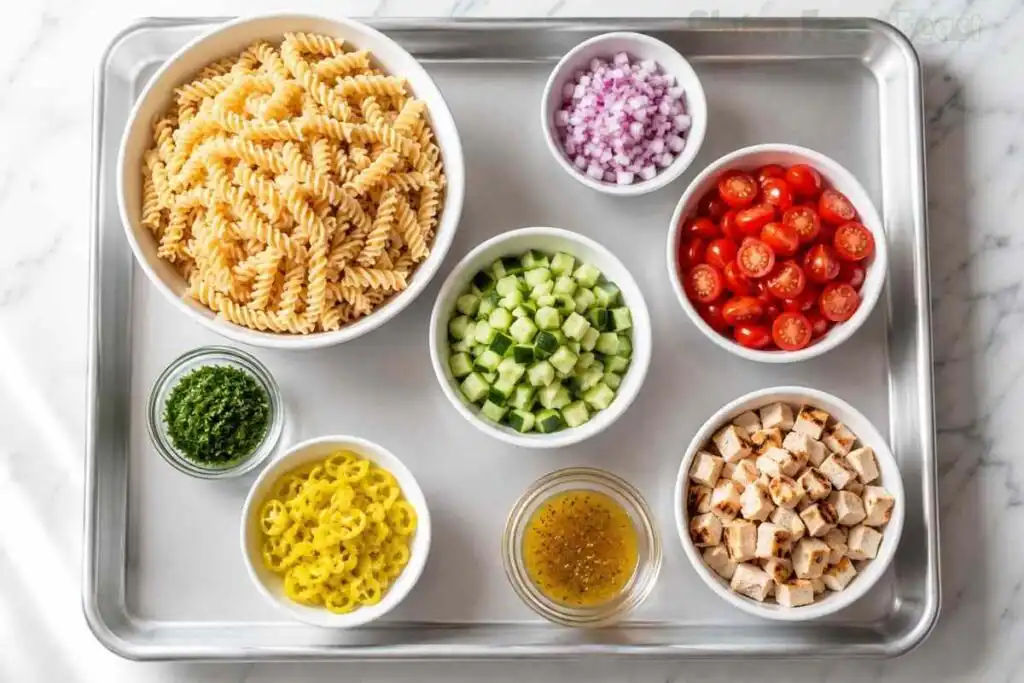
Ingredient Notes and Substitutions
The pasta matters: Jovial Organic Brown Rice Pasta (fusilli or rotini) is the tested recommendation for this gluten free pasta salad. The spirals hold dressing in their grooves, which keeps every bite flavorful and prevents the pasta from drying out. Brown rice pasta firms up more gradually in the refrigerator than chickpea or lentil pasta. You can read more about working with different pasta shapes in GFF’s guide to homemade gluten free pasta.
Why GFCO certification: The GFCO (Gluten Free Certification Organization) program tests to below 10 ppm of gluten, which is half the FDA’s 20 ppm threshold. For celiac disease specifically, the extra margin matters. Jovial Organic Brown Rice Pasta, Organicville Organic Dijon Mustard, and Spicely Organics Organic Italian Seasoning all carry current GFCO certification. You can verify any brand at gfco.org before purchasing.
Dijon mustard: Many Dijon mustards use white wine as a base, which is naturally gluten free. The risk is malt vinegar, which is barley-derived and not safe for celiac disease. Organicville Organic Dijon Mustard uses apple cider vinegar and is GFCO-certified. If you use a different brand, read the label specifically for malt vinegar before buying.
Italian seasoning: Pre-blended spice mixes are a hidden cross-contact risk. Many are processed on shared equipment with wheat-containing products. Spicely Organics produces its Italian seasoning in a dedicated gluten free facility with GFCO certification. If you use another brand, the label must carry a certified gluten free symbol, not just a “may be processed with” disclaimer.
Chicken: Plain grilled chicken is safe. The risk is in marinades and seasonings. If you are using rotisserie chicken, confirm the seasoning is gluten free before purchasing. Many rotisserie chickens use modified food starch, which can be wheat-derived.
Feta: Plain feta is generally low-risk. The concern is wheat starch used as an anti-caking agent in some pre-crumbled varieties. Buy a plain block and crumble it yourself. If you use pre-crumbled feta, read the label before adding it to this gluten free pasta salad.
Pepperoncini: Pickled peppers are typically gluten free. Some brands use malt vinegar in the brine, which is barley-derived. Read the brine ingredients before buying.
Celiac Safety Note: All packaged ingredients in this gluten free pasta salad must carry a certified gluten free label. Check specifically: pasta (GFCO-certified Jovial Organic Brown Rice Pasta), Dijon mustard (GFCO-certified Organicville Organic Dijon Mustard), Italian seasoning (GFCO-certified Spicely Organics), chicken (plain grilled; no wheat-based marinade), and feta (plain; check for wheat starch anti-caking agents). Cross-contact at packaging facilities is a real risk for people with celiac disease. When in doubt, look for the GFCO certification symbol, not just a “gluten free” marketing claim.
How to Make Gluten Free Pasta Salad
Step 1: Cook the Pasta
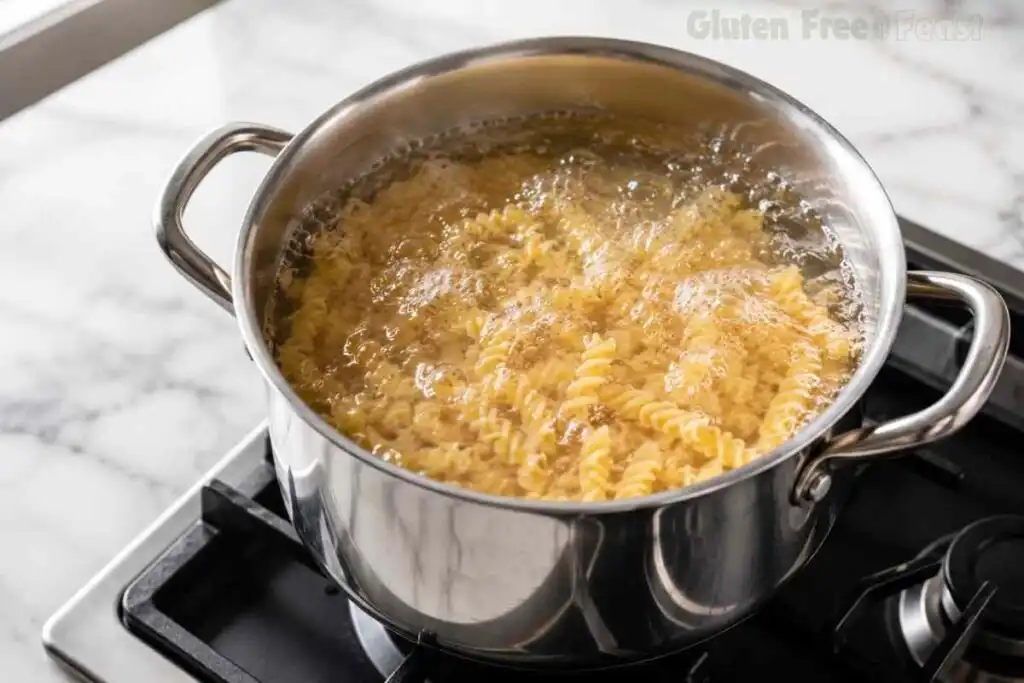
Bring a large pot of water to a boil and salt it generously. Unlike wheat pasta, brown rice pasta has no gluten protein network to carry flavor through the noodle itself. The cooking water is the only seasoning window for any gluten free pasta salad. Under-salted water produces flat, starchy pasta that no amount of dressing can fully rescue.
Cook the Jovial pasta according to the package directions, then set a timer for exactly one additional minute. This is the single most important technique in this gluten free pasta salad recipe. Brown rice starch behaves differently from wheat starch at cold temperatures: without gluten’s protein network holding structure together, the amylopectin starch recrystallizes as it cools. That recrystallization is what makes refrigerated GF pasta feel hard and dry the next day.
Starting one minute softer compensates for that firming. The vinaigrette coating delays it further.
Do not go to two minutes over the package time. Across every GF pasta type I tested, including brown rice, chickpea, and lentil pasta, two minutes over produced mushy results within 24 hours. The window is narrow: one minute gives you a great result every time.
Step 2: Prep the Vegetables and Dressing
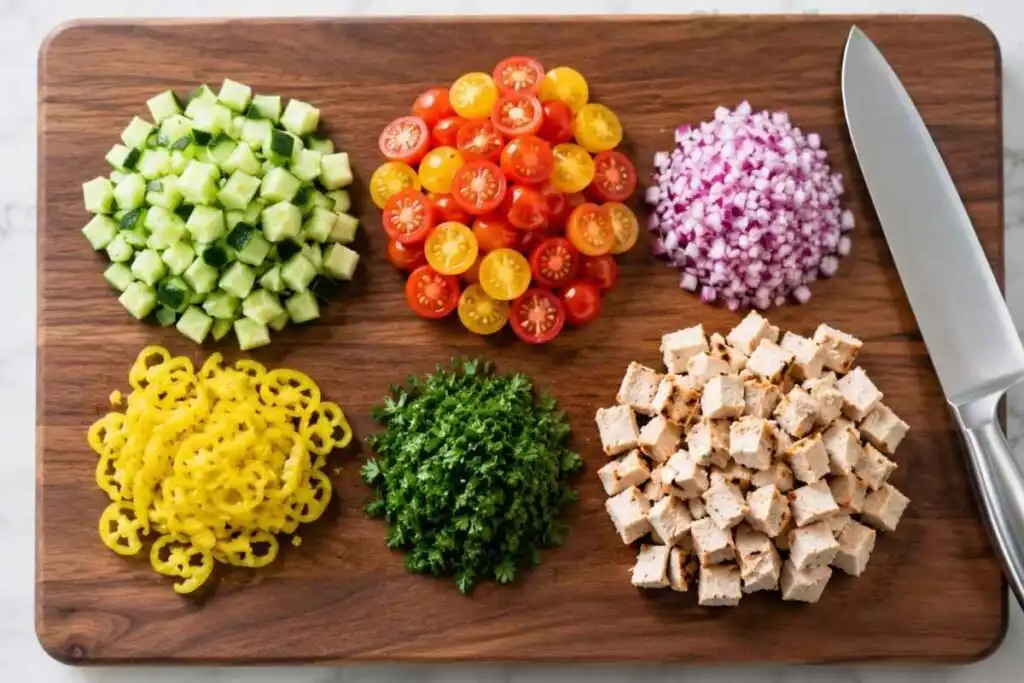
While the pasta cooks, dice the cucumber, halve the tomatoes, and finely dice the red onion. Place everything in a large mixing bowl along with the sliced pepperoncini, chopped chicken, fresh parsley, and feta if using.
In a small jar or bowl, combine the olive oil, red wine vinegar, lemon juice, Organicville Dijon mustard, honey, Spicely Organics Italian seasoning, garlic, salt, and pepper. Whisk or shake until fully combined and emulsified. Taste and adjust salt if needed before adding to the salad.
Step 3: Drain, Rinse, and Toss
Drain the pasta through a dedicated gluten free colander. Rinse immediately under cold running water. The cold rinse stops the cooking so the pasta does not overcook in its own residual heat. It also drops the temperature quickly enough to prevent further starch gelatinization.
Add the cooled pasta to the salad bowl. Pour the dressing over everything and toss until evenly coated. Every piece of pasta should be dressed, since the coating is what slows the starch recrystallization overnight in any gluten free pasta salad.
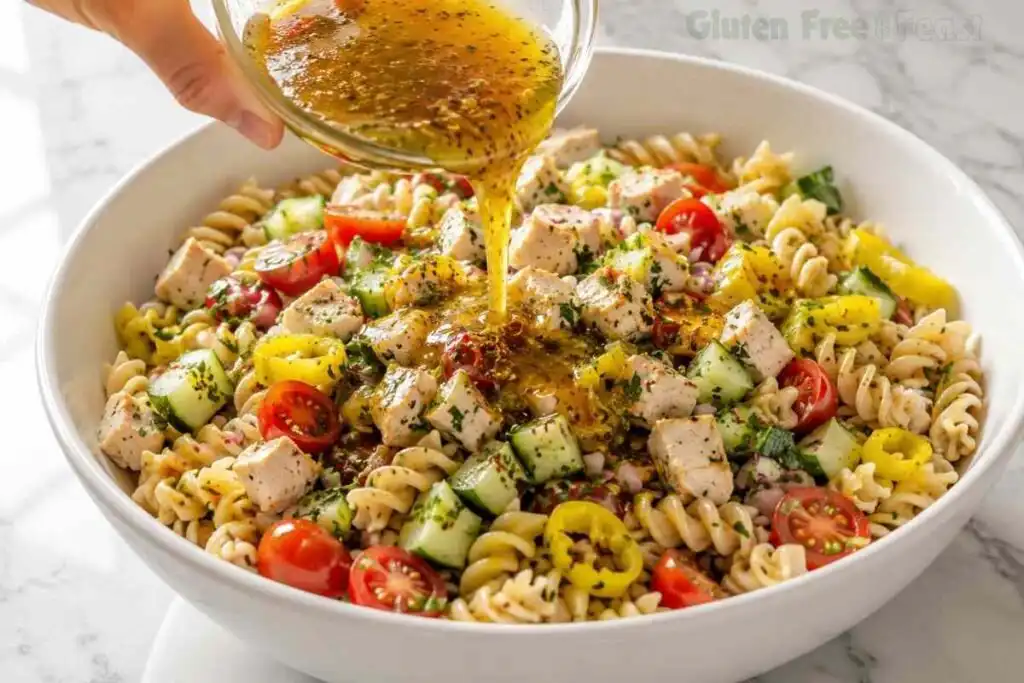
Serve immediately, or refrigerate until ready. Before serving leftovers, drizzle each portion with olive oil and a splash of red wine vinegar. This re-emulsifies any separated dressing, softens any pasta that has firmed up, and refreshes the flavors.
Expert Tips for Best Results
- Use a dedicated gluten free colander. Pasta water residue and starch cling to the mesh or holes of a colander even after washing. If your colander has ever held wheat pasta, it is a cross-contact risk for celiac disease. A separate, clearly labeled GF colander removes the risk completely.
- Use a dedicated GF cutting board. Wooden cutting boards absorb gluten into the grain permanently. They cannot be cleaned to a celiac-safe level. Use a dedicated plastic or glass cutting board for all gluten free food prep. Scratched non-stick surfaces carry the same risk.
- Salt the water heavily. Use at least one teaspoon of salt per quart of water. Brown rice pasta needs more seasoning from the cooking water than wheat pasta does, because the protein structure that normally carries flavor is absent. This is the flavor foundation of a good gluten free pasta salad.
- Time the extra minute precisely. Set a separate timer the moment the package time is up. Taste at the package mark: the pasta should feel just slightly firmer than you want to eat. One minute from there gives you the right result every time.
- Dress every piece of pasta thoroughly. After adding the dressing, toss for a full minute until every piece is coated. The vinaigrette coat is what delays starch recrystallization overnight in this gluten free pasta salad. Under-dressed pasta will be stiff by morning regardless of cook time.
- At outdoor events, follow the two-hour rule. A gluten free pasta salad with chicken should not sit at room temperature for more than two hours. On a hot day above 90°F, that window drops to one hour. Keep it chilled until ready to serve.
- Bring your own serving utensils to potlucks. Shared spoons at a buffet table are a cross-contact risk if other dishes contain gluten. Dedicated GF serving tools take 30 seconds to pack.
Substitutions and Variations
Vegan version: Replace the grilled chicken with one 15-oz can of drained and rinsed chickpeas. The protein count drops slightly, but the texture works well in a gluten free pasta salad. Omit the feta or use a dairy-free alternative. Make sure the chickpeas carry a certified gluten free label, as some canned legumes are processed on shared equipment.
Dairy-free version: Simply omit the feta. The gluten free pasta salad is complete without it, and the dressing is already dairy-free.
Greek style: Swap the Italian seasoning for ½ teaspoon dried oregano and ¼ teaspoon dried thyme. Add ¼ cup pitted Kalamata olives (check the brine label for a gluten free designation) and increase the feta. This variation of the gluten free pasta salad works especially well with plain grilled chicken.
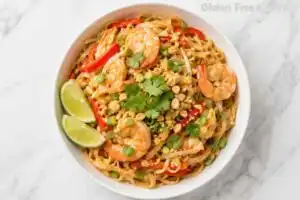
Pasta shape notes: Jovial’s fusilli and rotini are both tested and recommended. The spirals grip the dressing. Penne and elbows hold less dressing per bite and dry out faster in the refrigerator. If you want another weeknight GF pasta dinner, gluten free Pad Thai uses similar pantry staples and comes together just as fast.
Protein swap: Rotisserie chicken works well if you confirm the seasoning is gluten free before purchasing. Canned tuna packed in water, with a gluten free label on the can, is a quick variation. Grilled shrimp also works for a summer version, though that gluten free pasta salad is best eaten the same day.
What to Serve With Gluten Free Pasta Salad
This gluten free pasta salad works in almost every meal context. Here are the combinations that work best in my kitchen.
- As part of a summer spread: This gluten free pasta salad is one of the strongest anchors for a BBQ or picnic table. Add grilled corn, sliced fruit, and iced tea for a full outdoor meal. A warm gluten free quiche is a particularly good counterpart if you are hosting a brunch-style outdoor gathering.
- Weekend brunch: Served alongside gluten free pancakes or a simple egg dish, this gluten free pasta salad adds a savory, protein-rich element to a brunch spread that would otherwise lean sweet.
- Meal prep lunches: Portion this gluten free pasta salad into containers at the start of the week. Each serving holds well for three days with the olive oil and vinegar refresh before eating.
- Simple weeknight dinner: On its own with extra chicken and a side of crusty gluten free bread, this is a complete and satisfying weeknight meal that requires no reheating.
Storage and Make-Ahead Instructions
Refrigerator: Store this gluten free pasta salad in an airtight container for up to 3 days. Before serving leftovers, drizzle with olive oil and a splash of red wine vinegar. This restores the dressing emulsion and softens any pasta that has tightened from the cold.
Freezer: Do not freeze this gluten free pasta salad. GF pasta becomes unpleasantly soft after freezing and thawing, and the vegetables release water that breaks the dressing.
Make-ahead dressing: The vinaigrette can be made up to one week in advance. Store it in a sealed jar in the refrigerator. Shake or whisk before using, as the olive oil will solidify slightly when cold.
Make-ahead salad: Keep the pasta and dressing separate for longer storage. Toss to combine within an hour of serving for the freshest texture. If the gluten free pasta salad is already dressed, the three-day window applies.
Why Trust This Recipe
I develop recipes the same way I approached lab work: documented testing, controlled variables, results that hold up in any kitchen.
This gluten free pasta salad went through multiple rounds of testing in my dedicated gluten free kitchen. That included a three-variable cook-time study on Jovial Brown Rice Fusilli, refrigerated 24 hours per test. The data from that study is in the How to Make section. It is the reason the one-minute note exists and why the two-minute warning is specific and firm.
What that means for you:
- Multiple test batches before publishing, with specific variables tracked
- Science-based notes on the steps that actually matter, not generic advice
- GFCO-certified brands named at the ingredient level, not buried in footnotes
- Safe for celiac disease, with cross-contact guidance covering equipment, shared tools, and outdoor serving
Frequently Asked Questions
What is the trick to cooking gluten free pasta for a pasta salad?
Two things: salt the water well, and cook for exactly one minute past the package time for any cold application. Brown rice pasta lacks the gluten protein network that holds wheat pasta together as it cools. The starch recrystallizes at refrigerator temperatures, which is why this type of gluten free pasta salad can feel hard and dry the next day. Starting slightly softer compensates for that process, and the vinaigrette coating slows it further. Rinse immediately with cold water the moment you drain the pasta.
How do you keep gluten free pasta salad from getting hard in the fridge?
Two strategies work together. First, the one-minute overcook at the start. Second, a fresh drizzle of olive oil and red wine vinegar over your gluten free pasta salad before serving leftovers. The oil coats the starch and the vinegar refreshes the dressing. Well-dressed pasta stays softer significantly longer than under-dressed pasta.
What are the most common mistakes when making gluten free pasta salad?
Five mistakes come up consistently. Not salting the water enough is the most common, and the effects are permanent. Not overcooking by one minute for cold applications is the second. Skipping the cold water rinse is third. Using a colander that previously held wheat pasta is a celiac-specific risk many people overlook. And the fifth mistake is choosing chickpea or lentil pasta for a gluten free pasta salad that will sit overnight. Both types firm up faster in the refrigerator than brown rice pasta. A dressing drizzle alone cannot fully restore them.
How do you keep gluten free pasta from getting mushy?
Exactly one minute over the package time is the target. Two minutes over produces mushy pasta after chilling, across every GF pasta type I tested. Taste the pasta at the package time mark: it should feel just slightly firmer than you want to eat. Set a timer for one minute and drain at the bell, then rinse immediately with cold water.
Can I make pasta salad with gluten free pasta?
Yes, and cold pasta salad is one of the best applications for gluten free pasta. The vinaigrette coating protects the starch from recrystallizing as quickly as it would in a plain cold pasta dish. Brown rice pasta, specifically GFCO-certified Jovial Organic, holds texture better in the refrigerator than chickpea or lentil pasta. Fusilli and rotini spirals hold the dressing better than smooth shapes like penne, making them the best choice here.
Is bottled Italian dressing safe for celiac disease?
Many bottled Italian dressings are not safe for celiac disease. The common hidden source is malt vinegar, which is derived from barley. Some also contain wheat-derived thickeners. Homemade vinaigrette takes two minutes to whisk together and eliminates the risk entirely. This gluten free pasta salad dressing uses red wine vinegar, lemon juice, and GFCO-certified Organicville Organic Dijon Mustard, which removes the malt vinegar risk completely.
Which is healthier, gluten free pasta or regular pasta?
For people with celiac disease, gluten free pasta is not a healthier choice. It is a medical necessity. Wheat pasta causes intestinal damage in celiacs regardless of how it compares on a nutrition label. This gluten free pasta salad delivers 425 calories, 25 g protein, and 42 g carbohydrates per 273-gram serving, comparable to a similar wheat pasta salad. For celiacs, safety is the only relevant question.
Final Thoughts
This gluten free pasta salad is the recipe I come back to every summer. It is fast, it holds well, and it is the kind of dish that people without dietary restrictions consistently ask me to bring again. Make the dressing a day ahead, keep Jovial pasta in your pantry, and you have a 20-minute meal ready on demand.