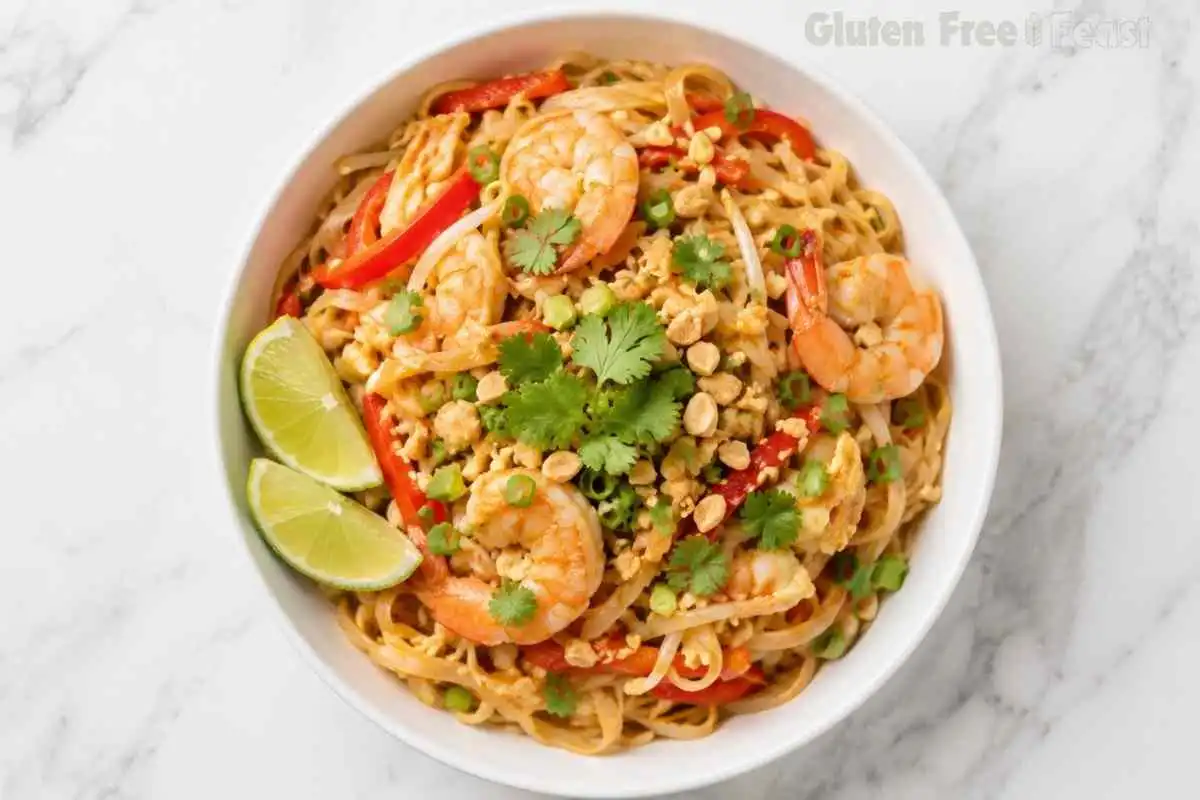
Most pad thai served at restaurants is not gluten free. The sauce almost always contains regular soy sauce, which is brewed with wheat. Shared woks carry residue from wheat-based dishes that soap and water do not fully remove. Making gluten free pad thai at home is the only way to control every single ingredient.
This recipe does exactly that: certified gluten free tamari, a verified rice noodle brand, and a confirmed-safe sriracha, all named by brand in the recipe. You do not have to cross-reference labels on your own. The result is a sweet, savory, tangy noodle dish that is ready in 35 minutes.
I have tested this recipe multiple times in my dedicated gluten free kitchen. The one variable that made the biggest difference was the cold-water noodle rinse. Skip it and the noodles clump, absorb the sauce unevenly, and turn gummy by the time the dish reaches the table. If pad thai has been off the table for you because of celiac disease, this is the recipe to bookmark.
Key takeaways
This gluten free pad thai is ready in 35 minutes and safe for celiac disease because every risk ingredient is named by certified brand: Kikkoman Gluten Free Tamari Soy Sauce (GFCO-certified) replaces regular soy sauce, Red Boat Fish Sauce (labeled gluten free) provides umami depth, and Thai Kitchen Stir-Fry Rice Noodles (labeled gluten free) are the tested noodle.
Cold-rinsing the rice noodles immediately after draining stops carryover cooking and removes surface starch, which is the step that prevents a gummy, clumped result in gluten free noodles. The sauce (fish sauce, tamari, rice vinegar, brown sugar, and certified GF sriracha) can be made up to 5 days ahead and refrigerated, cutting active cooking time to under 20 minutes on the night you serve it.
Prep Time: 20 mins · Cook Time: 15 mins · Total Time: 35 mins
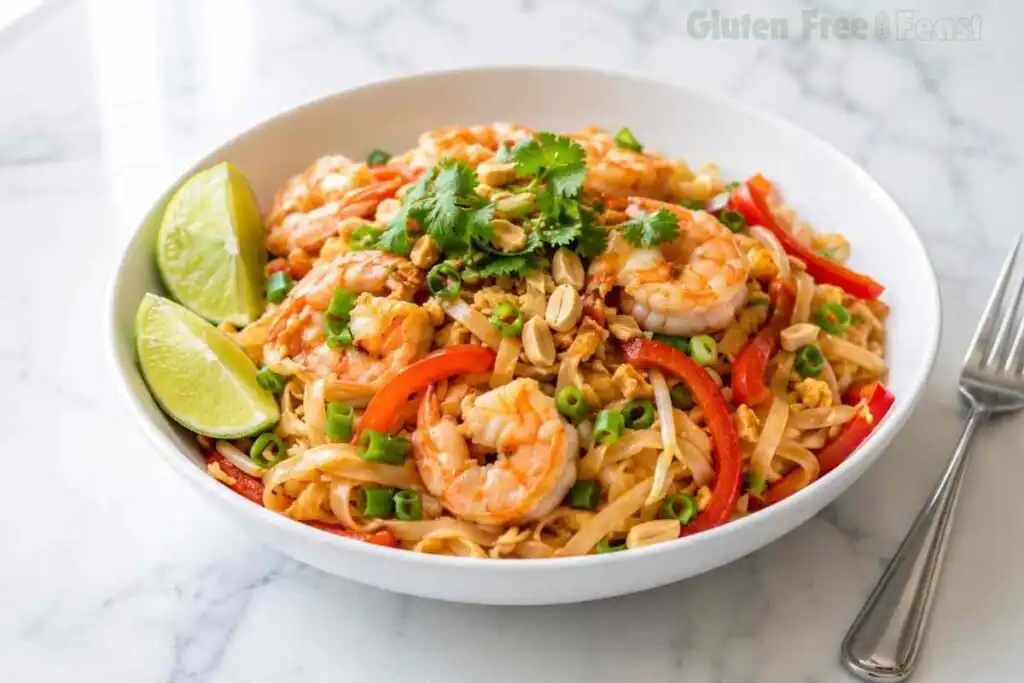
Table of Contents
Why You Will Love This Gluten Free Pad Thai Recipe
- 35 minutes from start to table: The sauce takes two minutes to whisk, the noodles cook while you prep the vegetables, and the wok work is fast. This is a weeknight recipe that actually fits a weeknight.
- Every risk ingredient is named by brand: Tamari, fish sauce, rice noodles, and chili sauce all carry certified GF wording with the specific brand verified for celiac safety. No guessing, no label-reading marathon at the store.
- Better than takeout for celiac disease: Restaurant pad thai is made on shared woks with regular soy sauce. This version eliminates those risks entirely.
- Flexible protein: Shrimp is the tested version, but firm tofu works equally well. Chicken breast or beef strips are easy swaps that follow the same timing.
- One pan after the noodles cook: Everything finishes in a single skillet or wok, which means minimal cleanup for a dish this satisfying.
Is Pad Thai Gluten Free?
Traditional pad thai is not gluten free as served in most restaurants. The problem is the sauce. Classic pad thai sauce is built on fish sauce, tamarind, and sugar, all naturally gluten free. But most restaurants substitute regular soy sauce for part of the flavor, and regular soy sauce is brewed with wheat.
Restaurant kitchens add another layer of risk. Woks used for wheat-based dishes carry residue that soap and water do not fully remove. Shared cooking oil in commercial woks absorbs gluten from prior batches. A menu that lists pad thai as a gluten free option does not mean the kitchen has dedicated gluten free equipment.
Homemade pad thai solves all of this. You control the sauce, the equipment, and the brands. This recipe uses certified gluten free tamari instead of soy sauce, and every other risk ingredient is verified before it goes into the pan.
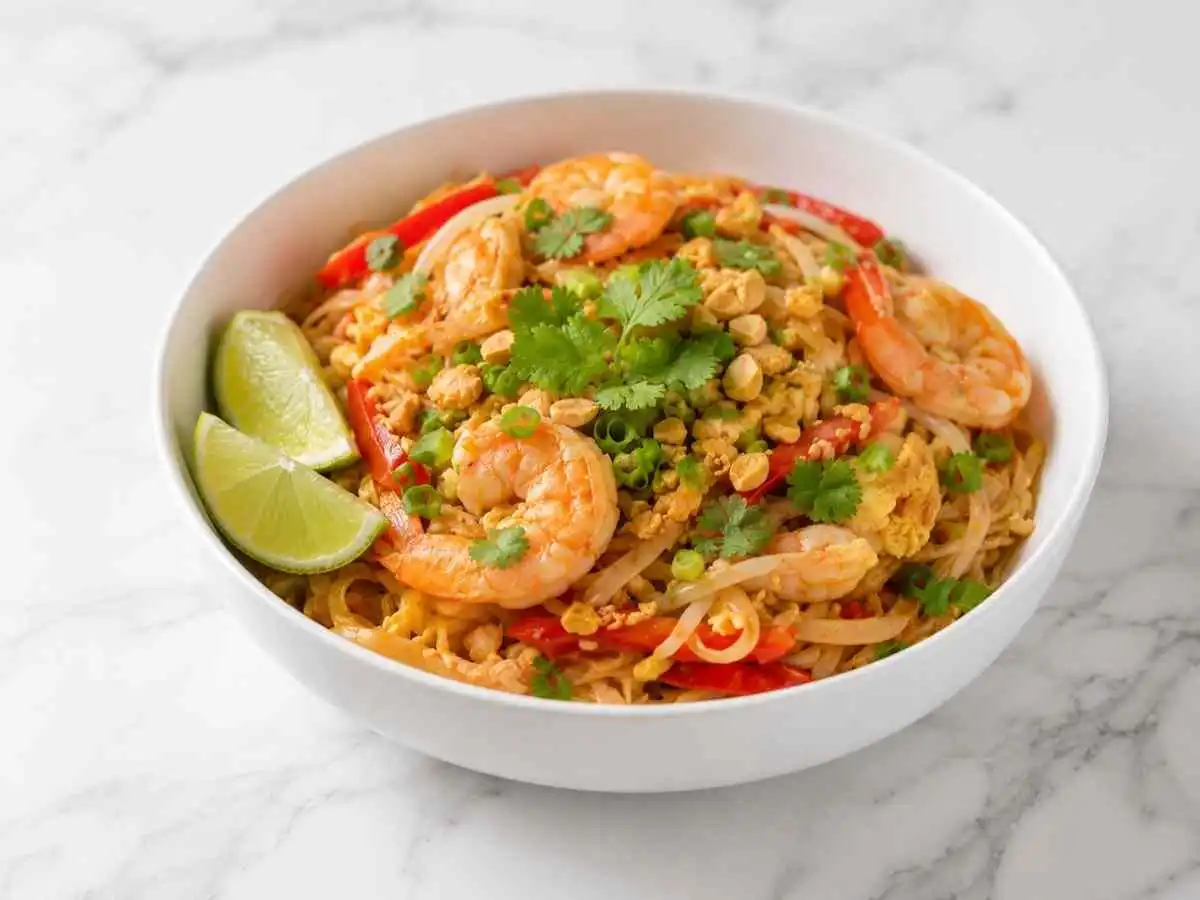

Gluten Free Pad Thai
Ingredients
Equipment
Method
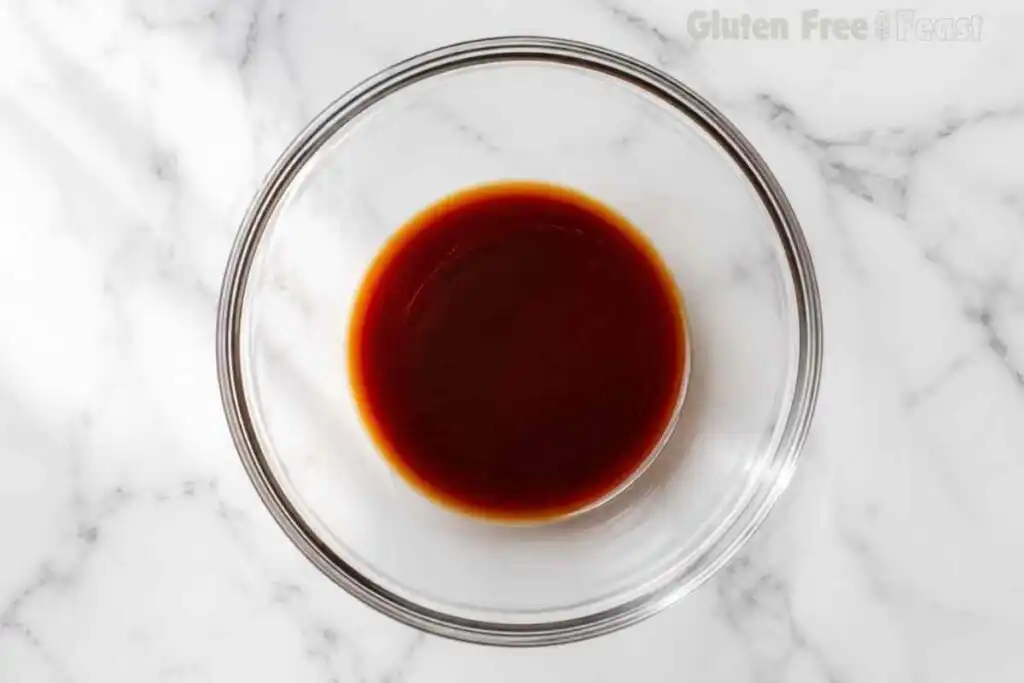
- Whisk together the Red Boat Fish Sauce, Kikkoman Gluten Free Tamari, rice vinegar, brown sugar, and Kikkoman Gluten Free Sriracha in a small bowl until the sugar dissolves completely. Set aside. The sauce can be made up to 5 days ahead and stored in a sealed jar in the refrigerator.
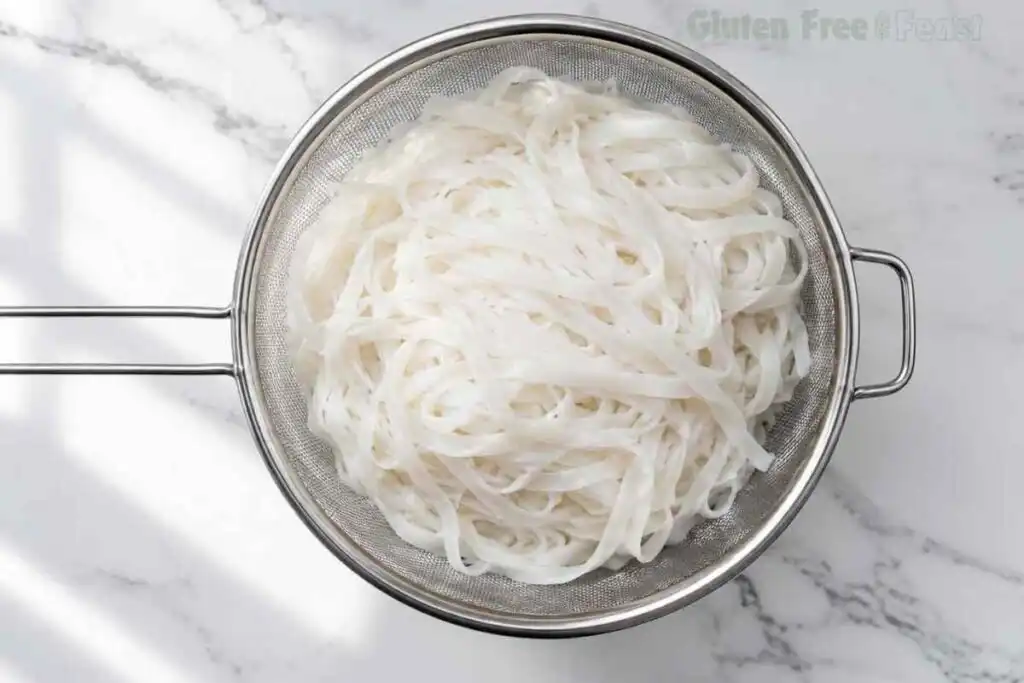
- Cook the Thai Kitchen rice noodles according to the package directions until just al dente. Drain immediately and rinse thoroughly under cold running water. Set aside in the colander. Do not skip the rinse: it stops carryover cooking and removes surface starch that would otherwise prevent the sauce from adhering evenly to gluten free rice noodles.
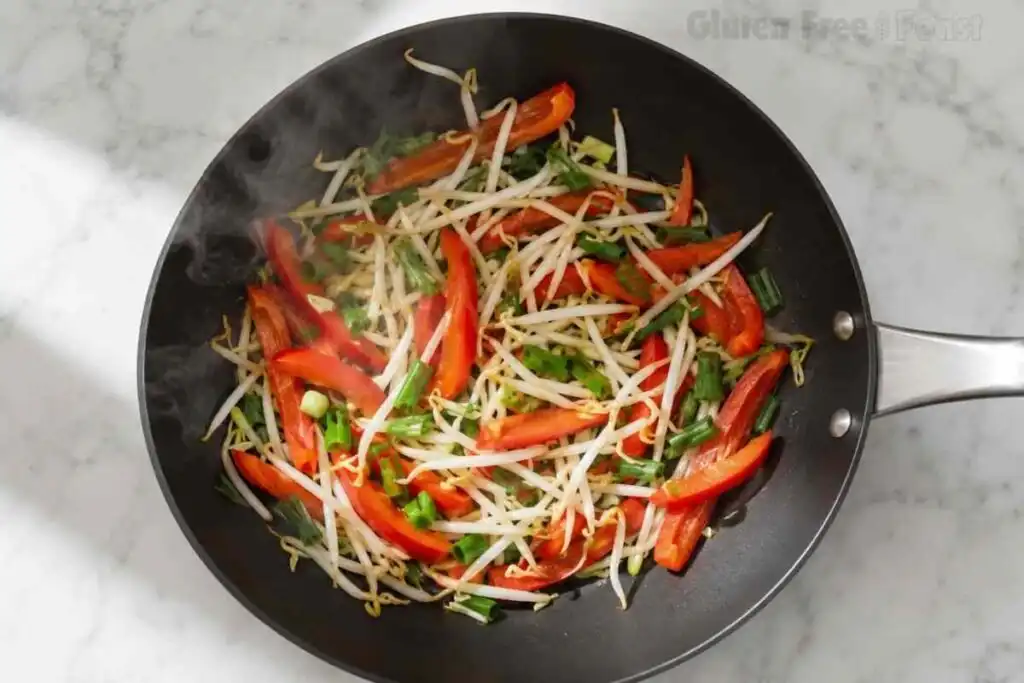
- Heat the vegetable oil in a large skillet or wok over medium-high heat. Add the bean sprouts, red bell pepper, green onions, and garlic. Cook for 1 to 2 minutes, stirring frequently, until the vegetables are fragrant and slightly softened.
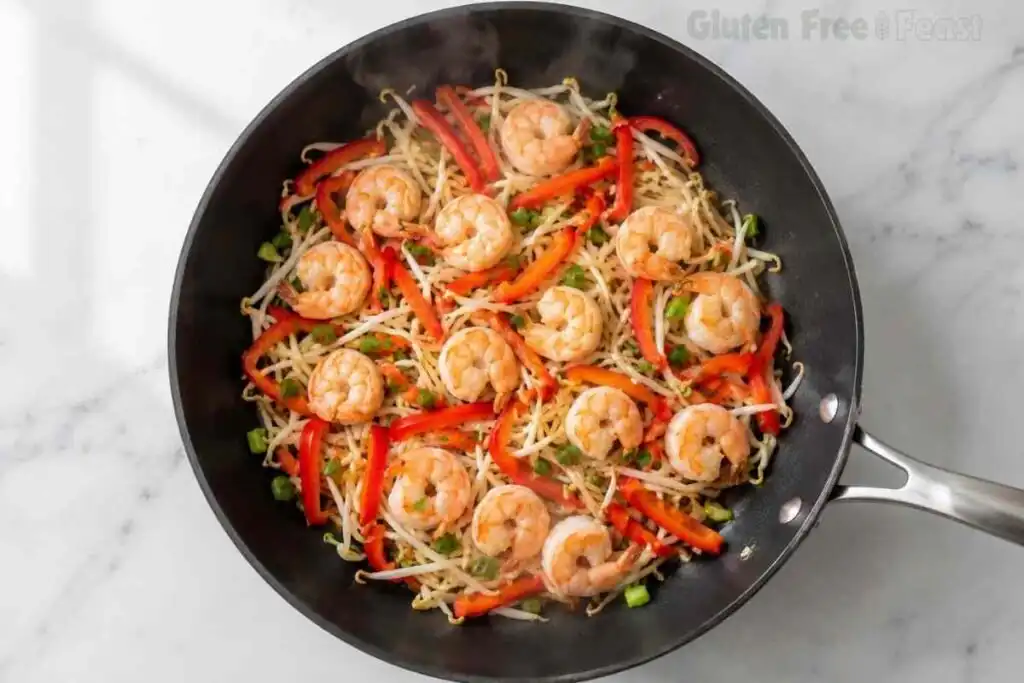
- Add the shrimp and cook for 2 to 3 minutes, until pink and opaque all the way through. If using tofu, cook until lightly golden on the outside, about 3 to 4 minutes. Work in two batches if the pan is crowded.
- Push the vegetables and shrimp to one side of the pan. Pour the beaten eggs into the empty side and scramble until fully set, breaking the curds into small pieces as they cook. Stir everything together.
- Add the rinsed rice noodles to the pan and pour the prepared sauce over the top. Toss with tongs until the noodles are evenly coated. Cook for an additional 1 to 2 minutes, tossing frequently, until heated through and the sauce has tightened slightly around the noodles.
- Divide the pad thai among four bowls. Top with the chopped peanuts and fresh cilantro. Serve with lime wedges. Serve immediately.
Nutrition
Notes
Gluten-Free Note
Tried this recipe?
Let us know how it was!Ingredients
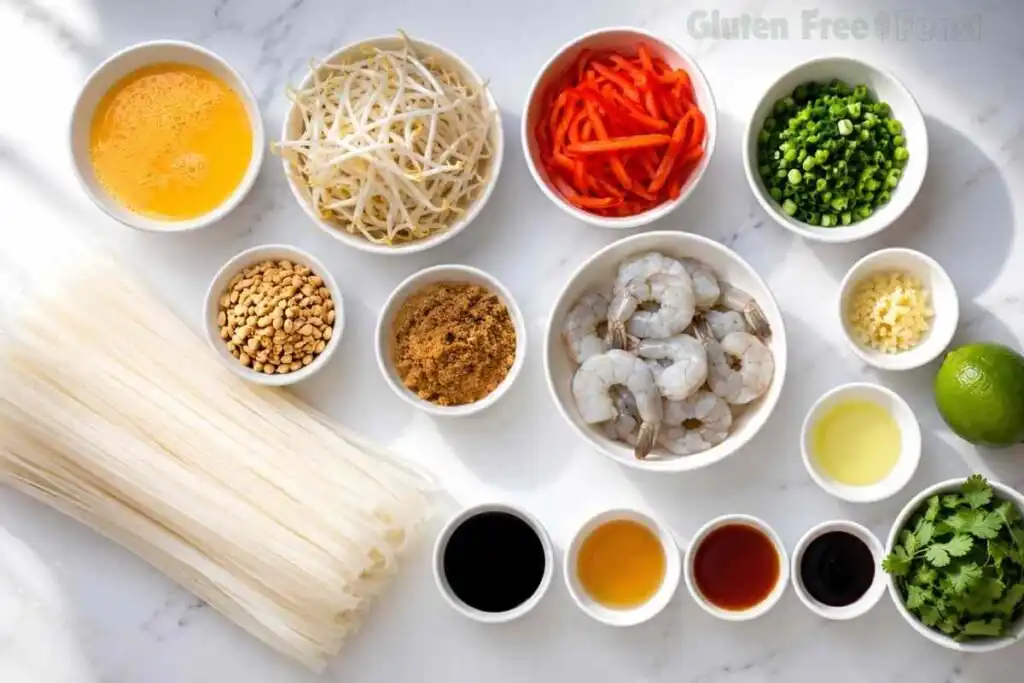
For the Pad Thai Sauce
- 3 tablespoons Red Boat Fish Sauce (labeled gluten free; see notes)
- 2 tablespoons Kikkoman Gluten Free Tamari Soy Sauce (GFCO-certified)
- 2 tablespoons rice vinegar
- 3 tablespoons brown sugar
- ½ tablespoon Kikkoman Gluten Free Sriracha Hot Chili Sauce (GFCO-certified), adjusted to taste
For the Pad Thai
- 8 ounces Thai Kitchen Stir-Fry Rice Noodles (labeled gluten free; see notes)
- 1 tablespoon vegetable oil
- 1 cup bean sprouts
- 1 red bell pepper, thinly sliced
- 4 green onions, thinly sliced
- 2 garlic cloves, minced
- 1 cup shrimp, peeled and deveined (or firm tofu, cubed)
- 2 large eggs, lightly beaten
- ¼ cup roasted peanuts, chopped (choose peanuts with a certified GF label or from a dedicated GF facility; see notes)
- ¼ cup fresh cilantro, chopped
- Lime wedges, for serving
Ingredient Notes and Substitutions
Tamari (not soy sauce): Regular soy sauce is brewed using wheat as a fermentation substrate. The wheat proteins break down during fermentation but do not disappear; gluten peptides remain in the finished product. For anyone with celiac disease, standard soy sauce is not safe.
Tamari is a Japanese-style soy sauce traditionally made without wheat, which is why it works as a celiac-safe substitute. The key word is traditionally: some modern tamari products do contain trace wheat. Kikkoman Gluten Free Tamari Soy Sauce is GFCO-certified, which means an independent body has verified the product meets the 10 ppm threshold. I confirmed in testing that it is indistinguishable in flavor from standard tamari in this recipe.
Fish sauce: Most fish sauce is made from fermented fish and salt, making it naturally gluten free. The risk comes from added wheat or flavoring agents in some brands. Red Boat Fish Sauce carries a clear gluten free label and is widely trusted in the celiac community.
Red Boat is not currently GFCO-certified, so reverify the label before publishing. If a GFCO-certified fish sauce becomes available, substitute that instead.
Rice noodles: Rice noodles are made from rice flour, which is naturally gluten free, but they can be processed in facilities that also handle wheat. Thai Kitchen Stir-Fry Rice Noodles carry a gluten free label and are the brand tested in this recipe. They are not currently GFCO-certified; if a GFCO-certified option is available by publication, use that instead.
For a traditional pad thai texture, use flat noodles roughly 3mm to 5mm wide. Thicker noodles take longer to cook and can become gummy; thinner noodles break apart in the wok.
Chili sauce or sriracha: Verify the gluten free status on any brand you use. Kikkoman Gluten Free Sriracha Hot Chili Sauce is GFCO-certified and is what I tested with. For a milder dish, reduce to ¼ tablespoon or omit entirely.
Roasted peanuts: Peanuts are naturally gluten free, but facility statements vary significantly by brand and production run. Choose roasted peanuts that carry a certified GF label or a clear statement confirming they are made in a dedicated GF facility. Do not rely on a brand that has no GF claim on the current package.
Tamarind option: For more traditional sweet-sour depth, replace the rice vinegar with 1½ tablespoons of pure tamarind paste (no added ingredients). Tamarind is naturally gluten free. The rice vinegar version is easier to find and still produces excellent results; the tamarind version is closer to restaurant pad thai flavor.
Tofu: Use extra-firm tofu, pressed for at least 15 minutes to remove moisture before cubing. It will brown instead of steam. Silken or soft tofu falls apart in the wok.
Vegan version: Use tofu, omit the eggs, and replace the fish sauce with a vegan fish sauce alternative that carries a GF label. The sauce flavor will be slightly less complex, but the recipe holds together well. For a high-protein gluten free egg dish on another night, the gluten free quiche is worth bookmarking.
Celiac Safety Note: Please ensure all packaged ingredients carry a certified gluten free label. Check tamari (only certified GF tamari, never regular soy sauce) and fish sauce (label must state gluten free). Also verify rice noodles (gluten free label on current package), chili sauce or sriracha, and roasted peanuts (certified GF or dedicated GF facility).
Cross-contact at packaging facilities is a real risk for people with celiac disease. When in doubt, look for the GFCO symbol on the package.
How to Make Gluten Free Pad Thai
Step 1: Make the Sauce
Whisk together the Red Boat Fish Sauce, Kikkoman Gluten Free Tamari, rice vinegar, brown sugar, and Kikkoman Gluten Free Sriracha in a small bowl. Whisk until the sugar dissolves completely. Set aside.
The sauce can be made up to 5 days ahead and stored in a sealed jar in the refrigerator. Making the sauce in advance is the best make-ahead move in this recipe.
Step 2: Cook the Noodles
Cook the Thai Kitchen rice noodles according to the package directions until just al dente. They should have a slight resistance when you bite through one. Drain immediately and rinse thoroughly under cold running water, then set aside in the colander.
The cold-water rinse matters more for gluten free rice noodles than for wheat pasta. Rice noodles have no gluten network to hold their structure, so they continue cooking from residual heat the moment they leave the boiling water. The rinse stops carryover cooking immediately.
The rinse also removes surface starch. Rice noodles release more surface starch than wheat pasta, and that excess starch prevents the sauce from adhering evenly, producing a gummy, unevenly sauced result.
Step 3: Cook the Vegetables
Heat the vegetable oil in a large skillet or wok over medium-high heat. Add the bean sprouts, red bell pepper, green onions, and garlic. Cook for 1 to 2 minutes, stirring frequently, until the vegetables are fragrant and slightly softened. You want a bit of color on the bell pepper but not full softness; it will continue cooking in the later steps.
Step 4: Cook the Shrimp
Add the shrimp to the pan and cook for 2 to 3 minutes, until pink and opaque all the way through. If you are using tofu, cook until lightly golden on the outside, about 3 to 4 minutes. If the shrimp or tofu is sitting in its own liquid rather than searing, you have too much in the pan at once. Work in two batches if needed.
Step 5: Scramble the Eggs
Push the vegetables and shrimp to one side of the pan. Pour the beaten eggs into the empty side and scramble until fully set, breaking the curds into small pieces as they cook. Once fully cooked, stir everything together so the egg is distributed throughout.
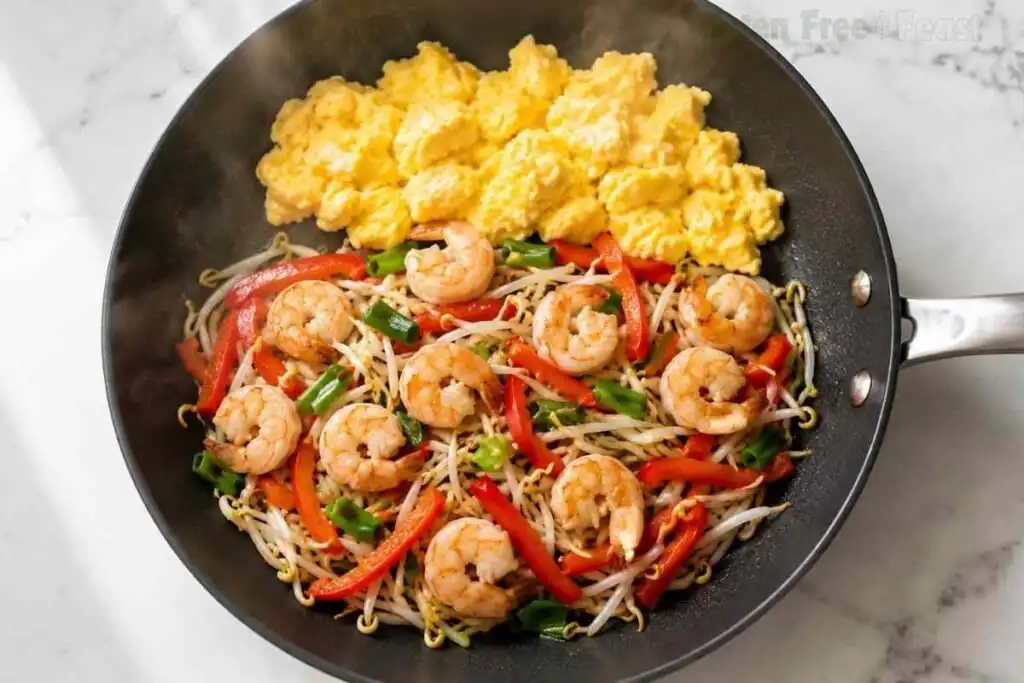
Step 6: Finish the Pad Thai
Add the rinsed rice noodles to the pan and pour the prepared sauce over the top. Use tongs to toss everything together until the noodles are evenly coated. Cook for an additional 1 to 2 minutes, tossing frequently, until everything is heated through and the sauce has tightened slightly. The finished dish should look glossy, not soupy.
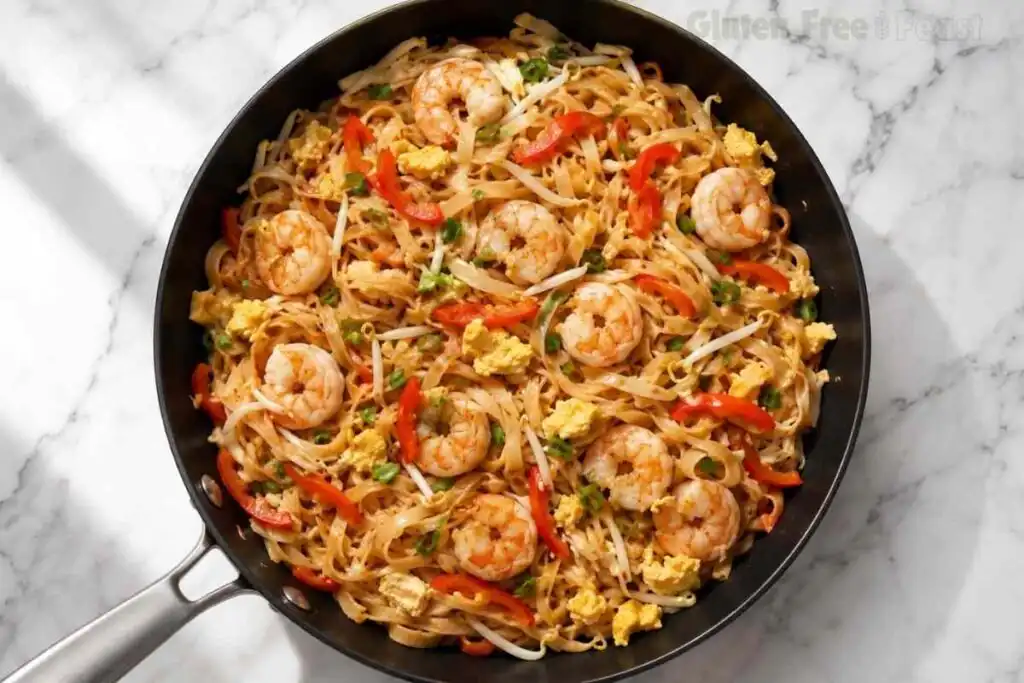
Step 7: Garnish and Serve
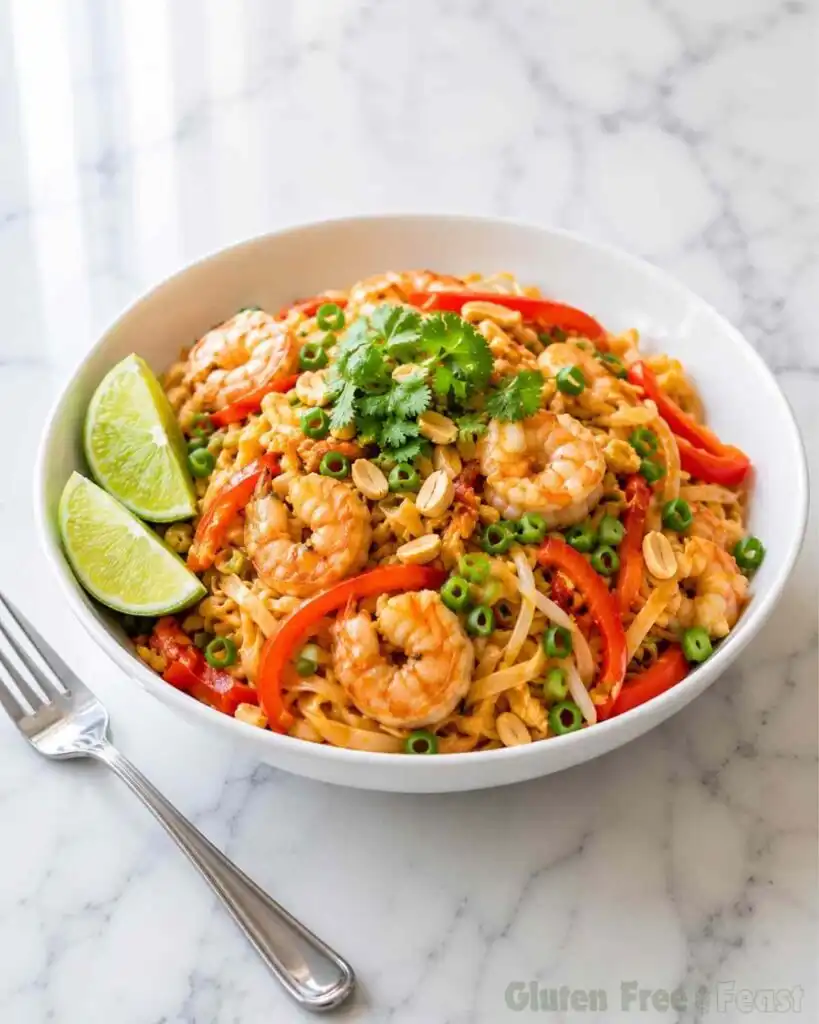
Divide the pad thai among four bowls. Top with the chopped peanuts and fresh cilantro. Serve with lime wedges on the side. Pad thai is best served immediately; the noodles continue absorbing the remaining sauce as the dish sits.
Expert Tips for Best Results
- Prep everything before the heat goes on. Pad thai moves fast once the wok is hot. Measure the sauce, rinse the noodles, and cut every vegetable before you turn on the burner. Stir-frying is not a recipe for multitasking.
- Do not overcook the noodles. Al dente is the target. GF rice noodles have less structural tolerance than wheat pasta; overcooked noodles break apart when you toss them in the wok.
- Use medium-high to high heat. A pan that is not hot enough traps steam and produces a soggy, gray result instead of a lightly charred, glossy one.
- Taste the sauce before adding it to the pan. Sweet, sour, salty, and a little heat should all be present. Adjust before the sauce goes in; it is much harder to correct the balance once it is coating the noodles.
- Work in batches for a crowd. A crowded wok traps steam and prevents browning. If you are doubling the recipe, cook it in two separate batches and combine at the end.
- Use dedicated GF equipment. A skillet or wok previously used for wheat-based cooking can carry trace gluten in scratches and seasoning even after washing. Use a pan reserved for gluten free cooking. Replace wooden utensils with silicone or stainless steel; wood harbors gluten in the grain. If you are planning a gluten free bread to serve alongside, the gluten free biscuits on GFF bake in under 20 minutes.
Substitutions and Variations
Protein options: Chicken breast, beef sirloin, and extra-firm tofu all work well as substitutes for shrimp. Slice chicken thin and cook 3 to 4 minutes. Slice beef sirloin thin against the grain and cook 2 minutes.
Press and cube tofu, then cook until golden. The technique is the same in every case: cook until just done, then push to the side before adding the eggs.
More vegetables: Shredded carrots, snap peas, sliced mushrooms, and small broccoli florets are all good additions. Add denser vegetables like carrots or broccoli at the same time as the bell pepper so they have enough time to soften.
Spice level: The recipe as written is mild to medium. For more heat, add extra sriracha, a teaspoon of chili garlic sauce (verify GF label), or a pinch of crushed red pepper flakes. Stir these into the sauce before adding it to the pan. For a milder version, reduce the chili sauce to ¼ tablespoon or omit entirely and serve sriracha on the side.
Coconut aminos: If you cannot find certified GF tamari, coconut aminos are a naturally gluten free alternative. The flavor is slightly sweeter and less salty, so reduce the brown sugar by 1 tablespoon and add a small pinch of salt to compensate.
What to Serve With Gluten Free Pad Thai
Pad thai is a complete meal on its own, but these additions round out a Thai-inspired dinner spread.
- Spring rolls: Rice paper spring rolls filled with shrimp, avocado, and fresh herbs are naturally gluten free and make a light starter that does not compete with the bold flavor of the pad thai. Verify GF status on any store-bought wrappers.
- Cucumber salad: A quick cucumber salad with rice vinegar, sesame oil, and a pinch of sugar takes five minutes and cuts through the richness of the peanuts and sauce. Serve it cold alongside the warm noodles.
- Jasmine rice: Plain jasmine rice is naturally gluten free and useful if you are serving a crowd and want to stretch the dish further. It is also a good base if anyone wants a smaller portion of noodles.
- More gluten free dinner recipes: For more weeknight ideas in the same spirit, browse gluten free dinner recipes on GFF.
- Gluten free biscuits: If you want something bread-like alongside a lighter soup starter on the same night, the gluten free biscuits on GFF use a fold method that keeps real layers in a GF dough.
Storage and Make-Ahead Instructions
Refrigerator: Store leftover pad thai in an airtight container for up to 2 days. The noodles absorb more sauce as the dish sits, so reheat with a splash of water to loosen everything. A skillet over medium-low heat gives the best result; the microwave is faster but softens the texture more.
Freezer: The assembled dish is not recommended for freezing. Rice noodles become soft and lose their texture after thawing. For a make-ahead freezer option, make the sauce only and freeze it in a small sealed container for up to 1 month. On the night you want pad thai, thaw the sauce in the refrigerator overnight and cook the noodles and protein fresh.
Make-ahead tip: The sauce keeps in the refrigerator for up to 5 days in a sealed jar. With sauce already made, the entire dish comes together in under 20 minutes on a weeknight.
Gluten Free Pad Thai and Cross-Contact Risks
Cross-contact is what happens when a gluten free food touches a surface or utensil that has had contact with gluten. Gluten is a protein, not a microorganism. Heat does not destroy it, and soap alone does not always remove it from porous surfaces.
For pad thai specifically, the risks worth knowing:
- Shared woks and skillets: Carbon steel and cast iron woks used for wheat-based dishes retain residue in the seasoning layer. Even a well-washed wok can transfer trace gluten. Use a dedicated GF pan if your household cooks with wheat regularly.
- Wooden utensils: Wood absorbs food residue into the grain. Wooden spatulas and spoons used for wheat-based cooking are not cleanable to a celiac-safe level. Use silicone or stainless steel for all GF cooking.
- Restaurant pad thai: A gluten free claim on a restaurant menu does not mean the kitchen uses dedicated equipment. Woks at Thai restaurants are typically shared across all dishes, and shared cooking oil carries gluten from prior batches. For strict celiac safety, making pad thai at home is the most reliable approach.
- Shared cooking oil: Use fresh oil for the pad thai if you have cooked anything wheat-containing in the same oil.
Why Trust This Recipe
I develop recipes with documented testing, controlled variables, and results that hold up in any kitchen, not just mine.
This recipe was tested multiple times in my dedicated gluten free kitchen. I have noted what fails, what works, and why, so you are not just following steps but understanding the process.
What that means for you:
- Multiple test batches before publishing
- Science-based notes on key steps throughout
- Honest substitution guidance, not guesswork
- Safe for celiac disease, with cross-contact taken seriously at every step
Frequently Asked Questions
Why isn’t pad thai gluten free?
Traditional restaurant pad thai uses regular soy sauce in the sauce base. Standard soy sauce is brewed with wheat as one of the primary fermentation ingredients, which makes it unsafe for celiac disease even in small amounts. The rice noodles themselves are naturally gluten free, but cross-contact in restaurant kitchens (shared woks, shared oil, shared utensils) adds another layer of risk. Making pad thai at home with certified gluten free tamari and verified brands is the only reliable solution for celiac disease.
What Thai sauce is gluten free?
Fish sauce (verify label), certified gluten free tamari, rice vinegar, coconut aminos, and tamarind paste are all safe choices for a gluten free Thai sauce. Oyster sauce and hoisin sauce are typically made with wheat and are not safe for celiac disease unless the label specifically states gluten free. Kikkoman Gluten Free Sriracha Hot Chili Sauce is GFCO-certified and is the brand used in this recipe.
Why can’t people with celiac disease eat soy sauce?
Most soy sauce is brewed using wheat as a substrate during fermentation. The wheat contributes flavor compounds during the process, and gluten peptides remain in the finished product. Fermentation breaks down some proteins but does not reduce gluten to a level safe for celiac disease.Tamari is the practical substitute. Authentic tamari is made without wheat, though some modern formulations do contain trace amounts. Always look for a certified gluten free label or GFCO certification before purchasing.
Can people with celiac disease eat rice noodles?
Rice noodles are made from rice flour, which is naturally gluten free. The risk is cross-contact during manufacturing. Rice noodles processed on shared equipment or in facilities that also handle wheat can contain trace gluten.
Always choose rice noodles with a gluten free label. Thai Kitchen Stir-Fry Rice Noodles carry a gluten free label and are the brand verified for this recipe.
What is a substitute for tamarind paste in pad thai?
The most widely used substitute is rice vinegar with a little extra brown sugar. Rice vinegar provides the sour note that tamarind contributes, and the brown sugar softens the edge. The ratio in this recipe (2 tablespoons rice vinegar, 3 tablespoons brown sugar) was tested against a tamarind version; the sweet-sour-salty balance is very close. Lime juice works in the same proportion as the rice vinegar, though it adds a brighter citrus note rather than the deeper tang of tamarind.
Is Thai Kitchen Pad Thai Sauce gluten free?
Thai Kitchen brand products are generally labeled gluten free, but formulations and manufacturing locations can change. Always verify the current label before purchasing. This recipe does not use a premade pad thai sauce. The homemade sauce gives you full control over every ingredient and its GF status, which is the most reliable approach for celiac disease.
Final Thoughts
Gluten free pad thai used to feel like a compromise. Every restaurant version carried risk, and most homemade recipes skipped the certified GF brand callouts or buried the cross-contact warnings in a footnote. This recipe gives you verified brands, a dedicated cross-contact section, and a sauce you can make five days ahead. It becomes one of the easiest things in your gluten free dinner rotation once you have made it once.