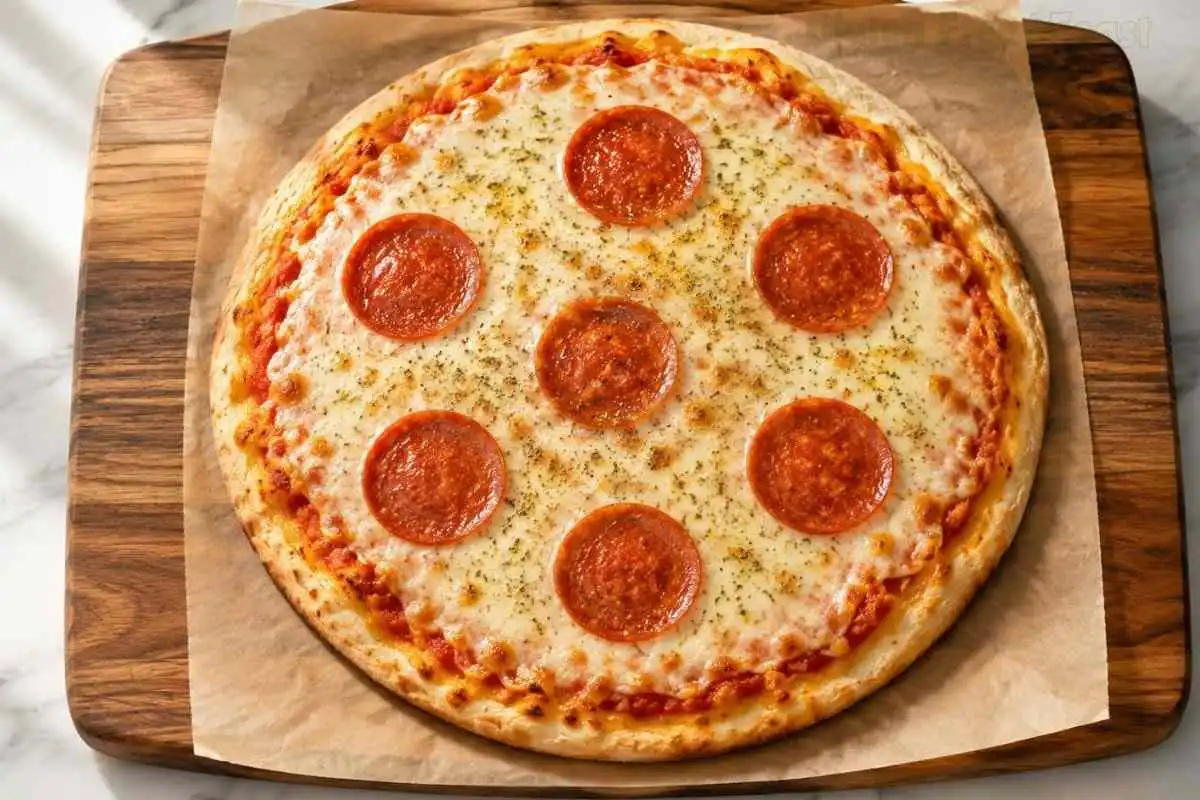
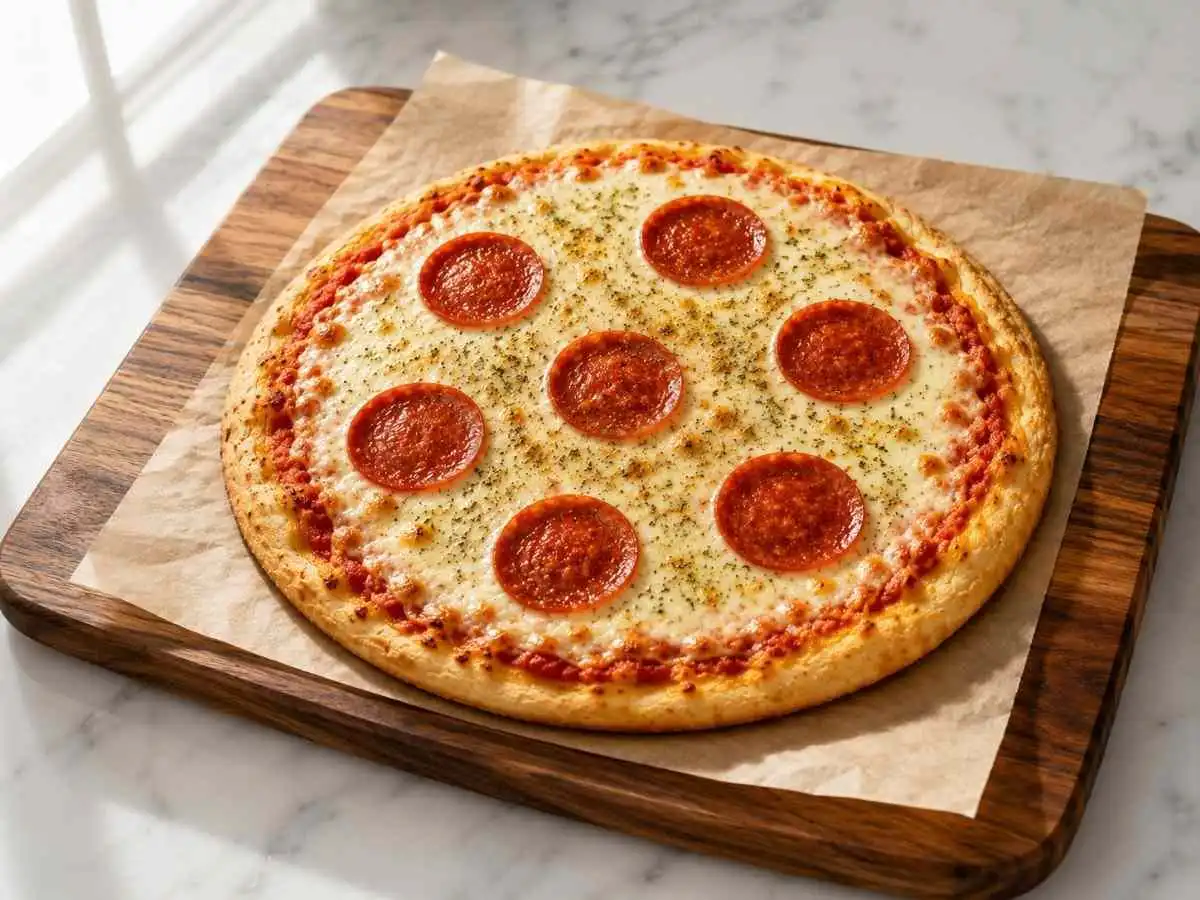
The first time I made this gluten free pizza dough, I stood over the kitchen counter and pressed it out by hand onto parchment paper. GF doughs do not look or feel like wheat dough. They are stickier, less elastic, and they do not stretch the way you expect. But 15 minutes into the par-bake, I had a 15-inch crust with a firm edge, a set center, and a smell that made it clear pizza night was back on the table for good.
This gluten free pizza dough recipe uses three certified-facility ingredients. Better Batter Original Blend GF All-Purpose Flour is GFCO-certified, produced in a dedicated allergen-free facility. Bob’s Red Mill Double Acting Baking Powder is made in a dedicated GF facility and batch tested for purity.
Hodgson Mill Fast Rise Yeast comes from a dedicated GF, top-8-allergen-free facility. Every ingredient with cross-contact risk is named, not listed generically. That is the difference between a recipe written for celiac disease and one written for general gluten preference.
That is the difference between a gluten free pizza dough recipe written for celiac disease and one written for general gluten preference. Named certifications, not just “check your labels.”
Total time is 1 hour 10 minutes and the recipe yields one 15-inch crust, cut into 8 slices. The dough requires no kneading, one 30-minute rise, and a 15-minute par-bake before toppings go on. If your dough feels too sticky to shape, there is a practical fix in the Expert Tips section that takes 15 minutes and costs nothing.
Key takeaways
This gluten free pizza dough recipe produces a thick, chewy, celiac-safe 15-inch crust using Better Batter Original Blend GF All-Purpose Flour (GFCO-certified, dedicated allergen-free facility), Bob’s Red Mill Double Acting Baking Powder (dedicated GF facility, batch tested), and Hodgson Mill Fast Rise Yeast (dedicated GF, top-8-allergen-free facility).
The dough requires no kneading, rises for 30 minutes in a warm oven, and must be par-baked for 15 minutes at 425°F before toppings go on: skipping the par-bake produces a soggy center that extra bake time will not fix. Apple cider vinegar is not optional: its mild acidity tightens the protein matrix in the rice flour blend and improves both rise and chew in the absence of gluten. The recipe is egg-free by design and freezer-friendly in two forms, either as a risen dough ball (up to 3 months) or as a fully par-baked crust (up to 1 month).
Prep Time: 10 mins · Cook Time: 30 mins · Rise Time: 30 mins · Total Time: 70 mins · Yield: 1 crust, 8 slices
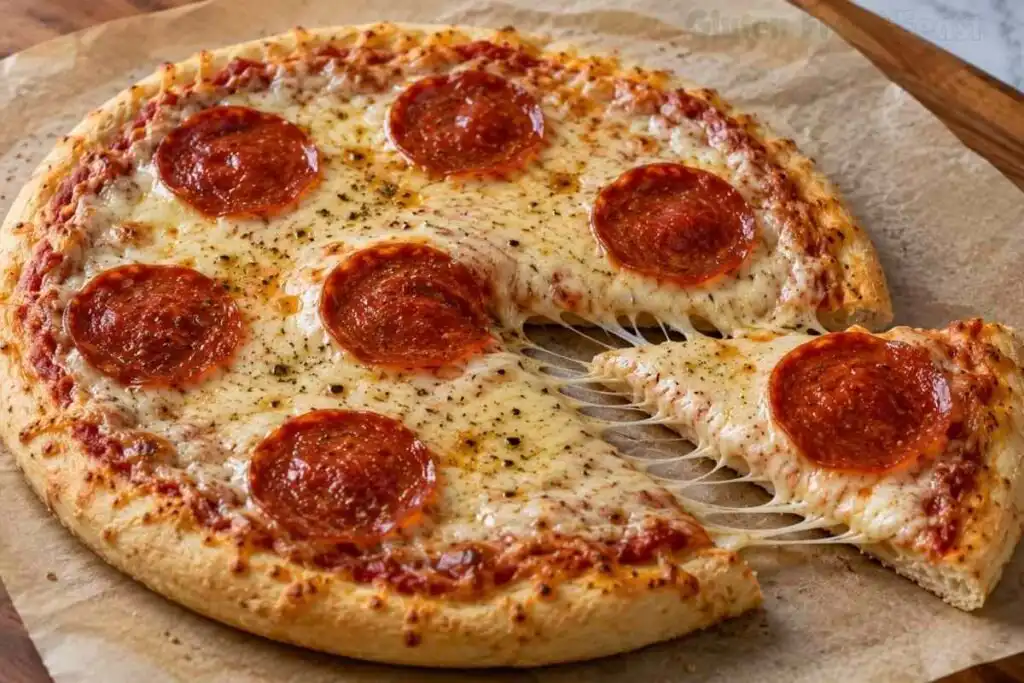
Table of Contents
Why You Will Love This Gluten Free Pizza Dough
- GFCO-certified ingredients at every risk point: Better Batter flour, Bob’s Red Mill baking powder, and Hodgson Mill yeast are all named inline with their certification level. No competitor on this SERP does this.
- Thick, chewy crust that holds toppings: The apple cider vinegar and a proper 30-minute yeast rise work together to build structure a GF dough cannot get from gluten alone. The result is a crust that does not crack under cheese.
- Egg-free by design: The confirmed recipe contains no eggs. This is a meaningful advantage for anyone managing multiple food sensitivities alongside celiac disease.
- No kneading, one rise: The stand mixer does the mixing work in under 2 minutes. Rise time is 30 minutes in a warm oven. Total active work is about 15 minutes.
- Freezer-friendly in two forms: Freeze the risen dough ball for up to 3 months, or freeze a par-baked crust for up to 1 month. A celiac-safe pizza night is available from your own freezer on demand.
- Dedicated cross-contact section: Pizza night involves more shared equipment risk than most home cooks realize. This recipe addresses pizza cutters, pizza stones, wooden boards, and rolling pins specifically.

Gluten Free Pizza Dough
Ingredients
Equipment
Method
- Set your oven to the proof setting. If your oven does not have one, heat it to 200 degrees F (93 degrees C) and turn it off when it reaches 100 degrees F (38 degrees C).
- Warm the water to 110-115 degrees F. Stir in the granulated sugar until dissolved. The sugar feeds the yeast during activation. A thermometer is strongly recommended: water above 120 degrees F kills the yeast.
- In the bowl of a stand mixer fitted with the paddle attachment, combine the Better Batter flour, Hodgson Mill yeast, Bob’s Red Mill baking powder, and salt. Mix briefly on low to distribute evenly.
- Pour the sugar-water mixture into the flour. Mix on low, then add the olive oil and apple cider vinegar. Mix for 1 to 2 minutes until a sticky dough forms. The dough will be sticky: this is correct for a GF dough at this hydration level.
- Transfer the dough to a greased oven-safe bowl. Cover with plastic wrap and a kitchen towel. Place in the warm oven and let rise for 30 minutes.
- Remove the bowl from the oven. Preheat the oven to 425 degrees F (218 degrees C).
- Sprinkle 1 tablespoon of Better Batter flour onto a large sheet of parchment paper. Turn the dough out onto the parchment and sprinkle the remaining tablespoon of flour over the top.
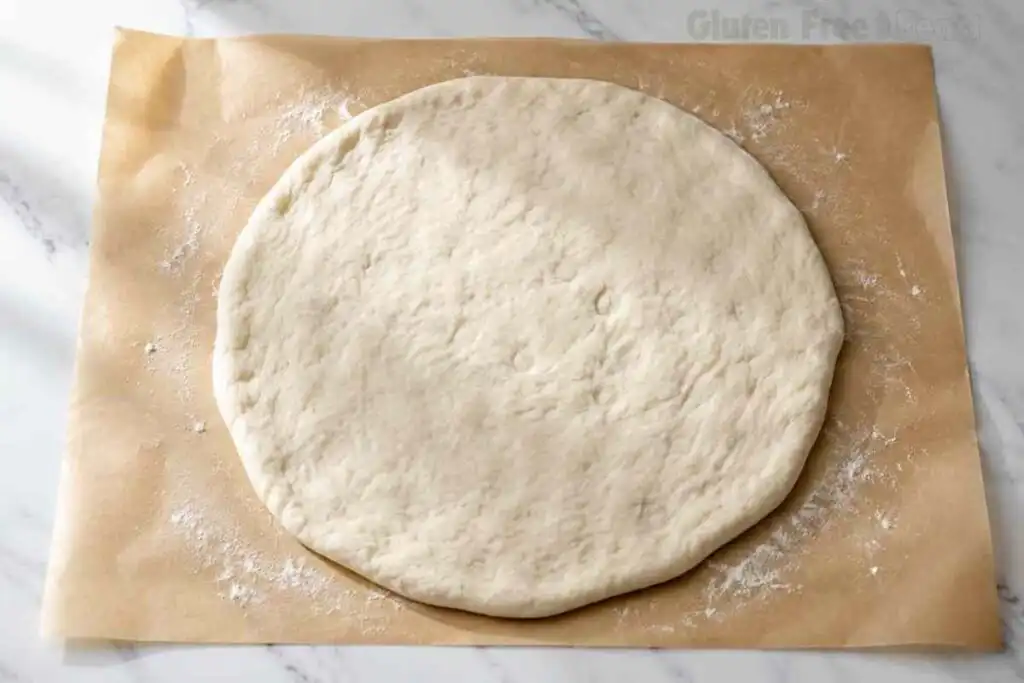
- Using your hands, gently pat and stretch the dough outward into a 15-inch circle, pressing the edges slightly thicker to form a crust rim. Do not use a rolling pin: it compresses the dough and produces a flat, dense crust.
- Transfer the parchment and shaped dough onto a pizza pan or baking sheet. Bake at 425 degrees F for 15 minutes. This par-bake is not optional: it sets the crust structure before sauce and topping moisture can penetrate it.
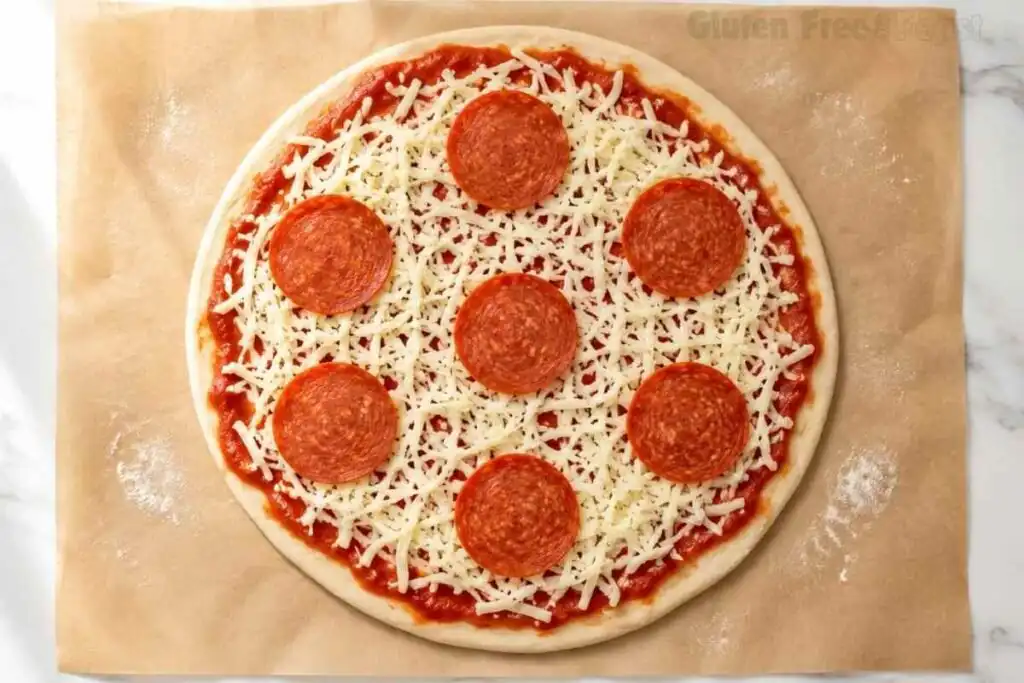
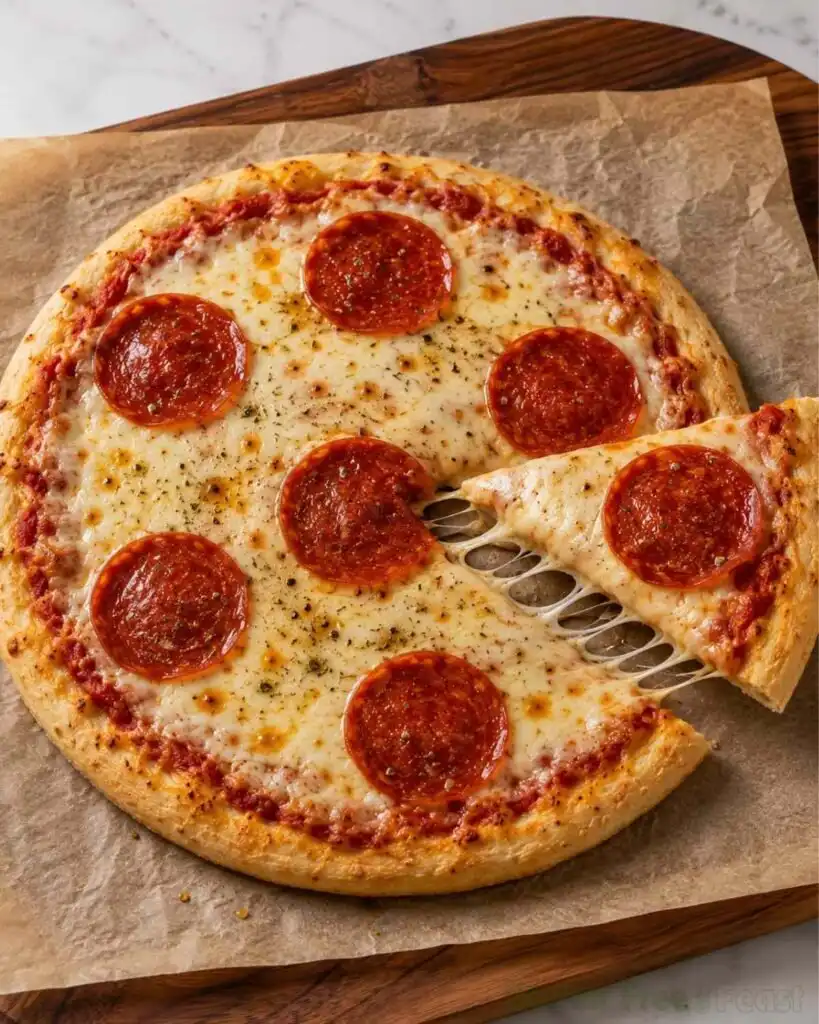
- Remove from oven. Add certified GF pizza sauce, cheese, and toppings. Return to the oven and bake for an additional 10 to 15 minutes, until the cheese is melted and crust edges are golden brown.
Nutrition
Notes
Gluten-Free Note
Tried this recipe?
Let us know how it was!Ingredients
For the Dough
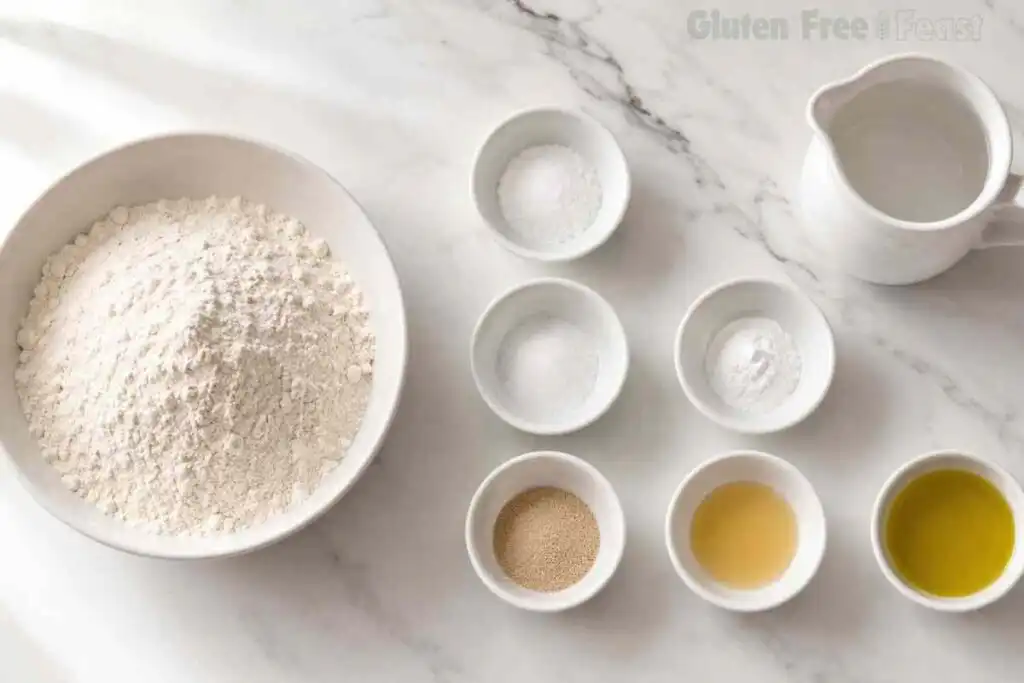
- 2½ cups Better Batter Original Blend GF All-Purpose Flour (GFCO-certified, dedicated allergen-free facility; xanthan gum already included), plus 2 tablespoons for dusting
- 1 tablespoon Bob’s Red Mill Double Acting Baking Powder (dedicated GF facility, batch tested)
- 1 teaspoon salt
- 2¼ teaspoons Hodgson Mill Fast Rise Yeast, 1 packet (dedicated GF, top-8-allergen-free facility)
- 1 cup warm water (110°–115°F / 43°–46°C)
- 1 tablespoon granulated sugar
- ½ cup olive oil
- 1 teaspoon apple cider vinegar (plain, unflavored only)
Ingredient Notes and Substitutions
Better Batter Original Blend GF All-Purpose Flour: This is the confirmed flour for this gluten free pizza dough. Better Batter carries full GFCO certification and is produced in a dedicated allergen-free facility. It also contains xanthan gum already, so you do not add extra. For more GF baking projects that use the same certified flour logic, see GFF gluten free biscuits and GFF gluten free pie crust.
If you substitute Bob’s Red Mill 1-to-1 Baking Flour, add at least 1 extra teaspoon of xanthan gum. That blend does not contain enough xanthan on its own for pizza dough structure. King Arthur Measure for Measure behaves similarly and needs the same addition.
Bob’s Red Mill Double Acting Baking Powder: Produced in a dedicated gluten free facility and batch tested for purity. Check current packaging for the GFCO logo. Do not swap for a generic store-brand baking powder without verifying the label.
Hodgson Mill Fast Rise Yeast: Produced in a dedicated gluten free, top-8-allergen-free facility. The water temperature matters: target 110°–115°F. Below that range, the yeast will not activate properly. Above 120°F, it dies and the dough will not rise.
Apple cider vinegar: Use plain, unflavored ACV only. The science behind why ACV helps gluten free pizza dough is explained in the Expert Tips section. Flavored versions can affect the dough and are not tested for this recipe.
Celiac Safety Note: Confirm all packaged ingredients carry a certified GF label or GFCO seal. For this recipe, check specifically: your GF all-purpose flour blend (Better Batter GFCO-certified ✓), baking powder (Bob’s Red Mill dedicated GF facility ✓), and yeast (Hodgson Mill dedicated GF facility ✓). Cross-contact at packaging facilities is a real risk for people with celiac disease. Certifications can change: always check current packaging.
Which Gluten Free Flour Is Best for Pizza Dough?
After testing multiple blends, Better Batter Original Blend produces the best balance of chew, structure, and rise for this gluten free pizza dough. The rice flour base holds its shape through the par-bake without becoming crumbly. Because xanthan gum is already included, you do not have to calibrate a separate addition.
If you substitute Bob’s Red Mill 1-to-1 Baking Flour, add at least 1 extra teaspoon of xanthan gum. The 1-to-1 blend absorbs liquid differently and produces a noticeably wetter dough without it. King Arthur Measure for Measure behaves the same way in this recipe.
Avoid almond flour blends and oat flour blends for gluten free pizza dough. Almond flour lacks the starch structure needed for a holdable crust. Oat flour, unless specifically labeled certified gluten free, is processed in facilities that handle wheat and is not safe for celiac disease. Whatever blend you use, confirm it carries a GFCO seal or certified label, not just a self-declared gluten free marketing claim.
How to Make Gluten Free Pizza Dough
Step 1: Prepare the Oven and Proof the Yeast
Set your oven to the proof setting. If your oven does not have one, heat it to 200°F (93°C) and turn it off when it reaches 100°F (38°C). The goal is a consistently warm environment, not a hot one.
Warm the water to 110°–115°F. Stir in the granulated sugar until it dissolves. The sugar feeds the yeast during activation, which produces the bubbles and rise. A thermometer is worth using: 109°F gives you a sluggish rise, and 121°F kills the yeast entirely.
Step 2: Mix the Dry and Wet Ingredients
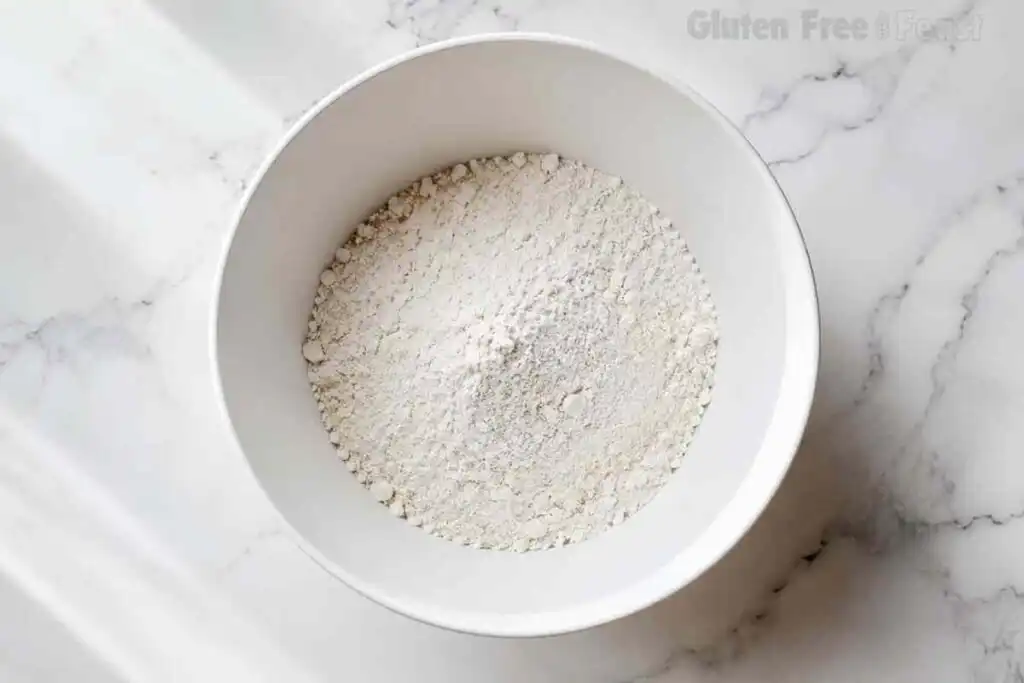
In the bowl of a stand mixer fitted with the paddle attachment, combine the Better Batter flour, Hodgson Mill yeast, Bob’s Red Mill baking powder, and salt for the gluten free pizza dough. Mix briefly on low to distribute the dry ingredients evenly.
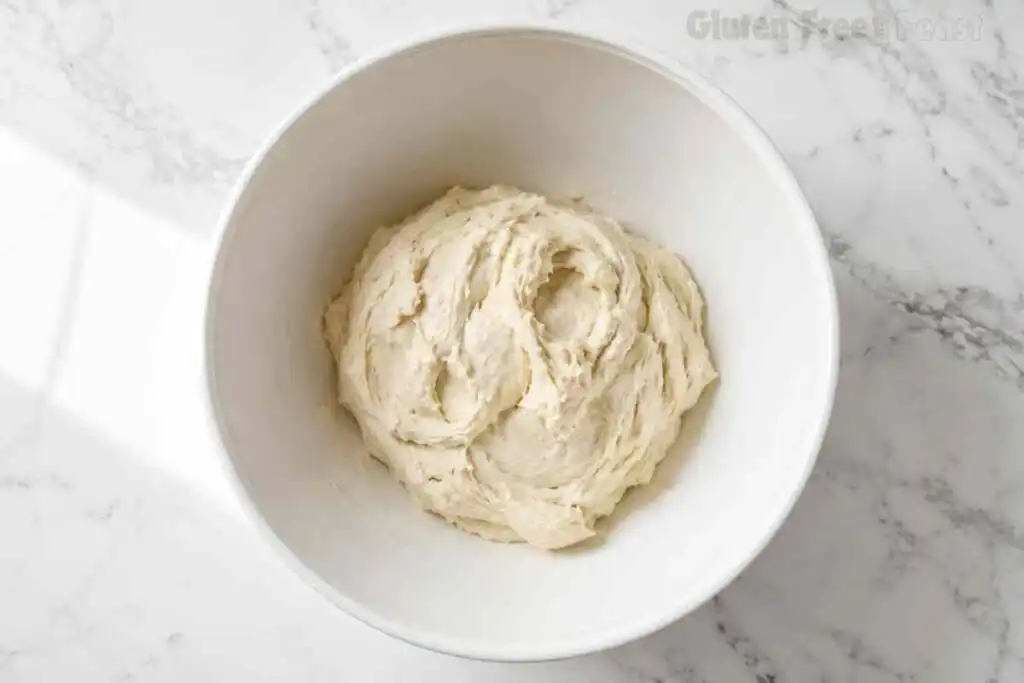
Pour the sugar-water mixture into the flour. Mix on low speed until it begins to come together, then add the olive oil and apple cider vinegar. Mix for 1 to 2 minutes until a dough forms. The dough will be sticky: GF doughs have higher hydration than wheat doughs because rice starch absorbs water more slowly.
Step 3: Rise the Dough
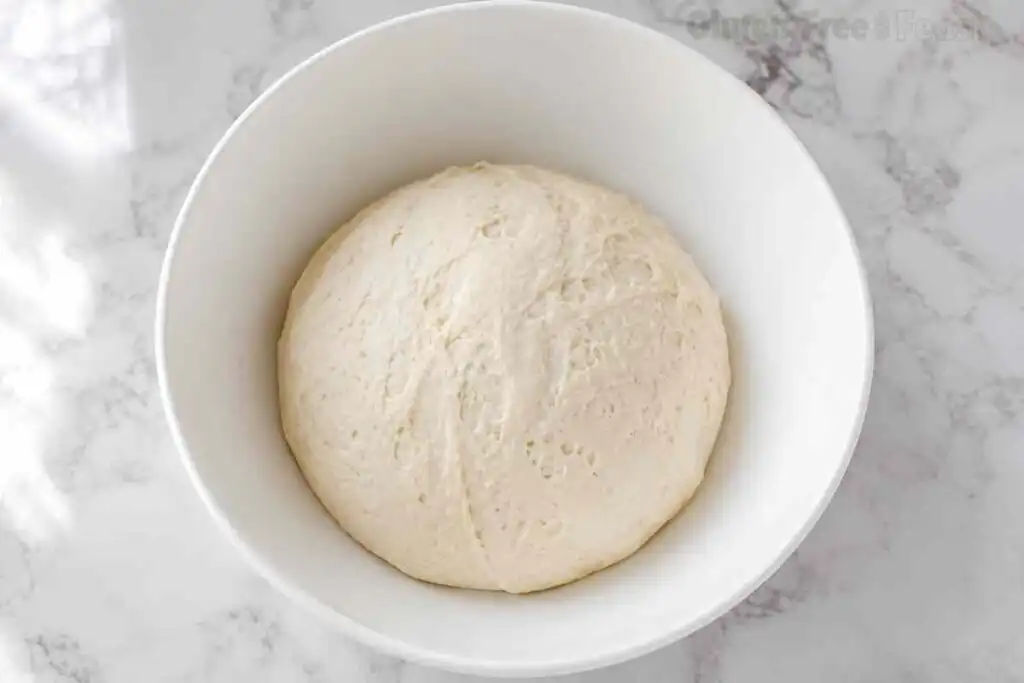
Transfer the dough to a greased oven-safe bowl. Cover it with plastic wrap and a kitchen towel. Place it in the warm oven and let it rise for 30 minutes.
After 30 minutes, remove the bowl and set it on the counter. Preheat the oven to 425°F (218°C).
Step 4: Shape the Crust
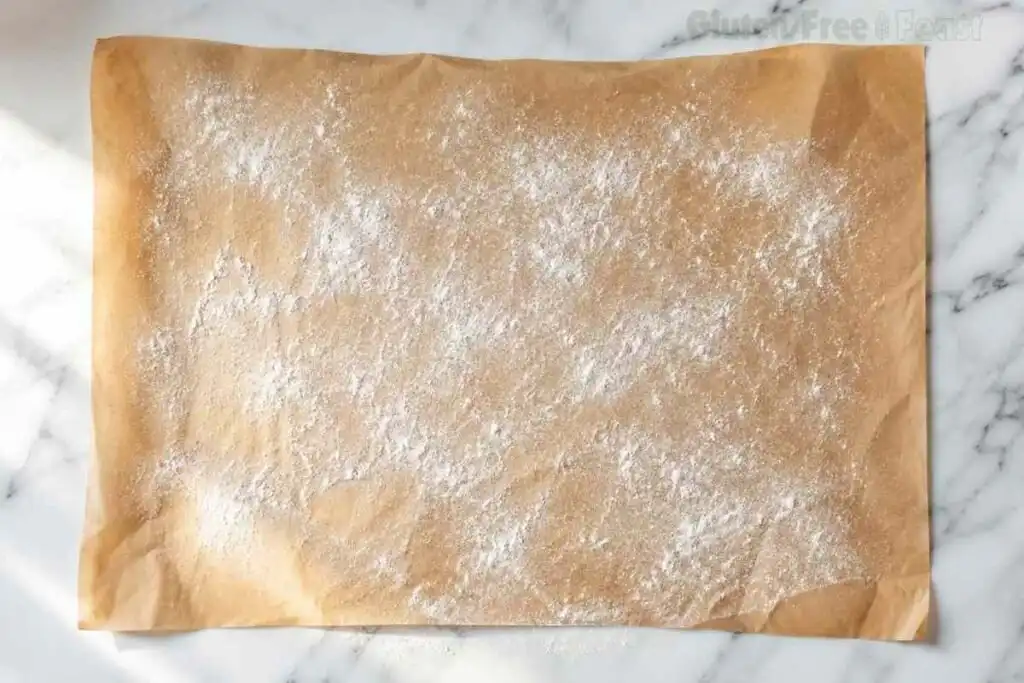
Sprinkle 1 tablespoon of Better Batter flour onto a large sheet of parchment paper. Turn the gluten free pizza dough out onto the parchment and sprinkle the remaining tablespoon of flour over the top. Do not use a rolling pin: rolling compresses the dough and produces a flat, dense crust.
Use your hands to gently pat and stretch the dough outward into a circle roughly 15 inches across, pressing the edges slightly thicker to form a crust rim. If the dough tears as you shape it, let it rest for 5 minutes uncovered. Rice starch continues hydrating after mixing, and a short rest makes the dough noticeably easier to work with.
Step 5: Par-Bake, Top, and Finish
Transfer the parchment and shaped dough directly onto a pizza pan or baking sheet. Bake at 425°F for 15 minutes. This par-bake step is not optional: skipping it produces a soggy, undercooked center regardless of how long the topped pizza bakes.
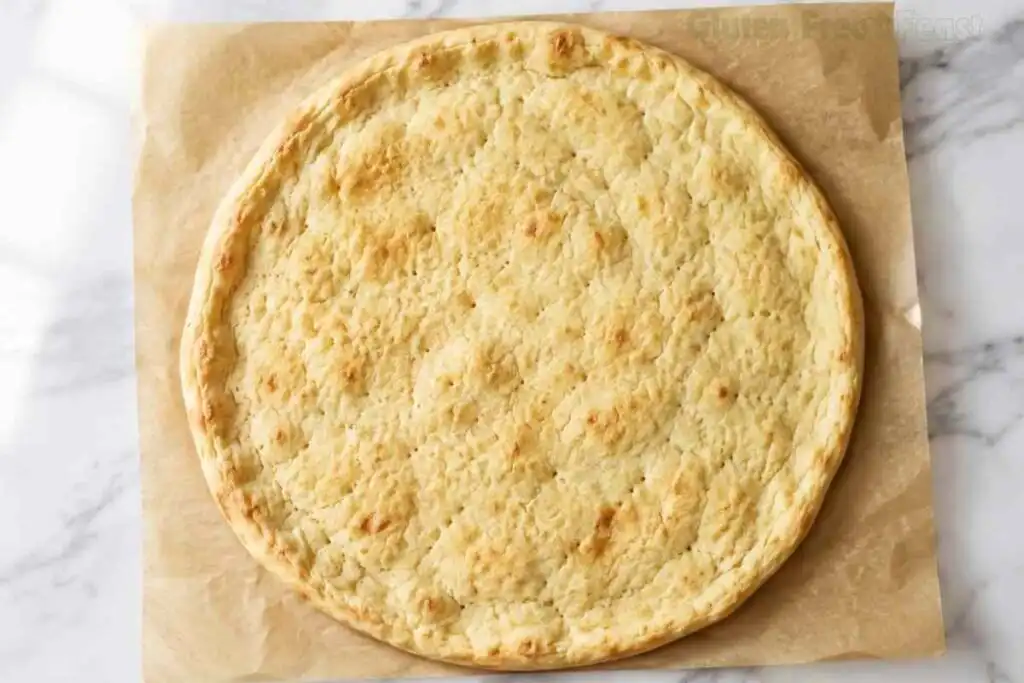
The par-bake sets the crust structure before moisture from sauce and toppings can penetrate it. Remove the crust from the oven and add your certified GF pizza sauce, cheese, and toppings. Return to the oven for 10 to 15 more minutes, until the cheese is melted and the crust edges are golden brown.
Expert Tips for Getting the Best Gluten Free Pizza Dough
- Use a thermometer for the water. The 110°–115°F target is narrow. Too cool and the yeast sits dormant; too warm and it dies. A cheap instant-read thermometer removes this variable entirely.
- Why does apple cider vinegar help gluten free pizza dough? ACV is mildly acidic (around pH 3). In a rice flour dough, that acidity tightens the protein matrix and improves CO2 retention during the yeast rise. This is the structural role gluten plays in wheat dough. The result is better rise, a less dense crumb, and improved chew. Skipping the ACV produces a noticeably flatter, denser crust.
- Refrigerate the dough for 15 minutes if it is too sticky to shape. Rice flour starches are hygroscopic: they keep absorbing moisture after mixing. A short fridge rest allows full hydration and makes the dough significantly less tacky. This is a practical tip for warm kitchens, not a required recipe step.
- Never skip the par-bake. This is the single most common mistake with GF pizza. Fifteen minutes at 425°F before toppings go on is the minimum. There is no way to compensate for a skipped par-bake once the pizza is topped.
- Do not roll the dough. A rolling pin flattens the structure built during the rise. Your hands give more control and preserve the crust edge. If you prefer a rolling pin, use a dedicated GF silicone one that has never touched wheat flour.
- Brush the top of the crust with olive oil before par-baking. A thin layer of oil helps the crust brown evenly and adds crispness to the surface before the sauce goes on.
- Use dedicated GF equipment. Wooden rolling pins, wooden cutting boards, and any pizza cutter used with wheat flour are not reliably cleanable for celiac safety. The full detail is in the cross-contact section below.
Common Problems With Gluten Free Pizza Crust
Dough too sticky to shape: This is normal with GF dough and does not indicate a measurement error. Work on well-floured parchment using the 2 tablespoons of Better Batter called for in the recipe. If the dough is still unmanageable, refrigerate it for 15 minutes before shaping.
Crust falls apart after baking: The two main causes are insufficient xanthan gum or an incomplete yeast rise. Check your flour bag. If you used Bob’s Red Mill 1-to-1, add 1 extra teaspoon of xanthan gum. A partial rise produces a fragile, crumbly structure that baking cannot fix.
Soggy center: The par-bake was skipped or cut short. Bake the gluten free pizza crust for the full 15 minutes at 425°F before adding any toppings. A GF crust cannot absorb sauce and then cook through the way a wheat crust can.
Flat crust with no chew: The yeast did not activate. Confirm the water was within 110°–115°F, the sugar was dissolved before adding the yeast, and your Hodgson Mill yeast packet is not past its expiration date. Also confirm the apple cider vinegar was added: skipping it noticeably reduces chew in the finished gluten free pizza dough.
Substitutions and Variations for Gluten Free Pizza Dough
Flour blend substitution: Bob’s Red Mill 1-to-1 Baking Flour is the next best option if Better Batter is unavailable. Add 1 teaspoon of xanthan gum to the dry ingredients. King Arthur Measure for Measure behaves similarly and needs the same xanthan addition.
Thinner crust: Press the dough to 17 or 18 inches instead of 15. The crust will be crispier and lighter after the par-bake. Reduce the final bake time by 2 to 3 minutes and watch the edges closely.
Personal pizzas: Divide the dough into two portions and shape each into a 9- to 10-inch round. Par-bake and top the same way. This works well for households with different topping preferences and freezes well at the par-baked stage.
Dairy-free toppings: The dough itself is already dairy-free. For toppings, Violife and Daiya both produce GF-labeled dairy-free mozzarella alternatives. Check current packaging for certification: labels change.
Yeast-free option: This gluten free pizza dough relies on yeast for both its rise and its chew. A yeast-free version is a different recipe, not a simple swap. A flatbread-style GF crust using extra baking powder is the more reliable path if yeast is a concern.
What to Serve With Gluten Free Pizza Dough
Pizza pairs naturally with a simple green salad, roasted vegetables, or a warm bowl of soup. For more celiac-safe dinner ideas from GFF, the GFF dinner recipes have options that work alongside or after pizza night. If you want to expand your GF dough skills, GFF homemade gluten free pasta uses a similar certified-flour approach for another weeknight staple.
For a dessert to round out the meal, the GFF gluten free brownies come together in one bowl and bake while the pizza is resting.
Cross-Contact and Celiac Kitchen Safety for Pizza Night
Pizza night involves more shared equipment than most meals, and several common kitchen tools are among the hardest to clean to a celiac-safe standard. This section covers the specific risks worth addressing before you start.
Pizza cutters: If a pizza cutter has been used to cut wheat-based pizza, the blade can retain gluten in the hinge and handle. Wash thoroughly with hot soapy water, or use a dedicated GF cutter. For families that regularly make both wheat and GF pizza, a separate cutter is the lower-risk choice.
Pizza stones: Unglazed pizza stones are porous and absorb flour from every pizza cooked on them. A stone used for wheat pizza cannot be made safe for celiac cooking. Use a pizza pan or baking sheet lined with fresh parchment paper, which this recipe already calls for. If you prefer a stone, dedicate one to GF use only from its first use.
Wooden rolling pins and cutting boards: Wood holds gluten in its grain in a way that soap and water cannot fully address. Beyond Celiac lists wooden rolling pins as items to replace when setting up a gluten free kitchen. Use a dedicated GF silicone rolling pin, or shape the dough entirely by hand on parchment as this recipe describes.
Countertops: Wipe down all surfaces with hot soapy water before shaping the gluten free pizza dough. Ambient flour dust from earlier baking can settle on counters and transfer to a GF dough. Beyond Celiac’s cross-contact resource page covers shared kitchen environments in detail, including guidance that applies directly to pizza preparation.
Restaurant GF pizza: Even when a restaurant offers a GF pizza option, the risk of cross-contact from shared pizza stones, shared cutters, and airborne flour dust in a pizza kitchen is significant. For comprehensive guidance on certified GF ingredient labeling and what third-party certification actually means, see Beyond Celiac’s food safety resource. Making this dough at home with confirmed certified ingredients removes that variable entirely.
Storage and Make-Ahead Instructions for Gluten Free Pizza Dough
Leftover pizza: Store in an airtight container in the refrigerator for up to 3 days. Reheat in a 350°F oven for 8 to 10 minutes to restore crust crispness. The microwave works in 45 to 60 seconds but softens the crust.
Freeze the dough: Allow the dough to complete the full 30-minute rise. Wrap it tightly in plastic wrap, then place it in a zip-top freezer bag. Freeze for up to 3 months. To use: thaw overnight in the refrigerator, then bring to room temperature for 30 minutes before shaping.
Freeze the par-baked crust: Bake the gluten free pizza crust for the full 15 minutes at 425°F and let it cool completely. Wrap tightly and freeze for up to 1 month. To finish: add toppings directly from frozen and bake at 425°F for 10 to 15 minutes until the cheese is melted and the crust is heated through.
Make-ahead tip: The par-baked crust method is the most practical for regular pizza nights. Make a double batch, freeze four crusts, and a celiac-safe pizza is ready on any weeknight in under 20 minutes.
Why Trust This Recipe
I develop recipes the same way I approached lab work: with documented testing, controlled variables, and results that hold up in any kitchen, not just mine.
This gluten free pizza dough has been tested multiple rounds in my dedicated gluten free kitchen using the confirmed certified brands throughout. I have noted what fails, what works, and why, so you are not just following steps but understanding the process.
What that means for you:
- Multiple test batches before publishing
- Science-based notes on key steps throughout
- Honest substitution guidance, not guesswork
- Safe for celiac disease, with cross-contact taken seriously at every step
Frequently Asked Questions
Does gluten free flour work for pizza dough?
Yes, but it behaves differently than wheat flour. GF flour lacks the gluten protein network that gives wheat dough its elasticity, so the dough will be stickier and will not stretch the same way. The solution is a GFCO-certified blend with xanthan gum already included, plus apple cider vinegar to improve structure and a proper 30-minute yeast rise. This recipe produces a thick, chewy, holdable gluten free pizza crust using Better Batter Original Blend and the technique described above.
Which gluten free flour is best for pizza dough?
Better Batter Original Blend gives the best balance of chewiness and structure. It is GFCO-certified, produced in a dedicated allergen-free facility, and already contains xanthan gum. The next best substitute is Bob’s Red Mill 1-to-1 Baking Flour with 1 extra teaspoon of xanthan gum added. Avoid almond flour and oat flour blends: both produce a grainier, more crumbly texture in gluten free pizza dough. Whatever blend you use, confirm it carries a certified GF label or GFCO seal.
What are common problems with gluten free pizza crust?
The four most common failures each have a clear cause. A crust that falls apart points to missing or insufficient xanthan gum, or an incomplete yeast rise. A soggy center means the par-bake was skipped or cut short. Dough too sticky to shape is normal: work on floured parchment and refrigerate for 15 minutes if needed. A flat, dense result with no chew means the yeast did not activate due to water temperature error or an expired yeast packet.
How do you make gluten free pizza dough step by step?
Combine Better Batter flour, Bob’s Red Mill baking powder, salt, and Hodgson Mill yeast. Add sugar-water at 110°–115°F, olive oil, and apple cider vinegar, then mix until a sticky dough forms. Rise for 30 minutes in a warm oven, then shape on floured parchment into a 15-inch circle. Par-bake the gluten free pizza crust at 425°F for 15 minutes, add certified GF toppings, and bake another 10 to 15 minutes. The full recipe with all certified brand callouts is in the recipe card above.
Can you make your own gluten free pizza dough at home?
Homemade gluten free pizza dough is the safest option for people with celiac disease. Restaurant GF pizza carries a real cross-contact risk even when the dough is technically GF, because shared pizza stones, shared cutters, and airborne flour dust in a pizza kitchen are difficult to control. This recipe uses GFCO-certified or dedicated-facility ingredients at every risk point, comes together in one bowl with no kneading, and can be frozen in two forms for future use.
What are the most common mistakes when baking gluten free pizza?
Skipping the par-bake is the most costly mistake in gluten free pizza dough: it produces a soggy center that no amount of extra baking time will fix. The second most common error is water that is too hot, which kills the yeast before the dough rises. Third is using a flour blend without enough xanthan gum, which results in a crust that crumbles instead of holds. Fourth is shaping with a rolling pin or on a surface that has been used with wheat flour, which is a cross-contact risk for celiac disease.
Final Thoughts
This gluten free pizza dough gives you a thick, chewy, celiac-safe crust using three certified ingredients named at every step. The technique is straightforward once you understand why each step matters, and the par-baked crust freezes so well that a second batch for the freezer is always worth making at the same time.