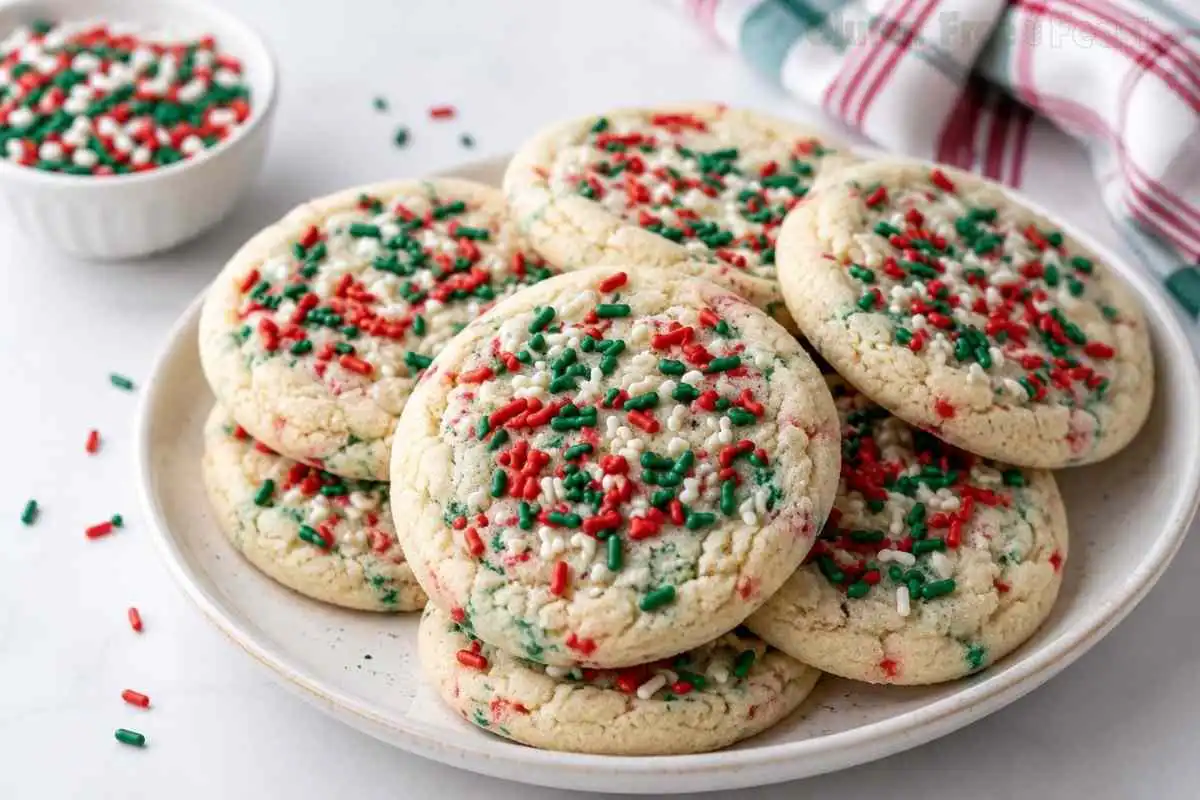
Every December, readers with celiac disease ask me the same thing: “Can I actually bring something to the cookie exchange this year?” These gluten free christmas cookies are the answer. Soft, chewy, loaded with festive sprinkles, and built entirely from certified gluten-free ingredients named by brand so there is no guesswork at the grocery store.
The dough takes about 20 minutes of active work. The two-hour chill does the rest. What comes out of the oven is a thick, tender cookie with a lightly set edge and enough sprinkle coverage to hold its own on any holiday platter.
If you have tried gluten free drop cookies before and ended up with flat discs or crumbled results, the fix is almost always the same two things: the right flour and a proper chill. This recipe explains exactly why both matter.
Key takeaways
These gluten free christmas cookies bake at 350°F for 10 to 12 minutes and yield 24 soft, chewy cookies made with certified gluten-free ingredients: Bob’s Red Mill 1-to-1 Baking Flour (or King Arthur Measure for Measure), certified GF baking powder (Bob’s Red Mill), pure vanilla extract (Nielsen-Massey), and certified GF sprinkles (India Tree or Supernatural). A two-hour chill is non-negotiable: it keeps the high butter content firm so the cookies hold their shape in the oven rather than spreading flat. The dough can be frozen raw in ball form and baked directly from frozen at 350°F for 14 to 16 minutes, making these a reliable make-ahead option for the holiday season. Tested dairy-free with Miyoko’s European Style Plant Milk Butter block at 170g, a confirmed 1:1 substitution.
Prep Time: 20 mins · Cook Time: 12 mins · Total Time: 152 mins
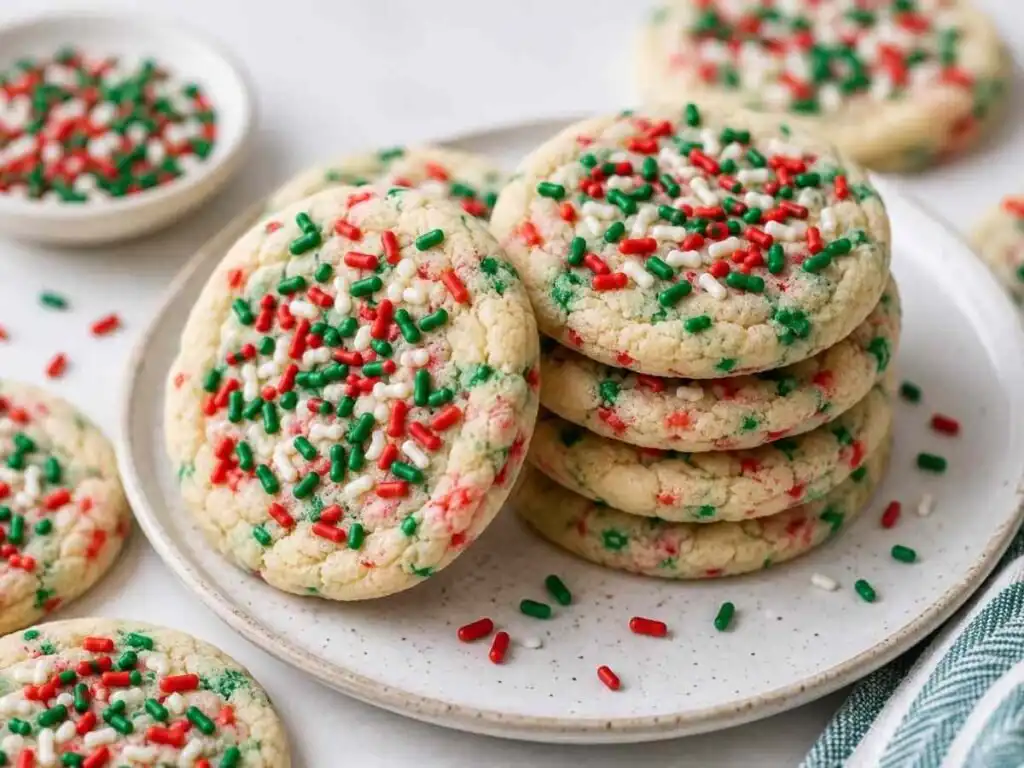
Table of Contents
Why You Will Love These Gluten Free Christmas Cookies
- Certified celiac-safe at every ingredient: the flour, baking powder, vanilla, and sprinkles all carry specific brand recommendations. This is the one thing no competing recipe does at ingredient-list level.
- Soft, chewy center with a slightly set edge: the high butter content and two-hour chill combine to give you a cookie that holds its shape without going hard or cakey.
- Festive sprinkle look with no decorating skill required: roll the tops in certified GF sprinkles before chilling and the cookies come out of the oven already finished.
- True total time disclosed: 2 hours 35 minutes including chill, so there are no timeline surprises the night before a party.
- Dairy-free swap developer-confirmed: Miyoko’s European Style Plant Milk Butter at 170g substitutes 1:1, tested and confirmed in my kitchen.
- Freeze-from-raw option confirmed: bake straight from frozen at 350°F for 14 to 16 minutes, so you can prep a batch in November and have fresh cookies on demand through the holidays.
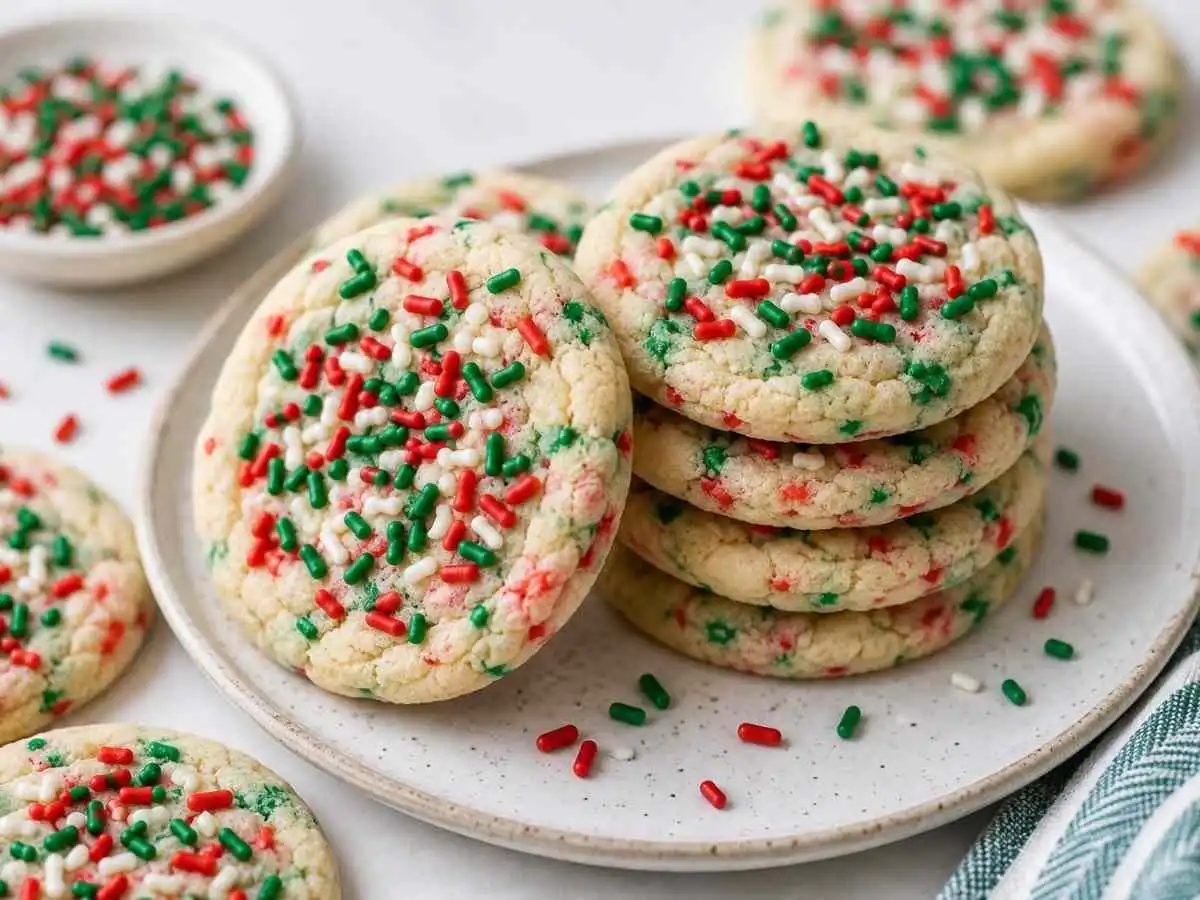

Gluten Free Christmas Cookies
Ingredients
Equipment
Method
- Whisk together the certified GF flour (240g, spooned and leveled), certified GF baking powder, and salt in a medium bowl until evenly combined. Set aside.
- Beat the softened butter and sugar together in a large mixing bowl until light and creamy, about 1 minute on medium speed. Add the egg and pure vanilla extract and beat until fully combined.
- Add the dry ingredients gradually and mix on low speed until just combined. Add the buttermilk (or almond milk) and certified GF sprinkles and mix until a thick, sticky dough forms. Do not overmix once no dry flour patches remain.
- Scoop about 2 tablespoons of dough per cookie and roll into balls. Dip the tops into extra certified GF sprinkles if desired. Place on a lined tray, cover, and refrigerate for at least 2 hours (overnight preferred).
- Preheat the oven to 350°F (175°C) while the dough finishes chilling. Arrange cold dough balls on a parchment-lined baking sheet about 2 inches apart.
- Bake for 10 to 12 minutes until the edges are lightly set. The centers will look slightly underdone when you pull them. Let cookies cool on the baking sheet for 5 minutes before transferring to a wire rack.
Nutrition
Notes
Gluten-Free Note
Tried this recipe?
Let us know how it was!Ingredients
For the Cookies
- 2 cups (240g) gluten-free 1:1 baking flour, Bob’s Red Mill 1-to-1 Baking Flour or King Arthur Measure for Measure (must contain xanthan gum)
- 1½ teaspoons certified gluten-free baking powder (Bob’s Red Mill)
- ¼ teaspoon salt
- 12 tablespoons (170g) unsalted butter, softened to room temperature
- 1½ cups (300g) granulated sugar
- 1 large egg
- 1½ teaspoons pure vanilla extract (Nielsen-Massey Pure Vanilla Extract recommended)
- 2 tablespoons buttermilk or unsweetened almond milk
- ½ cup certified GF Christmas sprinkles (India Tree or Supernatural brand), plus extra for topping
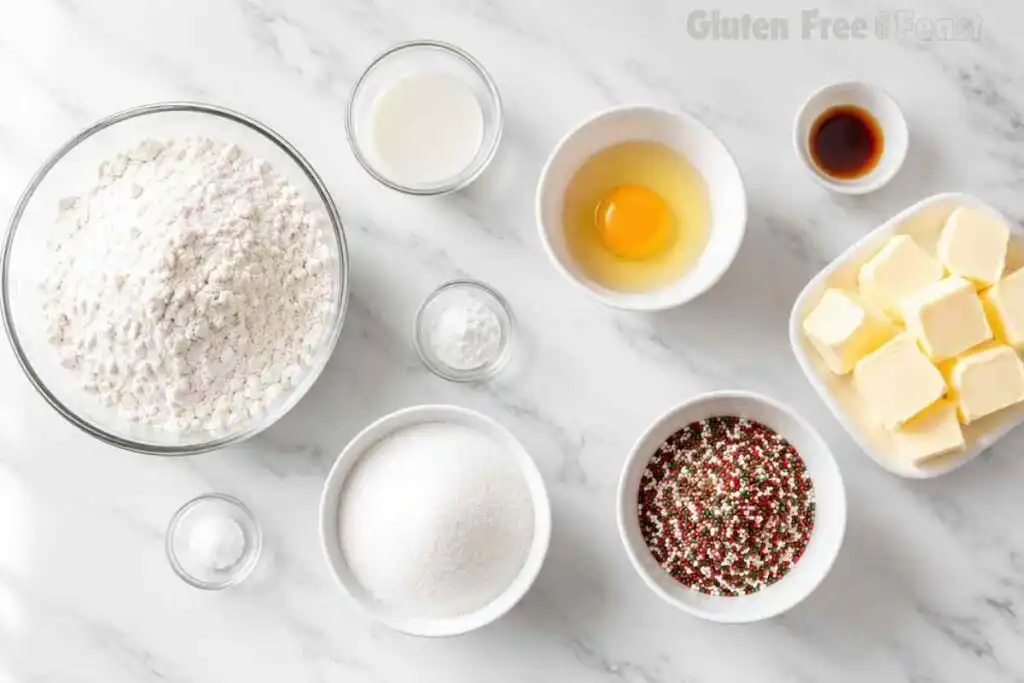
Ingredient Notes and Substitutions
Gluten-free 1:1 baking flour: This recipe uses Bob’s Red Mill 1-to-1 Baking Flour or King Arthur Measure for Measure. Both average 120g per cup, both already contain xanthan gum, and both are produced with certified gluten-free protocols. Do not substitute almond flour, rice flour, or any single-ingredient flour: they lack the starch blend and binder that holds this dough together. The same flour works equally well in gluten free pancakes if you want to put a new bag to use across multiple recipes.
Spoon the flour into your measuring cup and level with a knife. Scooping directly from the bag packs the flour and can add up to 20g more per cup than the recipe requires, which makes the cookies dry and stiff.
Certified gluten-free baking powder: Standard baking powder is often formulated without gluten-containing ingredients, but not all brands are produced in dedicated GF facilities. Bob’s Red Mill Gluten Free Baking Powder is manufactured in a dedicated facility. Do not use a generic store brand without confirming the certified GF symbol on the label.
Pure vanilla extract: Imitation vanilla uses synthetic vanillin, and some formulations use grain-based alcohol that may not be safe for celiac disease. Pure vanilla extract uses vanilla beans only. Nielsen-Massey Pure Vanilla Extract is the brand I specify: it is widely available and noticeably better in a butter-forward cookie like this one.
Certified GF sprinkles: Standard grocery store sprinkles are frequently produced in facilities that also process wheat. India Tree and Supernatural are the two brands I trust for certified GF status. Check the label each time, as formulations can change between seasons.
Dairy-free swap: Replace the butter with Miyoko’s European Style Plant Milk Butter (the block, not the spread) at 170g. Use unsweetened almond milk in place of buttermilk. The cookies bake slightly thicker and have a firmer texture once cooled. No other adjustments are needed.
Celiac Safety Note: Please ensure all packaged ingredients carry a certified gluten-free label. For this recipe, check specifically: your GF 1:1 flour blend, baking powder, vanilla extract (pure only, not imitation), and Christmas sprinkles. Cross-contact at packaging facilities is a documented risk for people with celiac disease.
Look for a certified GF symbol on the package, not just a “gluten-free” marketing claim. Use dedicated GF mixing bowls, a silicone spatula, and a dedicated GF baking sheet. Avoid wooden spoons. If your baking sheet has scratches from prior wheat baking, replace it before use.
The Science Behind the Chill
Two hours is the minimum chill time, and it is not optional. When the dough is cold, the butter is firm. Firm butter takes longer to melt in a 350°F oven. That slower melt gives the egg proteins time to set the cookie’s structure before the fat can cause the dough to spread flat.
The chill also allows the GF flour blend to fully hydrate. Starches in a 1:1 GF blend absorb moisture more slowly than wheat flour. Two hours completes that process, producing a softer crumb and reducing the gritty texture that signals an under-hydrated GF dough.
Overnight chilling (up to 24 hours, covered) takes both effects further. In my testing, overnight-chilled cookies came out measurably thicker with a more uniform edge and noticeably deeper vanilla flavor. If you have the time, overnight is the better cookie. Two hours is still very good.
How to Make Gluten Free Christmas Cookies
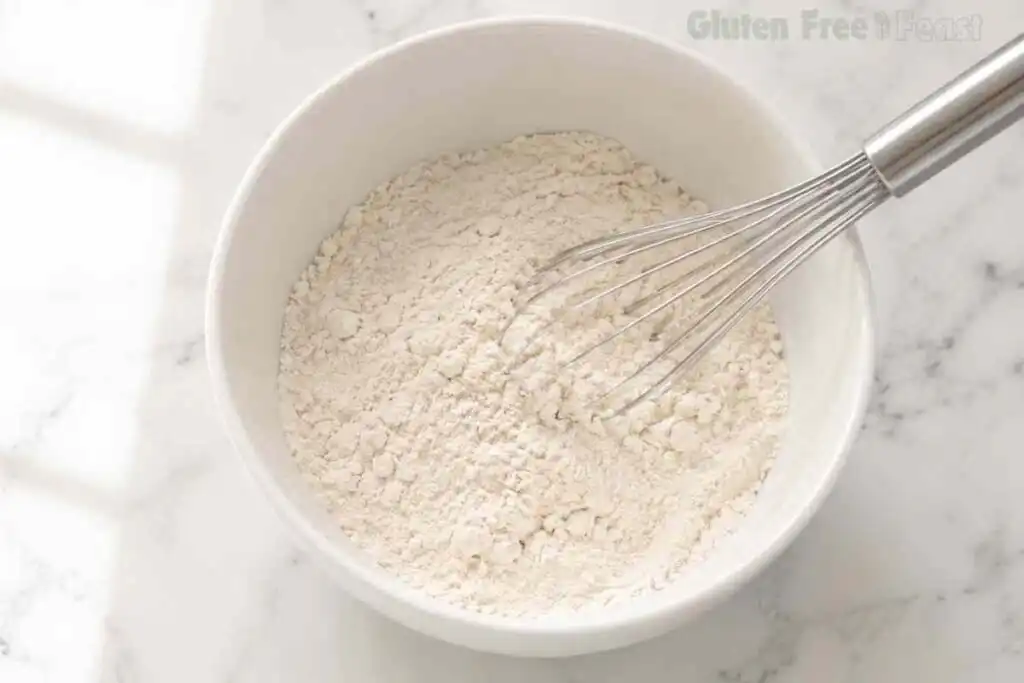
Step 1: Mix the Dry Ingredients
Whisk together the certified GF flour (240g, spooned and leveled), certified GF baking powder, and salt in a medium bowl until evenly combined. Set aside. A thorough whisk prevents uneven leavening, which is what causes some cookies in a batch to rise higher than others.
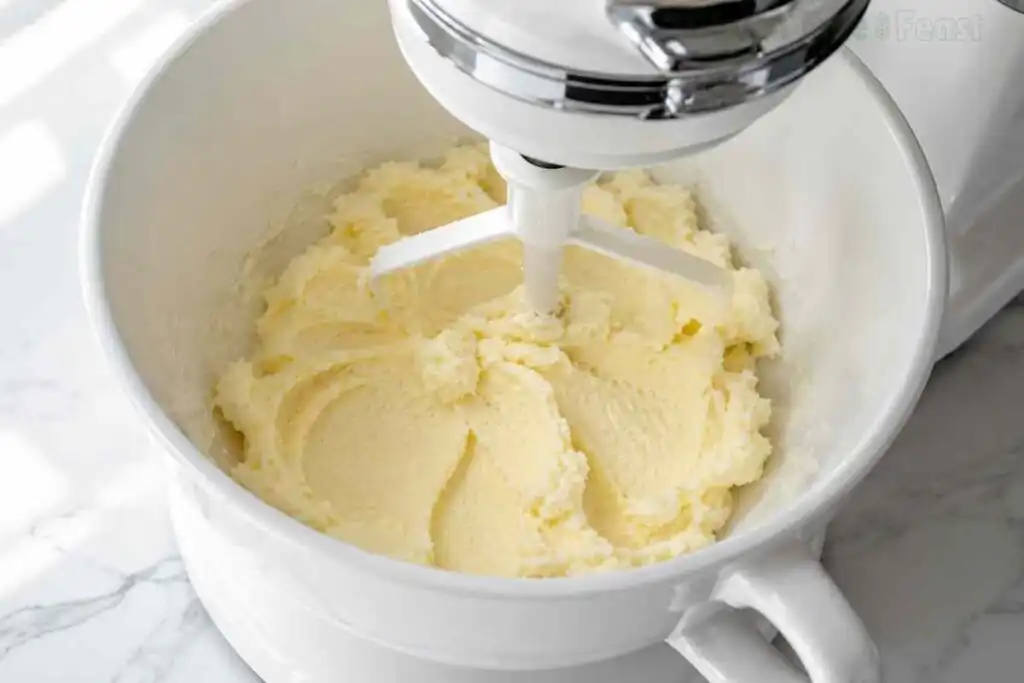
Step 2: Cream the Butter and Sugar
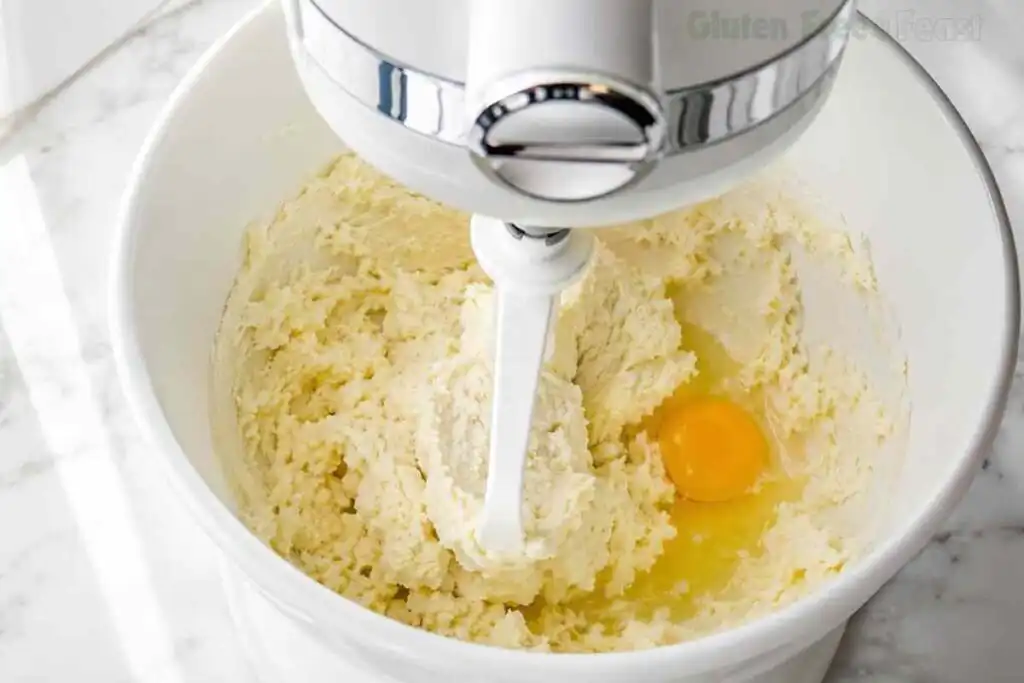
Beat the softened butter and sugar together in a large mixing bowl until light and creamy, about 1 minute on medium speed. Add the egg and pure vanilla extract and beat until fully combined. The mixture should look smooth and slightly pale.
Step 3: Combine and Form the Dough
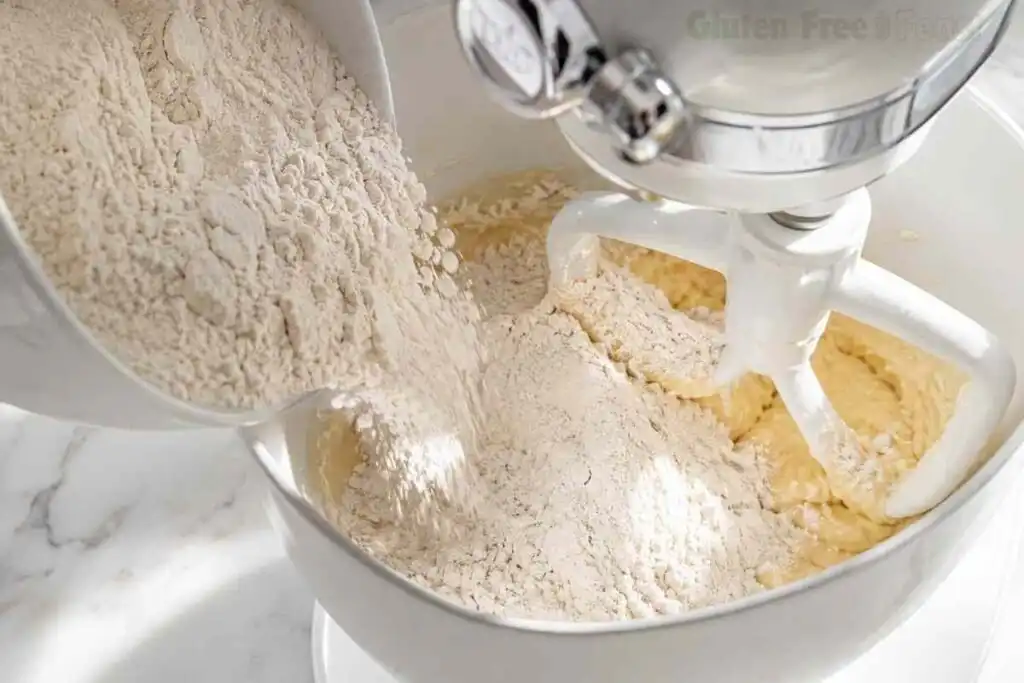
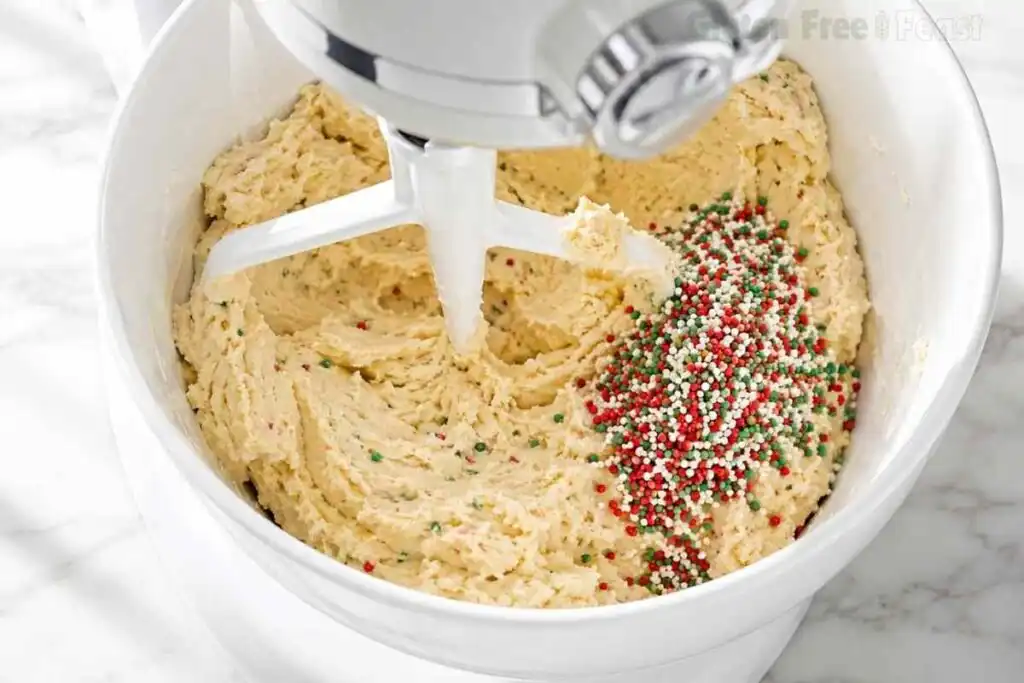
Add the dry ingredients gradually and mix on low speed until just combined. Add the buttermilk (or almond milk) and certified GF sprinkles and mix until a thick, sticky dough forms. Stop once no dry flour patches remain: working GF dough too long activates the starches and makes the finished cookies dense.
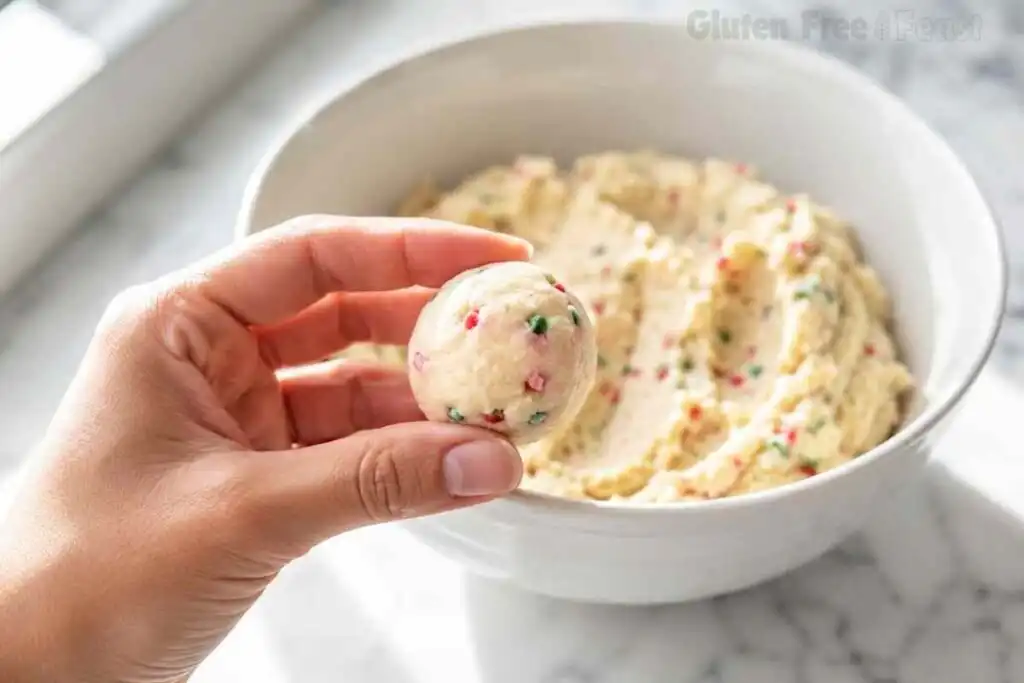
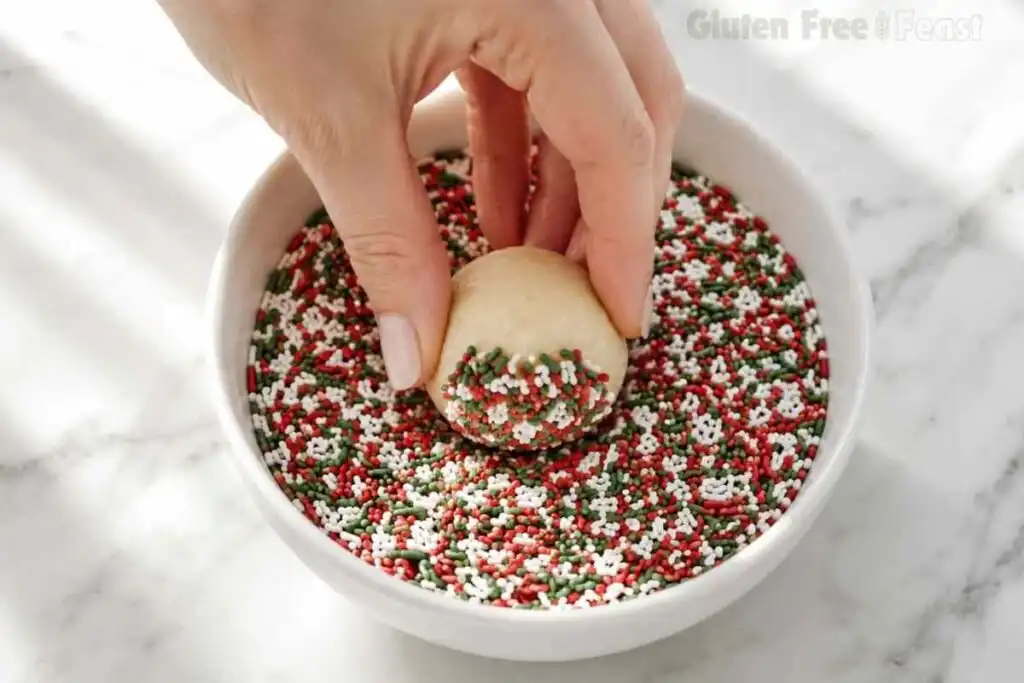
Scoop about 2 tablespoons of dough per cookie and roll into balls. Dip the tops into extra certified GF sprinkles if you want fuller coverage. Place on a lined tray, cover, and refrigerate for at least 2 hours.
Step 4: Bake
Preheat the oven to 350°F (175°C) while the dough finishes chilling. Arrange cold dough balls on a parchment-lined baking sheet about 2 inches apart. Bake for 10 to 12 minutes until the edges are lightly set.
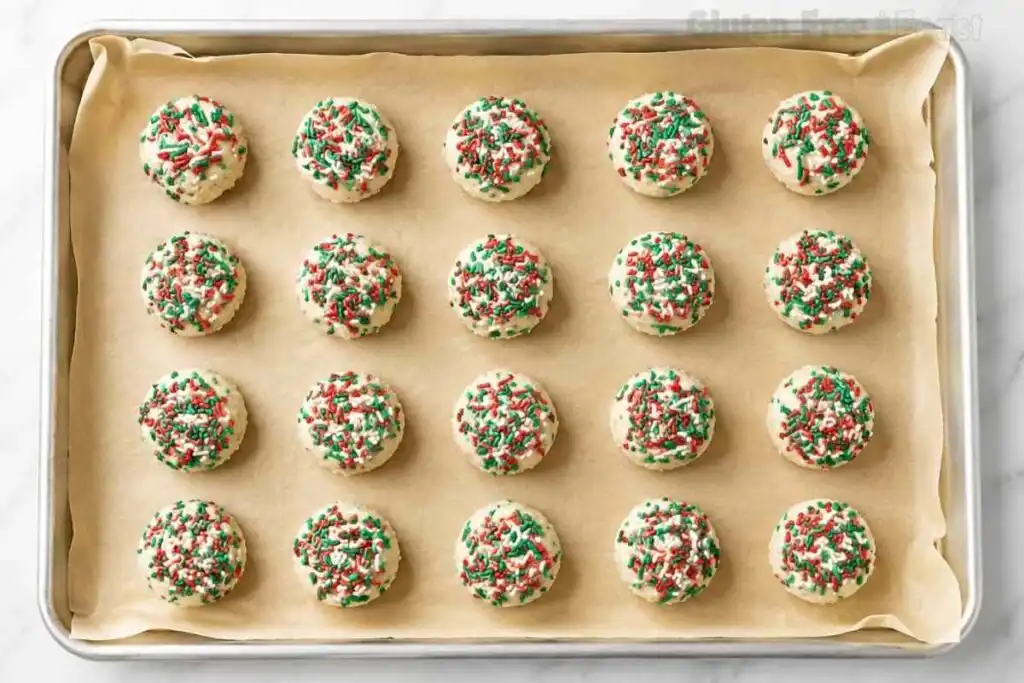
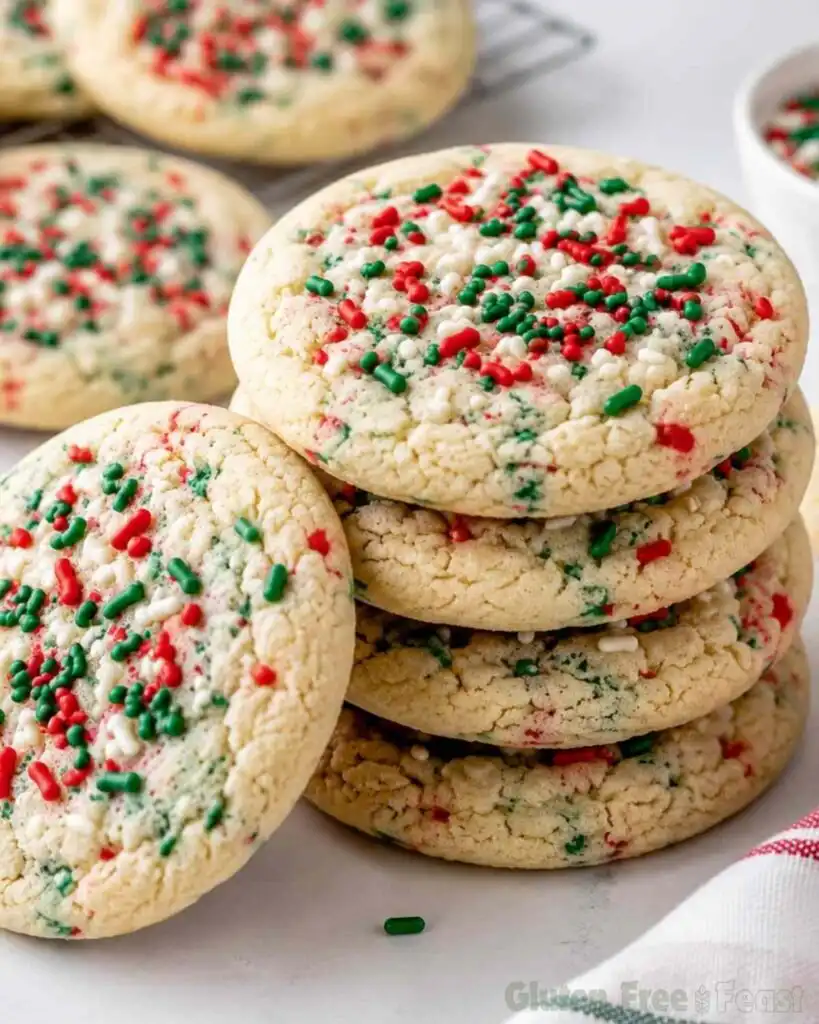
The centers will look slightly underdone when you pull them. That is correct: they firm up as they cool on the pan. Let cookies rest on the baking sheet for 5 minutes before transferring to a wire rack.
Why Xanthan Gum Matters
Gluten is a protein network that stretches and holds baked goods together. In gluten free baking, xanthan gum (a polysaccharide) takes on that binding role, creating viscosity in the dough and preventing the cookie from crumbling through baking. A GF flour blend without xanthan gum produces flat, falling-apart results regardless of how well you follow every other step.
Amount matters in the other direction too: more than 0.5 teaspoon of xanthan gum per cup of flour makes cookies gummy and dense. This is exactly why using a pre-blended 1:1 flour is strongly preferred over building your own blend from scratch.
Expert Tips for Best Results
- Spoon and level the flour. Do not scoop the cup directly into the bag. Scooping packs the flour and can add 20g or more per cup, which makes the cookies dry and dense. Spoon in, then sweep a straight edge across the top.
- Chill at least 2 hours, overnight if you can. I set the dough up the night before any event I am baking for. The cookies are measurably better, and there is no morning prep beyond preheating the oven.
- Watch the edges, not the tops. These cookies will not turn deep golden on top while they are still perfectly done. Pull them when the edges look lightly set and the surface has lost its sheen.
- Rotate the pan at 6 minutes. Most home ovens have hot spots. A 180-degree rotation halfway through keeps all the cookies baking at the same rate.
- Cool on the pan for a full 5 minutes. Gluten free cookies are more fragile when hot than wheat cookies. Give them the full 5 minutes and they transfer cleanly without the bottoms breaking.
- Use dedicated GF equipment. A dedicated GF baking sheet, silicone spatula, and mixing bowl eliminate the cross-contact risk that scratched or porous surfaces carry. Wooden spoons are not safe for celiac baking. For a full breakdown of why equipment matters, see how I approach it in the gluten free biscuits guide.
Substitutions and Variations
Dairy-free: Replace the butter with Miyoko’s European Style Plant Milk Butter block at 170g. Replace the buttermilk with unsweetened almond milk at the same 2-tablespoon quantity. The cookies bake slightly thicker and have a firmer texture once cooled. Do not use the Miyoko’s tub spread: the water content differs and will affect the dough.
Homemade buttermilk: Add 1 tablespoon of white vinegar to 1 cup of whole milk, stir, and let it sit for 5 minutes. Use 2 tablespoons from the mixture. The same method works with any dairy-free milk for a vegan substitute.
Flour swap: Both Bob’s Red Mill 1-to-1 and King Arthur Measure for Measure are confirmed for this recipe. If you use a different certified GF 1:1 blend, check that it contains xanthan gum and weigh it at 240g rather than measuring by volume, since cup weights vary between brands.
Sprinkle variations: India Tree makes seasonal color sets for Valentine’s Day, Easter, and birthdays, all certified GF. Swap in any India Tree or Supernatural variety to adapt these cookies for any occasion without changing anything else in the recipe.
What to Serve With Gluten Free Christmas Cookies
These cookies are made for sharing, so pairings matter. Here is what works well in my kitchen and on my holiday table.
- Hot cocoa: A warm mug alongside a sprinkle cookie is the most obvious pairing for a reason. Use certified GF cocoa powder and check your chocolate brands for GF status if you are adding mix-ins.
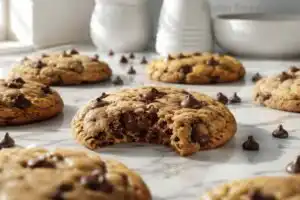
- A gluten free cookie platter: These pair naturally with gluten free chocolate chip cookies and gluten free peanut butter cookies for a mixed holiday tray. All three are drop cookies that bake at the same temperature, which makes batching them on the same day easy.
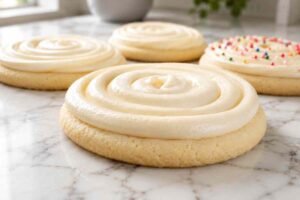
- Cut-out cookies alongside: If you want a shaped cookie on the same platter, these gluten free sugar cookies are designed for rolling and hold their shape cleanly after decorating.
- Holiday gifting: Layer cookies between parchment in a tin or a cellophane bag tied with ribbon. They hold their texture for up to 5 days at room temperature, which makes them reliable for shipping or sending ahead.
- A gluten free brunch spread: If you are hosting alongside a cookie display, gluten free blueberry muffins and gluten free banana muffins round out the table without requiring any extra technique.
Storage and Make-Ahead Instructions
Room temperature: Store baked cookies in an airtight container for up to 5 days. Layer between sheets of parchment to prevent the sprinkles from sticking together.
Freeze baked: Cool completely, then layer between parchment in a zip-top freezer bag. Baked cookies freeze well for up to 3 months. Thaw at room temperature for about 1 hour before serving.
Freeze raw dough balls: After rolling, place the balls on a parchment-lined tray and freeze until solid, about 1 hour, then transfer to a freezer bag. Raw dough keeps for up to 3 months. Bake directly from frozen at 350°F for 14 to 16 minutes, no thawing needed. This is the method I reach for most: a batch prepped in November means fresh cookies on demand through January.
Refrigerator (dough only): Formed dough balls keep covered in the refrigerator for up to 3 days before baking. This makes it easy to bake in smaller batches across different days.
Why Trust This Recipe
I develop recipes the same way I approached lab work: with documented testing, controlled variables, and results that hold up in any kitchen, not just mine.
This recipe has been tested through multiple rounds in my dedicated gluten free kitchen, with notes on what failed, what changed, and why each adjustment mattered.
What that means for you:
- Multiple test batches before publishing
- Science-based notes on key steps throughout
- Honest substitution guidance, not guesswork
- Safe for celiac disease, with cross-contamination taken seriously at every step
Frequently Asked Questions
What is the trick to gluten free baking?
The single biggest factor is using a certified 1:1 gluten free flour blend that already contains xanthan gum, such as Bob’s Red Mill 1-to-1 Baking Flour or King Arthur Measure for Measure. Xanthan gum replaces the binding job that gluten normally does, preventing cookies from crumbling. The second trick for these cookies is the chill. Cold dough holds its shape in the oven while the egg proteins set the structure, giving you a round, thick cookie instead of a flat one.
How do you keep gluten free cookies from spreading?
Chill the dough. When butter is cold and firm, it takes longer to melt in the oven, giving the cookie time to set before the fat causes it to spread. Two hours is the minimum for this recipe; overnight produces the best shape. The xanthan gum in your flour blend also plays a role, providing structural support as the butter melts.
Are gluten free christmas cookies safe for celiacs?
They can be, but only if every ingredient carries a certified GF label. In this recipe, the flour must be Bob’s Red Mill 1-to-1 or King Arthur Measure for Measure. The baking powder must be certified GF (Bob’s Red Mill), the vanilla must be pure and not imitation, and the sprinkles must be certified GF (India Tree or Supernatural).
These cookies are developed and baked in a dedicated gluten free kitchen using dedicated GF equipment. Cross-contact from shared bowls, baking sheets, or wooden utensils is a real risk that should be addressed before you start.
Can you make these cookies dairy free?
Yes. Swap the butter for Miyoko’s European Style Plant Milk Butter (the block, not the tub spread) at 170g, a direct 1:1 substitution by weight. Replace the buttermilk with unsweetened almond milk at the same 2-tablespoon quantity. The cookies bake slightly thicker and firm up more once cooled, but the structure and flavor hold well. No other changes are needed.
How far in advance can you make these cookies?
You have three options. Bake up to 5 days ahead and store in an airtight container at room temperature. Freeze baked cookies for up to 3 months, layered between parchment, and thaw at room temperature for 1 hour.
Or freeze raw dough balls for up to 3 months and bake directly from frozen at 350°F for 14 to 16 minutes without thawing. The freeze-from-raw method is the most flexible for holiday planning.
What gluten free flour is best for christmas cookies?
A 1:1 gluten free baking flour blend with xanthan gum already included. Bob’s Red Mill 1-to-1 and King Arthur Measure for Measure both average 120g per cup and have been tested in this recipe. Avoid single-ingredient flours such as almond, rice, or coconut flour used alone: they do not provide the starch structure or binding that a pre-blended 1:1 flour delivers.
Final Thoughts
These cookies are the ones I bring to every holiday gathering and the ones I mail to friends who have spent years sitting out the cookie exchange. A soft, chewy, sprinkle-covered cookie made with every ingredient certified and named is not a consolation prize. Make a double batch, freeze half the raw dough balls, and you will have fresh cookies ready from now until the New Year.