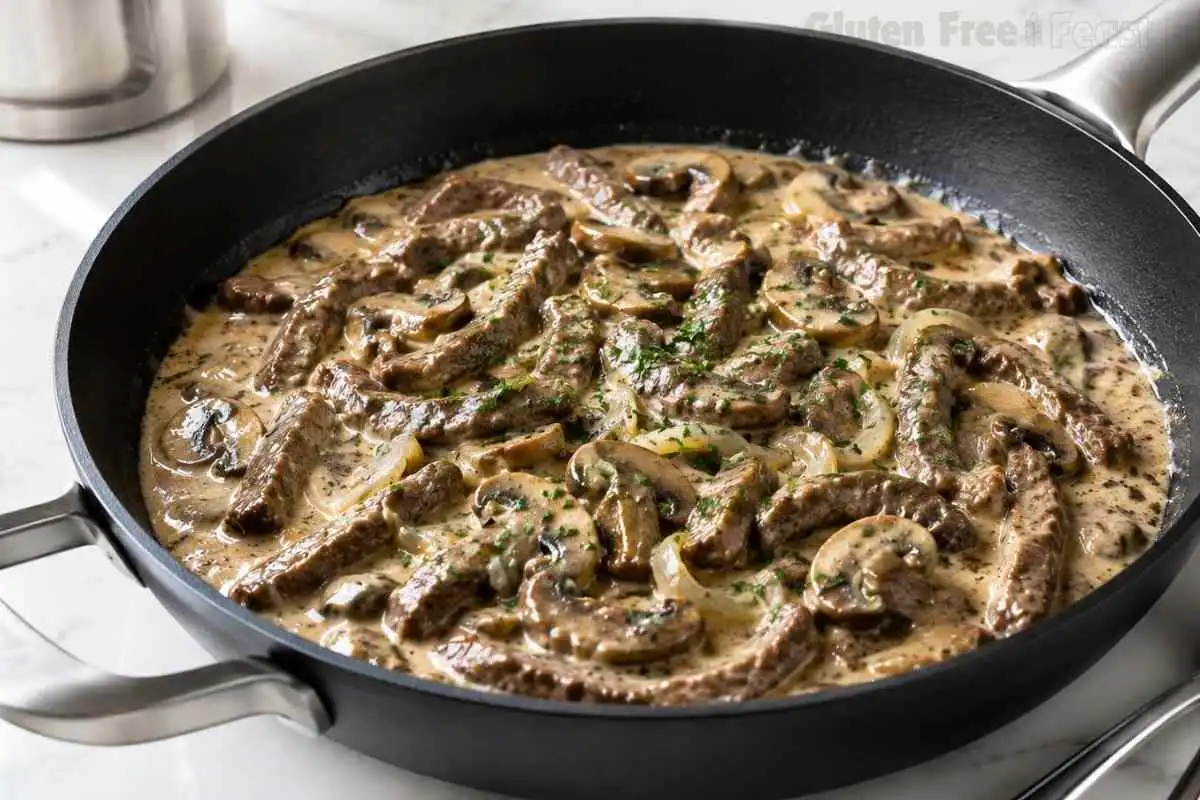
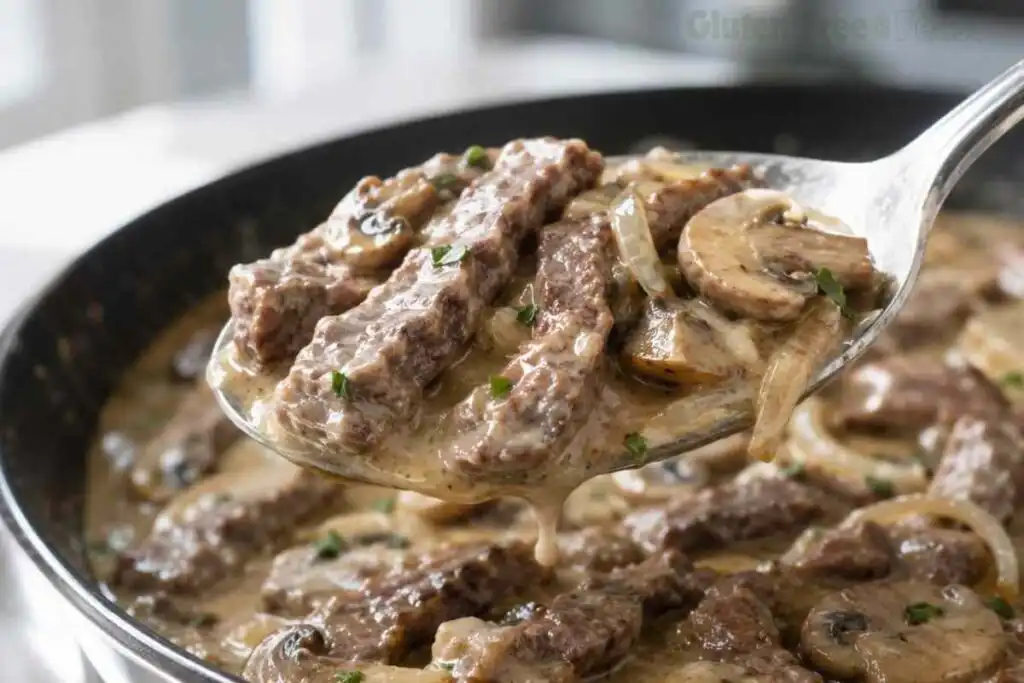
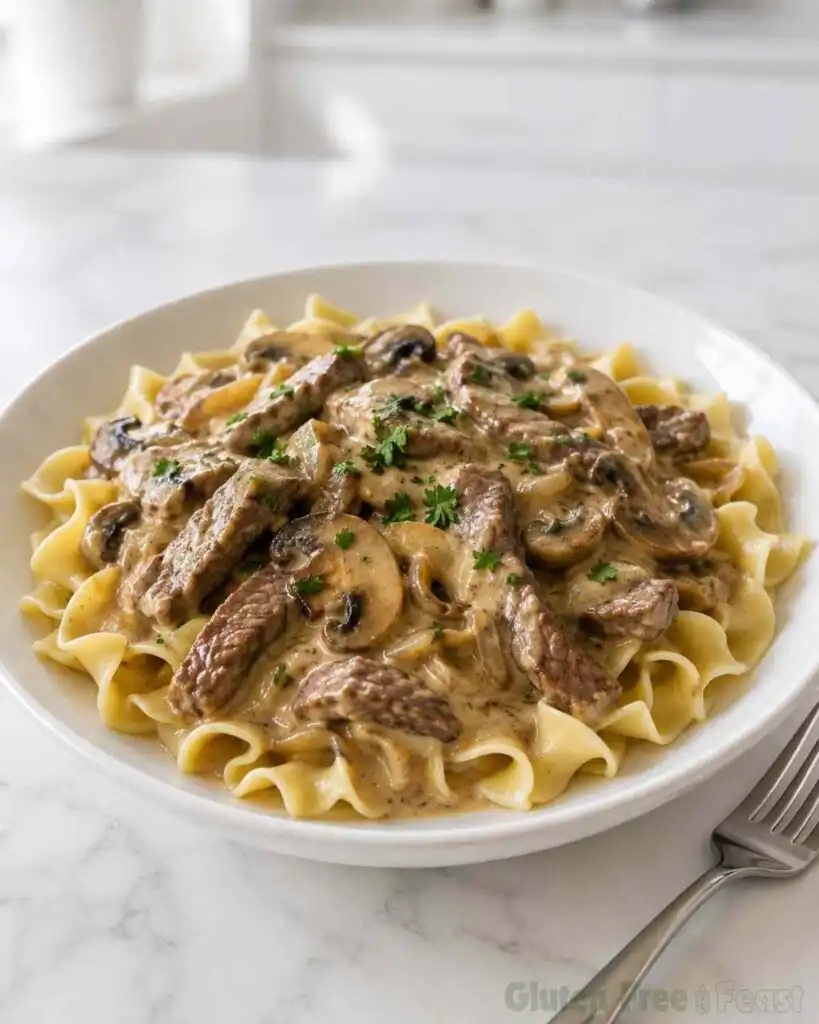
There is a particular sound this dish makes in the last few minutes of cooking. A low, steady simmer as the sour cream folds into the sauce and turns it silky. This gluten free beef stroganoff is the dinner I make for that exact smell filling the kitchen. Every certified …
There is a particular sound this dish makes in the last few minutes of cooking. A low, steady simmer as the sour cream folds into the sauce and turns it silky. This gluten free beef stroganoff is the dinner I make for that exact smell filling the kitchen. Every certified brand is named directly in the recipe, so there is no guessing at the store.
Testing this recipe in my dedicated gluten-free kitchen, I found one step matters more than any other. The order in which you add the sour cream. Add it too early, over heat that is still too high, and the sauce breaks into a grainy, separated mess instead of staying smooth.
Have you wondered exactly what makes traditional stroganoff unsafe for celiac disease? Or worried that a bottled Worcestershire sauce might be hiding gluten? Both of those problems get solved before you even turn on the stove.
Key takeaways
This gluten free beef stroganoff uses GFCO-certified King Arthur Measure for Measure flour, Bare Bones beef bone broth, Organicville Dijon mustard, and Green Valley Creamery sour cream, plus a homemade tamari-based Worcestershire swap since no certified bottled version currently exists on the market.
The sauce comes together in 40 minutes for 4 servings, with thin-sliced sirloin seared hot and fast in batches, then finished with sour cream stirred in off high heat to prevent curdling. The recipe includes a celiac safety note flagging every hidden-gluten risk ingredient, plus cross-contact guidance for shared cutting boards, wooden utensils, and pasta pots and strainers.
The key technique is keeping the pan off high heat before the sour cream goes in, which prevents the sauce from curdling. Nutrition per serving: 397 calories, 41g protein, 10g carbohydrates, and 21g fat, with 658mg sodium.
Prep Time: 15 mins · Cook Time: 25 mins · Total Time: 40 mins
Table of Contents
Why You Will Love This Gluten Free Beef Stroganoff
This gluten free beef stroganoff earns its place in the weeknight rotation for more than just flavor.
Every flagged ingredient has a named, certified brand: the flour, broth, mustard, and sour cream are all GFCO-certified, so you are not left guessing at the store.
No mystery Worcestershire sauce: since no Worcestershire on the market currently carries third-party GFCO certification, this recipe uses a quick homemade swap instead.
Ready in 40 minutes: sear, sauce, simmer. This is a genuine weeknight dinner, not a weekend project.
Rich and creamy without heaviness: tender beef, browned mushrooms, and a tangy sour cream sauce that coats every bite.
Built-in cross-contact guidance: specific notes for the exact equipment this recipe touches, not a generic disclaimer.
Freezer-friendly base, fresh finish: the beef and sauce reheat beautifully; the sour cream goes in fresh each time.
This gluten free beef stroganoff uses GFCO-certified flour, broth, and mustard, with a homemade Worcestershire swap for full celiac safety. Tender seared beef and mushrooms come together in a rich, tangy sour cream sauce in just 40 minutes.
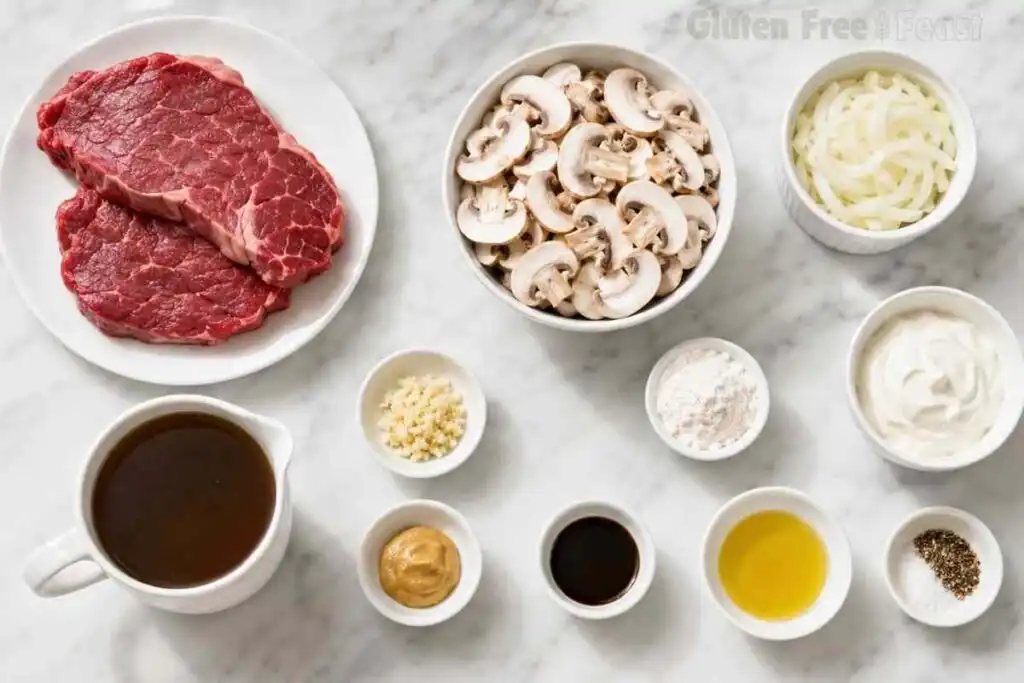
1tbsphomemade gluten free Worcestershire substitute1 tbsp tamari or coconut aminos + 1/2 tsp apple cider vinegar + a pinch of brown sugar, stirred together; no GFCO-certified bottled Worcestershire currently exists
2/3cupGreen Valley Creamery Lactose Free Sour Cream (GFCO-certified)
1tbspfresh parsley, choppedoptional garnish
Equipment
Large skillet
Whisk
Cutting board (dedicated gluten-free)
Method
Prep and Sear the Beef
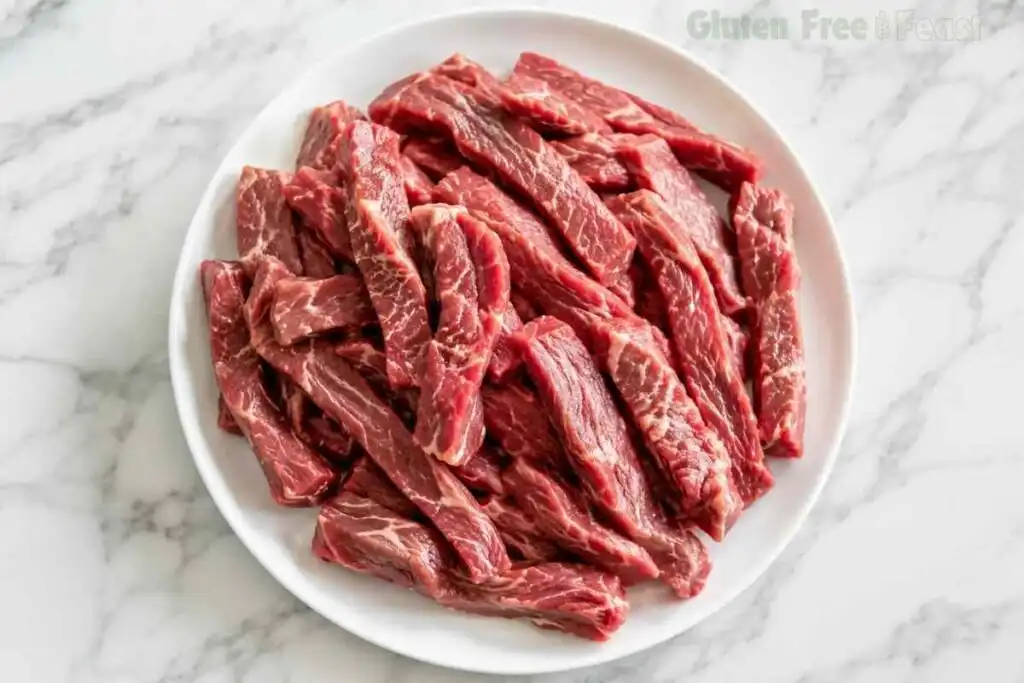
Freeze the sirloin for about 20 minutes before slicing thin against the grain.
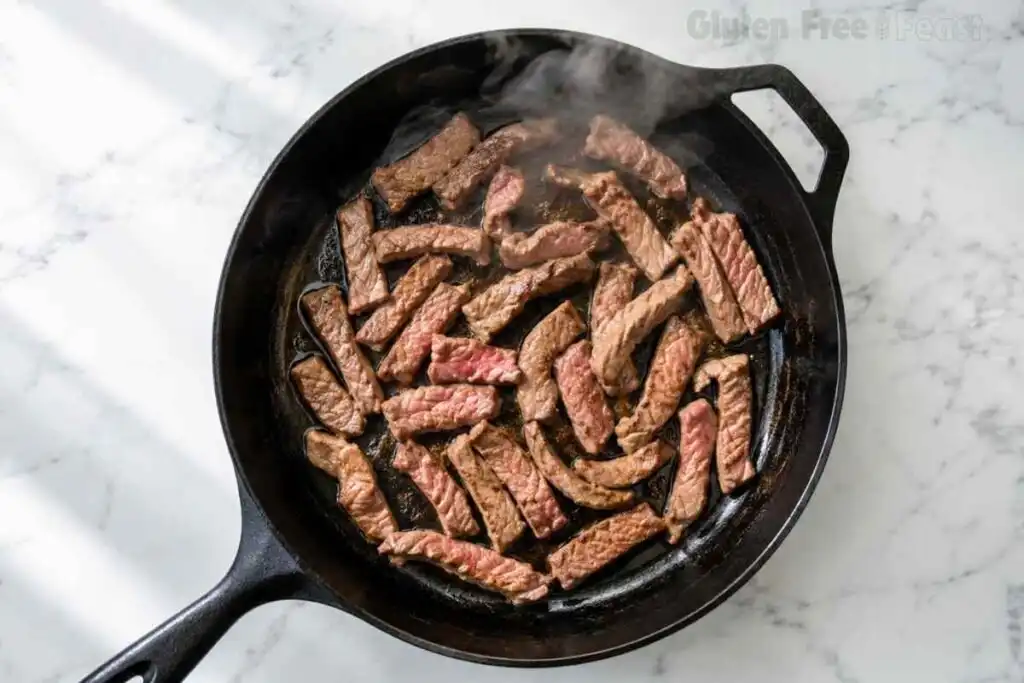
Heat 1 tablespoon of olive oil in a large skillet over high heat. Season the beef with salt and pepper, then sear in batches, 30 to 60 seconds per side, until browned. Remove and set aside.
Build the Sauce Base
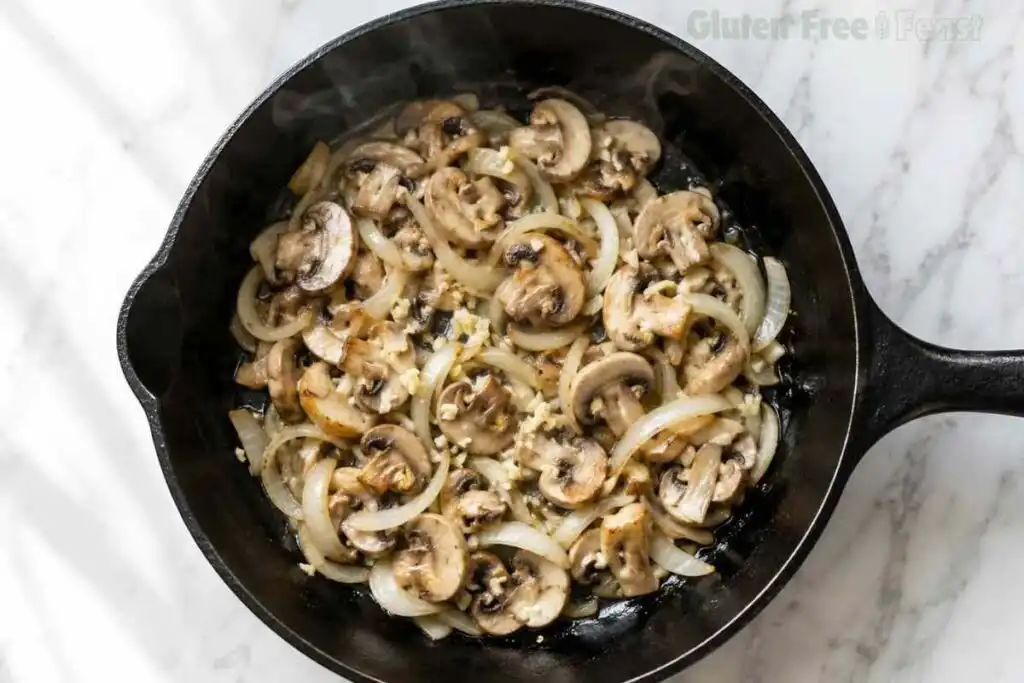
Reduce heat to medium. Add the remaining olive oil and onion, and cook 2 to 3 minutes until softened.
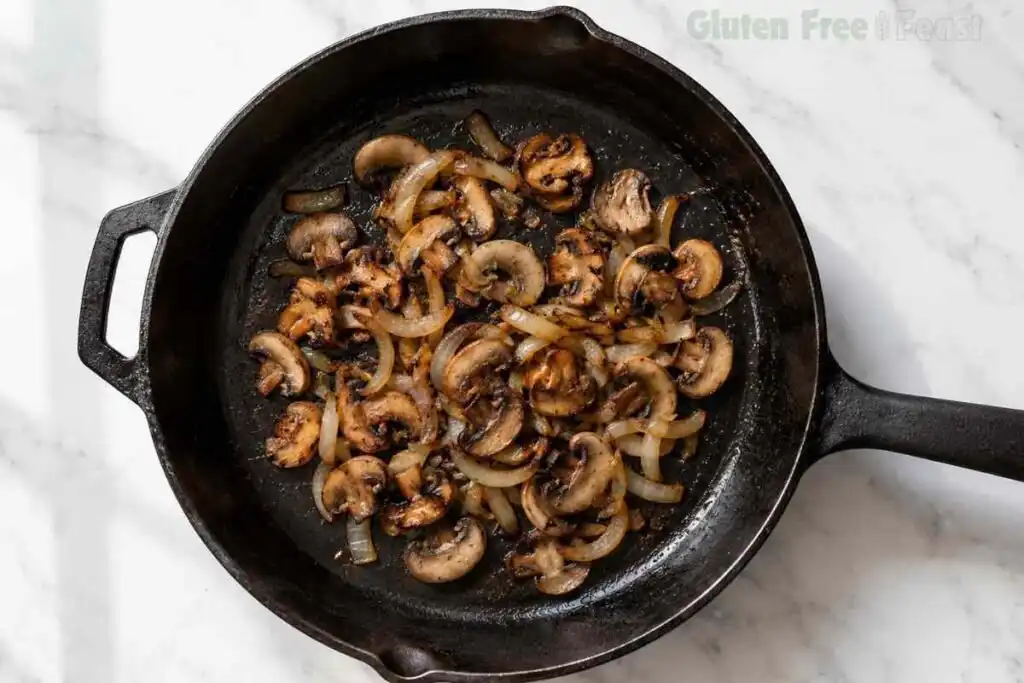
Stir in the garlic and mushrooms, and cook 5 to 7 minutes until the mushrooms release their moisture and begin to brown.
Sprinkle the certified gluten-free flour over the vegetables and stir constantly for 1 minute.
Add the Liquid and Simmer
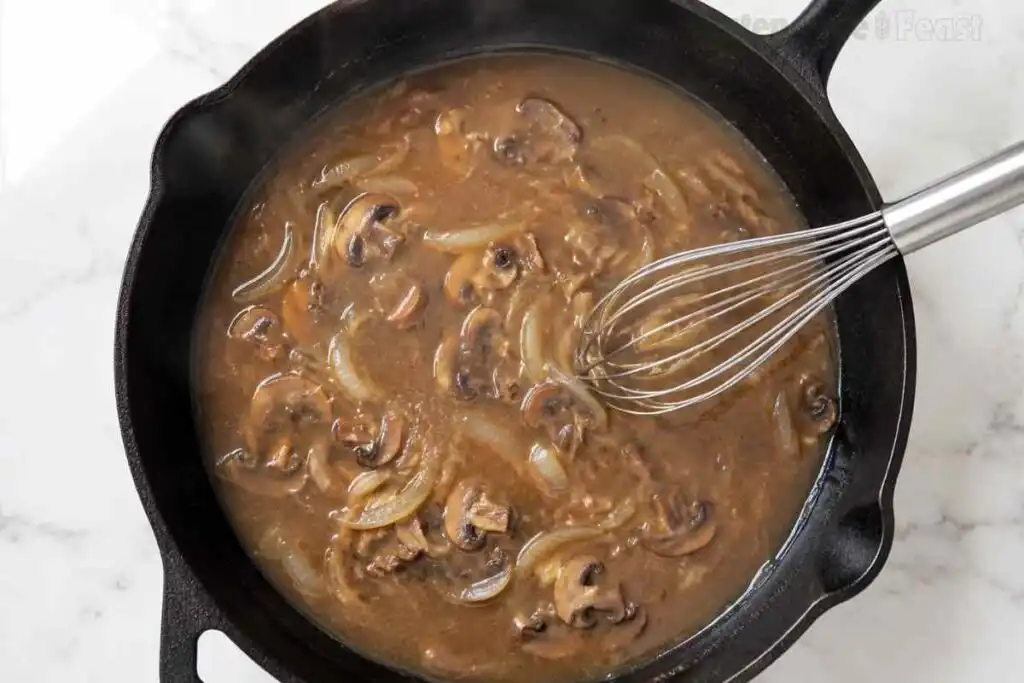
Gradually whisk in the certified gluten-free beef broth to prevent lumps. Add the Dijon mustard and the homemade Worcestershire substitute, then bring to a gentle simmer.
Cook about 5 minutes, until the sauce thickens slightly.
Finish with Sour Cream
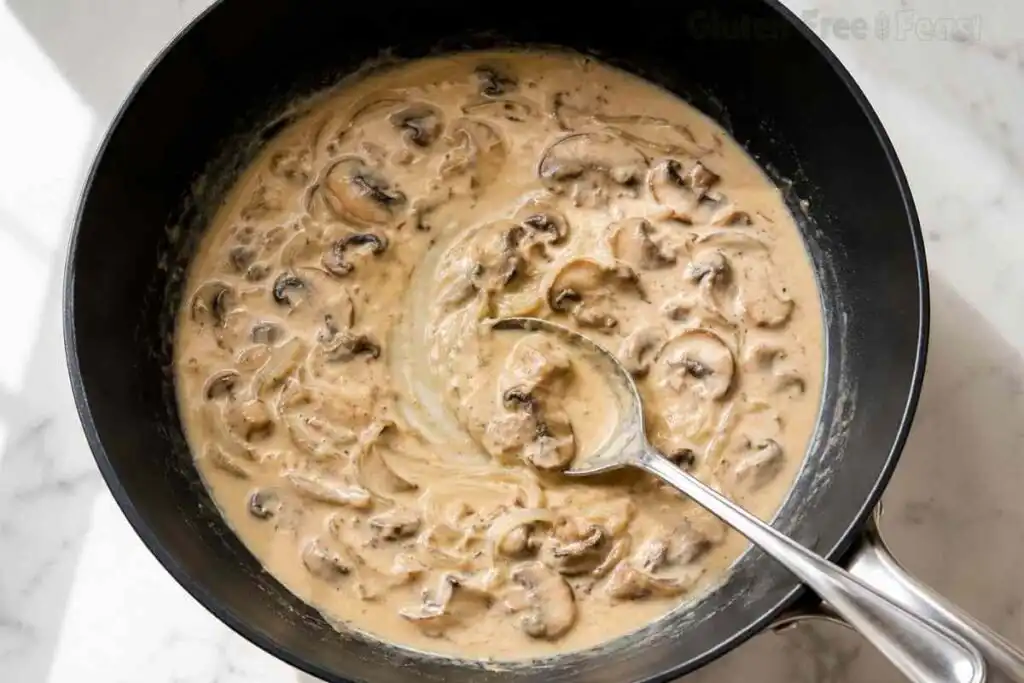
Reduce heat to low. Stir in the Green Valley Creamery sour cream until fully incorporated. Do not let the sauce boil.
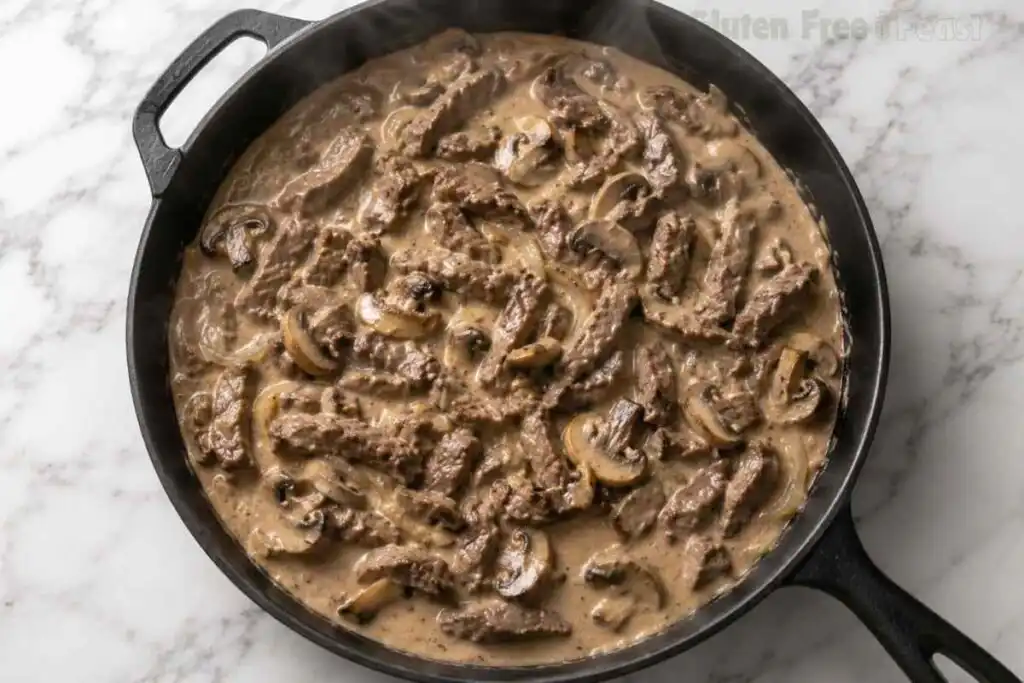
Return the beef and any accumulated juices to the pan, and simmer 2 to 3 minutes until heated through.
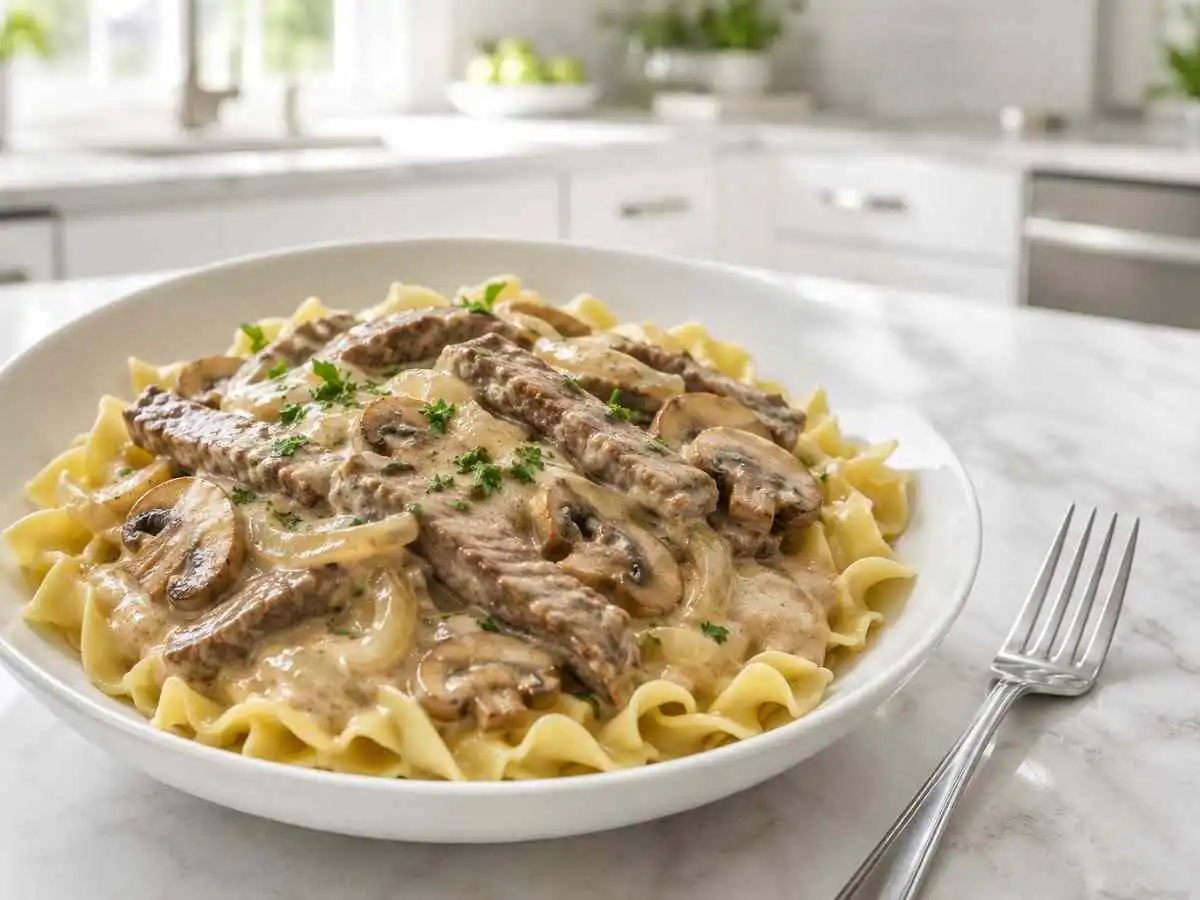
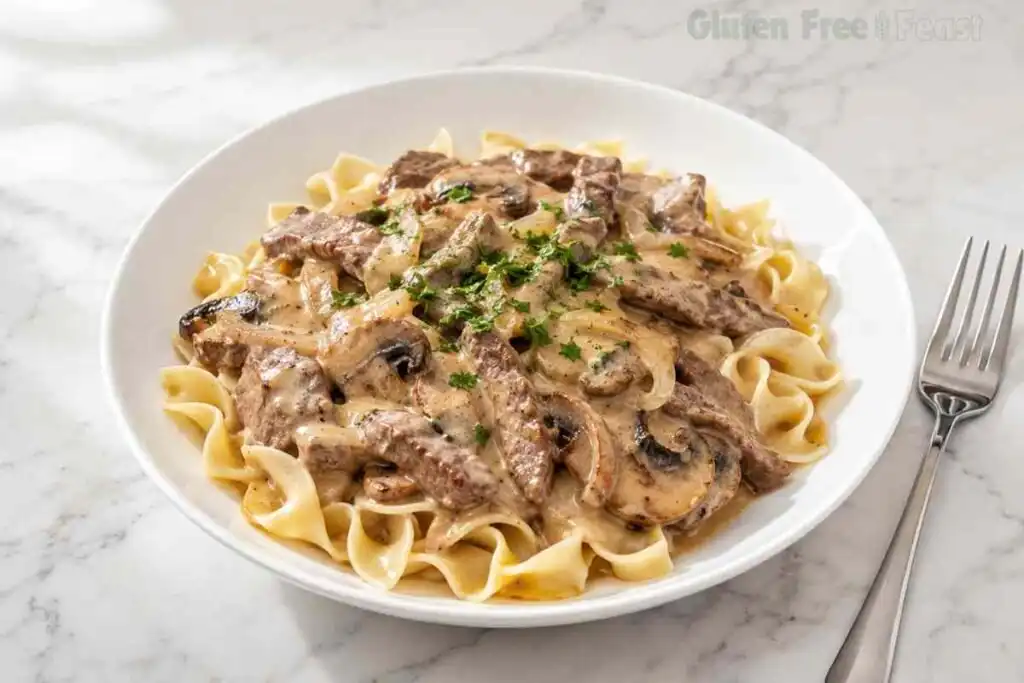
Taste and adjust seasoning. Garnish with parsley if using, and serve immediately over gluten-free noodles, mashed potatoes, or rice.
Celiac Safety Note: Please ensure all packaged ingredients carry a certified gluten-free label. For this recipe, check specifically: your gluten-free flour blend, beef broth, Dijon mustard, sour cream, and any store-bought Worcestershire substitute if used. Cross-contact at packaging facilities is a real risk for people with celiac disease.Make-ahead: Sear the beef and build the sauce through the simmer step up to a day ahead. Reheat gently and stir in the sour cream fresh just before serving.Storage: Refrigerate up to 3 days. Freezing after the sour cream is added is not recommended, as the sauce may separate once thawed.Substitutions: Plain Greek yogurt can replace the sour cream. Ground beef can replace sliced sirloin; brown 1 1/2 lbs, drain excess fat, then continue from the onion and mushroom step.
Gluten-Free Note
This recipe is designed to be gluten-free when prepared with certified gluten-free ingredients. Always check labels, as ingredient formulations and manufacturing practices can change. If you have celiac disease or a severe gluten allergy, verify that all ingredients are certified gluten-free and appropriate for your dietary needs.
⅔ cup Green Valley Creamery Lactose Free Sour Cream (GFCO-certified)
1 tbsp fresh parsley, chopped, for garnish (optional)
Ingredient Notes and Substitutions
Certified gluten-free all-purpose flour: King Arthur Gluten-Free Measure for Measure is the certified brand I use to thicken this sauce. A two-tablespoon dusting over the sauteed vegetables is enough to build body without turning the sauce pasty.
Certified gluten-free beef broth: Bare Bones Beef Bone Broth carries GFCO certification. That matters here, since broth is one of the most common places hidden gluten shows up. Many bouillon bases use wheat-derived fillers that never appear in an obvious ingredient name.
Certified gluten-free Dijon mustard: Organicville Organic Dijon Mustard is GFCO-certified. Standard Dijon is usually gluten-free by ingredients, but mustard is another product where certification closes the gap between “probably fine” and “verified safe.”
Worcestershire sauce, the homemade way: As of this writing, no Worcestershire sauce on the market carries third-party GFCO certification. Some brands are self-declared gluten-free but made in facilities that also handle wheat, which is a real cross-contact risk for celiac disease. In my kitchen, I skip the bottle entirely.
I stir together 1 tablespoon of tamari (or coconut aminos), ½ teaspoon apple cider vinegar, and a small pinch of brown sugar. It delivers the same salty, tangy depth without an unverified label.
Sour cream: Green Valley Creamery Lactose Free Sour Cream is GFCO-certified. It also happens to be lactose-free, so it works for readers managing both celiac disease and lactose sensitivity at once.
Beef: Sirloin gives the best balance of tenderness and price. Beef tenderloin works if you want to splurge; stew meat will turn out chewy in this quick-cook method.
Celiac Safety Note: Please ensure all packaged ingredients carry a certified gluten-free label. For this recipe, check specifically: your gluten-free flour blend, beef broth, Dijon mustard, sour cream, and any store-bought Worcestershire substitute if used. Cross-contact at packaging facilities is a real risk for people with celiac disease. Traditional stroganoff recipes typically rely on regular flour and malt-vinegar Worcestershire sauce as their two biggest hidden gluten sources.
When in doubt, look for the certified GF symbol on the package rather than relying on “gluten-free” marketing language alone.
How to Make Gluten Free Beef Stroganoff
Step 1: Prep and Sear the Beef
Freeze the sirloin for about 20 minutes before slicing. This firms the meat just enough to let you cut clean, thin strips instead of ragged pieces that tear as the knife drags through.
Heat 1 tablespoon of olive oil in a large skillet over high heat. Season the beef with salt and pepper, then sear in batches, 30 to 60 seconds per side, until browned but not cooked through. Remove and set aside.
Searing in batches matters here. Crowding the pan drops the temperature and steams the beef instead of browning it, which costs you flavor before the dish even gets started.
Step 2: Build the Sauce Base
Reduce the heat to medium. Add the remaining olive oil and the sliced onion, and cook for 2 to 3 minutes until softened. Stir in the garlic and mushrooms, and cook 5 to 7 minutes until the mushrooms release their moisture and begin to brown.
Sprinkle the certified gluten-free flour over the vegetables and stir constantly for 1 minute. This step coats every surface evenly and cooks out the raw flour taste before any liquid goes in.
Step 3: Add the Liquid and Simmer
Gradually whisk in the certified gluten-free beef broth, stirring as you pour to prevent lumps. Add the Dijon mustard and the homemade Worcestershire substitute, then bring the mixture to a gentle simmer.
Let it cook for about 5 minutes, until the sauce thickens slightly and coats the back of a spoon.
Step 4: Finish with Sour Cream
Reduce the heat to low. This is the step that determines whether your sauce stays silky or breaks. Sour cream proteins denature and curdle above a certain temperature, which is why the sauce needs to be gentle, not simmering, before it goes in.
Stir in the sour cream until fully incorporated, then return the beef and any accumulated juices to the pan. Simmer for 2 to 3 minutes, just until everything is heated through.
Taste and adjust the seasoning. Garnish with parsley if using, then serve immediately over gluten-free noodles, mashed potatoes, or rice.
Expert Tips for Best Results
These tips make the difference between an average pan sauce and a gluten free beef stroganoff worth repeating.
Freeze the beef for exactly 20 minutes. Any longer and the outside starts to freeze solid, which makes it harder to slice evenly.
Sear hot and fast. The goal is color on the outside, not a fully cooked interior. The beef finishes cooking later, off the heat.
Take the pan off high heat before the sour cream goes in. This is the single most common way this dish goes wrong. Low and slow prevents curdling every time.
Whisk the broth in gradually. Pouring it all in at once around the flour-coated vegetables is the fastest way to end up with lumps.
Slice the beef against the grain. This shortens the muscle fibers and makes every bite easier to chew.
Use a dedicated wooden spoon or a silicone one. Wooden utensils used with gluten-containing sauces in the past can hold gluten in surface grooves that washing does not fully remove.
Taste before adding extra salt. Beef broth and mustard both carry sodium, and the reduction concentrates it further as the sauce thickens.
Substitutions and Variations
This gluten free beef stroganoff adapts well to a few common dietary swaps.
Greek yogurt swap: Substitute plain Greek yogurt for the sour cream for a lighter, higher-protein sauce. The tang is similar, though the texture is slightly thinner.
Ground beef version: Brown 1½ pounds of ground beef first, drain the excess fat, then continue the recipe from the onion and mushroom step. Skip the freezing and slicing steps entirely.
Dairy-free sauce: A full-fat coconut cream or a store-bought dairy-free sour cream can replace the Green Valley Creamery sour cream. The flavor profile shifts slightly sweeter.
Noodle-free serving: Spoon the finished stroganoff over mashed potatoes or steamed rice instead of pasta. Both are naturally gluten-free with no substitution needed.
Homemade noodles: Want to make your own pasta instead of buying a packaged brand? GFF’s homemade gluten free pasta pairs well with this sauce. It lets you control every ingredient from scratch.
What to Serve With Gluten Free Beef Stroganoff
This gluten free beef stroganoff is rich enough to carry a meal on its own, but a few sides round it out nicely.
Warm biscuits: A soft, buttery side is perfect for soaking up extra sauce. GFF’s gluten free biscuits are a favorite pairing in my house.
A cold pasta side: For a contrast in temperature and texture, GFF’s gluten free pasta salad works well as a make-ahead side dish for the same meal.
Simple steamed vegetables: Green beans or broccoli add color and a little crunch against the creamy sauce.
A crisp green salad: Something acidic, like a vinaigrette-dressed salad, balances the richness of the sour cream.
Something sweet after: If you want to round out the meal with dessert, browse GFF’s gluten free dessert recipes for options that pair well with a hearty dinner.
Storage and Make-Ahead Instructions
This gluten free beef stroganoff stores and reheats well, with one exception noted below.
Refrigerator: Store leftovers in an airtight container in the refrigerator for up to 3 days. Reheat gently on the stovetop over low heat, adding a splash of broth if the sauce has thickened too much.
Freezer: I do not recommend freezing this dish after the sour cream is added. Dairy-based sauces tend to separate and turn grainy once thawed.
Make-ahead tip: You can sear the beef and build the sauce base through Step 3 up to a day ahead, then refrigerate. Reheat gently and stir in the sour cream fresh just before serving.
Reheating: Always reheat over low to medium-low heat. High heat risks curdling the sour cream a second time, even after the dish has already been assembled once.
Why Trust This Recipe
I develop recipes the same way I approached lab work. Documented testing, controlled variables, and results that hold up in any kitchen, not just mine.
This recipe has been tested in my dedicated gluten-free kitchen. I have noted what fails, what works, and why, so you are not just following steps but understanding the process.
What that means for you:
Multiple test batches before publishing
Science-based notes on key steps throughout
Honest substitution guidance, not guesswork
Safe for celiac disease, with cross-contact taken seriously at every step
Frequently Asked Questions
What makes stroganoff not gluten free?
This is the exact question that shapes how this gluten free beef stroganoff is built. Traditional stroganoff typically uses regular all-purpose flour as a thickener and often relies on Worcestershire sauce made with malt vinegar, which is derived from barley. Both are common hidden gluten sources in what is otherwise a simple dish of beef, mushrooms, and sour cream.
What are common stroganoff mistakes?
The most frequent mistake is boiling the sauce after the sour cream goes in, which causes curdling and a grainy texture. Overcrowding the pan while searing is another common issue, since it steams the beef instead of browning it. Using an unverified “gluten-free” flour or broth without checking for certification is a celiac-specific mistake worth avoiding.
What’s the secret to a flavorful stroganoff?
Searing the beef hard and fast for color, without fully cooking it through, builds a flavorful base in the fond left behind in the pan. Finishing the sauce with a touch of acid from the mustard and dairy added off direct heat rounds out the flavor without dulling it.
What is the main flavor in stroganoff?
The dish has a savory, tangy, umami-rich profile built from browned beef, earthy mushrooms, and a mustard-tinged sour cream sauce. The tang from the sour cream and mustard is what sets it apart from a plain beef gravy.
What is the best seasoning for stroganoff?
A simple base of salt and black pepper is usually enough, since the broth, mustard, and Worcestershire substitute already carry plenty of flavor. Some cooks add smoked paprika or a pinch of dried thyme for extra depth, though this recipe keeps the seasoning classic.
Why do some stroganoff recipes use paprika?
Paprika shows up in some regional and modern variations of stroganoff as a way to add warmth and a subtle smokiness to the sauce. This recipe keeps the classic, paprika-free flavor profile, but a half teaspoon of smoked paprika is a reasonable variation if you want to try it.
Final Thoughts
This gluten free beef stroganoff is the kind of dinner that feels like it took more effort than it did. Every certified ingredient is named so you never have to second-guess the ingredient list, and the technique is simple enough for a weeknight. Make a batch this week, and let me know in the comments how the homemade Worcestershire swap works in your kitchen.
The recipes on this site come from a scientist who went gluten-free and refused to settle for dense, gummy results. BSc in Molecular Biology & Genetics. Former laboratory analyst. Full-time founder of Gluten Free Feast.
Every recipe is mine, developed, tested and written by me.
My Commitment: Every recipe on Gluten Free Feast is created with gluten-free ingredients and thoroughly tested. Because brands and manufacturing practices can change, always verify that your ingredients are certified gluten-free if you have celiac disease.
Molecular Biologist · Laboratory Analyst · GF Recipe Developer 🎓 BSc Molecular Biology & Genetics — Boğaziçi University, Istanbul, Turkey Former Biological Laboratory Analyst Founder & Recipe Developer — Gluten Free Feast Claire's scientific background means every recipe on this site is built on a genuine understanding of food science — from why gluten-free flours absorb moisture differently, to how specific binding agents replicate gluten's structural role in baking. Read Claire's full story →