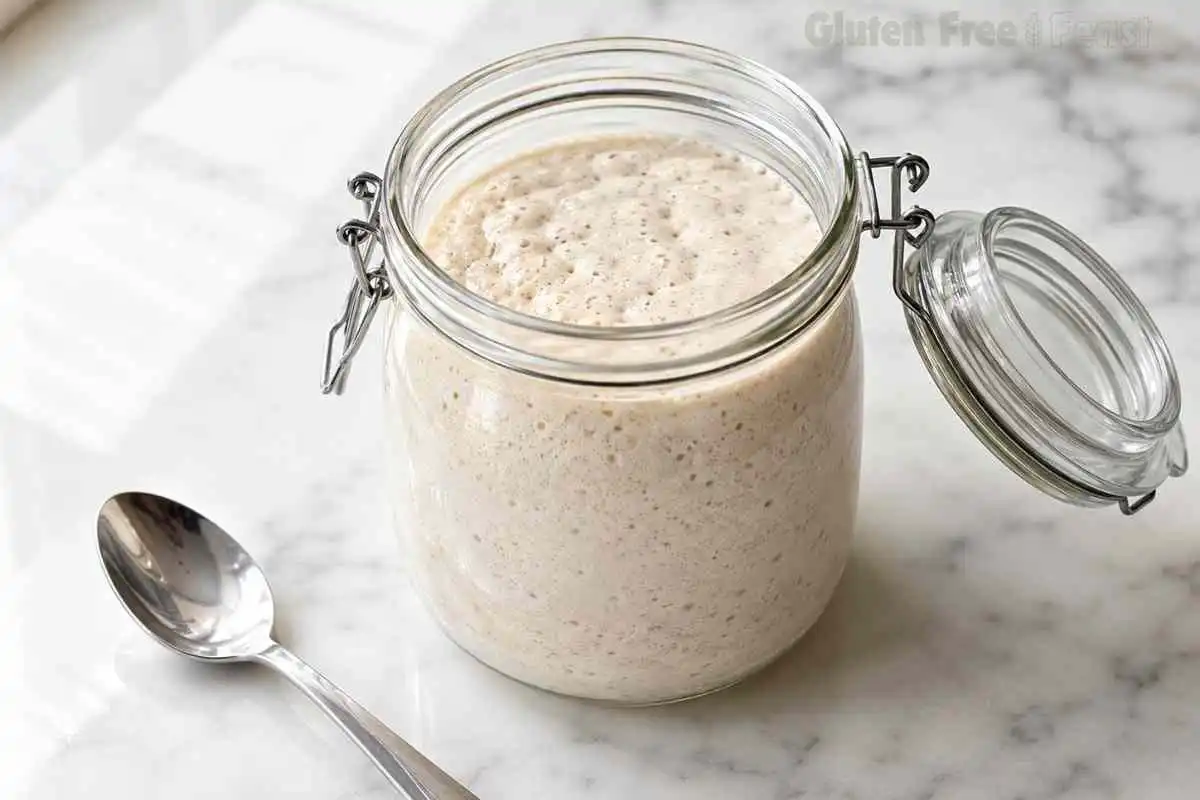
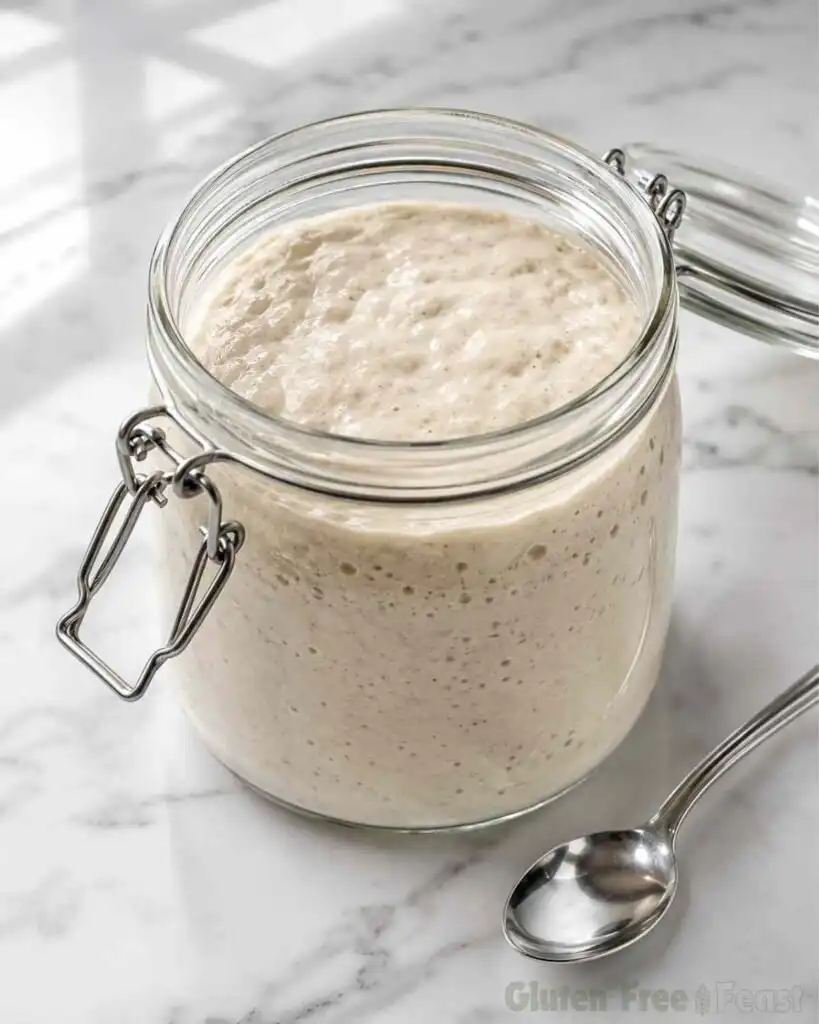
A gluten free sourdough starter smells different on the morning it finally wakes up. Instead of the flat, floury scent of Day 1, you get something sharp and a little sour, like yogurt crossed with green apples. That smell means the wild yeast and bacteria in your flour have found their rhythm. Your gluten free sourdough starter is now ready to leaven bread, pancakes, and pizza dough without a single packet of commercial yeast.
I built this method using King Arthur Gluten-Free Measure for Measure Flour, which is certified gluten-free by GFCO. That means every gram of this gluten free sourdough starter is safe for celiac disease from day one. Six rounds of testing in my dedicated gluten-free kitchen taught me something important. Gluten-free starters ferment faster than wheat starters and are far less forgiving about inconsistent feeding.
Maybe you have tried a gluten free sourdough starter before. Maybe it stalled, separated into liquid and paste, or grew a suspicious pink tinge. This guide is built to fix exactly that. You get gram weights for every day, a real troubleshooting section, and a cross-contact checklist most starter recipes skip entirely.
Key takeaways
A gluten free sourdough starter needs just two ingredients: certified gluten-free flour (King Arthur Gluten-Free Measure for Measure, GFCO-certified) and filtered water, fed once every 24 hours for 5 to 10 days. It is ready to bake with once it doubles in size within 4 to 8 hours of a feeding and passes the float test. Hooch on top is normal and simply means the starter is hungry, while true mold appears fuzzy and colored and means the culture must be discarded. Whole-grain flours like brown rice or sorghum tend to activate a day or two faster than blended flours. Filtered water helps because chlorine in tap water can slow down the wild yeast and bacteria doing the work. Store an active starter at room temperature and feed it daily, or refrigerate it with a loose lid and feed weekly once it is mature.
Prep Time: 20 mins · Fermentation: 7 days · Total time: 7 days, 20 mins ·Yield: 1¼ cups starter
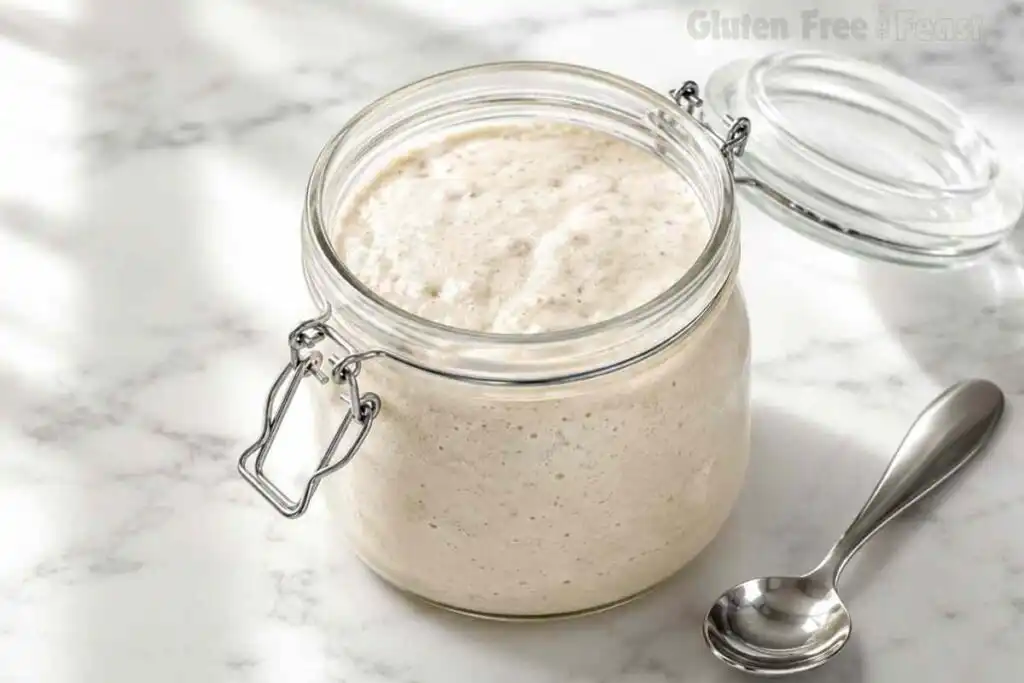
Table of Contents
Why You Will Love This Gluten Free Sourdough Starter
- Named certified GF flour, not a mystery blend: King Arthur Gluten-Free Measure for Measure Flour is GFCO-certified, so you know exactly what is feeding your culture.
- A concrete visual and aroma checklist: no vague “ready when it’s ready” language. You will know precisely what active looks, smells, and feels like.
- A real troubleshooting section: mold versus hooch versus normal discoloration, explained so you never have to guess.
- Celiac-safe by design: every step includes cross-contact guidance for jars, utensils, and shared kitchen spaces.
- Only two ingredients: certified gluten-free flour and filtered water, repeated on a simple schedule.
- Fully self-contained: everything you need for this gluten free sourdough starter lives on this one page.

Gluten Free Sourdough Starter
Ingredients
Equipment
Method
- In a clean glass or stoneware jar, combine 1 cup (120g) of certified gluten-free flour with 1/2 cup plus 1 tablespoon (128g) of cool filtered water. Stir until no dry flour remains and the mixture looks like a thick, smooth paste.
- Cover loosely with a lid, cloth, or plastic wrap that is not airtight, since the culture needs to breathe. Let it rest at room temperature for 24 hours.
- Discard half of the mixture, about 1/2 cup. Feed the remaining half with another 1 cup (120g) of flour and 1/2 cup plus 1 tablespoon (128g) of filtered water. Stir until smooth.
- Cover loosely again and rest another 24 hours at room temperature, ideally between 70 and 80 degrees Fahrenheit.
- Repeat the day 2 process once every 24 hours: discard half, feed with the same 120g flour and 128g water, stir, cover, and rest. The starter should start doubling in size within 4 to 8 hours of a feeding sometime between day 5 and day 10.
- Run the float test before baking with it: drop a small spoonful of starter into a cup of room-temperature water. If it floats, it is ready to use. If it sinks, feed it again and test in a few hours.
Nutrition
Notes
Gluten-Free Note
Tried this recipe?
Let us know how it was!Ingredients
For the Starter (Same Amounts Every Feeding)
- 1 cup (120g) King Arthur Gluten-Free Measure for Measure Flour, certified gluten-free by GFCO
- ½ cup + 1 tablespoon (128g) cool filtered water
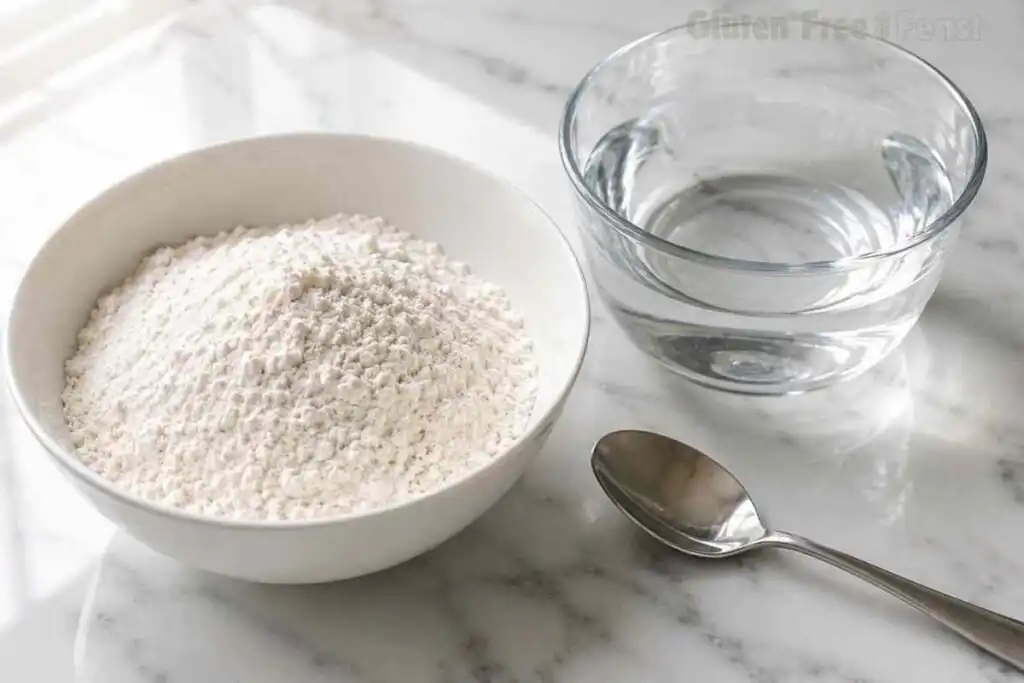
Ingredient Notes and Substitutions
King Arthur Gluten-Free Measure for Measure Flour: This blend is certified gluten-free by GFCO. That matters for a starter, since the culture lives in that flour for a week or more. In my testing, this blend produced a stable, predictable rise by day 5 to 7. If you want to compare it against a full loaf, my gluten free bread flour notes cover how this blend performs in a finished dough.
Whole-grain flour option: Brown rice flour or sorghum flour, both certified gluten-free, work as substitutes. They tend to show visible bubbling a day or two sooner than a blended flour. Whole grains retain more of their own natural yeasts and nutrients, which gives the culture a head start. The tradeoff is a slightly more sour, more assertive starter once mature.
Filtered water: This is a technique note, not a celiac-safety requirement. Chlorine and chloramine in tap water can suppress the wild yeast and bacteria you are cultivating. Filtered or dechlorinated water gives your gluten free sourdough starter a more even start. Tap water that sits out uncovered for 24 hours also works if filtered water is not available.
Celiac Safety Note: Please ensure your flour carries a certified gluten-free label. For this recipe, check specifically: your GF flour blend (King Arthur GF Measure for Measure or a substitute brown rice or sorghum flour). Cross-contact at packaging facilities is a real risk for people with celiac disease. Look for the certified GF symbol on the bag rather than a general “gluten-free” marketing claim alone.
How to Make Gluten Free Sourdough Starter
Step 1: Day 1, Mix and Rest
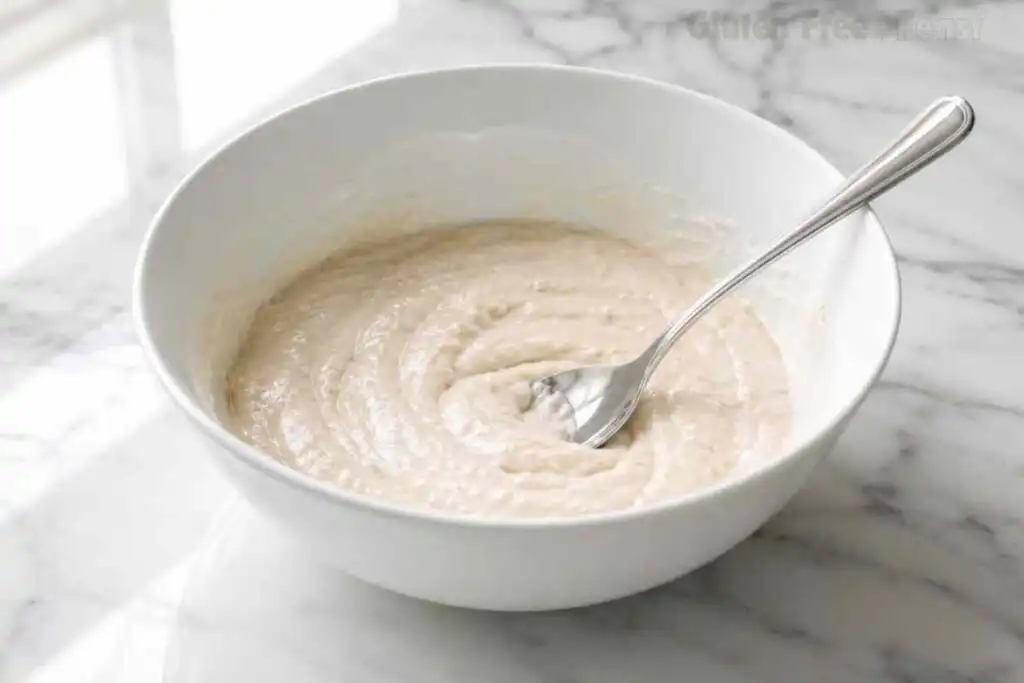
In a clean glass or stoneware jar, combine 1 cup (120g) of certified gluten-free flour with ½ cup plus 1 tablespoon (128g) of cool filtered water. Stir until no dry flour remains. The mixture should look like a thick, smooth paste.
Cover loosely with a lid, cloth, or plastic wrap that is not airtight, since the culture needs to breathe. Let it rest at room temperature for 24 hours. Nothing dramatic happens on day one, and that is completely normal.
Step 2: Day 2, First Feeding
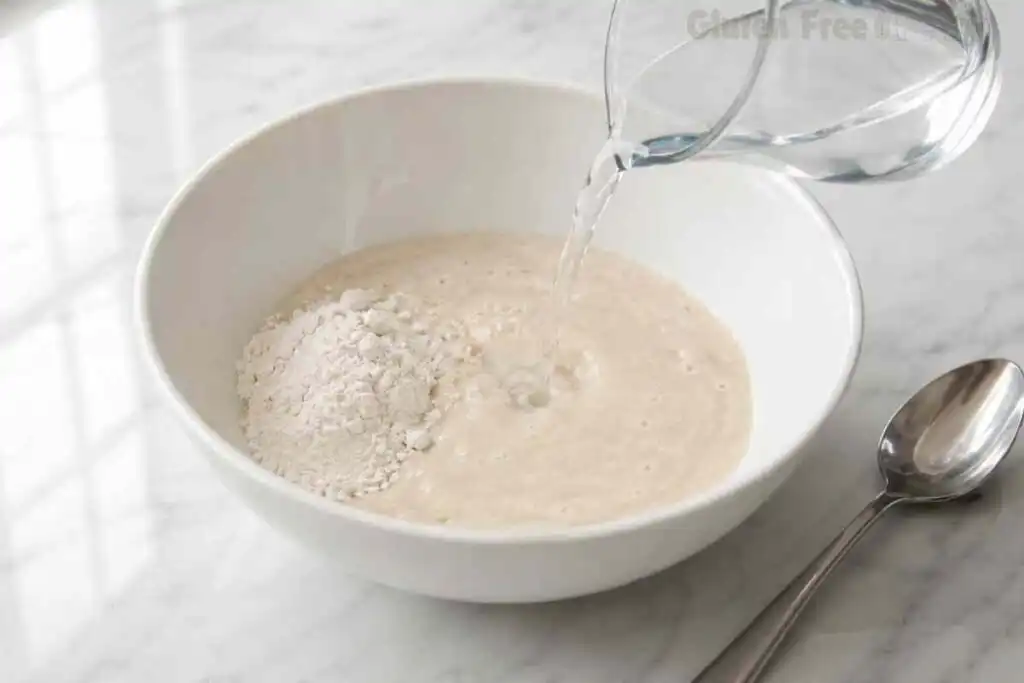
Discard half of the mixture, about ½ cup. This step feels wasteful the first time, but it keeps the ratio of flour to existing culture balanced. That balance is what keeps the yeast from running out of food. Feed the remaining half with another 1 cup (120g) of flour and ½ cup plus 1 tablespoon (128g) of filtered water.
Stir until smooth, cover loosely again, and rest another 24 hours. Aim for a room temperature between 70 and 80 degrees Fahrenheit.
Step 3: Days 3 Through 10, the Gluten Free Sourdough Starter Feeding Cycle
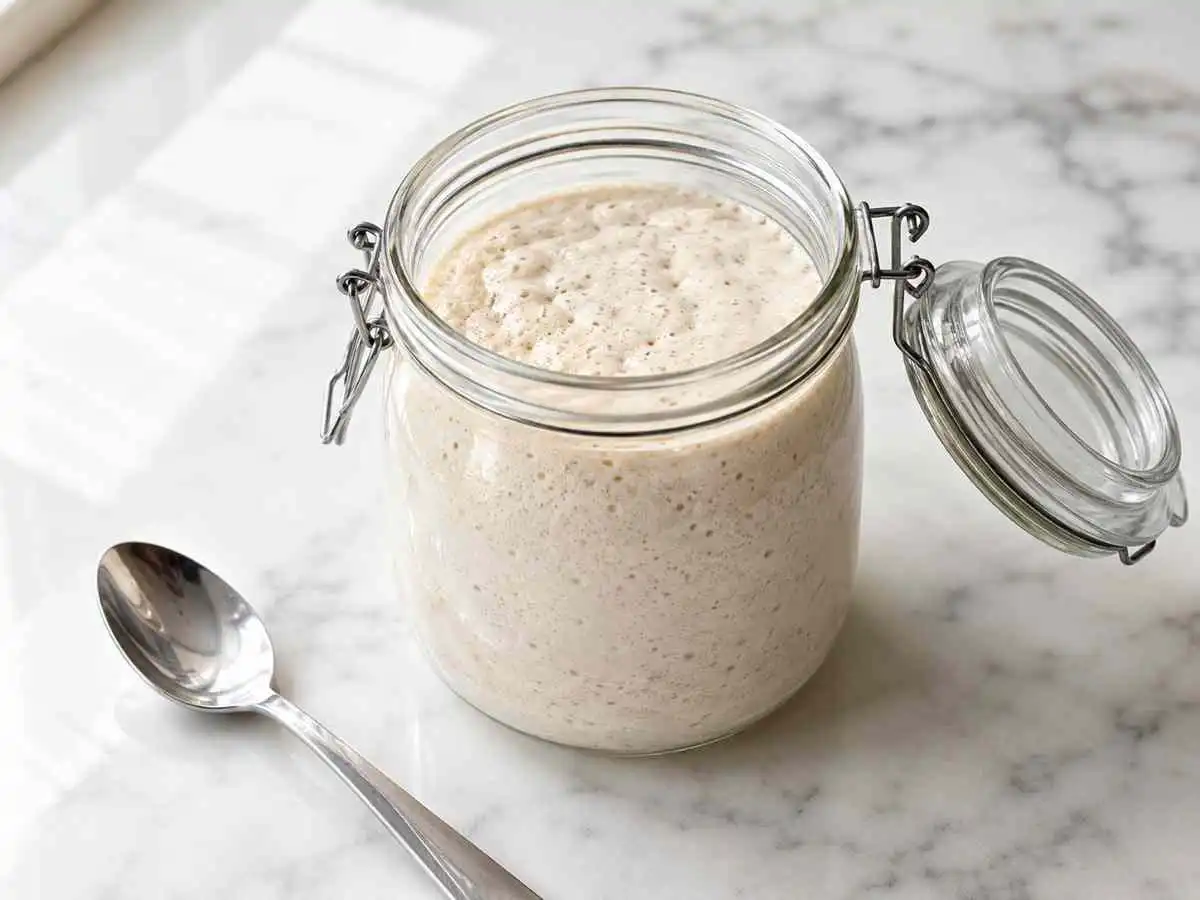
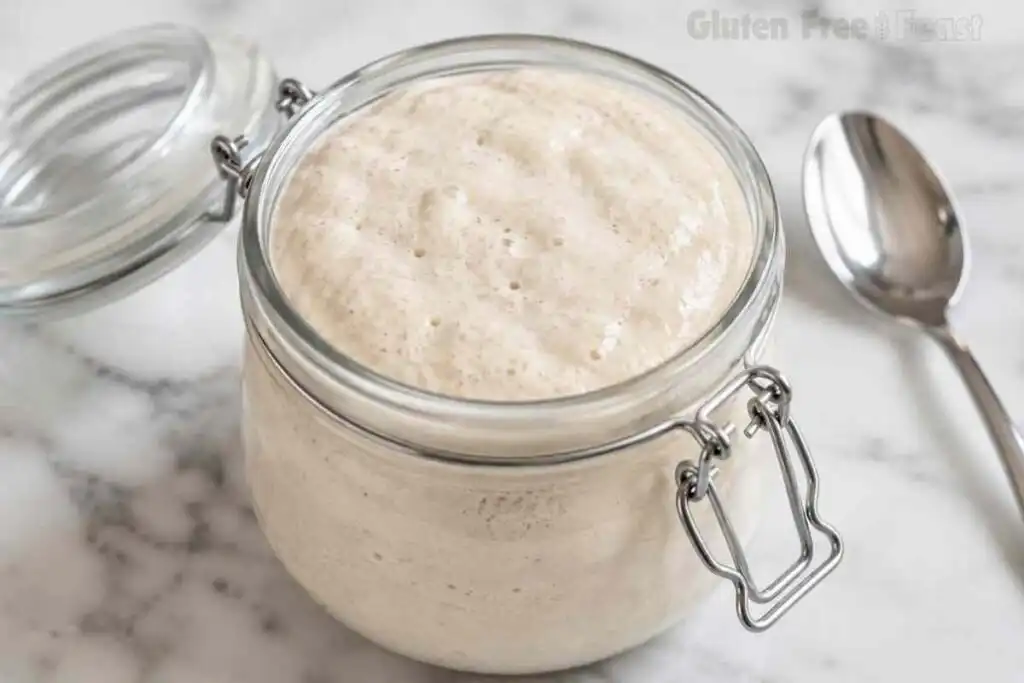
Repeat the day 2 process once every 24 hours: discard half, feed with the same 120g flour and 128g water, stir, cover, and rest. Somewhere between day 5 and day 10, your gluten free sourdough starter should start doubling within 4 to 8 hours of a feeding. You should also see small, visible bubbles throughout the culture. The exact timeline depends mostly on your kitchen’s temperature.
Whole-grain flour versions often show this activity by day 4 or 5. Blended flours like King Arthur GF Measure for Measure sometimes take the full 7 to 10 days. That slower timeline is still a success, not a failure.
Step 4: Confirm Your Gluten Free Sourdough Starter Is Active
Before baking with it, run the float test: drop a small spoonful of starter into a cup of room-temperature water. If it floats, the culture has enough trapped gas to leaven bread. If it sinks, give it one more feeding and test again in a few hours.
Expert Tips for Best Results
- Feed at the same time every day. Gluten-free starters ferment faster than wheat starters and tolerate a skipped feeding poorly. Set a phone reminder if you tend to forget.
- Weigh your flour and water. Volume measurements for gluten-free flour blends vary by brand and by how tightly the flour is packed. Gram weights keep the hydration ratio of your gluten free sourdough starter consistent every day.
- Use a clear jar. Glass lets you see bubble activity and rise height without opening the lid. This keeps the culture at a stable temperature.
- Mark the starting level with a rubber band. This makes it easy to see how much your starter has risen since the last feeding, instead of guessing.
- Keep it warm, not hot. A spot near 75 degrees Fahrenheit, like the top of the refrigerator, speeds fermentation nicely. Above 90 degrees Fahrenheit can kill the culture.
- Never use a wooden utensil that has touched wheat flour. Wood is porous and holds gluten in its grain even after washing, a common cross-contact risk. Keep a dedicated gluten-free spoon just for this jar.
Troubleshooting Common Gluten Free Sourdough Starter Problems
Hooch (a layer of dark liquid on top): This is normal and simply means the starter is hungry. Pour it off or stir it back in, then feed as usual. It is not mold and does not mean the culture has failed.
Mold: True mold appears fuzzy and comes in pink, orange, black, or green spots. It often carries a distinctly unpleasant smell. If you see actual fuzz or unusual coloring beyond a thin gray or brownish liquid, discard the starter. Start over in a freshly washed jar.
Slow or no activity by day 10: Do not discard the culture. Continue the daily feeding schedule as written. Cooler kitchens, chlorinated water, or an inconsistent schedule are the most common causes, and most starters recover within a few more consistent days.
Runny, soup-like texture: Your ratio of water to flour is likely off. Your flour blend may also absorb less liquid than King Arthur GF Measure for Measure. Reduce the water slightly at your next feeding until the texture returns to a thick, spoonable paste.
Substitutions and Variations
Brown rice or sorghum flour version: Substitute the King Arthur blend 1:1 by weight with certified gluten-free brown rice flour or sorghum flour. The result activates a little faster and tastes noticeably more sour.
UK and non-US availability: If King Arthur’s blend is not sold in your region, look for a certified gluten-free all-purpose blend from a local brand. Straight buckwheat or brown rice flour also ferments reliably.
Smaller batch: Halve every measurement (60g flour, 64g water) if you want to waste less flour. This is useful while you are still learning your kitchen’s fermentation speed. Once the starter is active, scale back up before your first bake.
Once your gluten free sourdough starter is active, it becomes the base for other bakes on this site. That includes gluten free pizza dough, which benefits from the extra depth of flavor a mature starter provides.
What to Bake With Your Gluten Free Sourdough Starter
A healthy starter produces discard every single day, and that discard is too good to throw away. Here is where mine goes most often.
- Pancakes: Unfed discard adds a pleasant tang to a basic batter. My gluten free pancakes recipe works well with up to a cup of discard folded in.
- Quick breads: Discard blends seamlessly into gluten free banana bread batter without changing the texture. It is a great way to use up discard you would otherwise toss.
- Muffins: A few tablespoons of discard stirred into gluten free blueberry muffins batter adds moisture and a subtle tang.
- Full sourdough loaves: Once your starter is reliably doubling, it is ready to leaven a full loaf of gluten free sourdough bread. That loaf is the real payoff for the whole process.
Storage and Make-Ahead Instructions
Daily use (counter): If you plan to bake with your gluten free sourdough starter every day or two, keep it at room temperature. Feed it every 24 hours on the schedule above. Consistency matters more here than for a wheat-based starter.
Less frequent baking (refrigerator): Once mature, store the starter in the refrigerator with a loose-fitting lid. Feed it once a week instead of daily. Let it come to room temperature and show bubbling activity again before baking with it.
If neglected for more than 10 days: Do not throw it out. Resume the daily feeding schedule at room temperature. Most starters bounce back within a few days as long as no true mold has developed.
Traveling or pausing baking: Feed the starter, then refrigerate it and check in weekly. A dormant starter can survive for months in the refrigerator with occasional feedings.
Why Trust This Recipe
With a background in laboratory science, I develop recipes the same way I approached lab work. I rely on documented testing, controlled variables, and results that hold up in any home kitchen, not just mine.
This gluten free sourdough starter method was tested across six separate batches in my dedicated gluten-free kitchen. I tracked activity day by day, so the timeline above reflects what actually happens, not a best-case guess.
What that means for you:
- Multiple test batches before publishing, tracked day by day
- Science-based notes on hydration ratio and flour choice throughout
- Honest troubleshooting guidance, not guesswork
- Safe for celiac disease, with cross-contact taken seriously at every step
Frequently Asked Questions
Is gluten free sourdough starter possible?
Yes. A mixture of certified gluten-free flour and water can capture wild yeast and naturally occurring bacteria just as well as a wheat-based starter. Gluten-free starters often ferment faster and need closer, more consistent monitoring to stay healthy.
What is the best flour for gluten free sourdough starter?
A GFCO-certified blend like King Arthur Gluten-Free Measure for Measure Flour works well. A whole-grain flour such as certified gluten-free brown rice or sorghum flour also works well. Whole grains tend to show visible activity a little sooner, since they retain more of their natural yeasts and nutrients.
What are common problems with gluten free sourdough starter?
The most frequent issues are hooch, slow activity in cooler kitchens, and a runny texture from too much water. Hooch is a harmless liquid layer that simply signals hunger. True mold, which appears fuzzy and colored, is rare, but it does mean the starter should be discarded and restarted.
How do you make gluten free sourdough starter outside the US?
The process is identical everywhere. If King Arthur’s certified gluten-free blend is not available in your country, substitute a locally certified gluten-free all-purpose blend. Straight buckwheat or brown rice flour also ferments reliably.
Is gluten free sourdough still healthy?
Fermentation offers some digestive benefits regardless of the flour used. Gluten-free sourdough does not carry the same reduced-gluten claims sometimes made about traditional wheat sourdough, since there is no gluten present to begin with. For someone with celiac disease, the main benefit is a genuinely safe, homemade alternative to store-bought gluten-free bread.
What are common mistakes when making gluten free sourdough starter?
Using flour that is not certified gluten-free is the most serious mistake. Feeding on an inconsistent schedule and using chlorinated tap water are the next two most common. Each one slows fermentation or introduces a celiac-safety risk that is easy to avoid with the right ingredients and routine.
Final Thoughts
A gluten free sourdough starter takes patience more than skill. The difference between a stalled jar of paste and a bubbly, doubling culture usually comes down to consistency. Feed it on schedule, trust the timeline, and by day 7 to 10 you will have a celiac-safe base ready for real gluten-free sourdough bread.