The first time I made homemade gluten free pasta in my dedicated gluten-free kitchen, I was convinced it would crumble. Two other flour blends had failed me before I landed on King Arthur Measure for Measure. With the right flour and a 30-minute rest, this dough rolls thin and cuts …
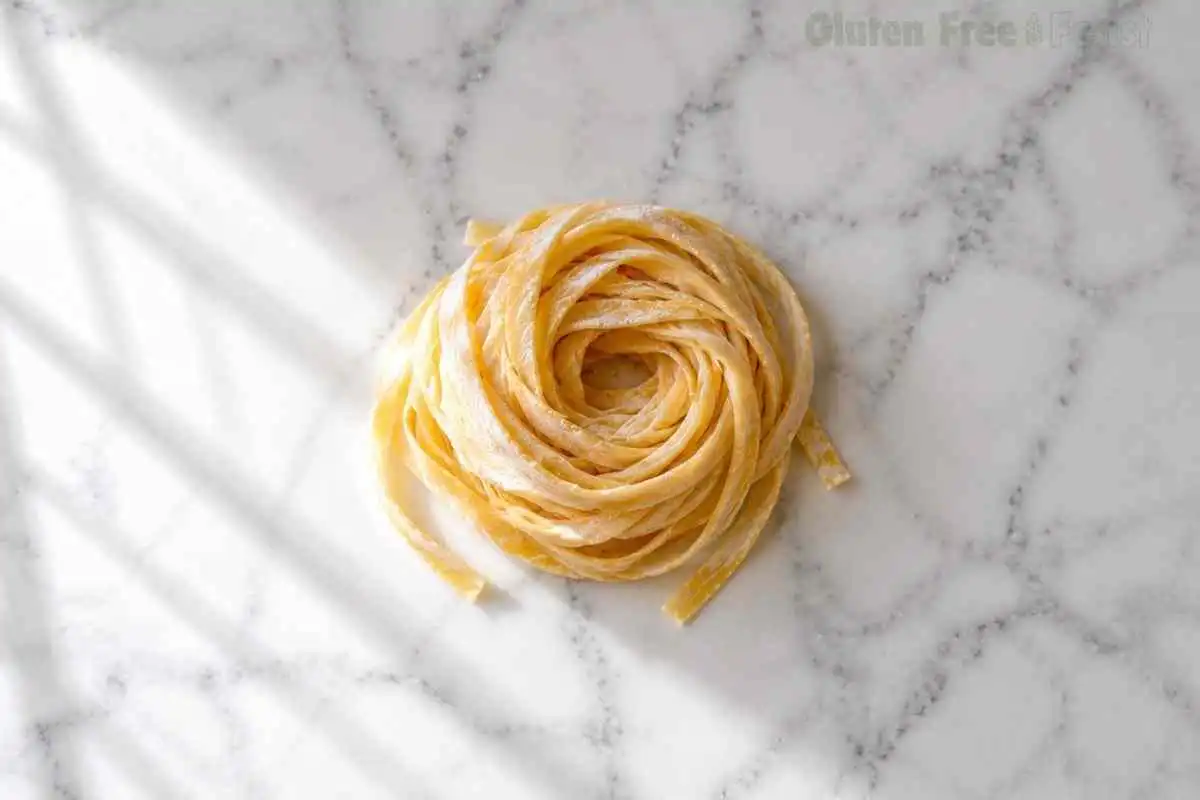
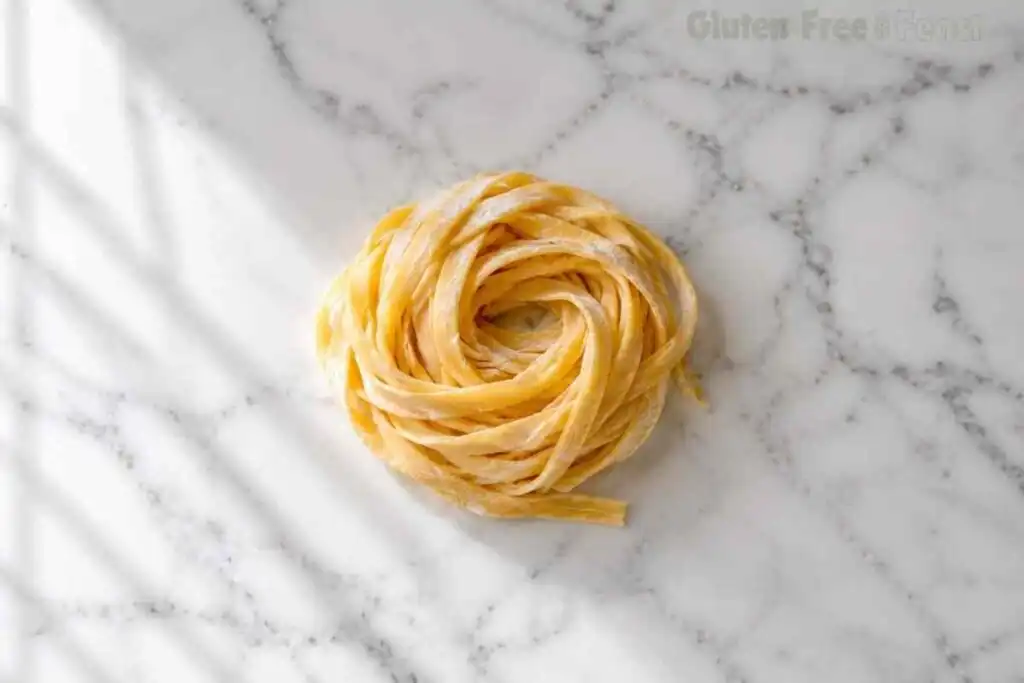
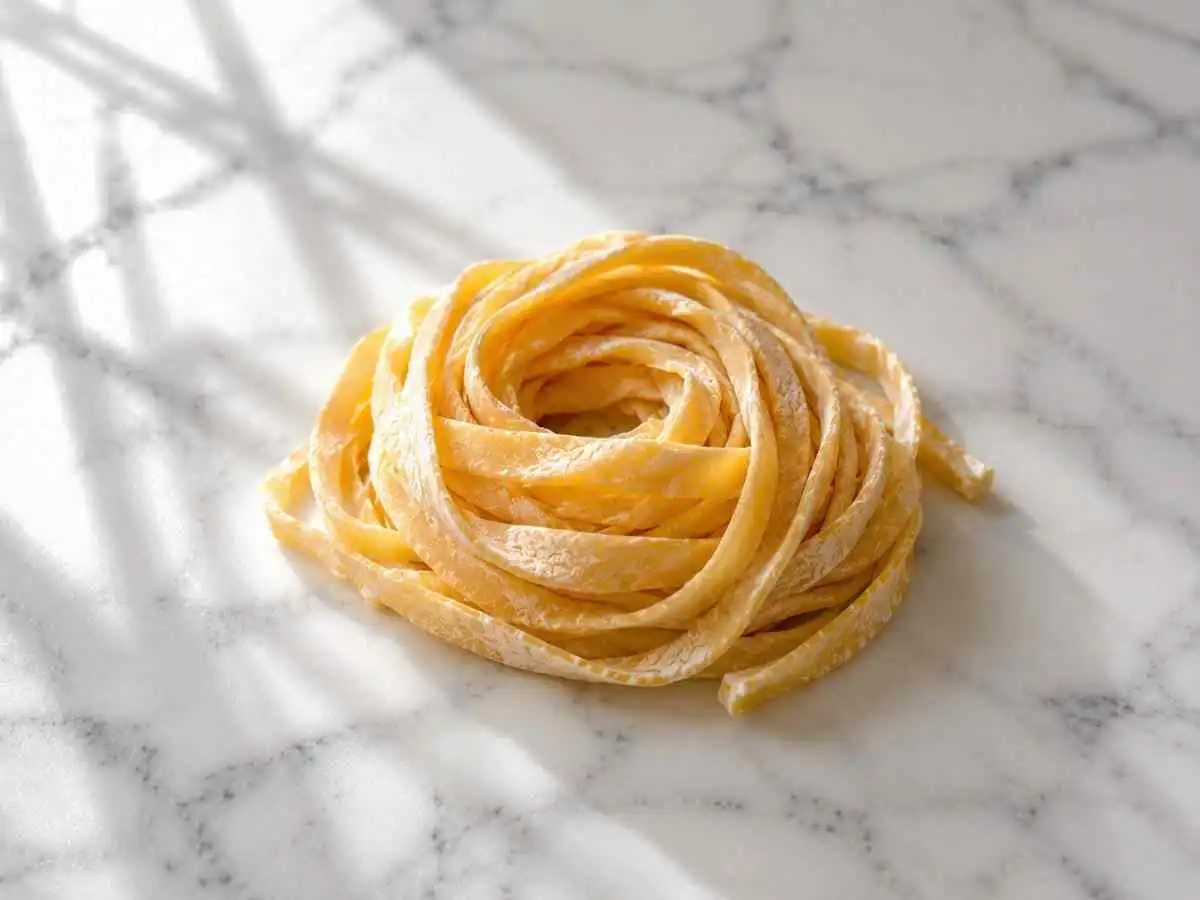
The first time I made homemade gluten free pasta in my dedicated gluten-free kitchen, I was convinced it would crumble. Two other flour blends had failed me before I landed on King Arthur Measure for Measure. With the right flour and a 30-minute rest, this dough rolls thin and cuts clean. It cooks in under 3 minutes to a silky fettuccine that no one at the table has ever guessed was gluten-free.
This recipe uses six straightforward ingredients, zero special equipment, and one technique most homemade pasta guides skip: the rest. Rice starch and tapioca starch absorb moisture more slowly than wheat starch. Without the full 30-minute rest, the dough tears when you roll it. After testing at 20 minutes versus 30, the difference was obvious: the 20-minute dough cracked at the edges, and the 30-minute dough rolled out clean.
If you have tried homemade gluten free pasta before and ended up with something gummy or gritty, what follows explains exactly why that happens. The science behind GF pasta dough is simple once you understand it, and this recipe puts every relevant detail where you need it.
Key takeaways
This homemade gluten free pasta recipe uses six ingredients, including GFCO-certified King Arthur Measure for Measure Flour, to produce silky fettuccine, tagliatelle, lasagna sheets, and more, with no pasta machine required. The 30-minute dough rest is the most important step: rice starch and tapioca starch absorb moisture slowly, and skipping the rest causes the dough to tear when rolling. A kitchen scale (210g of flour), cold eggs straight from the refrigerator, and a sharp knife or pizza cutter are the only tools you need. Fresh pasta cooks in just 2 to 3 minutes, significantly faster than dried pasta. The recipe is celiac-safe when made with GFCO-certified flour and dedicated GF equipment, including a non-wooden rolling pin and a reserved colander.
Prep Time: 45 mins · Cook Time: 5 mins · Resting Time: 30 mins · Total Time: 80 mins Yield: 4 servings
Table of Contents
Why You Will Love This Homemade Gluten Free Pasta Recipe
Silky texture with no gritty aftertaste: King Arthur Measure for Measure (GFCO-certified) is finely milled and blended for the closest texture to semolina you will find in a certified GF flour.
No pasta machine required: A rolling pin and parchment paper is all you need. A pasta machine speeds things up, but the hand-roll method produces excellent results.
Multiple shapes from one dough: Fettuccine, linguine, tagliatelle, lasagna sheets, and pappardelle all come from the same recipe. Thickness targets are in the Substitutions section.
Celiac-safe at every step: GFCO-certified flour named at the ingredient level, a full cross-contact section covering shared equipment, and a Celiac Safety Note in the recipe card.
Ready in 80 minutes total, only 50 active: The 30-minute rest requires no attention. Mix, knead, wait, roll, cut, cook.
Only 6 ingredients: Flour, xanthan gum, salt, eggs, water, olive oil. Everything is a pantry staple if you bake gluten free.
Silky homemade gluten free pasta made with GFCO-certified King Arthur Measure for Measure Flour, no pasta machine required. Celiac-safe, ready in 80 minutes with only 50 minutes active time.
1 3/4cupsKing Arthur Gluten Free Measure for Measure Flour (GFCO-certified), plus extra for dusting210g by weight
1tspxanthan gum3g; omit if your flour blend already contains xanthan gum
1/2tspfine sea salt3g
3large eggs150-165g without shells; cold from refrigerator
2tbspwater30g
1tbspolive oil13-15g
Equipment
Large mixing bowl
Fork
Kitchen scale
Plastic wrap
Parchment paper
Rolling pin (silicone or stainless steel, dedicated GF)
Sharp knife or pizza cutter
Large pot
Colander (dedicated GF)
Method
Make the Pasta Dough
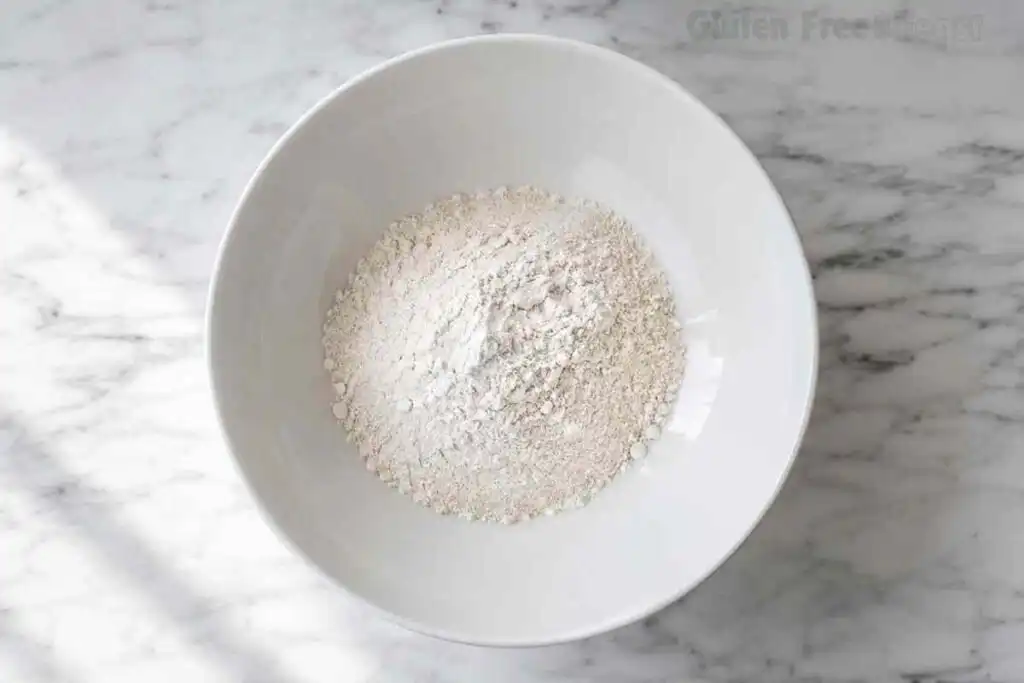
In a large bowl, whisk together the King Arthur Measure for Measure flour, xanthan gum (if using), and fine sea salt for about 30 seconds until evenly combined.
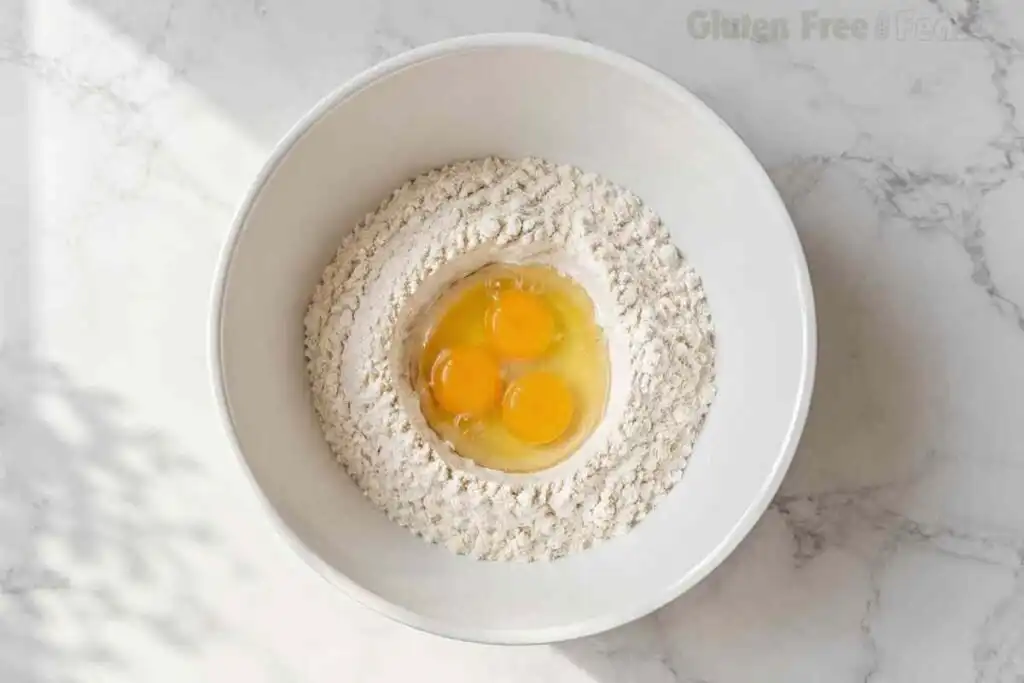
Make a well in the center of the flour mixture. Add the eggs, water, and olive oil into the well. Using a fork, work the flour gradually from the inside of the well outward until a rough, shaggy dough forms. Switch to your hands when the fork becomes ineffective.
Transfer the dough to a lightly floured surface, using GF flour for dusting. Knead for 5 to 7 minutes until the dough becomes smooth and elastic. If it feels dry, add water 1 teaspoon at a time. If it feels sticky, dust with a small amount of GF flour.
Rest the Dough
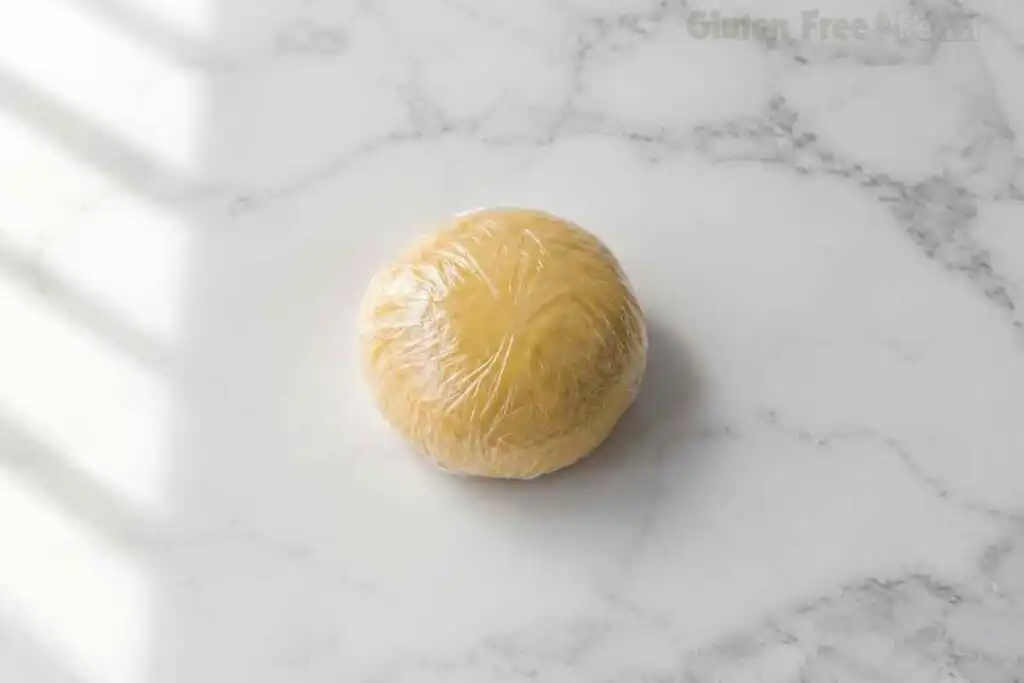
Shape the kneaded dough into a smooth ball and wrap it tightly in plastic wrap. Rest at room temperature for 30 full minutes. Do not shorten this step: the rest allows rice and tapioca starch to fully hydrate, producing a dough that rolls without tearing.
Roll and Cut
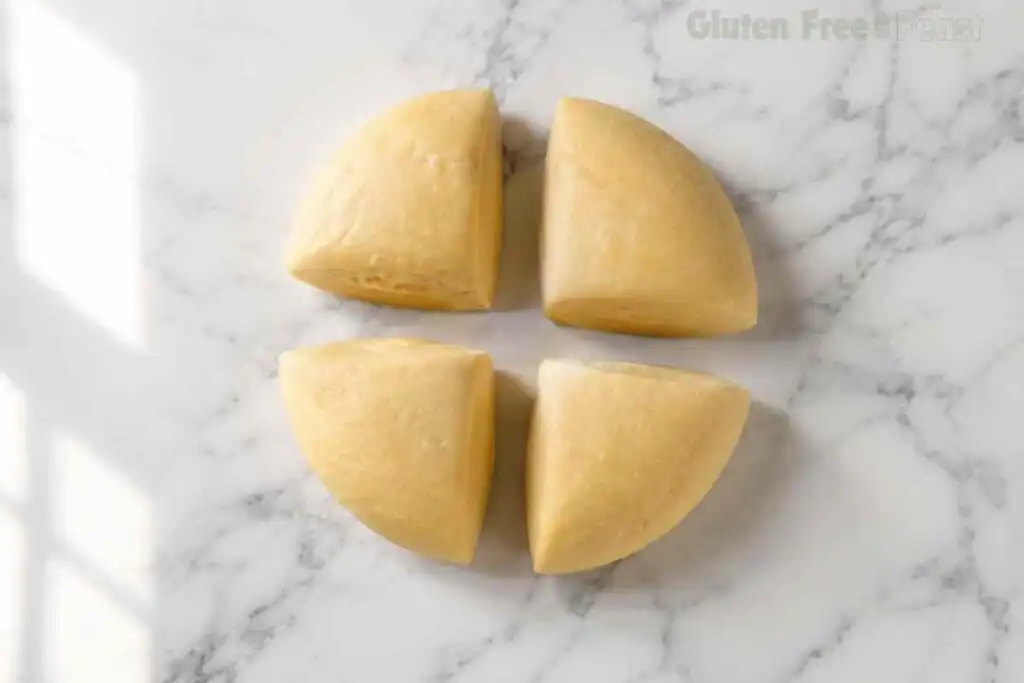
After the rest, cut the dough into 4 equal portions (about 104g each). Keep unused portions wrapped in plastic. Lightly dust a sheet of parchment paper and a rolling pin with GF flour.
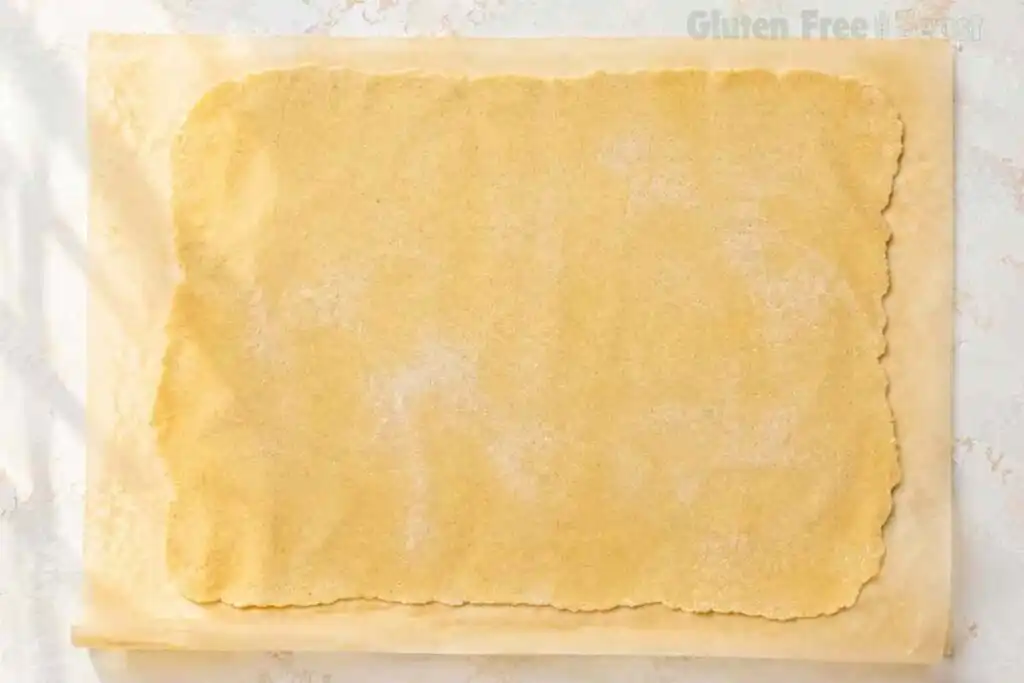
Working with one portion at a time, press the dough into a flat disk, then roll into a thin rectangle. Roll in stages, rotating the dough a quarter turn between passes. Target 1.5 to 3mm thick for fettuccine, tagliatelle, and linguine; 2 to 3mm for lasagna sheets.
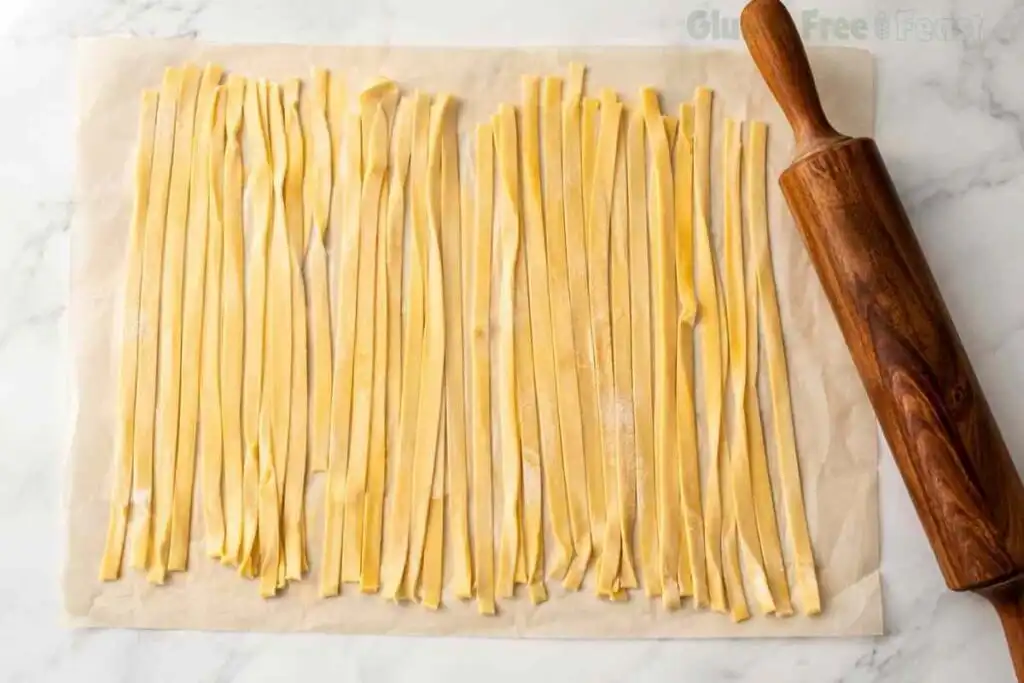
Using a sharp knife or pizza cutter, cut the dough into your preferred shape. Fettuccine and tagliatelle: cut strips about 6mm wide. Lasagna sheets: leave in large rectangles. Dust cut pasta lightly with GF flour if it starts to stick.
Cook the Pasta
Bring a large pot of generously salted water to a rolling boil. Add the pasta and cook for 2 to 3 minutes, testing at the 2-minute mark. GF pasta breaks down quickly past al dente. Drain immediately and toss with sauce at once.
Flour: King Arthur Gluten Free Measure for Measure is the tested and recommended blend (GFCO-certified). Bob’s Red Mill 1-to-1 Baking Flour (also GFCO-certified) works as a substitute; add 2 extra tablespoons of flour as the dough will be slightly wetter.Xanthan gum: King Arthur Measure for Measure already contains xanthan gum. Omit the extra teaspoon if using this blend. A blend without xanthan gum needs the full teaspoon added.Rest time: Do not shorten the 30-minute rest. At 20 minutes the starch is underhydrated and the dough tears when rolled. If making ahead, refrigerate the dough overnight and bring to room temperature for 10 minutes before rolling.Storage: Uncooked dough: refrigerate up to 3 days wrapped in plastic. Cut raw nests: freeze flat on a tray for 1 hour, then bag; freeze up to 3 months. Cook from frozen with 1 extra minute. Cooked pasta: refrigerate up to 3 days; toss with olive oil before storing and reheat in a pan with pasta water.Celiac Safety Note: Confirm your gluten free flour blend carries a certified GF symbol (GFCO, GFFS, or equivalent). If adding xanthan gum separately, use Bob’s Red Mill Xanthan Gum (dedicated facility). Use a dedicated GF rolling pin (silicone or stainless steel, not wood), dedicated GF colander, and fresh parchment paper on work surfaces. A shared pasta machine cannot be reliably cleaned to celiac-safe levels; the hand-roll method in this recipe is the safer option for a shared kitchen.
Gluten-Free Note
This recipe is designed to be gluten-free when prepared with certified gluten-free ingredients. Always check labels, as ingredient formulations and manufacturing practices can change. If you have celiac disease or a severe gluten allergy, verify that all ingredients are certified gluten-free and appropriate for your dietary needs.
1¾ cups (210g) King Arthur Gluten Free Measure for Measure Flour (GFCO-certified), plus extra for dusting
1 teaspoon (3g) xanthan gum (omit if your flour blend already contains it)
½ teaspoon (3g) fine sea salt
3 large eggs (150–165g without shells)
2 tablespoons (30g) water
1 tablespoon (13–15g) olive oil
Ingredient Notes and Substitutions
King Arthur Gluten Free Measure for Measure Flour: This is the only blend I tested that produces a dough cohesive enough to roll thin without extra binders. It carries GFCO certification, tested to below 10 ppm gluten, which is tighter than the FDA’s legal 20 ppm threshold. Bob’s Red Mill 1-to-1 Baking Flour (also GFCO-certified) works as a substitute, but the dough will be slightly wetter. Add 2 extra tablespoons of flour if you switch blends.
Xanthan gum: Xanthan gum replaces the structural role of gluten in this dough. Gluten in wheat pasta forms a protein network that holds the dough together and gives it elasticity. Without it, rice starch and tapioca starch would crumble when rolled. Xanthan gum binds the flour particles and gives the dough enough stretch to roll without tearing.
Check your flour bag before adding xanthan gum. King Arthur Measure for Measure already contains it, so omit the extra teaspoon. Any blend without it needs the full teaspoon added. Xanthan gum also appears in the batter for GFF gluten free blueberry muffins, another recipe that relies on the same binding principle.
Eggs: Eggs are non-negotiable in this recipe. Egg yolks contribute fat and lecithin, which give the dough its silky texture and golden color. Egg whites contribute protein, which firms up during cooking and holds the pasta together. No single egg replacer replicates both functions at once, which is why this recipe does not include a vegan option.
Olive oil: A tablespoon of olive oil adds suppleness to the dough, making it easier to roll thin without cracking at the edges. It also prevents the strands from sticking together before cooking.
Celiac Safety Note: Confirm that your gluten free flour blend carries a certified GF symbol (GFCO, GFFS, or equivalent). A marketing claim that says “gluten free” without a third-party symbol is not sufficient. If you are adding xanthan gum separately, Bob’s Red Mill Xanthan Gum is produced in a dedicated facility and is a safe choice.
In a large bowl, whisk together the King Arthur Measure for Measure flour, xanthan gum (if using), and fine sea salt for about 30 seconds. A thorough whisk ensures the xanthan gum distributes evenly through the flour before any liquid is added. Uneven distribution means some parts of the dough will bind and others will not. You will see it as cracking at the edges when you roll.
Step 2: Add the Wet Ingredients
Make a well in the center of the flour mixture. Add the eggs, water, and olive oil into the well. Using a fork, work the flour gradually from the inside of the well outward until a rough, shaggy dough forms.
Switch to your hands when the fork becomes ineffective. The dough at this stage will look rougher than you expect, and that is correct.
Step 3: Knead the Dough
Transfer the dough to a lightly floured surface, using your GF flour for dusting. Knead for 5 to 7 minutes until the dough becomes smooth and elastic. If it feels dry and crumbly, add water 1 teaspoon at a time. If it feels sticky, dust with a small amount of GF flour.
Unlike wheat pasta, you are not developing gluten here. You are evening out moisture so the starch particles hydrate uniformly, which is why consistent kneading matters even without gluten development at play.
Step 4: Rest the Dough
Shape the kneaded dough into a smooth ball and wrap it tightly in plastic wrap. Rest at room temperature for 30 full minutes. Rice starch and tapioca starch absorb moisture considerably more slowly than wheat starch. At 20 minutes, the hydration is still uneven and the dough will crack at the edges when you roll it.
In my testing, the 30-minute rest was the difference between a dough that tore on the first pass and one that held together cleanly. Thirty minutes is not a suggestion.
Step 5: Divide and Roll
After the rest, unwrap the dough and cut it into 4 equal portions (about 104g each). Keep unused portions wrapped in plastic so they do not dry out. Lightly dust a sheet of parchment paper and a rolling pin with GF flour.
Working with one portion at a time, press the dough into a flat disk with your hands, then roll into a thin rectangle. Roll in stages: start at a slightly thicker pass, rotate a quarter turn, and gradually work thinner. Target 1.5 to 3mm for fettuccine, tagliatelle, and linguine. Lasagna sheets can stay slightly thicker at 2 to 3mm.
Step 6: Cut and Cook
Using a sharp knife or pizza cutter, cut the rolled dough into your preferred shape. Fettuccine and tagliatelle: cut strips about 6mm wide. Lasagna sheets: leave in large rectangles. Dust the cut pasta lightly with GF flour if it starts to stick before cooking.
Bring a large pot of generously salted water to a rolling boil. Cook the pasta for 2 to 3 minutes, testing at the 2-minute mark. GF pasta breaks down faster than wheat pasta once it passes al dente. Drain immediately and toss with your sauce at once.
Expert Tips for Best Results
Use a kitchen scale. Measuring flour by cup is imprecise; a packed cup can add 20% more than the recipe needs. Weigh 210g every time for consistent results. The same spoon-and-level or weight principle applies to the GFF gluten free pancakes recipe, where GF flour measurement is equally critical.
Do not skip the rest. Thirty minutes is not a suggestion. If you are short on time, make the dough the night before and refrigerate it. Cold dough rolls slightly more easily; let it sit at room temperature for 10 minutes before cutting.
Dust the parchment, not the dough. Dusting directly onto the dough surface builds a dry layer that stops strands from sticking to each other during cooking. Dusting the parchment and rolling pin provides surface release without changing the dough’s hydration.
Roll in stages, not one long push. A single long rolling pass compresses the dough unevenly. Several shorter passes with a quarter turn between them produce consistent thickness throughout.
Salt the cooking water generously. This is the only point at which you can season pasta from the inside. Under-salted water produces flat-tasting noodles no amount of sauce will fully rescue.
Taste at 2 minutes, drain at al dente. GF pasta continues cooking from residual heat after draining. Pulling it slightly before it looks done produces perfect texture in the bowl.
Use dedicated GF equipment. Wooden rolling pins and worn surface tools are porous and cannot be fully cleaned of wheat residue. Silicone or stainless steel rolling pins and parchment-lined surfaces are the safest approach for celiac disease.
Common failure mode: The most common mistake across testing was under-resting the dough. If your pasta is tearing at the edges during rolling, the dough has not rested long enough. Wrap it back up and give it another 10 minutes before trying again.
Substitutions and Variations
Pasta shapes and thickness targets:
Fettuccine / Tagliatelle: 1.5 to 2mm thick, cut 6mm wide. Best with cream-based sauces, carbonara-style dishes, and nut-based pestos.
Linguine: 1.5mm thick, cut 3 to 4mm wide. Good with olive oil-based sauces and seafood.
Pappardelle: 2mm thick, cut 2cm wide. Ideal with ragu and slow-braised meat sauces.
Lasagna sheets: 2 to 3mm thick, left in large rectangles. Pre-boil for 90 seconds before layering, or use slightly underdone if your sauce is very liquid.
Bob’s Red Mill 1-to-1 Baking Flour: The closest tested alternative to King Arthur. The dough will be slightly wetter; add 2 extra tablespoons of flour and knead for the full 7 minutes. Texture difference in finished pasta is minor.
Xanthan gum alternatives: Psyllium husk powder at 1½ teaspoons is a workable substitute. The dough will be stickier and slightly more fragile when rolling. Konjac powder at 1 teaspoon also works, though neither produces quite the same smooth, elastic result as xanthan gum.
Herb pasta: Add 2 tablespoons of finely chopped fresh herbs (basil, parsley, thyme) to the dry ingredients before mixing. Spinach pasta: blend 30g of raw spinach with the eggs before adding to the flour. Add 1 to 2 extra tablespoons of flour to compensate for the extra moisture.
What to Serve With Homemade Gluten Free Pasta
Fresh homemade pasta has a softer, more porous surface than dried pasta. Lighter cream-based or oil-based sauces cling to it beautifully. Here are the pairings that work best in my kitchen.
Simple butter and Parmesan: Brown 2 tablespoons of butter in the pan, toss the drained pasta straight in, finish with finely grated Parmesan. Ready in the time it takes to boil the water.
Carbonara-style with GF bacon: The richness of an egg yolk sauce pairs perfectly with silky fettuccine. Use GF-labeled bacon or pancetta. For more egg-based GF dishes, the GFF gluten free quiche uses the same technique of tempering eggs with heat.
Pesto: Classic basil pesto is naturally gluten free and takes under 5 minutes to blend. Toss immediately after draining for best color.
Brown butter and sage: Six sage leaves crisped in 3 tablespoons of browned butter, with a squeeze of lemon and a handful of toasted walnuts. One of the best quick sauces for fresh pasta.
With a GF bread side: Fresh pasta alongside a warm bread makes a full dinner. The GFF gluten free biscuits come together while the pasta water heats and are the easiest celiac-safe bread option in the GFF library.
Storage and Make-Ahead Instructions
Uncooked dough: Wrap tightly in plastic wrap and refrigerate for up to 3 days. Cold dough is slightly firmer and can be easier to roll. Let it sit at room temperature for 10 minutes before cutting.
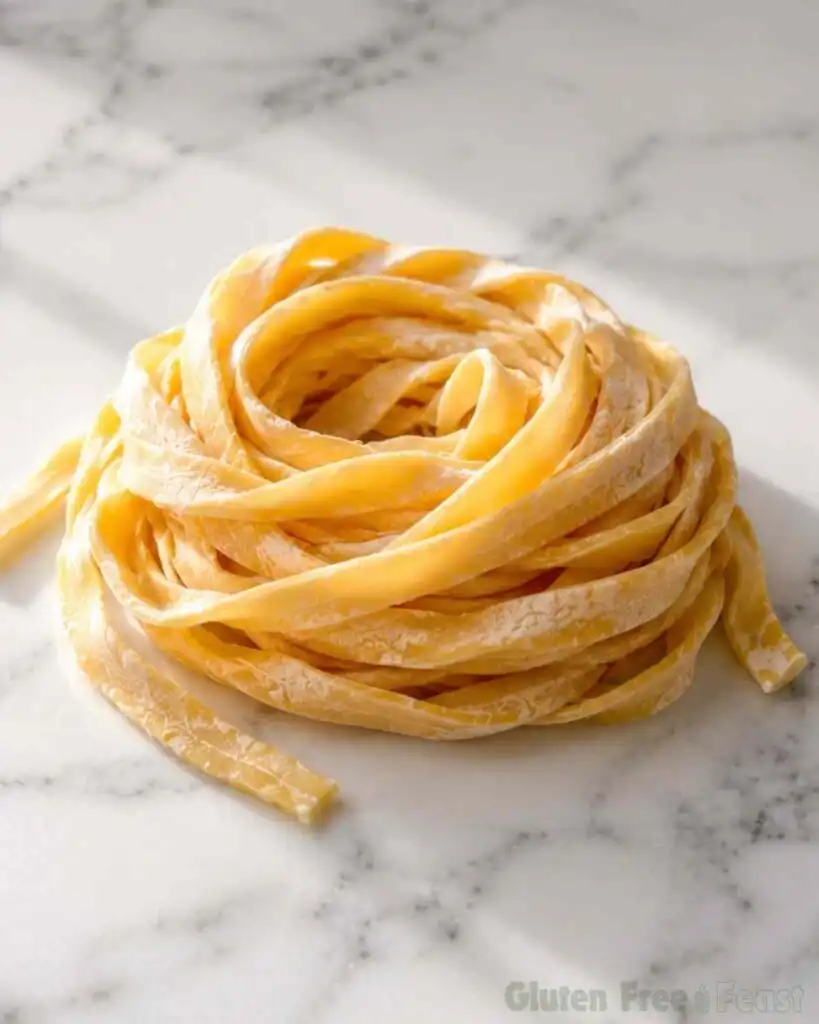
Cut raw pasta: Dust the cut strands with GF flour and form into loose nests. Freeze on a parchment-lined tray for 1 hour until solid, then transfer to a zip-top freezer bag. Frozen raw pasta keeps for up to 3 months. Cook directly from frozen, adding 1 extra minute to the cooking time.
Cooked pasta: Toss immediately with a small drizzle of olive oil to prevent sticking, then refrigerate in an airtight container for up to 3 days. Reheat in a pan with a splash of pasta water or sauce over medium heat. Microwave reheating makes GF pasta gummy.
Make-ahead for a dinner party: Make the dough the night before and refrigerate. Roll, cut, and nest the pasta up to 4 hours ahead, kept dusted with GF flour and covered loosely. Cook to order when guests sit down.
Celiac Safety and Cross-Contact Risks
Fresh pasta dough clings to surfaces and tools in a way dried pasta does not. In a kitchen that has ever handled wheat, cross-contact risk is higher than for most recipes. Check these five pieces of equipment before you start.
Rolling pin: Wooden rolling pins are porous and trap dough in the grain even after washing. Use a dedicated GF silicone or stainless steel rolling pin, or wrap any rolling pin in cling film before use.
Pasta machine: Pasta machine rollers have crevices that hold dough from previous batches. A shared pasta machine cannot be reliably cleaned to safe levels for celiac disease. Use a dedicated GF machine, or use the hand-roll method in this recipe.
Work surface: Wipe down and then lay fresh parchment paper over the surface before rolling. Do not use grooved or unsealed wooden boards that have had wheat dough on them.
Colander: Wheat starch from previous pasta batches bonds to plastic colander surfaces and does not fully wash out. Use a dedicated GF colander or a fine mesh strainer reserved for GF cooking.
Dough scraper: If your bench scraper has been used with wheat dough, retire it from GF use. Plastic scrapers harbor residue in surface scratches; stainless steel is easier to clean but should still be dedicated.
Why Trust This Recipe
I develop recipes with documented testing, controlled variables, and results that hold up in any kitchen, not just mine.
This recipe has been tested multiple rounds in my dedicated gluten-free kitchen. I have noted what fails, what works, and why, so you are not just following steps but understanding the process.
What that means for you:
Multiple test batches of this homemade gluten free pasta before publishing, including rest time comparison at 20 versus 30 minutes
Science-based notes on key steps throughout
Honest substitution guidance backed by testing, not guesswork
Safe for celiac disease, with cross-contact taken seriously at every step
Frequently Asked Questions
Why is my homemade gluten free pasta falling apart?
GF pasta falls apart for three reasons: underhydration, insufficient rest time, or overcooking. If the dough crumbles while kneading, add water 1 teaspoon at a time. If it tears while rolling, the rest was too short; wrap it back up for the full 30 minutes. If cooked pasta breaks in the bowl, it overcooked. GF pasta loses structural integrity quickly past al dente. Test at 2 minutes and drain immediately.
Is Bob’s Red Mill or King Arthur better for gluten free pasta?
King Arthur Measure for Measure is the tested choice for this recipe. It is GFCO-certified, finely milled, and produces a smooth dough with a neutral flavor. Bob’s Red Mill 1-to-1 Baking Flour (also GFCO-certified) works as a substitute, but the dough is wetter and needs 2 extra tablespoons of flour. Always choose the GFCO-certified version of either brand, not just one labeled gluten free without third-party verification.
Do you need a binder in gluten free pasta?
Yes. Xanthan gum is the essential structural binder in this recipe. Without gluten to form a protein network, rice starch and tapioca starch particles would not hold together through rolling, cutting, or cooking. Check your flour blend before adding it: King Arthur Measure for Measure already contains xanthan gum, and adding extra produces a gummy, rubbery texture.
What are the most common mistakes when making gluten free pasta?
Three come up most often in testing. First: skipping or shortening the rest; 30 minutes is required, 20 is not enough. Second: rolling too thin on the first pass; work in stages from thicker to thinner rather than one long push. Third: overcooking; GF pasta turns gummy and then falls apart quickly past al dente, so set a timer and taste at 2 minutes.
Can you make gluten free pasta without a pasta machine?
Yes, and this recipe is specifically designed for the hand-roll method. A rolling pin on parchment paper produces excellent results when you roll in stages and rotate the dough a quarter turn between passes. A pasta machine speeds the process and produces more even thickness, but it carries cross-contact risk in a shared kitchen and is not required.
How do you store homemade gluten free pasta?
Homemade gluten free pasta dough keeps refrigerated for up to 3 days, wrapped tightly. Cut pasta nests freeze for up to 3 months: freeze flat on a tray first, then transfer to a bag. Cook directly from frozen with 1 extra minute. Cooked pasta stores in the fridge for up to 3 days. Toss with olive oil before refrigerating and reheat in a pan with a splash of pasta water.
Final Thoughts
Homemade gluten free pasta rewards understanding over repetition. Once you know why the rest matters, every batch gets better. Homemade gluten free pasta also needs to come off the heat faster than wheat, so set that timer and pull it early. Start with fettuccine, the most forgiving shape, and work toward thinner cuts once the dough feels familiar. This recipe holds up across flours, shapes, and sauces, and it belongs in permanent rotation in any gluten free kitchen.
The recipes on this site come from a scientist who went gluten-free and refused to settle for dense, gummy results. BSc in Molecular Biology & Genetics. Former laboratory analyst. Full-time founder of Gluten Free Feast.
Every recipe is mine, developed, tested and written by me.
My Commitment: Every recipe on Gluten Free Feast is created with gluten-free ingredients and thoroughly tested. Because brands and manufacturing practices can change, always verify that your ingredients are certified gluten-free if you have celiac disease.
Molecular Biologist · Laboratory Analyst · GF Recipe Developer 🎓 BSc Molecular Biology & Genetics — Boğaziçi University, Istanbul, Turkey Former Biological Laboratory Analyst Founder & Recipe Developer — Gluten Free Feast Claire's scientific background means every recipe on this site is built on a genuine understanding of food science — from why gluten-free flours absorb moisture differently, to how specific binding agents replicate gluten's structural role in baking. Read Claire's full story →